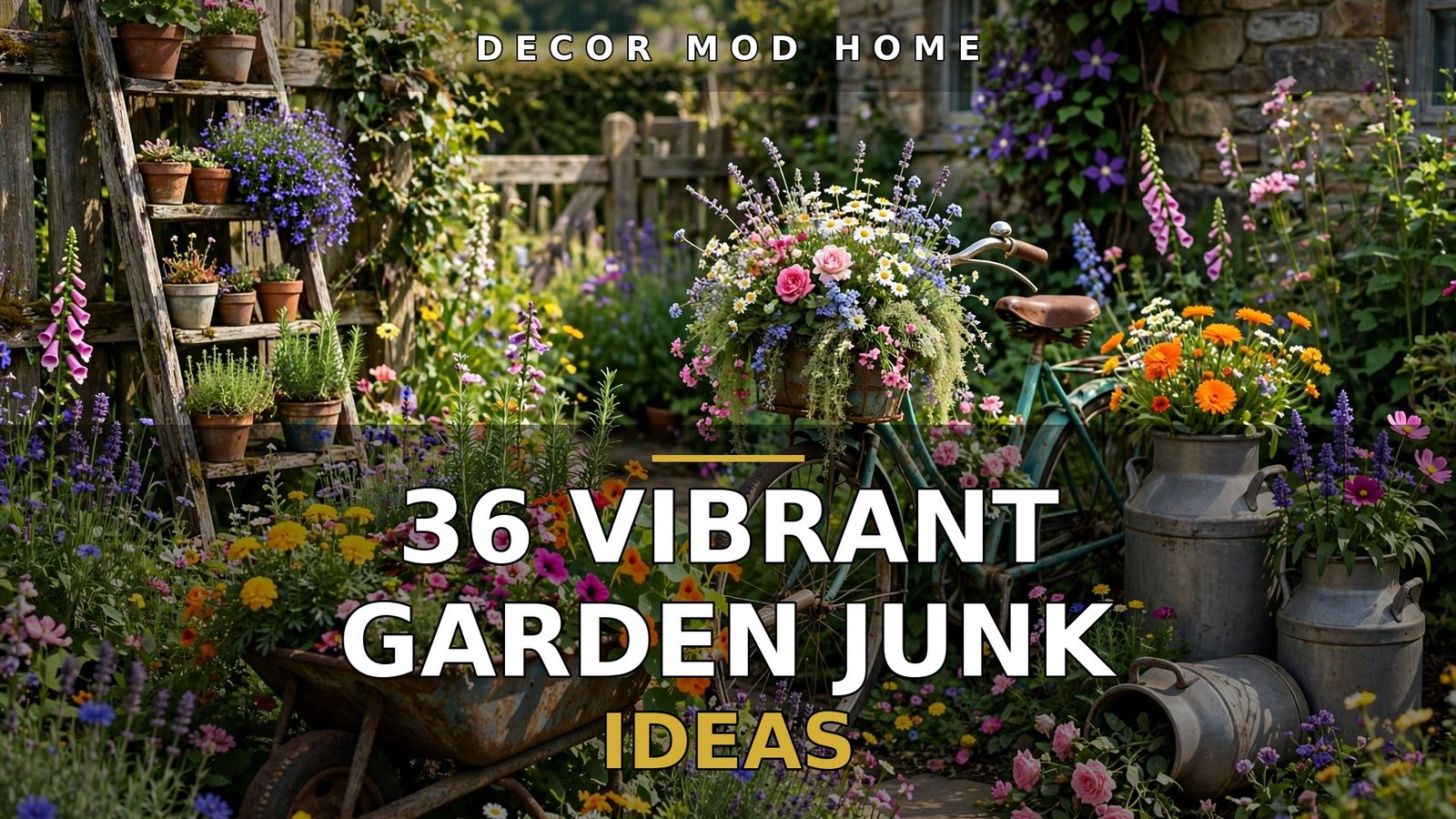
36 Vibrant Garden Junk Ideas for a One-of-a-Kind Garden
There is something deeply satisfying about giving a forgotten object a second life. If you love the charm of salvage yards, flea markets, and attic clear-outs, these 36 vibrant garden junk ideas will help you turn cast-offs into the most talked-about corners of your garden. Garden junk — the art of styling repurposed vintage and salvaged items outdoors — pairs weathered wood, rusty metal, and chipped enamel with lush, colourful planting for a look that is playful, personal, and impossible to buy off the shelf. Best of all, most of these projects cost next to nothing: the “supplies” are already gathering dust in your shed or waiting at the car boot sale.
1. Turn an Old Ladder into a Tiered Plant Stand
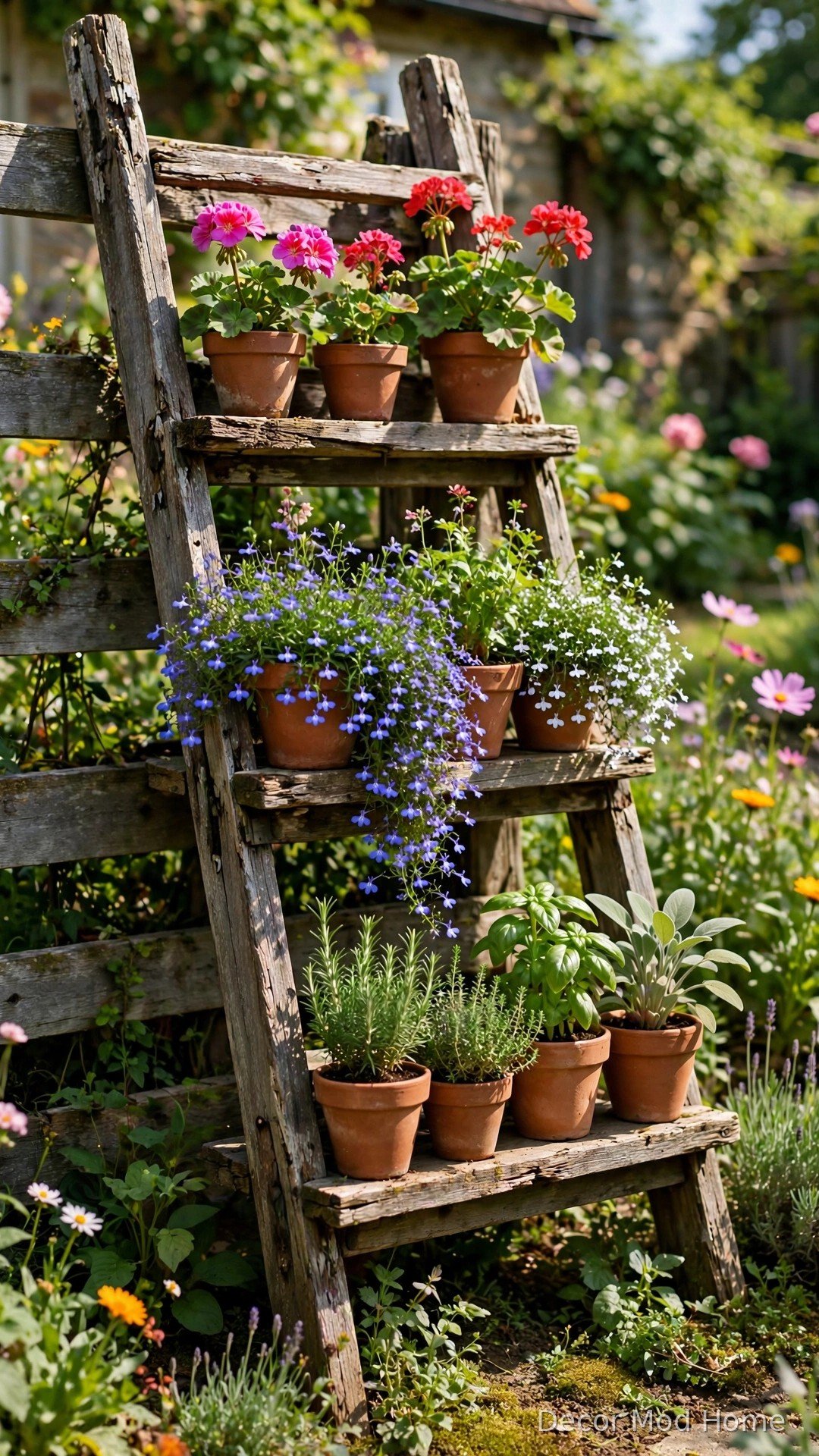
That wobbly wooden ladder in the garage is a display shelf waiting to happen. Sand off the splinters, seal it with exterior wood oil, and lean it at a gentle angle against a fence or shed wall. Lay planks across the rungs to create instant tiers, then arrange pots of trailing lobelia, upright geraniums, and fragrant herbs on each level. The tallest pots go at the bottom for stability, and a few hanging planters hooked over the top rungs add height. Paint it a cheerful colour — sage green or sunny yellow — if you fancy a bolder statement.
2. Plant Petunias in a Vintage Wheelbarrow
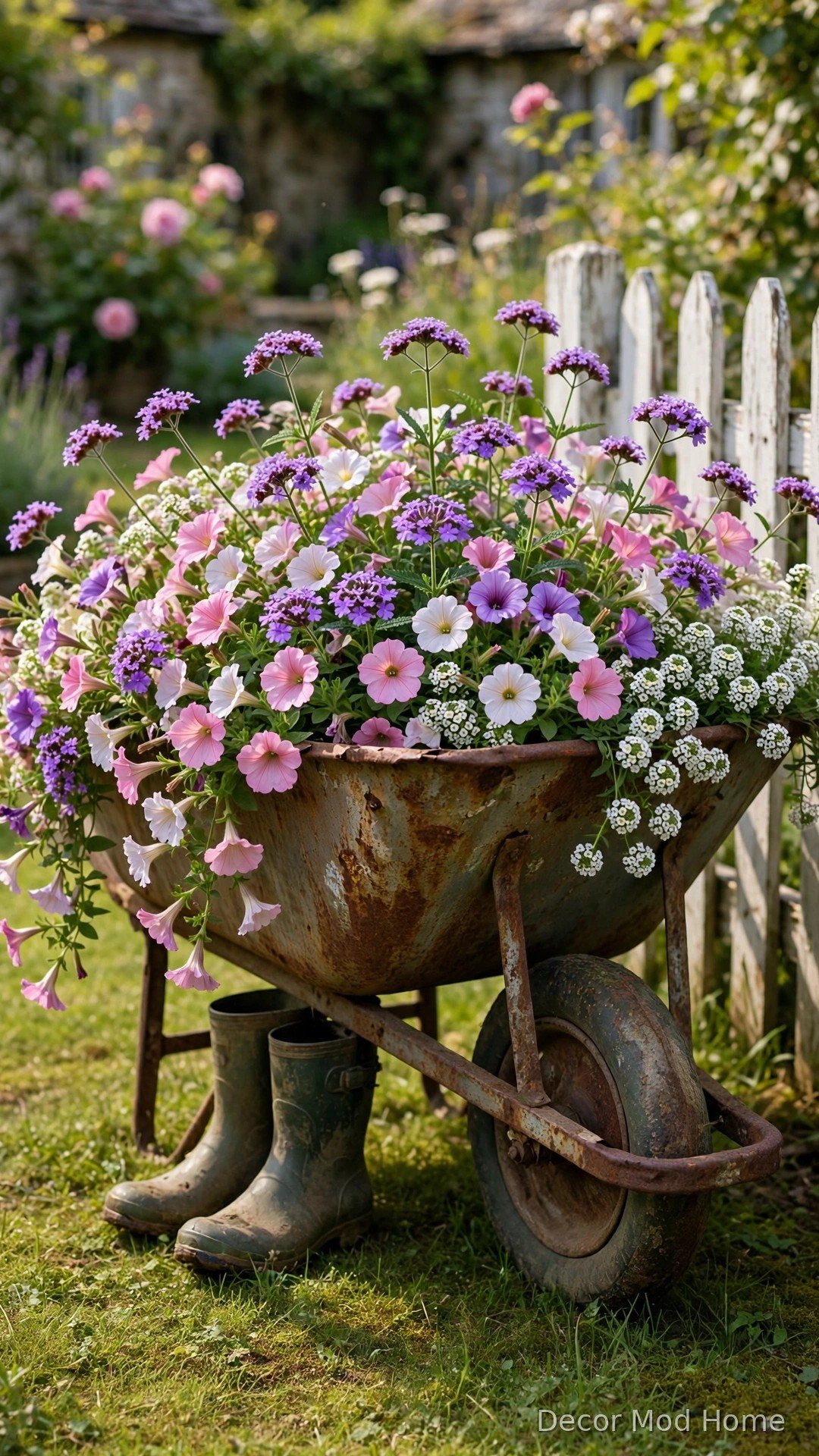
A rusty wheelbarrow with a leaky pan makes the most charming oversized planter. Drill a few drainage holes if it does not already have them, line the basin with landscape fabric to hold the soil in, and fill it with a riot of trailing petunias, verbena, and sweet alyssum. Wheel it to a bare corner of the lawn and let it spill over. For extra cottage charm, lean the handles against a picket fence and tuck a pair of old wellies underneath. Come autumn, swap the petunias for pansies and ornamental kale.
3. Fill a Chipped Teapot with Trailing Succulents

Grandma’s chipped teapot was never going to hold tea again — but it holds succulents beautifully. Wedge a piece of mesh over the spout so soil stays put, add a gritty cactus mix, and nestle in echeverias, string-of-pearls, and sedum so the trailing stems pour from the spout like a green waterfall. Set it on a garden table or wall ledge where the miniature scale can be appreciated up close. A group of three in mismatched patterns looks far better than one, so start hunting flea markets for companions.
4. Grow Herbs in a Rustic Bicycle Planter

A vintage bicycle with flat tyres is peak garden junk — especially with a wicker basket overflowing with thyme, rosemary, and trailing nasturtiums. Secure the bike upright with a discreet metal stake behind the frame, wire a wooden crate over the back rack for extra planting room, and tuck small pots into the basket. Park it beside the back door so you can snip herbs on your way inside. A quick coat of clear sealant keeps the rust at bay without hiding that lovely timeworn patina.
5. Stack Wooden Crates into a Vertical Garden

Wine and apple crates stack into a brilliant vertical planter for a narrow patio wall. Arrange them in a staggered tower — two on the base, one centred on top — and screw them together from the inside so the fixings stay invisible. Line each crate with coconut fibre, fill with compost, and plant a mix of strawberries, lettuce, and cascading flowers like bacopa. The front faces can be stencilled with plant names for a market-garden feel. Water from the top and let gravity do the rest.
6. Repurpose a Dresser Drawer as a Raised Bed

When a chest of drawers falls apart, rescue the deep drawers for instant mini raised beds. Remove any musty drawer bottoms and replace them with slatted offcuts, drill drainage holes, and fill with a soil-and-compost mix. A single drawer is the perfect depth for salad leaves, radishes, or a dense carpet of marigolds. Line up two or three on a bench or low wall, and add the original drawer pulls as decorative handles. They weather to a lovely silvery grey if left unsealed.
7. Hang a Vintage Colander as a Flower Basket

Enamel colanders already have built-in drainage, which makes them ready-made hanging baskets with far more personality than plastic. Thread sturdy wire or macramé cord through the handles, line the bowl loosely with moss, and pack in trailing fuchsias, ivy-leaf geraniums, and lobelia. Hang it from a tree branch, a pergola beam, or a shepherd’s hook by the gate. The bright enamel colours — red, cream, or sky blue — pop beautifully against green foliage, so do not be shy about hunting down the boldest one.
8. Turn an Old Bathtub into a Cottage Garden Pond

A cast-iron bath sunk into the ground becomes the most characterful little wildlife pond on the street. Dig a hole deep enough that the rim sits just above soil level, line the tub with pond liner, and fill it with rainwater. Add a few oxygenating plants, a miniature water lily, and a small solar fountain for movement. Edge the rim with smooth pebbles and creeping thyme to blur the boundary. Frogs will move in within weeks — and nothing beats the surprise of a vintage bath brimming with water in the middle of a flowerbed.
9. Use a Salvaged Window Frame as a Trellis
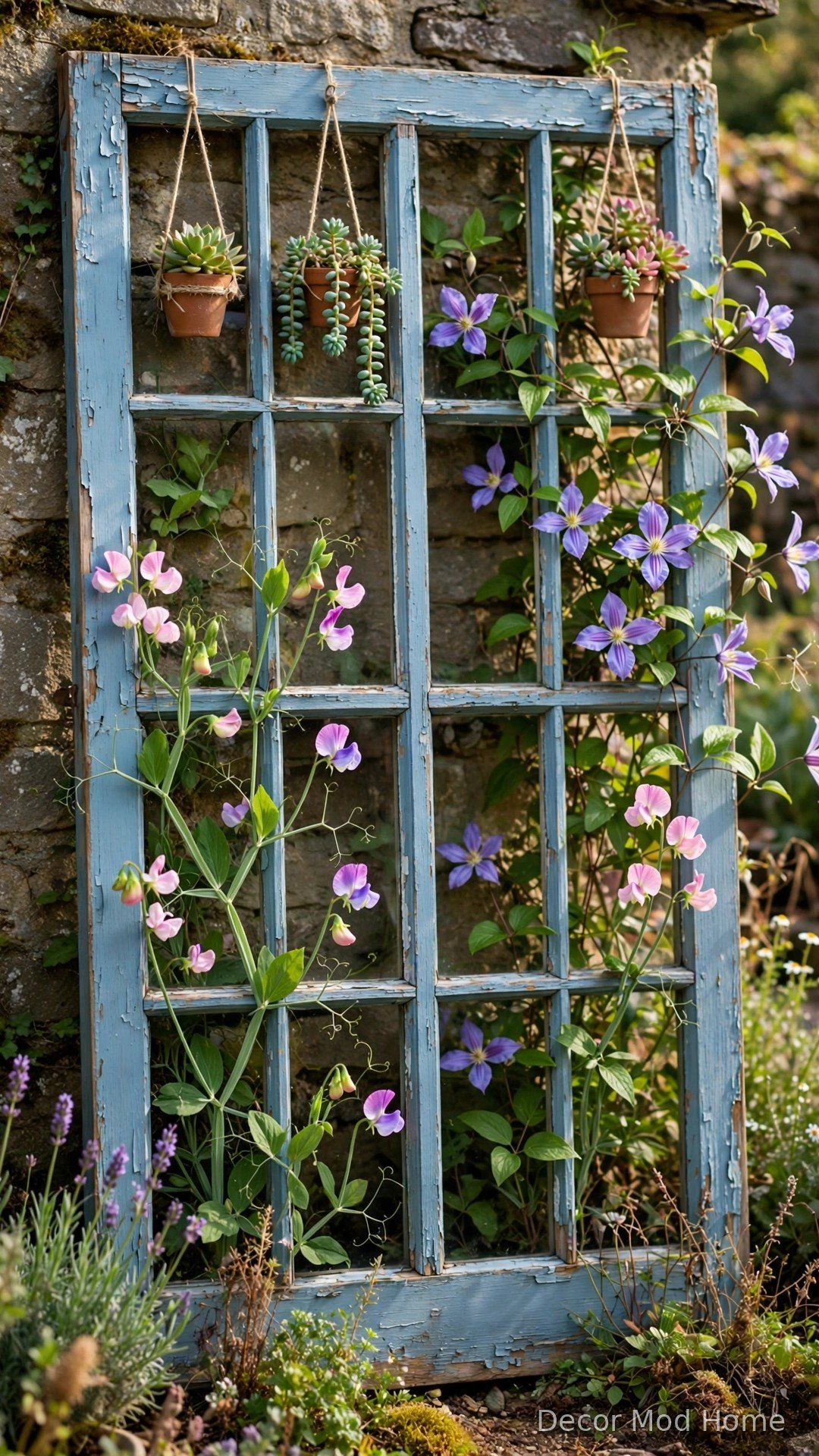
An old multi-pane window frame is a ready-made garden trellis with built-in geometry. Remove any remaining glass for safety, give the frame a coat of exterior paint in a soft white or duck-egg blue, and stand it against a wall or fence. Train sweet peas, morning glory, or clematis up through the panes, and the flowers will frame themselves like living stained glass. For extra magic, hang a few small potted succulents from the top rail with wire. It looks especially good weathered — so do not over-restore it.
10. Fill Rain Boots with Cheerful Seasonal Blooms

A pair of outgrown or split wellies is too good to bin — puncture a few drainage holes in the soles, fill them with compost, and plant each with a tuft of pansies, primroses, or spring bulbs. Line them along the doorstep, hang them on a fence in a row, or tuck one into a flowerbed as a playful surprise. Kids love “planting the boots,” and swapping the contents each season keeps them fresh all year. Bright colours work best: yellow, red, or polka-dot boots practically glow against fresh green foliage.
11. Turn a Wooden Chair into a Whimsical Flower Seat
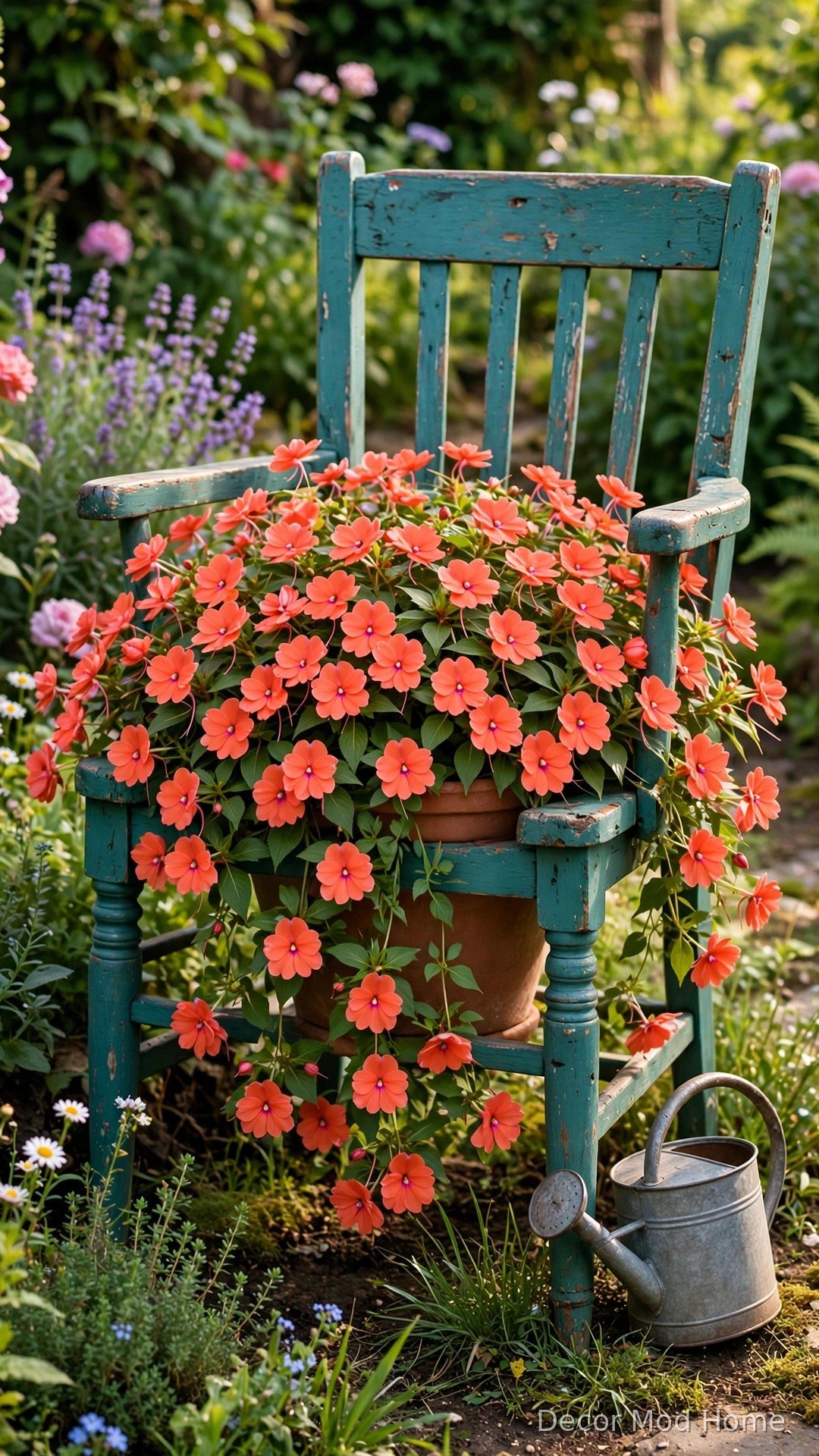
A chair with a broken seat or missing leg earns a second act as a flower throne. Remove what is left of the seat, drop a terracotta pot or lined basket into the frame, and plant it with a mound of bright impatiens or trailing petunias that spills over the edges like a skirt. Paint the chair a contrasting colour — teal against coral blooms is irresistible — and nestle it into a cottage border. Finish the vignette by leaning a tiny watering can against one leg and tucking moss around the base.
12. Style a Vintage Suitcase Stacked with Plants
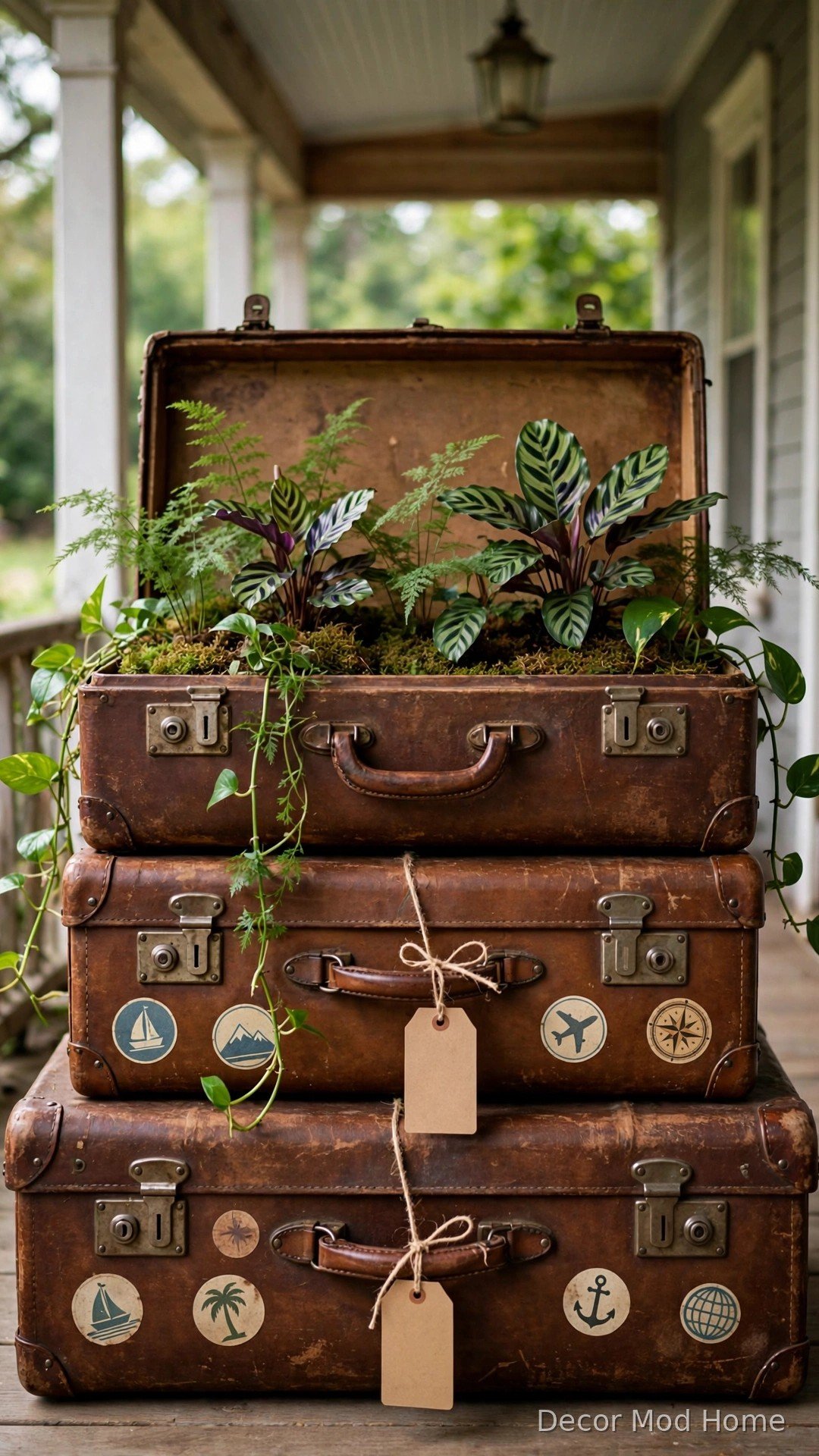
Old leather suitcases from the attic stack into a brilliant plant display with instant travel-story charm. Open the top case flat, line it with a plastic tray, and arrange small potted ferns, calatheas, and trailing pothos inside like a living diorama. Stack two or three closed cases beneath as a plinth, strap them together so they cannot slip, and shelter the whole display on a covered porch where the leather stays dry. Paper travel stickers and twine labels add to the wanderlust mood.
13. Convert a Metal Toolbox into a Herb Caddy

A rusty metal toolbox with a flip lid is the perfect portable herb garden for the patio table. Clean it out, drill drainage holes along the base, and plant compartments of basil, chives, mint, and parsley — mint in its own pot inside, unless you want it to take over. The handle makes it easy to carry to the barbecue, and the lid props open as a little chalkboard sign. A light sanding followed by clear lacquer keeps the vintage printing visible while stopping further rust in its tracks.
14. Hang an Old Chandelier as a Garden Lantern
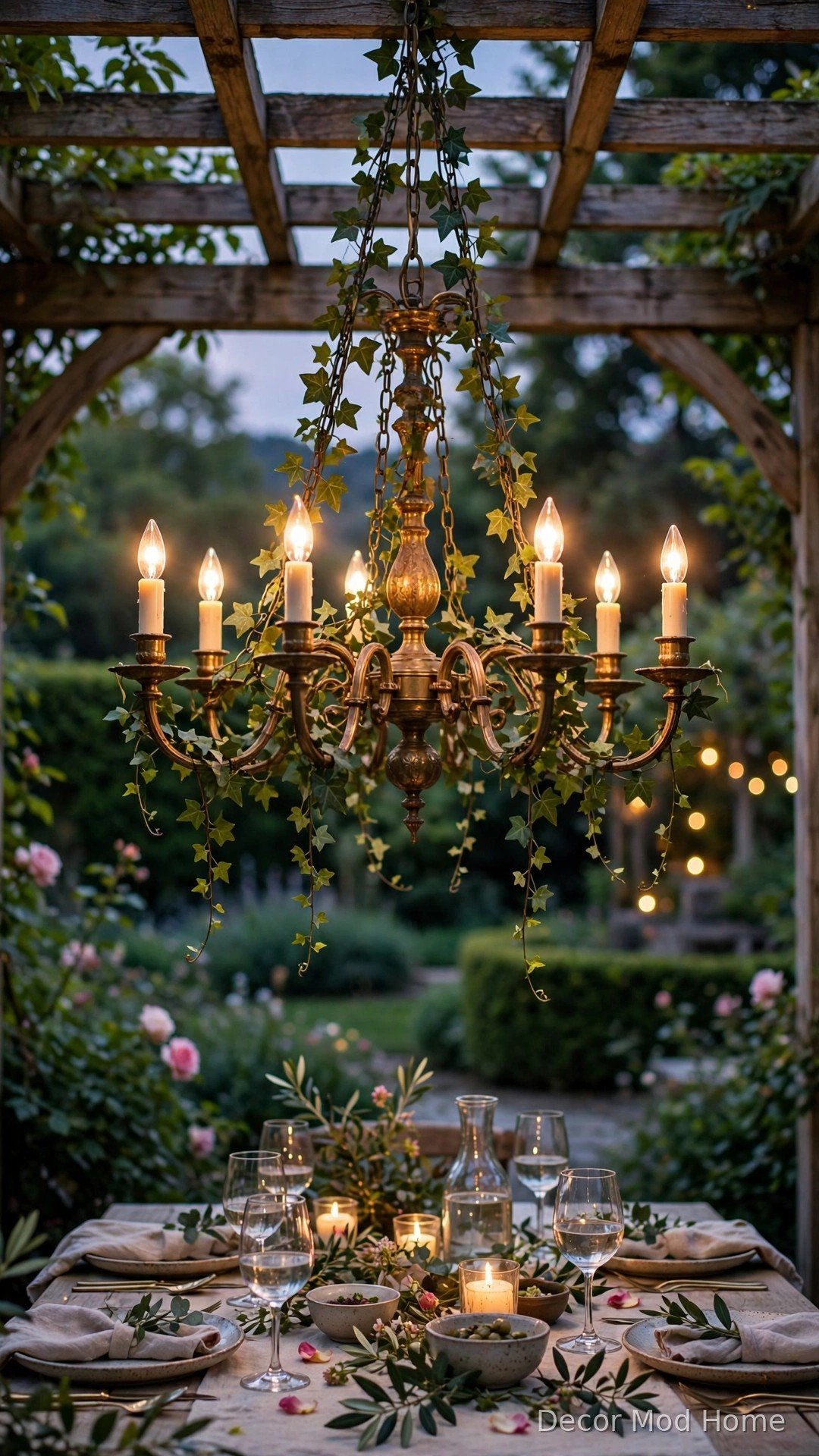
A brass chandelier from the charity shop becomes pure evening magic when hung from a pergola or sturdy branch. Remove the wiring, fit each candle socket with a battery tealight or a small solar light, and trail ivy or faux wisteria around the arms. At dusk it glows like something from a fairy tale — and in daylight it is a sculptural focal point. Hang it low enough to see over the dinner table but high enough to walk under, and give it a gentle wipe-down each spring.
15. Turn a Tractor Tyre into a Bold Flower Ring
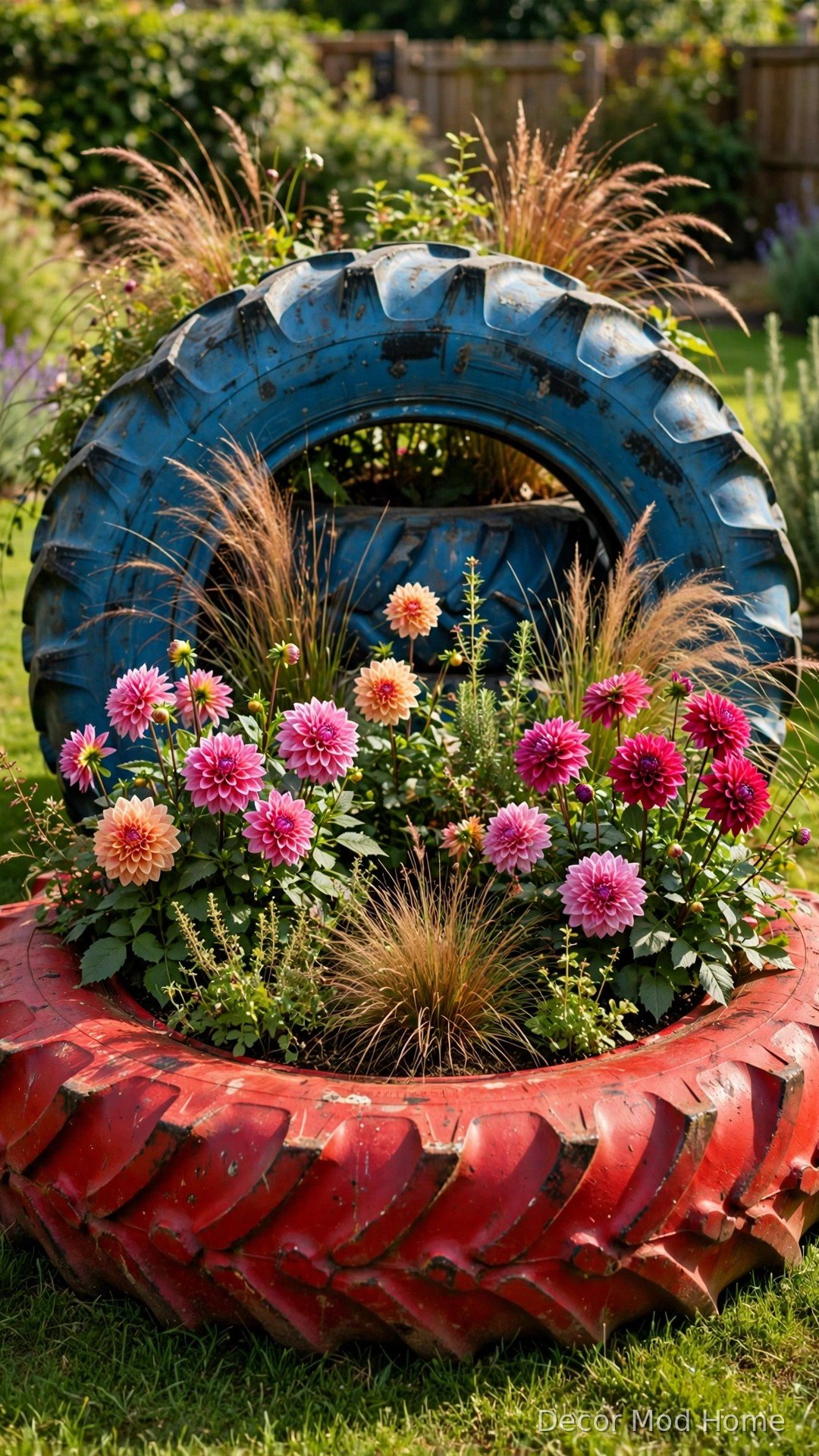
Big old tractor tyres are free for the taking at most farms — and they make unbeatable statement planters. Scrub one clean, paint it a vivid colour like pillar-box red or cobalt blue, and lay it flat on a lawn or gravel patch. Fill the centre with compost and plant a bold ring of dahlias, sunflowers, or ornamental grasses that contrast with the paint. Stack two or three in a pyramid for a tiered tower, or half-bury one upright as a quirky garden sculpture planted with tumbling sedum.
16. Use a Salvaged Door as a Backdrop Arch

A panelled interior door, stood on end and fixed between two posts, creates a theatrical backdrop for a flowerbed. Paint it in a faded pastel, leave the paint to chip naturally, and plant climbing roses or honeysuckle at its base so the blooms frame the panels. Lean a small bench or a crate of pots in front to complete the “secret garden” vignette. Fix it firmly with post spikes and a bracket at the top — a full door catches the wind like a sail, so anchoring matters more than it looks.
17. Fill a Vintage Kettle with Cascading Flowers
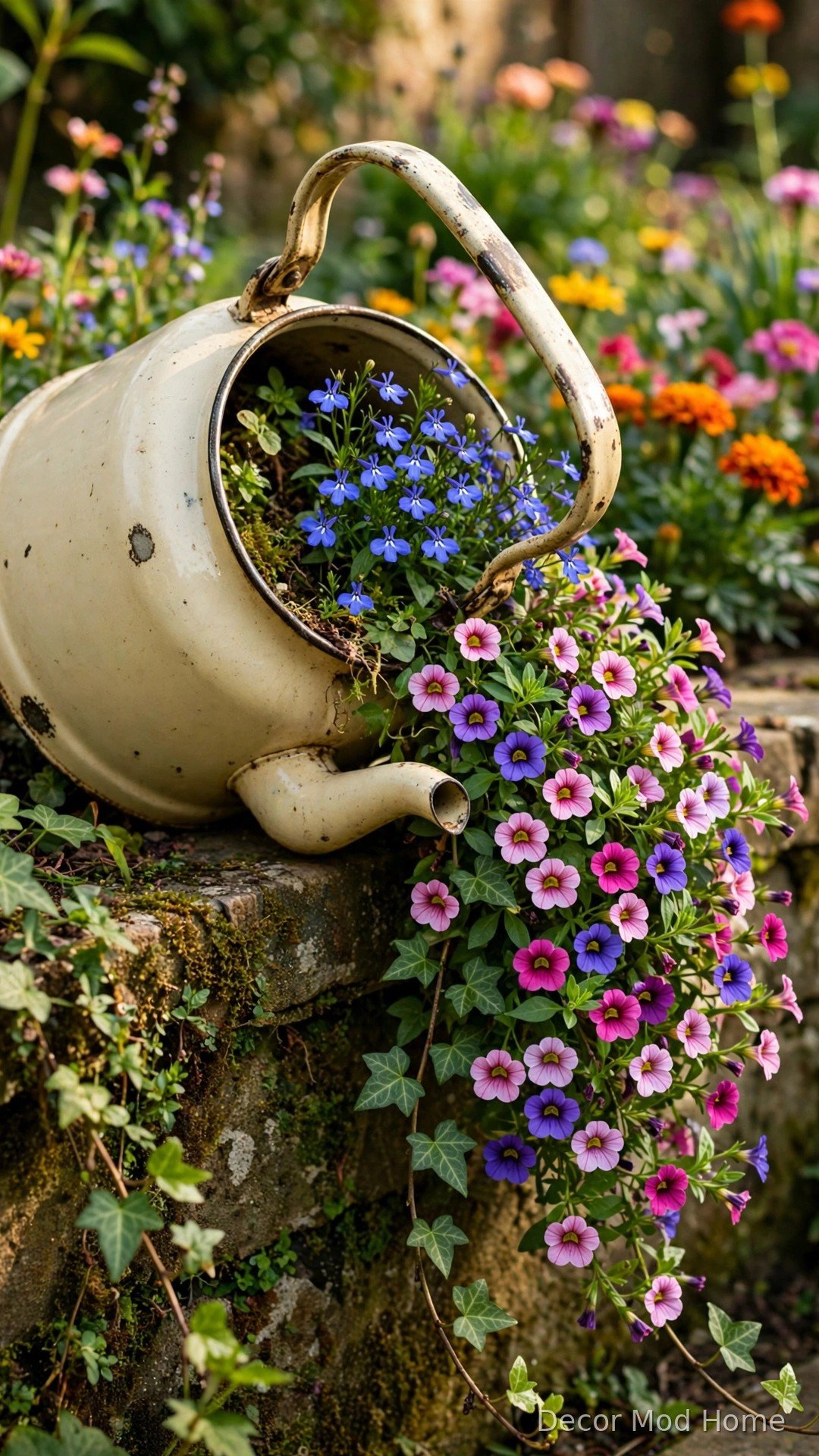
Enamel kettles, like teapots, were born to spill flowers. Remove the lid, wedge soil-retaining mesh inside the spout, and plant trailing varieties — calibrachoa, bacopa, or ivy — so they pour from the spout in a living stream. Set the kettle on its side slightly tipped, as if mid-pour, on a low wall or among border plants for the full illusion. A copper or cream enamel kettle against blue lobelia is a classic combination that photographs beautifully and costs almost nothing to assemble.
18. Turn a Wooden Pallet into a Living Wall

Heat-treated pallets (look for the HT stamp) convert into a brilliant vertical garden for herbs and annuals. Staple landscape fabric across the back and inside of each slat channel to form planting pockets, fill with compost, and tuck in seedlings of thyme, oregano, strawberries, and trailing nasturtiums. Lay the pallet flat for a fortnight so roots establish, then stand it against a sunny wall. Water little and often — the shallow pockets dry fast — and you will have a living tapestry within a month.
19. Repurpose Enamelware Bowls as Bird Baths

Chipped enamel mixing bowls balance perfectly on upturned terracotta pots to make charming bird baths. Choose a bowl with a wide rim, bed it on a sturdy pot with a little sand for stability, and fill it with fresh water daily. Birds adore the shallow depth, and the glossy enamel keeps algae at bay longer than stone. Place it near — but not under — a shrub so birds have a quick escape route, and you will have feathered visitors within days. A red or cobalt bowl adds a jewel-like accent to the border.
20. Style Old Milk Cans as Rustic Flower Buckets
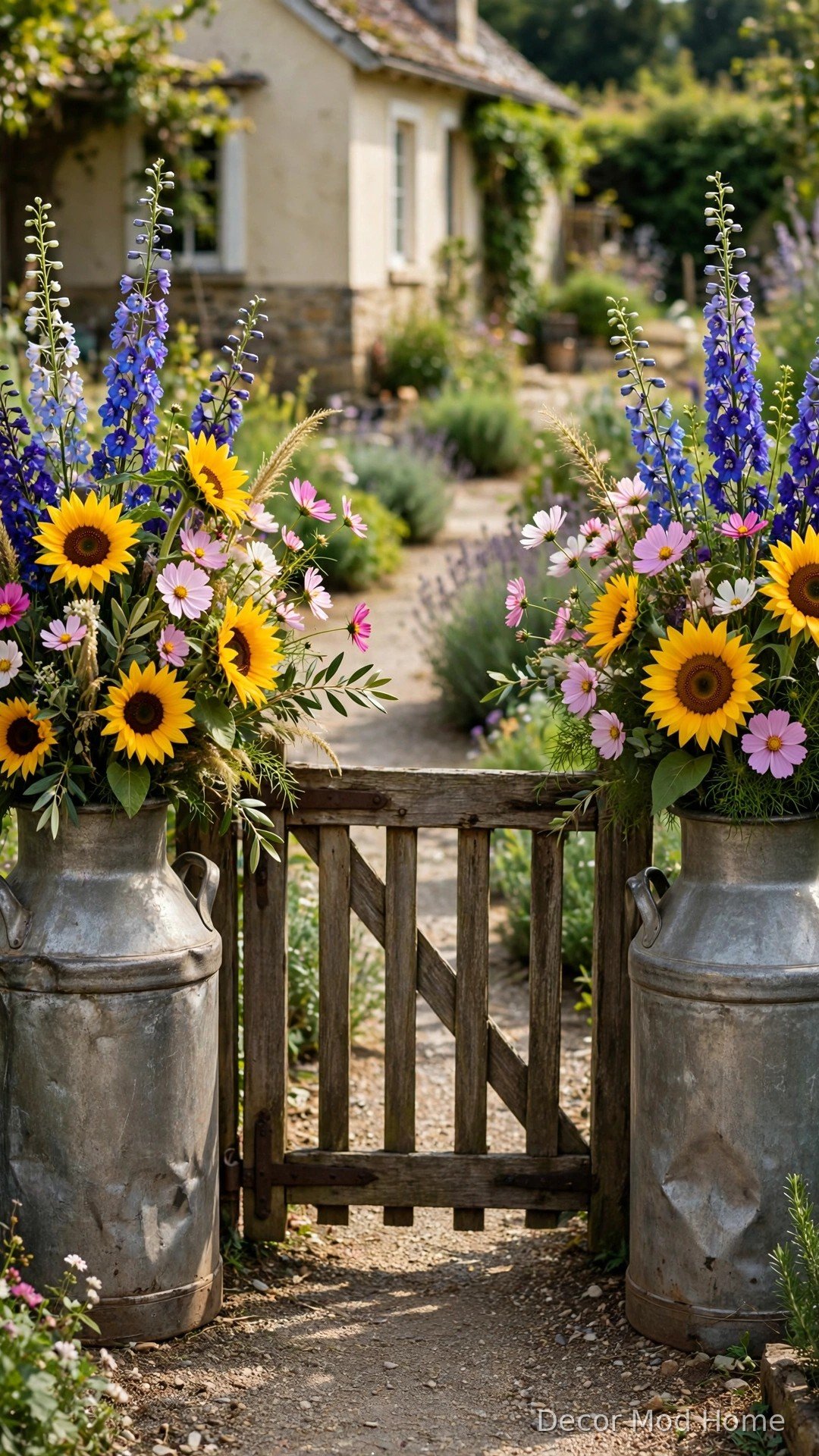
Tall vintage milk cans are made for dramatic flower displays. Drop a plastic bucket of water inside and arrange armfuls of sunflowers, cosmos, or delphiniums for an instant farmhouse statement by the front door. Alternatively, drill drainage holes and plant them directly with ornamental grasses for a permanent fixture. The galvanised or painted finish weathers beautifully, and a pair flanking a gate looks effortlessly grand. Check the base for rust holes before filling — a little sealant fixes most leaks.
21. Turn a Broken Teacup into a Fairy Garden
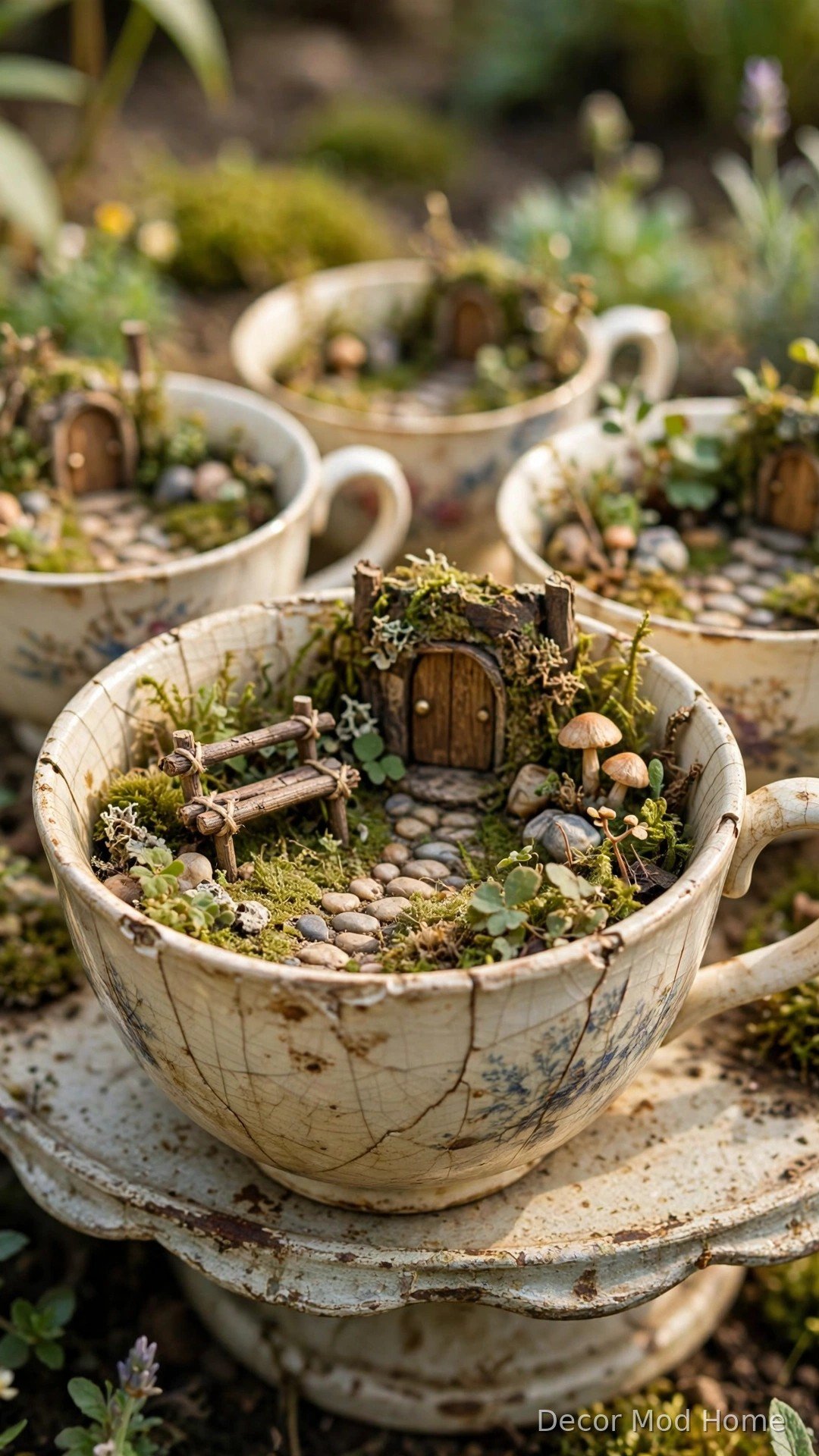
A cracked teacup is the perfect miniature world for a fairy garden. Fill it with fine compost, plant a tiny tuft of Irish moss or baby’s tears as a lawn, and add a pebble path, a twig bench, and a miniature door propped against a mossy stone. A single miniature rose or thyme sprig becomes a full-sized tree at this scale. Cluster several cups on a tray or an old cake stand for a whole fairy village, and mist rather than water to avoid flooding the tiny landscape.
22. Hang Garden Tools on an Old Headboard

A wooden or iron bed headboard screwed to a shed or fence wall becomes a brilliant outdoor tool station. Fit S-hooks along the top rail for hand trowels, twine, and secateurs, screw small jars to the uprights for plant labels and screws, and hang a coil of garden twine from one post. It keeps tools visible and within reach — and it looks a hundred times better than a plastic organiser. A coat of exterior paint in a bold colour turns a practical store into a genuine garden feature.
23. Convert a Metal Wash Tub into a Succulent Bowl

Galvanised wash tubs are wide, shallow, and practically indestructible — ideal for a big, bold succulent arrangement. Drill drainage holes, add a layer of gravel, and fill with gritty compost. Arrange echeverias, sedums, and sempervivums in drifts like a living mandala, tucking in a few decorative stones and a piece of driftwood. Set the tub on a patio table or a low wall where the rosette patterns can be admired from above. One good soak a week is plenty; these tough plants thrive on neglect.
24. Turn a Vintage Radio Cabinet into a Planter Nook

An old wooden radio cabinet — the kind with the fabric speaker grille — makes a quirky little plant shrine. Remove the electronics, line the interior with a tray, and fill it with shade-loving ferns and calatheas that peek through the open back. Keep the dial and knobs intact for retro charm, and stand the cabinet on a covered porch or under a pergola where rain will not reach it. A string of warm fairy lights draped inside turns it into a glowing evening feature.
25. Use Old Picture Frames as Plant Markers
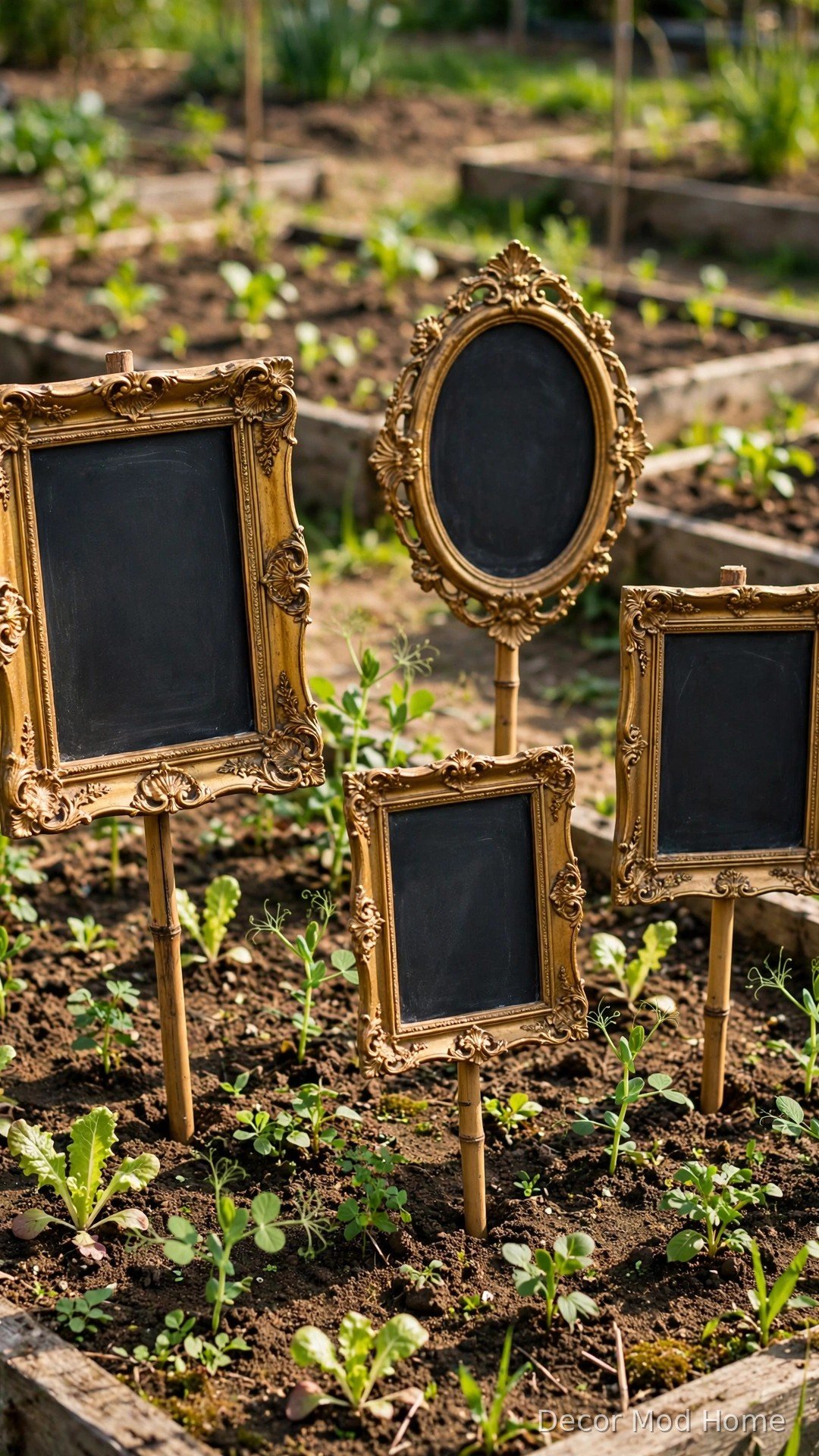
Ornate charity-shop frames, emptied of their art, become the prettiest plant markers in the vegetable patch. Remove the glass, slot a chalkboard or painted card into the frame, and write the variety name in chalk pen. Mount each frame on a short cane or stake pushed into the bed — or lean them against pots on the patio. They survive the season if you seal the backs, and rewriting them each year becomes part of the spring ritual. Gold and white frames look especially smart against dark soil.
26. Fill a Wire Egg Basket with Potted Herbs
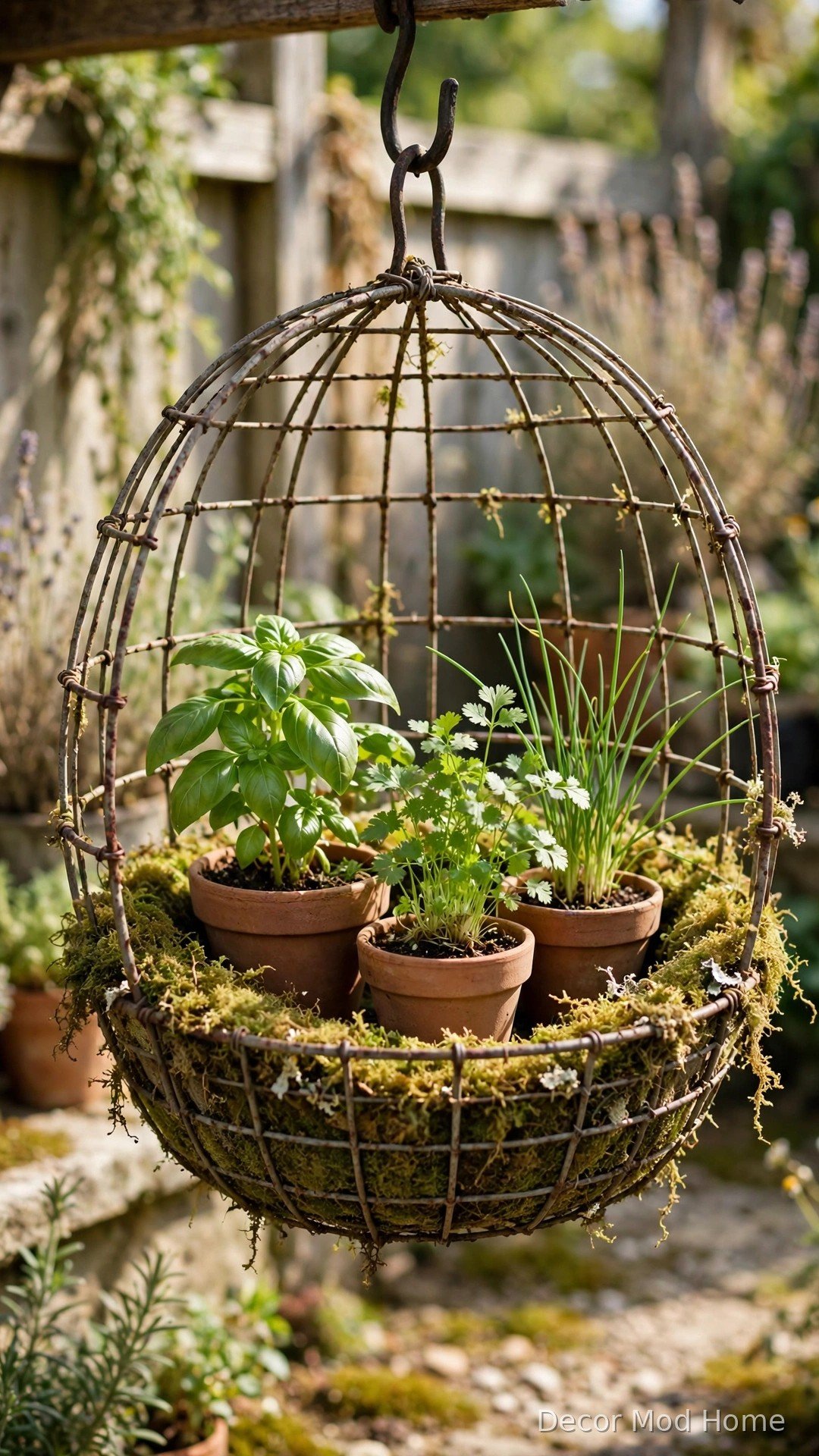
Vintage wire egg baskets are airy, rustic, and perfectly sized for a trio of small herb pots. Line the basket with a little moss to hide the plastic, nestle in pots of basil, coriander, and chives, and hang it from a kitchen-garden hook or set it on the outdoor dining table. Everything stays portable, so the whole basket can move to the sun or come indoors on chilly nights. A second basket filled with cherry tomatoes and basil makes a lovely gift for a fellow gardener.
27. Turn a Rusty Bed Frame into a Climbing Rose Arbour

A cast-iron bed frame is already arbour-shaped — it just needs legs. Sink the headboard and footboard into the ground (or bolt them to sturdy posts), bridge the top with a couple of curved metal rods or a wooden lath, and plant a climbing rose at each corner. Within two seasons the ironwork disappears under blooms and the rust becomes part of the romance. Train the canes horizontally along the frame for the heaviest flowering, and underplant with lavender to hide the bare lower stems.
28. Style a Vintage Typewriter Tray with Seedlings

Old printer’s type trays — with their dozens of tiny compartments — are nature’s seedling nursery. Line each cubby with a pinch of compost, sow one seed per compartment, and label the tray edge with chalk. The shallow cells are perfect for starting lettuce, herbs, and flowers before transplanting. Hang the finished tray on a potting-shed wall as décor between sowings, or fill the compartments with moss and tiny succulent cuttings for a permanent living artwork. Keep it under cover; vintage wood and constant rain are not friends.
29. Turn an Old Drawer Cart into a Rolling Garden

A little wooden drawer unit on castors — the kind once used for sewing supplies — becomes a rolling garden you can chase the sun with. Fill the drawers with herbs, salad leaves, and edible flowers, leaving one drawer for tools and twine. The castors make it easy to wheel under cover when storms threaten, which tender plants will thank you for. Paint the carcass a cheerful colour, stencil the drawer fronts with plant names, and it doubles as a moveable piece of garden furniture.
30. Use Salvaged Shutters as a Garden Room Divider

Pairs of louvred shutters, hinged together, make a freestanding screen that carves a boring garden into “rooms.” Stand them to hide the compost bins, shield a seating nook from the wind, or create a backdrop for a border. Paint them in weathered pastels, leave the louvres open a touch so light filters through, and train a light clematis up one side. Anchor the feet in gravel-filled pots so the screen stays upright in gusts but can still be moved when you redesign the layout.
31. Fill an Antique Watering Can with Wildflowers

A long-spouted antique watering can is the quintessential garden-junk planter. Line it with a plastic pot insert, fill with compost, and plant a froth of wildflowers — cornflowers, poppies, and daisies — that tumble over the rim. Set it beside the tap or on the potting bench as a permanent still life, or carry it to the table as a centrepiece for summer lunches. Brass and copper cans develop the most beautiful patina; lacquer them if you want to freeze the shine, or let them age gracefully.
32. Turn a Wooden Step Stool into a Display Pedestal

A sturdy old step stool gives a prized plant the pedestal it deserves. Sand it smooth, paint it a colour that contrasts with the pot — white stool, terracotta pot, green fern — and use it to lift a favourite specimen above the crowd in a busy border. It is also handy for creating height on a patio display: cluster two or three stools of different heights with trailing plants on top. The steps double as a display for small pots, doubling your planting space in the same footprint.
33. Repurpose a Vintage Sink as a Herb Planter

A Belfast or enamel sink is a ready-made herb garden with drainage built in. Scrub it clean, mount it on a sturdy stand or a pair of old table legs at a comfortable picking height, and plant rows of thyme, sage, rosemary, and chives. The deep basin holds plenty of soil, the plug hole drains perfectly, and the whole thing looks like it was always meant to be there. Position it just outside the kitchen door for the shortest possible journey from plant to plate.
34. Hang an Old Mirror to Double Garden Light

A weatherproofed old mirror hung on a shady fence works like a window into a brighter garden. Seal the back and edges with exterior varnish, choose a spot that reflects the sunniest part of the garden, and watch a dark corner double in light and depth. Frame it with climbing plants — ivy, jasmine, or a rambling rose — so the edges dissolve into greenery and the reflection feels like a secret glade. Avoid placing it where startled birds might fly into it; angling it slightly downward solves that.
35. Turn a Galvanised Bucket into a Mini Pond

A galvanised bucket is the easiest wildlife pond you will ever make: no digging, no liner, no fuss. Fill it with rainwater, add a dwarf water lily in a weighted pot, a handful of oxygenating weed, and a small solar-powered bubbler for movement. Sink a few stones at one edge so visiting frogs and insects can climb out, and surround the bucket with ferns and hostas. Site it where it gets morning sun but afternoon shade, and top it up in hot weather — small ponds evaporate fast.
36. Style a Weathered Bench with Layered Pots

An old wooden bench past its sitting days becomes the stage for your best pots. Arrange a layered display: tall grasses or a small olive tree at the back, medium mounds of geraniums and dahlias in the middle, and trailing bacopa spilling off the front edge. Vary pot materials — terracotta, galvanised zinc, and glazed ceramic — for a collected-over-time look. Tuck the bench against a wall or hedge, drape a faded striped cushion on one end, and you have a vignette that looks straight out of a garden magazine.
FAQs
What exactly is garden junk?
Garden junk is the joyful practice of decorating your garden with repurposed vintage and salvaged items — old ladders, enamelware, crates, bicycles, and the like — styled alongside plants. It is about personality over perfection: weathered patina, chipped paint, and a sense of history, all softened by lush planting. Most pieces cost little or nothing, and every display is one of a kind.
How do I stop old metal items from rusting in the garden?
A little rust is part of the charm, but to slow it down, scrub off loose flakes with a wire brush, then seal the piece with a clear exterior lacquer or rust-converting primer followed by paint. Keep items out of constant standing water, drill drainage holes in anything used as a planter, and bring the most precious pieces under cover in winter. Galvanised and enamelled items resist rust far better than bare iron.
Is it safe to grow food in salvaged containers?
Mostly yes, with common sense. Avoid containers that held chemicals, lead paint, or motor oil, and be cautious with very old painted wood that may contain lead. Line questionable containers with a food-safe plastic pot or landscape fabric so soil never touches the surface, and always use fresh compost. Vintage enamelware, galvanised tubs, and wooden crates are generally fine once cleaned and lined.
Where is the best place to find garden junk pieces?
Car boot sales, flea markets, charity shops, and farm clearances are goldmines — go early for the best picks. Ask neighbours before skip day, watch local freecycle groups, and keep an eye on roadside “free” piles. Auctions and salvage yards yield bigger pieces like doors, baths, and gates. Train your eye to see the planter hiding inside the teapot, and you will never look at a jumble sale the same way again.
Bring Your Garden Junk Story to Life
That is the beauty of garden junk: no two gardens will ever look the same, because no two salvage finds are ever alike. Start with one piece — a ladder, a teapot, a battered old chair — and let it spark the next. Before you know it, the whole garden will be telling your story in rust, wood, and blooms. Which of these 36 vibrant garden junk ideas will you try first? Tell us in the comments, and pin your favourite to save it for your next flea-market adventure.