15 Simple Concrete Patio Ideas to Try This Weekend
A plain grey slab doesn’t have to stay plain. Some of the loveliest outdoor spaces I’ve seen started life as nothing more than a poured rectangle of concrete — and with a little imagination, that blank canvas can become the hardest-working corner of your home. These simple concrete patio ideas prove you don’t need a big budget or a contractor on speed dial to create a space you’ll actually use. From quick weekend upgrades like staining and stencilling to clever styling tricks with lighting, planting and furniture, every idea below is practical, affordable and genuinely doable. Whether your patio is brand new or twenty years old, there’s something here that will make you look at it with fresh eyes.
1. Stain Your Existing Slab for Instant Colour

Concrete stain is the single fastest way to transform a tired patio, and it’s far simpler than most people expect. Unlike paint, stain soaks into the surface and reacts with the minerals in the concrete, giving you rich, variegated colour that won’t peel or flake. Water-based stains come in earthy terracottas, warm walnuts and soft greys that suit almost any garden style. Start by pressure-washing the slab and letting it dry completely, then apply the stain with a pump sprayer in smooth, overlapping passes. Two thin coats beat one thick coat every time. Seal it afterwards with a concrete sealer and you’ll have a patio that looks professionally finished for a fraction of the cost — most homeowners finish the whole job in a single weekend.
2. Try a Concrete Stencil Pattern
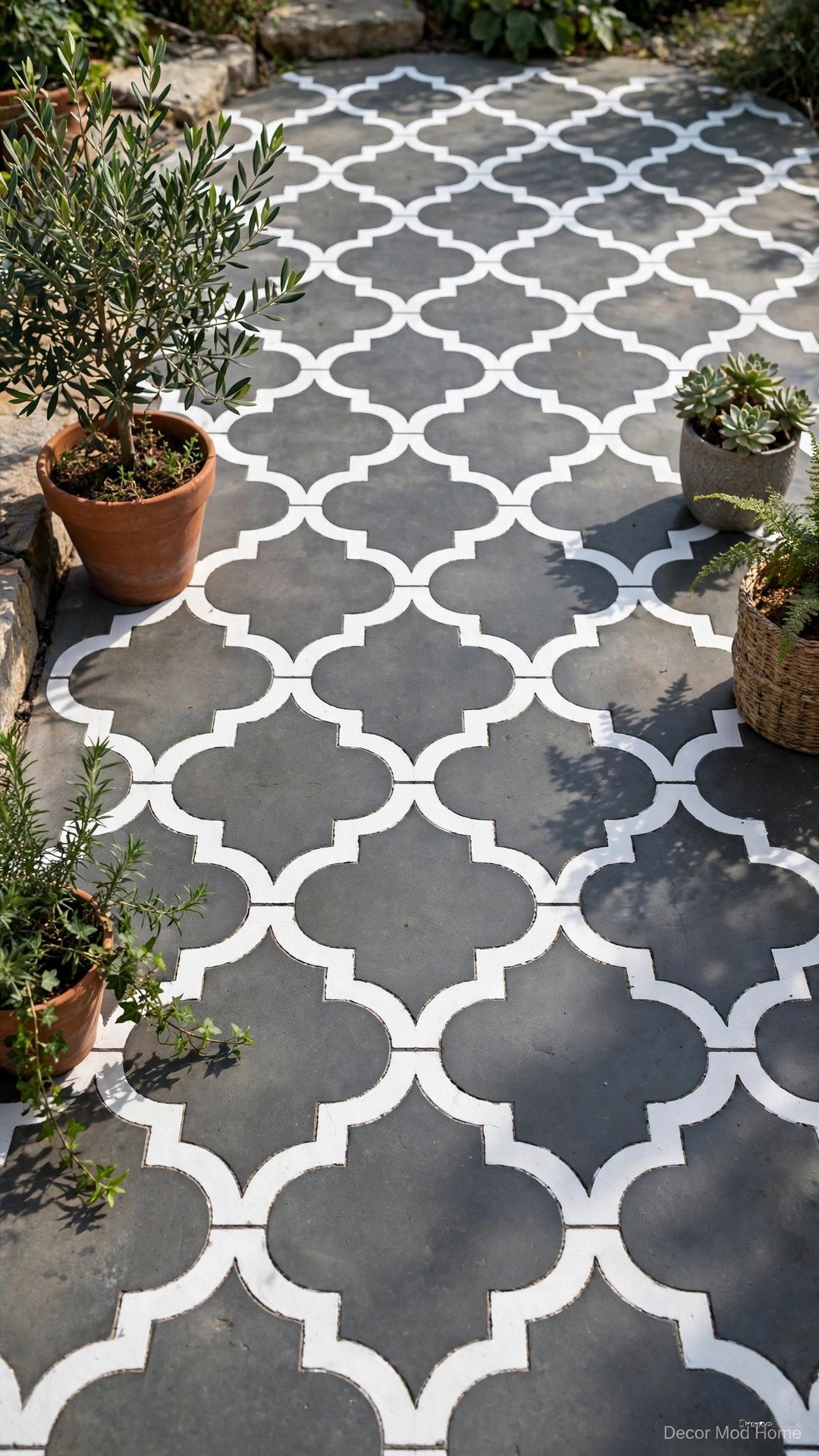
If you love the look of patterned tile but not the price tag, concrete stencils are your answer. Large reusable stencils — think Moroccan quatrefoil, classic damask or simple geometric grids — let you “tile” an entire patio with nothing more than concrete paint and a roller. Tape the stencil down firmly so it can’t shift, then roll the paint on with a dense foam roller, working from the centre of the patio outwards. Lift the stencil carefully, reposition it, and repeat. The trick to a crisp result is using barely any paint on the roller; two light passes give sharper edges than one heavy one. Finish with a clear sealer for durability. The effect is so convincing that guests will genuinely ask where you bought your tiles.
3. Add a Stamped Concrete Border

You don’t need to stamp an entire patio to get the high-end look — a stamped border around the edges delivers most of the visual impact for a fraction of the effort and cost. A 30–45cm border in an ashlar slate or cobblestone pattern frames the space beautifully and makes the whole patio feel designed rather than accidental. If your slab is already down, an overlay product (a thin polymer-modified concrete skim) can be stamped directly on top of the existing border area. Choose a contrasting stain colour for the border — charcoal against warm grey is a classic — and seal it well. It’s a small detail that reads as expensive, and it neatly hides any rough or chipped slab edges too.
4. Paint a Bold Geometric Design

For the brave-hearted, a painted geometric design turns a dull slab into a genuine statement. Painter’s tape, a few tester pots of exterior masonry paint and a free afternoon are all you need. Popular patterns include oversized chevrons, concentric arches and simple diagonal stripes radiating from a centre point. Mark your design lightly in chalk first and step back to check the proportions before you commit. Keep the palette tight — two or three colours maximum — and echo one of them in your cushions or planters so the whole space feels pulled together. A clear concrete sealer over the top protects your artwork from foot traffic and weather, keeping those lines crisp for seasons to come.
5. Frame It with a Gravel Border

Sometimes the simplest upgrades happen off the concrete rather than on it. A gravel border around your patio softens the hard edge where slab meets lawn and gives the whole area a more finished, landscaped feel. Dig a shallow trench about 20cm wide along the patio’s perimeter, lay weed membrane, and fill with a decorative aggregate — Cotswold-style buff gravel or slate chippings both look superb against grey concrete. Use discreet metal or stone edging to keep the gravel in place. The border doubles as practical drainage, stopping muddy splash-back onto the slab during heavy rain. It’s a half-day job that instantly makes a plain patio look like part of a proper garden design.
6. Layer Outdoor Rugs Over Plain Concrete

An outdoor rug is the quickest no-commitment upgrade a concrete patio can get. It hides stains, cracks and discolouration instantly while adding the warmth and pattern that bare concrete lacks. Choose a flatweave polypropylene rug designed for outdoor use — they shrug off rain, hose down easily and won’t go mouldy. Layering works beautifully too: a large neutral jute-look base with a smaller patterned rug on top creates the same cosy depth you’d build indoors. Anchor the rug under your furniture legs so it can’t ruffle in the wind, and bring it in over winter to extend its life. For less than the cost of a restaurant dinner, your patio gains a whole new personality.
7. Build a Simple Fire Pit Centrepiece

Nothing draws people outside like a fire pit, and concrete patios are the ideal safe surface for one. A simple above-ground bowl on legs or a low steel fire pit needs no installation at all — just place it, add seasoned wood, and you’re done. Arrange seating in a loose circle around it: a couple of weatherproof armchairs, a bench, or even chunky floor cushions for a relaxed feel. Keep a heat-resistant mat underneath if your concrete is stained or sealed, and check local rules on open fires first. As dusk falls, the flickering light transforms the whole patio into somewhere magical. It’s the one addition most likely to double how often you actually use the space.
8. Edge with Chunky Timber Sleepers

Timber sleepers laid along the patio’s edge create a warm, rustic frame that contrasts beautifully with cool grey concrete. New or reclaimed railway-style sleepers both work; simply bed them on a shallow layer of compacted gravel so they sit level and drain freely. Beyond looks, they’re practical — they double as casual extra seating, keep mulch and soil off the slab, and define the patio’s boundary with real presence. Treat them with an exterior wood oil once a year to keep the colour rich and the timber sound. If your patio sits slightly above lawn level, a single course of sleepers also makes a neat, safe step down. Rustic, sturdy and full of character.
9. Add Raised Planters Along the Edges
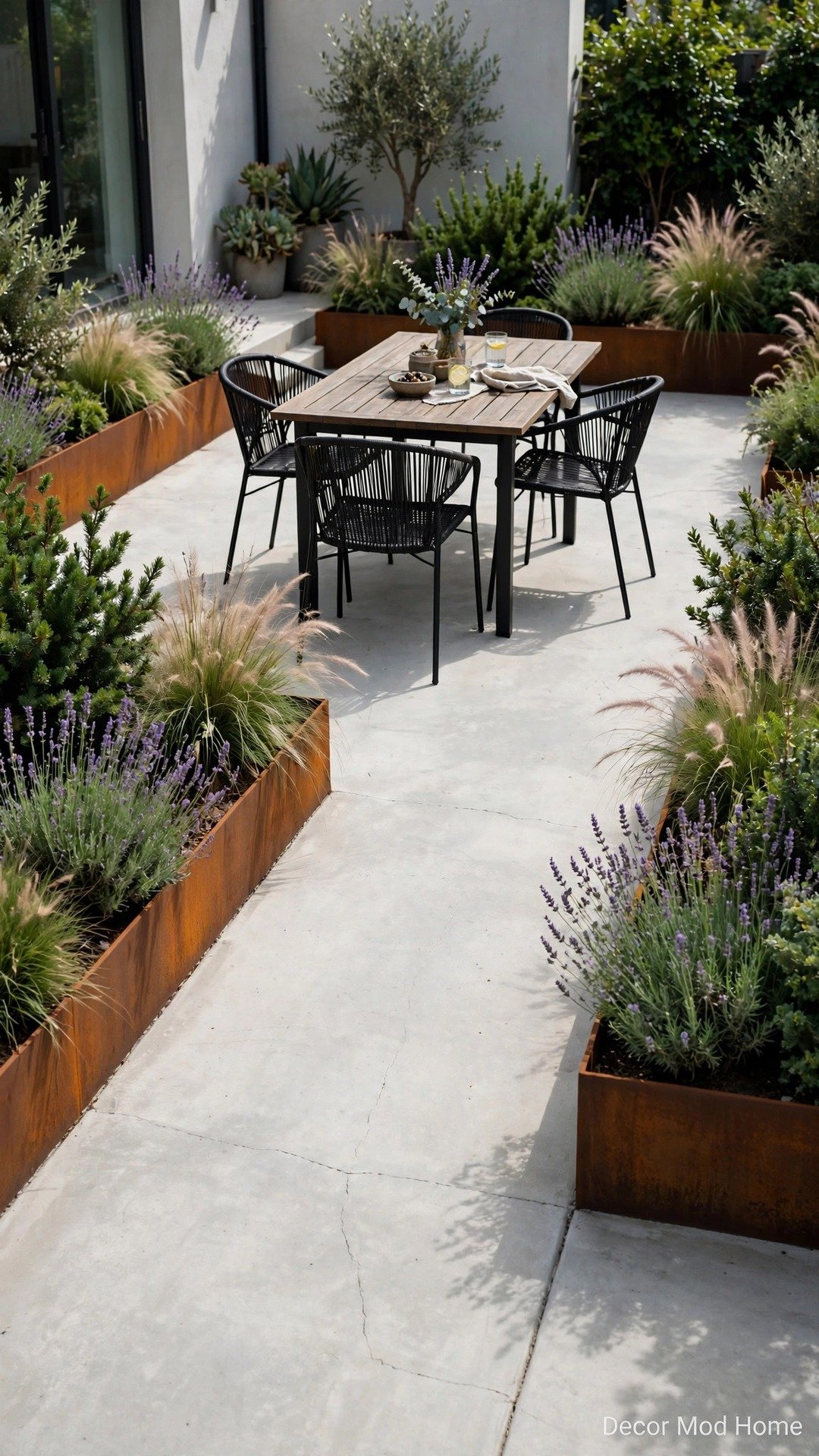
Raised planters turn the perimeter of a concrete patio into a living, breathing border. Slim rectangular planters in corten steel, rendered block or simple timber sit neatly along the edges without eating into your usable space. Fill them with a mix of heights — ornamental grasses for movement, lavender for scent, and a few evergreen shrubs for year-round structure. Drip irrigation on a timer takes the watering chore off your hands entirely. Planters also solve the classic problem of a patio that feels exposed: a row of well-planted boxes creates privacy and softness in a single afternoon. Group them in odd numbers and vary the heights for a professionally designed look.
10. String Up Festoon Lights Overhead

Festoon lights are the fastest way to make any patio feel like an occasion. A few strings of warm-white outdoor festoon lights, swagged between the house wall and a couple of sturdy posts or a nearby tree, cast the kind of golden glow that makes everything — and everyone — look better. Use proper catenary wire or a tensioned cable so the strings don’t sag, and choose shatterproof LED bulbs for safety and low running costs. A plug-in timer means they switch on by themselves every evening. From a plain concrete slab to a candlelit bistro terrace in under an hour: it’s the highest-impact-per-pound upgrade on this entire list.
11. Create Zones with Outdoor Furniture

A large plain patio feels aimless; zones give it purpose. Think of your concrete slab the way you’d think of an open-plan living room and carve it into areas: a dining zone with a table and chairs near the kitchen door, a lounging zone with a sofa set and coffee table, maybe a quiet reading corner with a single armchair and side table. Outdoor rugs help define each zone visually without any construction. Arrange furniture to face inward within each zone so each area feels like its own little room. Even a modest patio comfortably holds two zones, and suddenly the space works twice as hard — dinner one end, coffee the other, all on the same slab of concrete.
12. Install a Simple Pergola or Shade Sail

Overhead structure changes everything about how a patio feels. A simple timber pergola — four posts and a slatted roof — adds architecture, dappled shade and somewhere to hang lights or climbing plants. If a pergola feels like too much, a triangular shade sail does the same job for a fraction of the cost: three fixing points, a tensioned fabric sail, and instant cool shade over your seating area. Position it over the part of the patio you use most in the afternoon sun. Choose a sand or charcoal sail to suit your scheme, and take it down before winter storms. Either option turns an exposed slab into a proper outdoor room with a ceiling.
13. Soften the Edges with Potted Plants

Plants are concrete’s best friend. Where hard grey meets soft green, the whole patio comes alive — and pots let you add that softness with zero digging. Cluster pots in threes at the patio’s corners and flanks, mixing heights and leaf textures: a small olive or bay tree for structure, grasses for movement, trailing plants to spill over the rims. Stick to two or three pot materials — terracotta, charcoal fibre-clay or natural stone — for a cohesive look rather than a jumble. Big pots make more impact than lots of small ones and need watering less often. In one afternoon, your stark slab gains the layered, established feel of a proper garden.
14. Add a Small Water Feature

The gentle sound of moving water makes a patio feel like a retreat, and modern water features need no plumbing at all. Self-contained stone or slate fountains simply sit on the concrete, plug into an outdoor socket, and recirculate their own water. Place one where you’ll hear it from your favourite seat — near the house wall or in a quiet corner works best. The moving water also attracts birds, adding life and movement to the space. In winter, just empty it and cover it to protect the pump. It’s a small luxury with an outsized effect on atmosphere: suddenly your simple concrete patio feels like a spa garden.
15. Finish with Solar Path Lighting

The final touch that makes your patio usable after dark is also the easiest: solar lighting. Stake solar path lights along the patio’s edges and gravel borders, and they’ll charge all day and glow automatically at dusk — no wiring, no electrician, no running costs. Choose warm-white (around 2700K) rather than cool blue-white for a welcoming glow that flatters both the concrete and your guests. Add a couple of solar lanterns or a string of solar fairy lights in the planters for extra sparkle. Good lighting extends your patio’s usable hours deep into the evening and makes the whole garden feel safe and magical after sunset.
FAQs About Simple Concrete Patio Ideas
What is the cheapest way to make a concrete patio look better?
A pressure wash followed by concrete stain or paint is the cheapest transformation — often under the cost of a weekly shop for an average patio. Stain soaks in and lasts for years, while a stencilled pattern on top gives a tiled look for the price of a tin of paint.
Can you put a fire pit directly on a concrete patio?
Yes, concrete is one of the safest surfaces for an above-ground fire pit, but use a heat-resistant mat underneath to protect any stain or sealer from heat discolouration. Keep the pit at least a metre from the house wall and any overhanging structures, and never use a fire pit on concrete less than three months old.
How do I stop my concrete patio looking cold and grey?
Warm it up with the three W’s: wood (furniture, sleepers, decking tiles), weave (outdoor rugs and textiles) and wildlife-friendly planting. Warm lighting — festoon lights or solar lanterns in warm white — does the rest, especially in the evening.
Do I need to seal a painted or stained concrete patio?
Yes — a good concrete sealer protects colour from UV fading, stops water soaking in over winter, and makes the surface far easier to clean. Reapply every two to three years, or when water stops beading on the surface.
A Patio You’ll Actually Use Every Day
A concrete patio is one of the most honest spaces in a home — no pretence, just a solid foundation waiting for your personality. As you’ve seen, you don’t need a demolition crew or a designer budget: a tin of stain, a string of lights, a few well-chosen plants and some comfortable seating will take you most of the way. Pick the two or three ideas that excited you most and start this weekend — even a single afternoon’s work will change how the space feels. Then pour yourself something cold, step outside at dusk, and enjoy the patio you’ve been walking past for years. If you try any of these ideas, we’d love to hear which one made the biggest difference.