
15 Serene Garden Pathway Ideas with Stone Walkways
A garden path is more than just a way to get from the back door to the shed — it shapes how you feel every time you step outside. When it comes to creating a truly calming outdoor space, serene garden pathway ideas with stone walkways top the list for a reason. Stone feels permanent, natural, and grounding; it softens the edges of a landscape and invites you to slow down, notice the scent of herbs underfoot, and take the long way around the flower beds.
In this guide, I have rounded up fifteen serene garden pathway ideas with stone walkways that work for every garden size and budget, from simple stepping stones set in moss to elegant limestone paths lit with warm evening light. Each idea includes practical tips on materials, layout, and upkeep so you can plan with confidence and build a walkway that looks beautiful for years. Grab a cup of tea and let us wander through them together.
1. Flagstone Path Lined with Lavender

Flagstones are the classic choice for a serene garden path because their irregular edges feel organic rather than manufactured. Plant lavender along both edges so its scent releases every time you brush past, and add a few low boxwood balls for structure. Lay the stones on a four-inch bed of compacted gravel topped with sharp sand so water drains freely and the path never feels squishy. Brush the joints clear of soil twice a year and trim the lavender after flowering to keep the path edge crisp.
2. Stepping Stones Set in Soft Moss
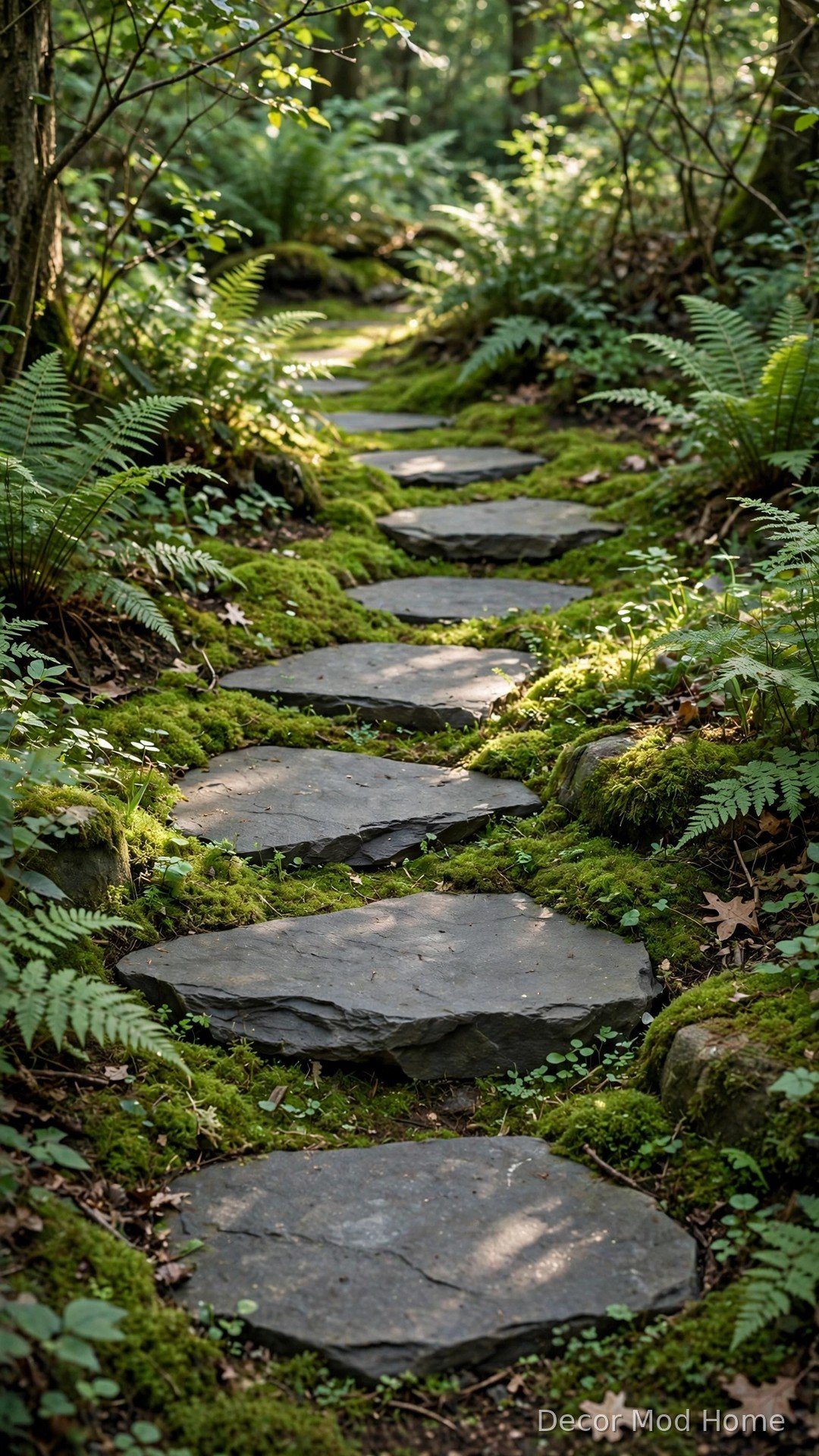
There is something deeply peaceful about hopping across stepping stones nestled in a carpet of moss. This idea works beautifully in shady corners where grass refuses to grow. Pick large, flat stones — slate, granite, or reclaimed pavers — and space them so one natural stride lands comfortably on each, roughly fifty to sixty centimetres apart centre to centre. Prepare the ground with a weed membrane and a shallow sand bed, then seat each stone firmly with a rubber mallet. Sweep leaves off regularly because rotting leaves smother moss. The result is a quiet, woodland-style path that looks like it has been there forever.
3. Gravel Path Framed by Large Stone Pavers
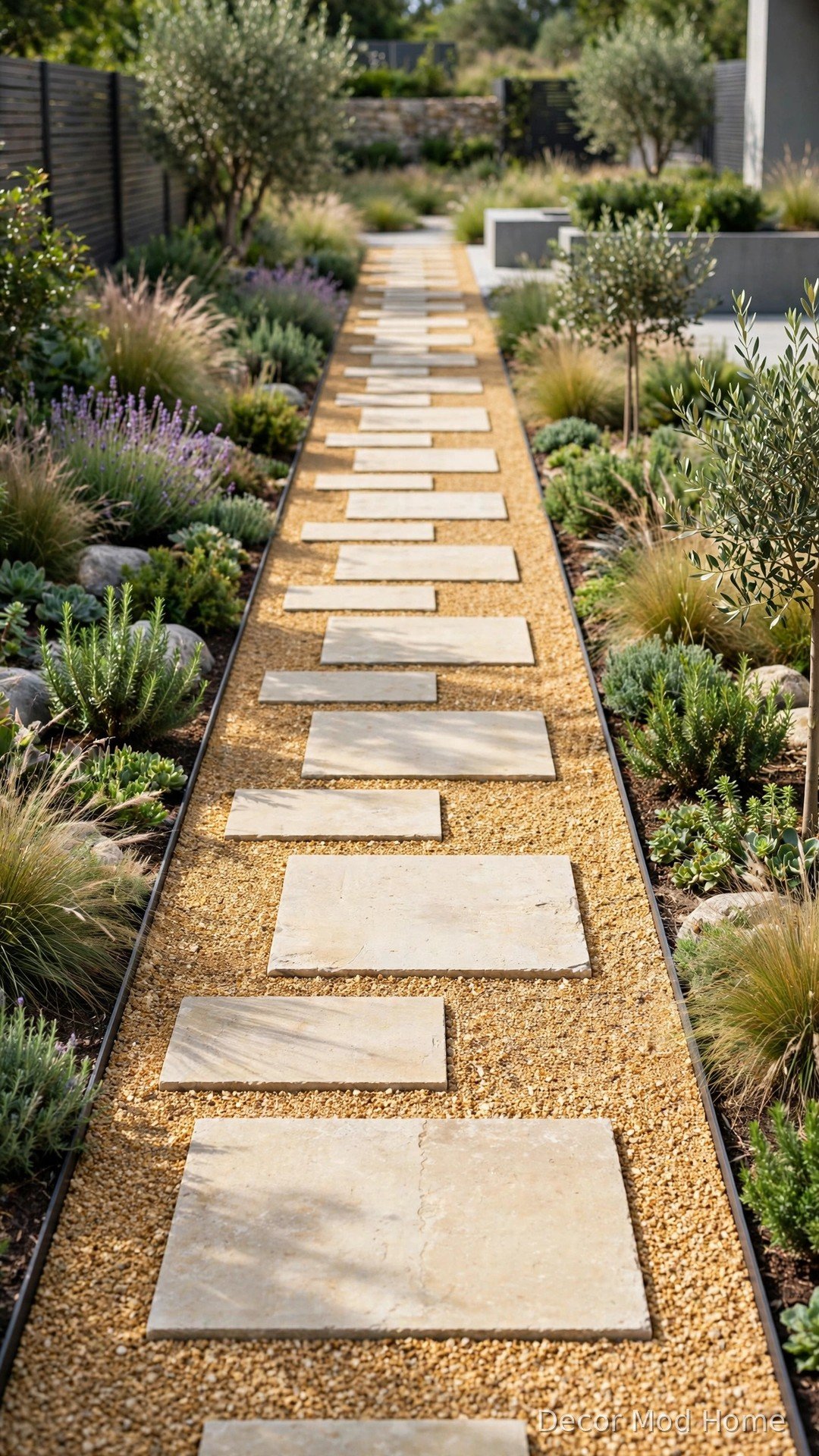
Combining gravel with oversized stone pavers gives you the best of both worlds: the crunch of gravel underfoot and the solid, confident footing of stone. Lay a weed-suppressing membrane, then spread four to six centimetres of angular gravel in a warm colour like Cotswold or golden pea gravel. Set large rectangular pavers — limestone or concrete with a stone finish — in a staggered rhythm down the centre, leaving them slightly proud of the gravel so they shed water. Edge the path with slim steel strips or stone setts to stop gravel migrating into the beds. Rake the gravel level monthly and top it up yearly. This style suits modern gardens perfectly, and the pavers make the walk effortless even in wellies on a wet morning.
4. River Rock Borders with Slate Slabs

Slate slabs bring drama and calm at the same time — their dark, layered tones make green planting pop. Set broad rectangular slate slabs on a solid compacted base, spacing them evenly, and fill the gaps with smooth river rock in cream and grey tones. The contrast between the dark flat slabs and the pale rounded pebbles is striking yet restful. Use a galvanized steel edge to keep the pebbles contained and the line tidy. One practical note: dark slate can get warm in strong sun, so in hot climates consider lighter stone instead. Sweep pebbles back into the joints after heavy rain, and the path will look freshly groomed with minimal effort.
5. Stone Walkway with Warm Solar Lanterns

A path that glows softly at dusk turns your garden into an evening sanctuary. Start with any stone base you love — flagstone, pavers, or stepping stones — and focus the design on lighting. Place solar lanterns at staggered intervals, alternating sides so the light leads your eye forward rather than lining up like a runway. Choose warm-white LEDs (around 2700K) for a candle-like glow, and pick lanterns with real glass so they age gracefully. Charge-free solar stakes are the easiest option; just make sure the panels get at least six hours of direct sun. This is the path you will walk every evening, cup of tea in hand.
6. A Gently Curving Path Around Flower Beds

Straight paths feel efficient; curved paths feel like an invitation. Laying your stone walkway in a gentle S-curve around planting beds instantly makes the garden feel larger and more mysterious, because you cannot see the whole journey at once. Use flexible materials like flagstone or small setts to follow the curve without awkward cuts — large rectangular pavers fight curves and create waste. Mark the curve with a garden hose before you dig, step back, and check it from your kitchen window; the view from inside matters just as much. Plant taller blooms on the outside of bends so they screen the view ahead and reward you with a new reveal at every turn.
7. Stone Steps Through a Terraced Garden

If your garden slopes, a stone-stepped pathway turns a challenge into the prettiest feature in the yard. Build chunky steps from natural stone or thick-cut slabs, keeping each riser no higher than fifteen centimetres so the climb feels easy and safe. Add a low dry-stone or rendered wall beside the steps to create terraces, and plant the levels with lavender, catmint, and trailing rosemary that spill softly over the edges. Make sure each step has a slight forward tilt so rain runs off rather than pooling. Fit a discreet handrail or a solid planting edge on one side if the drop is more than a few steps — safety should never be sacrificed for looks.
8. A Waterside Stone Path by the Pond

There is a special kind of stillness that water brings to a garden, and a stone path running alongside it doubles the effect. Lay wide, flat stones with a rough, slip-resistant finish — honed stone looks elegant but gets treacherous when wet, so choose riven or tumbled surfaces instead. Keep the path slightly above the waterline and slope it gently away from the pond so runoff does not carry debris in. Plant iris, hostas, and creeping jenny along the far edge for lush texture. A simple wooden bench at the far end of the path gives you a destination — and honestly, this may become your favourite spot in the whole garden.
9. Japanese-Inspired Stepping Stone Path
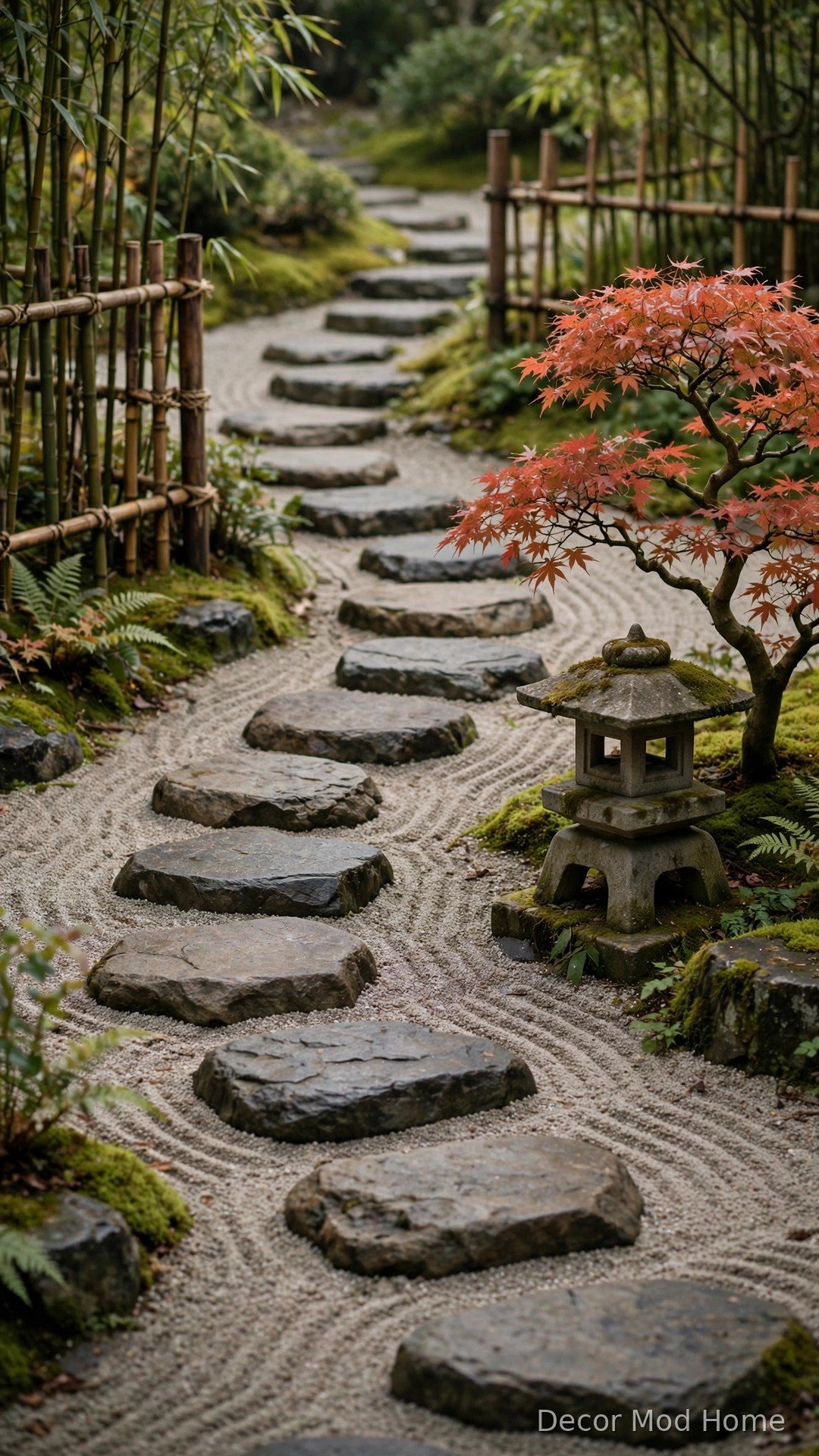
Japanese garden design has perfected the art of the serene pathway over centuries, and you can borrow its principles without building a full Japanese garden. The key is irregularity: stones of different sizes placed in a relaxed, meandering rhythm, each one large enough to stand on comfortably. Set the stones directly into raked gravel or fine moss, keeping them level with the surface so they feel like part of the ground rather than objects on it. Add a stone lantern, a pruned maple, or a simple bamboo screen nearby to complete the atmosphere. Rake the surrounding gravel into gentle patterns if you are feeling meditative — it is optional, but oddly satisfying. Walk the path slowly when you test the layout; a Japanese-style path is meant to be savoured, never rushed.
10. Stone Pathway with Creeping Thyme Between Joints

Planting creeping thyme in the joints of a stone path is one of those ideas that looks like a dream and smells even better. The plants will knit together within one growing season, releasing a sweet herbal scent every time you step on them. Keep foot traffic moderate while it establishes, and avoid weedkiller anywhere near the path. Thyme loves full sun and sharp drainage, so this works best on paths that get at least six hours of sun. Once established, it needs almost nothing — an occasional trim after flowering keeps it dense. Butterflies adore it too, which adds movement and life to your peaceful walk.
11. Old-World Cobblestone Charm
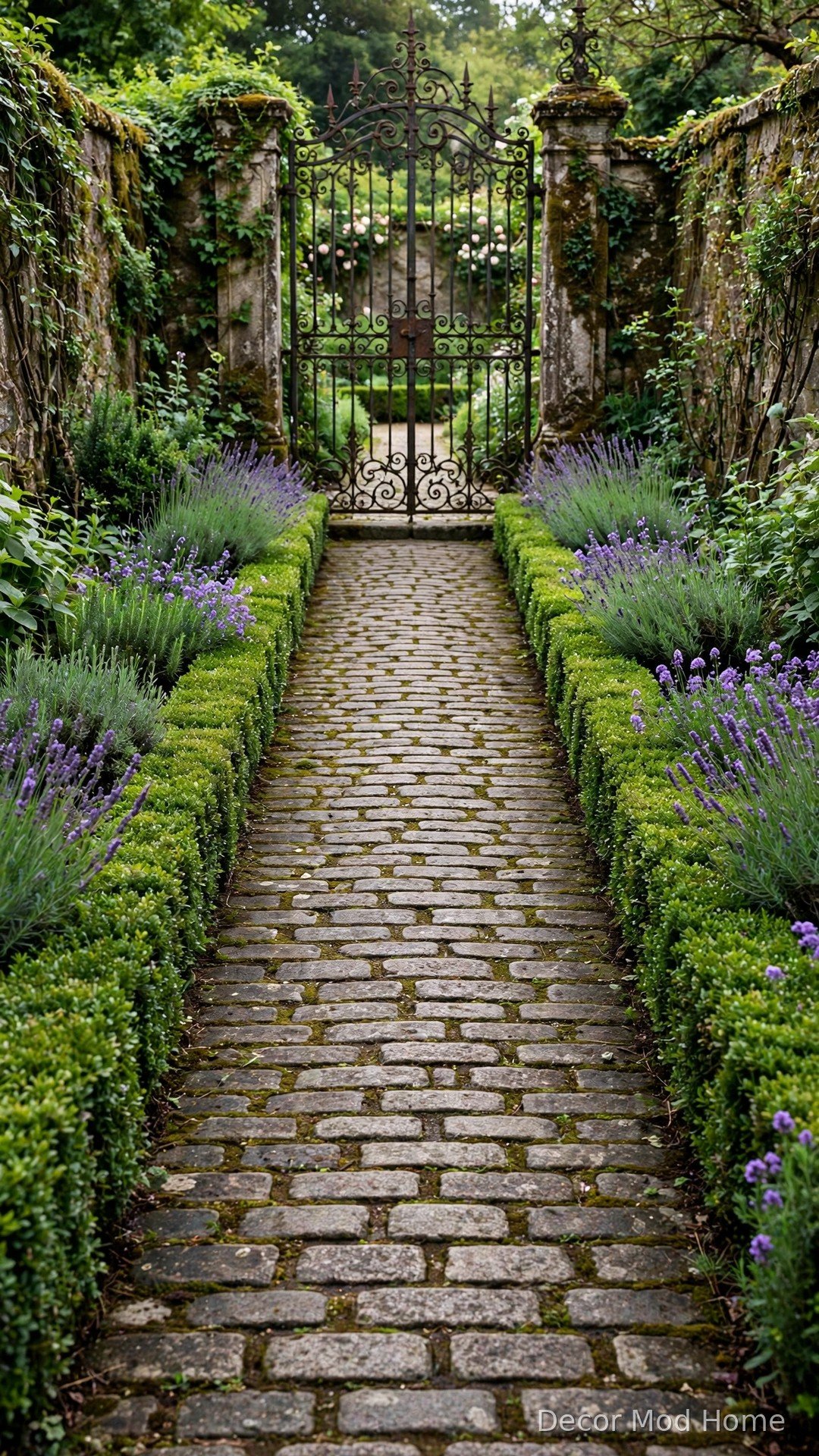
Cobblestones bring a romantic, old-world feeling that instantly makes a garden feel established and storied. Use reclaimed granite setts or new tumbled cobbles laid in a running bond or fan pattern on a compacted aggregate bed with sand joints. The slightly uneven surface is part of the charm, but keep the variation subtle — a path that twists ankles is not serene. Plant low boxwood or lavender hedges alongside to echo formal European gardens, and consider a wrought-iron gate at one end for the full effect. Cobbles need very little maintenance beyond occasional re-sanding of the joints, and they age gracefully, softening in colour over decades.
12. White Limestone Path for a Bright, Airy Feel
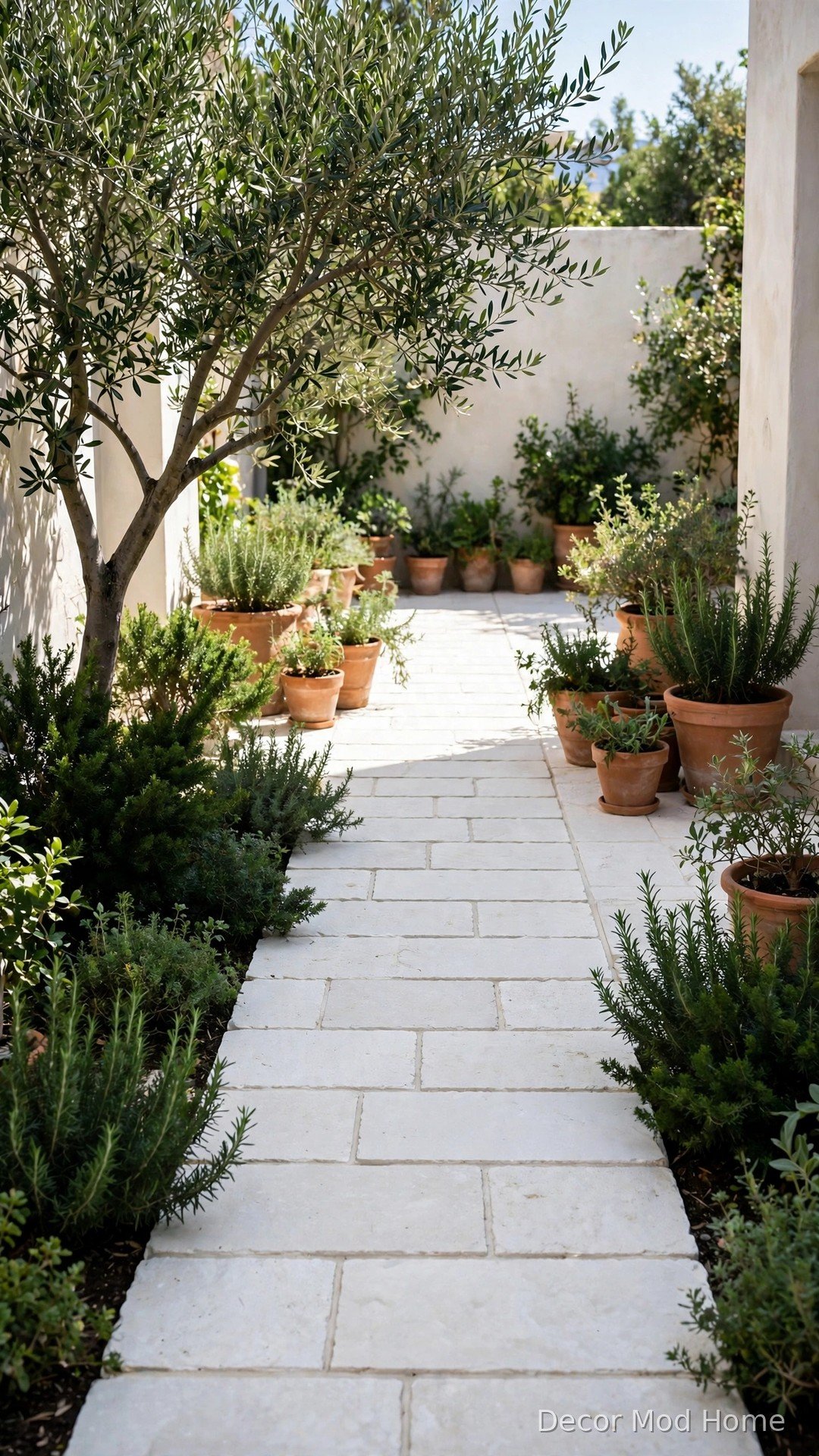
White or cream limestone transforms a shady or narrow garden by bouncing light around and making everything feel fresher. Lay large-format limestone slabs with tight, even joints for a clean contemporary look, or choose riven slabs for more texture. The pale surface shows less dust and looks crisp against dark green planting — think olive trees, dark laurels, or deep-toned grasses. Seal the stone with a breathable natural-stone sealer to resist staining and make leaf marks easier to wash off. In small courtyards this single change — pale stone underfoot — can make the space feel twice as large.
13. Stone Walkway Beneath a Flowering Arch
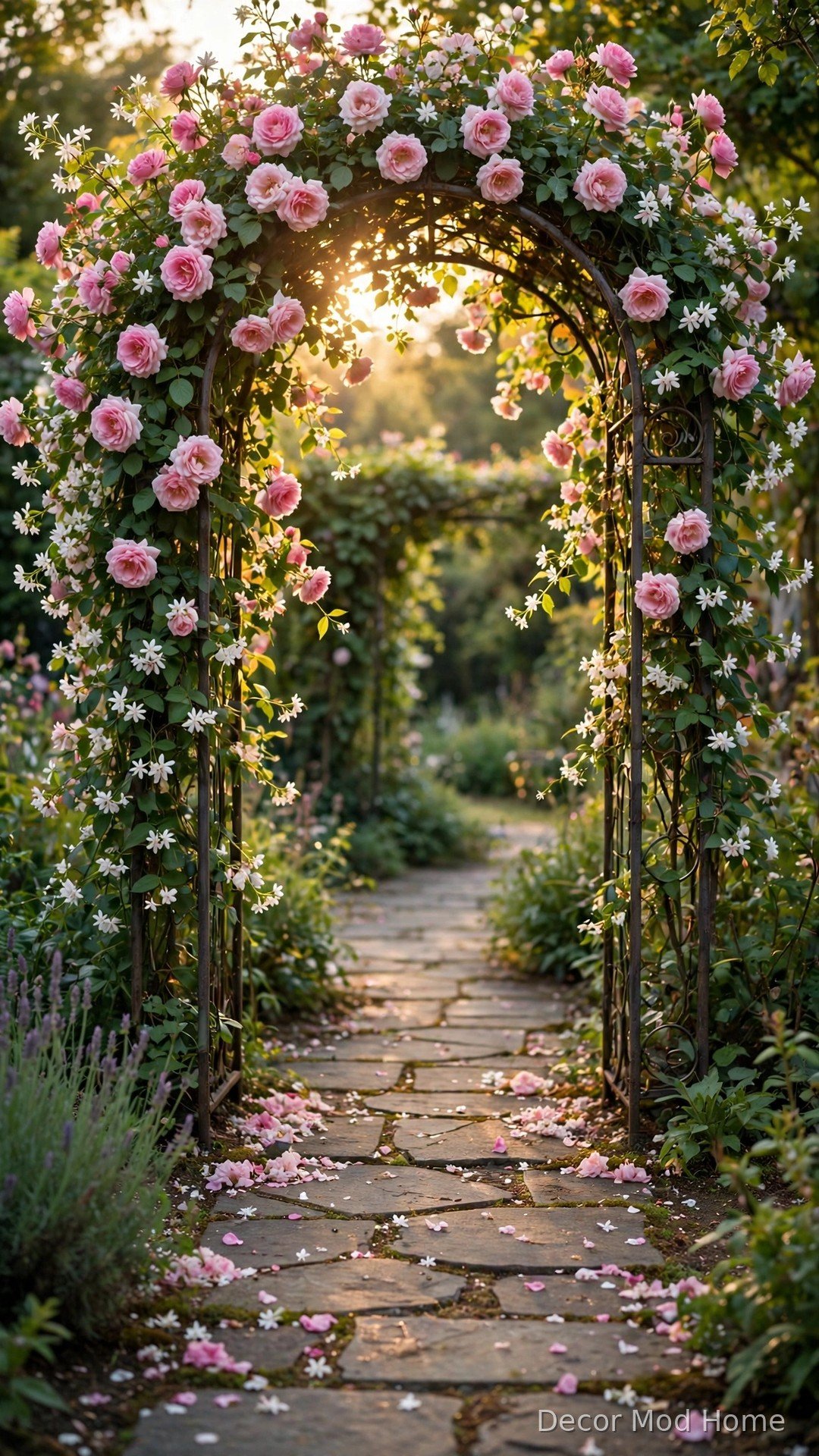
Walking beneath an arch heavy with roses or wisteria is one of gardening’s great pleasures, and a stone path underneath makes it a destination rather than a glimpse. Position a sturdy metal or wooden arch across your walkway — at least two metres tall so tall visitors walk through comfortably — and plant a vigorous climber at each foot. Stone flagstones or cobbles beneath handle the shade and leaf drop better than gravel, which climbers’ roots love to colonise. Prune climbers so the archway stays open above head height and light still reaches the path. This idea works wonderfully as a threshold between two garden areas: the front lawn and the hidden terrace, say. Add a scented climber like jasmine or honeysuckle, and the arch becomes a full sensory moment, not just a visual one.
14. A Night-Lit Stone Path with Uplighting
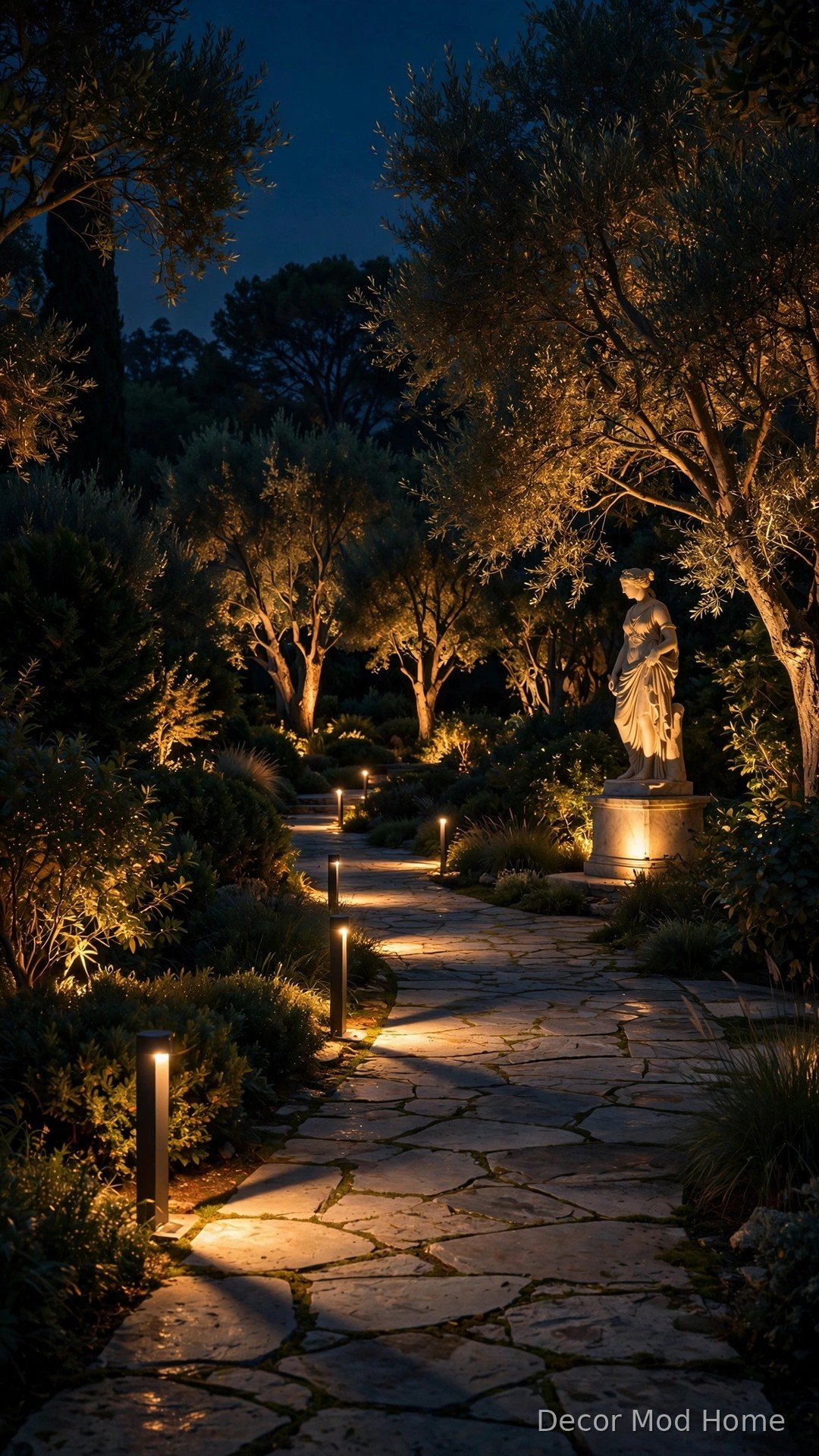
Professional gardens look stunning after dark, and the secret is uplighting rather than path lights alone. Combine low bollards or spike lights along the stone walkway with a few uplights aimed at a tree, wall, or sculpture nearby. The layered light creates depth and shadows that make the garden feel three times bigger at night. Choose 2700-kelvin LED fittings with a wide beam for a soft wash rather than harsh spots, and bury the cables properly — no one wants a tripping hazard on their serene path. Stone paths photograph beautifully under uplighting, so if you love sharing your garden on Pinterest or Instagram, this is money well spent.
15. Pergola-Shaded Stone Walkway
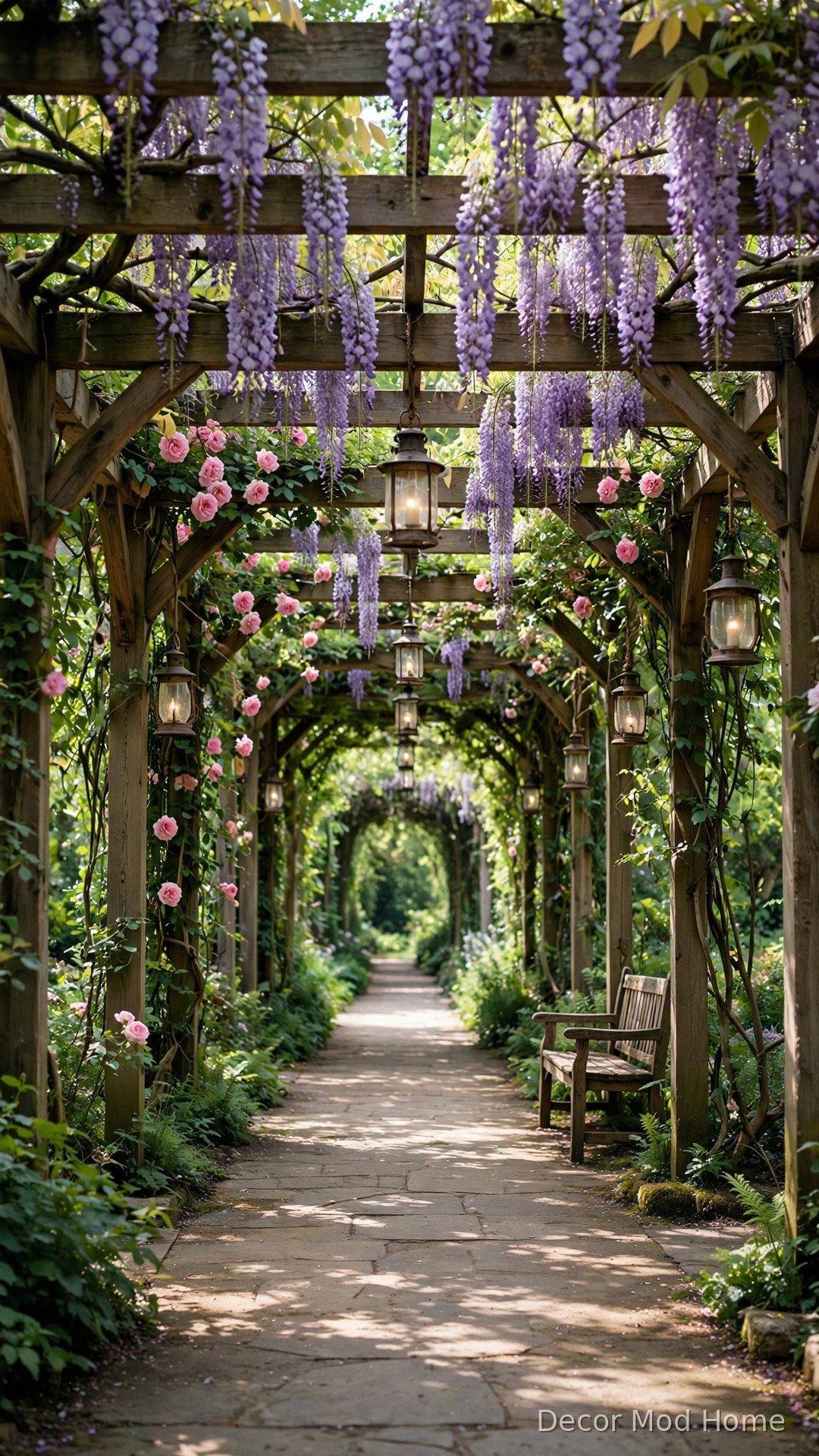
A pergola over your stone walkway creates the ultimate garden room: dappled shade, a sense of enclosure, and a frame for climbing plants. Build or buy a pergola at least 2.4 metres tall so the space feels generous, and anchor the posts in concrete footings for stability. Lay a wide stone path beneath — flagstone or large pavers — wide enough for two people to stroll side by side, around 1.2 to 1.5 metres. Plant wisteria, grape vines, or climbing roses to grow over the top; deciduous climbers are ideal because they give shade in summer and let light through in winter. This is the pathway you will end up showing every visitor.
Frequently Asked Questions
What is the cheapest stone material for a garden pathway?
Gravel paired with a few large reclaimed pavers is the most budget-friendly way to build a stone walkway. Angular gravel costs very little per square metre, spreads quickly over a membrane, and needs no special skills to lay. Watch local classifieds and reclamation yards for second-hand slabs — they are often a fraction of the price of new stone and bring lovely character. Pea gravel and Cotswold stone chippings both look far more expensive than they are, especially when edged neatly. Even a small project — say a three-metre path — can be finished in a single weekend for a modest outlay if you do the digging yourself.
How do I stop weeds growing between the stones on my path?
Prevention starts at installation: lay a permeable weed membrane under the whole path and set stones on a mortar or compacted aggregate bed rather than bare soil. For existing paths, the best defence is density — plant ground covers like creeping thyme, Irish moss, or Corsican mint in the joints so weeds have nowhere to take hold. Sweep the joints clear of soil and leaf debris regularly, because weeds germinate in the organic matter that collects there. A targeted flame weeder or boiling water works well for spot treatment without chemicals. Whatever you do, avoid pressure-washing sand joints aggressively, as it blasts out the sand and opens fresh space for weeds.
Which stone is best for a garden path that gets a lot of rain?
In wet climates, drainage matters more than the stone itself. Choose riven or tumbled stone with a naturally textured surface for grip — granite, sandstone, and slate all work well when they are not polished smooth. Lay the path on a free-draining sub-base of crushed aggregate at least ten centimetres deep, and slope the finished surface one to two percent away from the house or beds so water runs off. Avoid limestone in very damp, shady spots as it can become slippery with algae; a yearly scrub with a stiff brush and diluted outdoor cleaner keeps any stone safe. Permeable gravel-stone combinations are excellent because water simply falls through the gaps.
Do stone garden paths need much maintenance?
One of the joys of a stone walkway is how little it asks of you. A well-laid path needs little more than a sweep now and then, an annual wash-down, and occasional re-sanding of the joints every couple of years. In shady spots, watch for moss and algae on north-facing surfaces and scrub them in spring before they get slippery. Frost rarely damages quality stone, but check for rocking slabs each spring and re-bed any that have moved over winter. Done properly, your serene stone pathway will look better with age and ask for almost nothing in return.
A Path Worth Wandering
A serene garden pathway with stone walkways is one of the most rewarding projects you can take on — it changes not just how your garden looks, but how it feels to be in it. Whether you choose the romance of cobblestones, the calm of moss-set stepping stones, or the drama of a pergola tunnel, the best path is the one that makes you slow down and notice the world around you. Pick the idea that speaks to you, start with a weekend-sized section, and enjoy watching it come together. When yours is finished, I would love to see it — share a photo with the Decor Mod Home community, and explore our other outdoor guides for more ways to make your garden your favourite room of the house.