
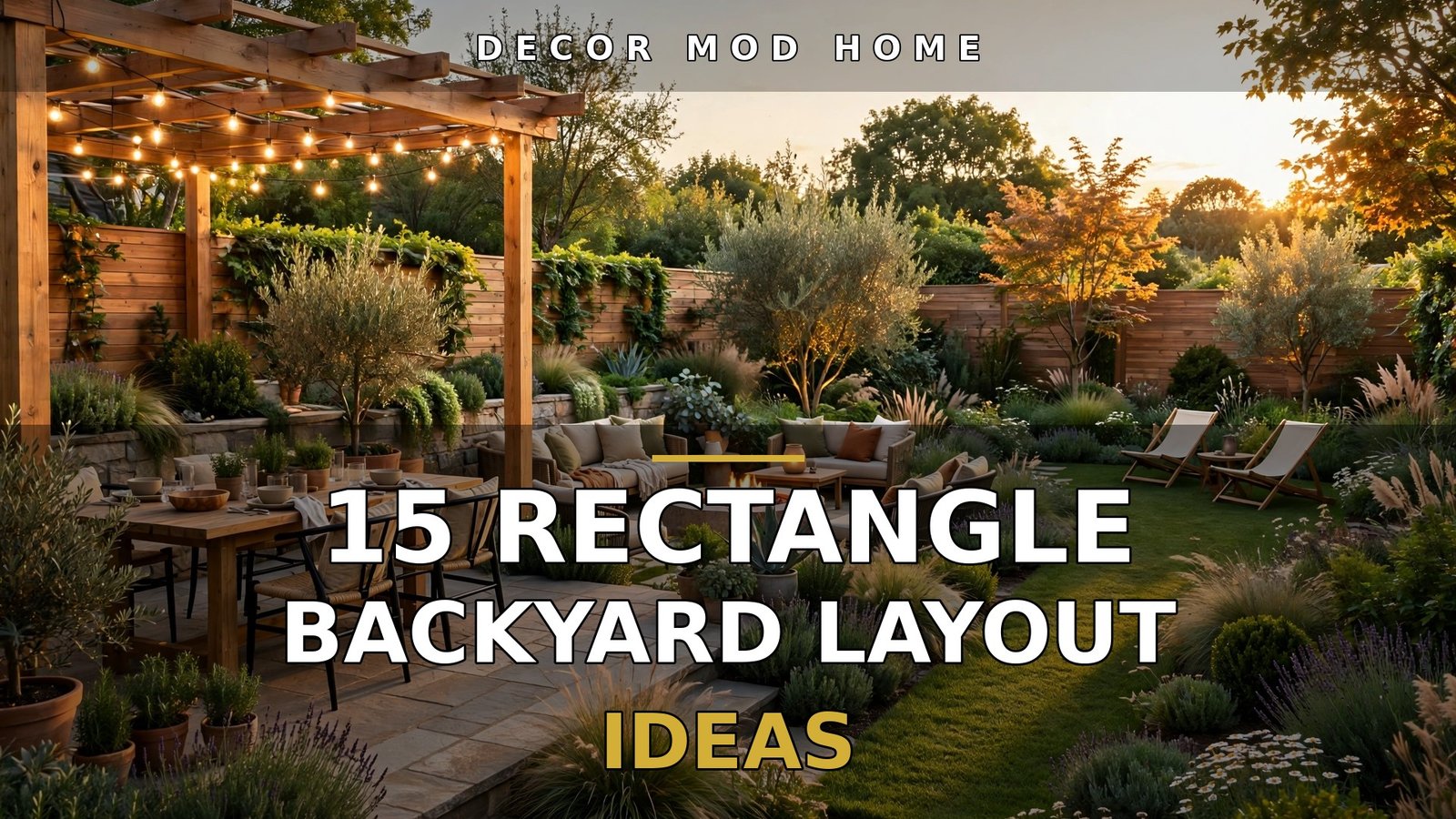
15 Rectangle Backyard Layout Ideas That Maximize Space
A long, narrow yard can feel like a puzzle — too skinny for a sprawling lawn, too stretched for one big patio. But here is the good news: a rectangle is actually one of the easiest shapes to design well. These rectangle backyard layout ideas will show you how to turn that predictable strip of grass into a layered, intentional outdoor retreat. The secret is thinking in zones instead of one big space: a dining terrace near the house, a lounge or fire pit in the middle, and a green destination at the far end. With clear sight lines, smart paths, and planting that hugs the edges, even the narrowest rectangle can feel generous, private, and full of surprises.
1. Divide the Rectangle into Three Garden Rooms
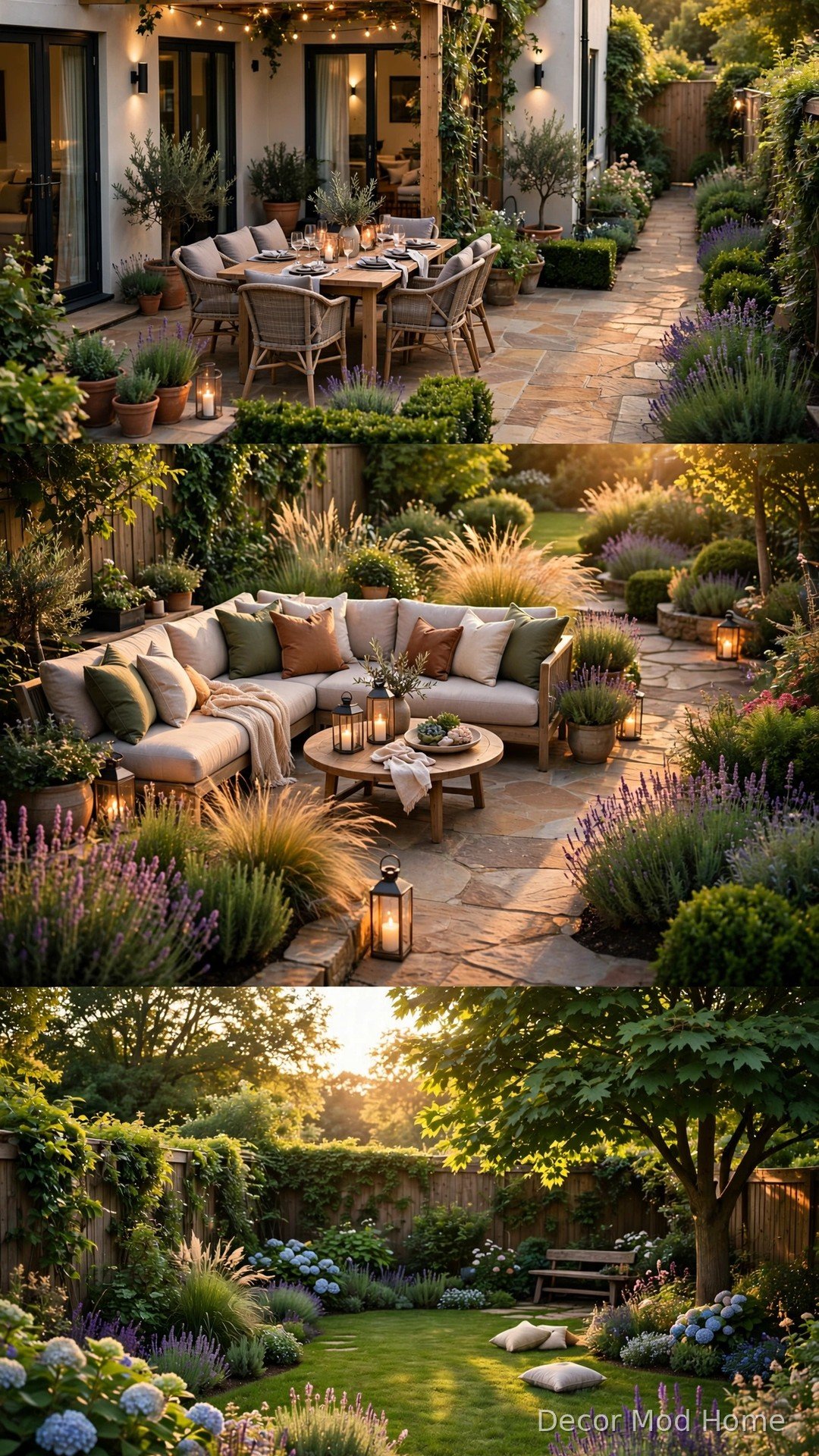
The single most effective trick for a rectangular yard is to stop treating it as one space. Divide the length into three distinct “rooms”: a dining terrace right outside the back door, a relaxed lounge or play zone in the middle, and a green retreat at the far end. Each room gets its own purpose, its own ground material, and its own mood — which instantly makes the yard feel bigger, because your eye reads three experiences instead of one long corridor. Use low hedges, a change in paving, or a simple arch to mark the transitions. A good rule of thumb: make the middle room the largest, since it carries the view from the house. Even a yard just 20 feet wide works beautifully when the length is broken into chapters rather than one endless sentence.
2. Lay a Strong Central Axis Path
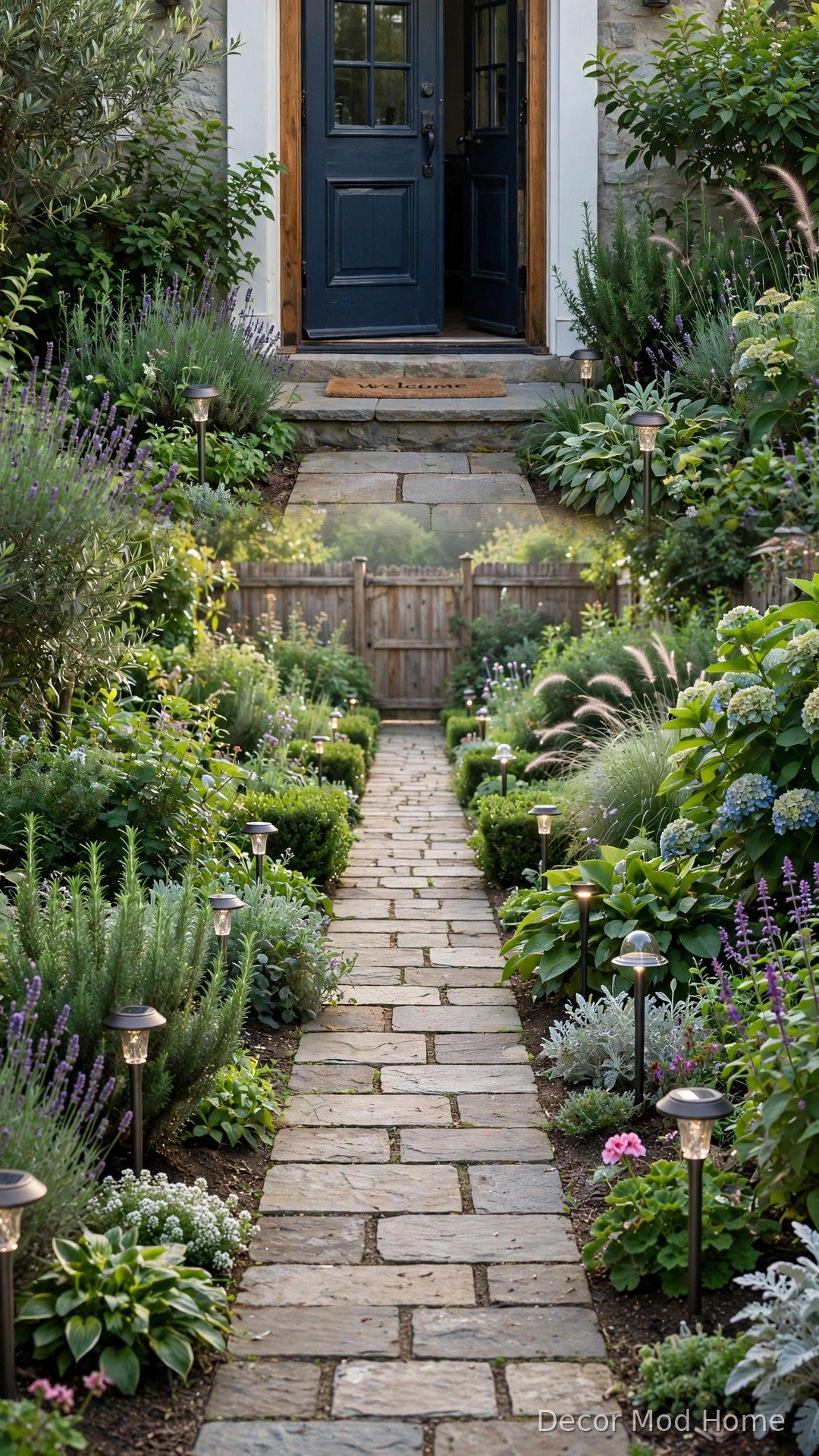
Every great rectangular garden has a spine — one clear path that runs from the house to the far fence and ties all the zones together. A straight central axis of stone pavers, gravel, or brick gives the layout instant structure and pulls the eye deep into the yard, which makes the space feel longer and more intentional. Keep the path 3 to 4 feet wide so two people can walk side by side, and edge it with low planting or solar path lights to emphasize the line. The magic is in the journey: as you walk the axis, each zone reveals itself in sequence. For a softer look, lay the pavers with generous gaps and let creeping thyme or moss fill the joints — structure with a lived-in feel.
3. Start with a Wide Full-Width Patio
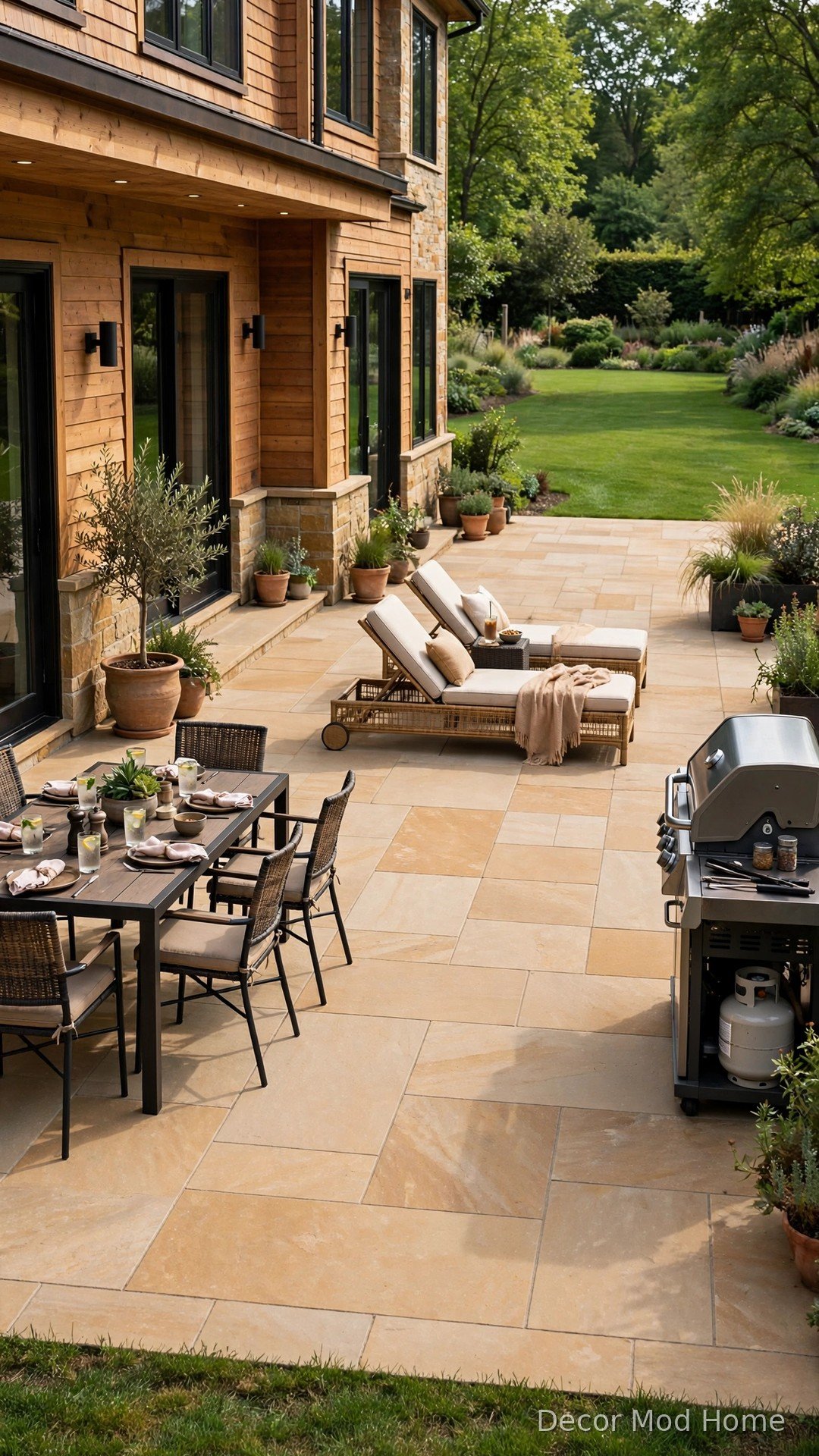
Begin at the house with a patio that spans the full width of the yard. This does two powerful things: it visually anchors the home to the garden, and it gives you the largest possible entertaining surface right where you need it — steps from the kitchen. Aim for at least 12 feet of depth so a dining table, chairs, and a grill all fit without crowding. Large-format pavers or poured concrete in a warm tone keep a narrow space feeling open, while a simple border of brick or stone adds polish. Furnish it like an outdoor living room: a dining set at one end, a couple of lounge chairs at the other. When the patio fills the width, the yard reads as an extension of the house rather than an afterthought.
4. Break the Straight View with Offset Zones
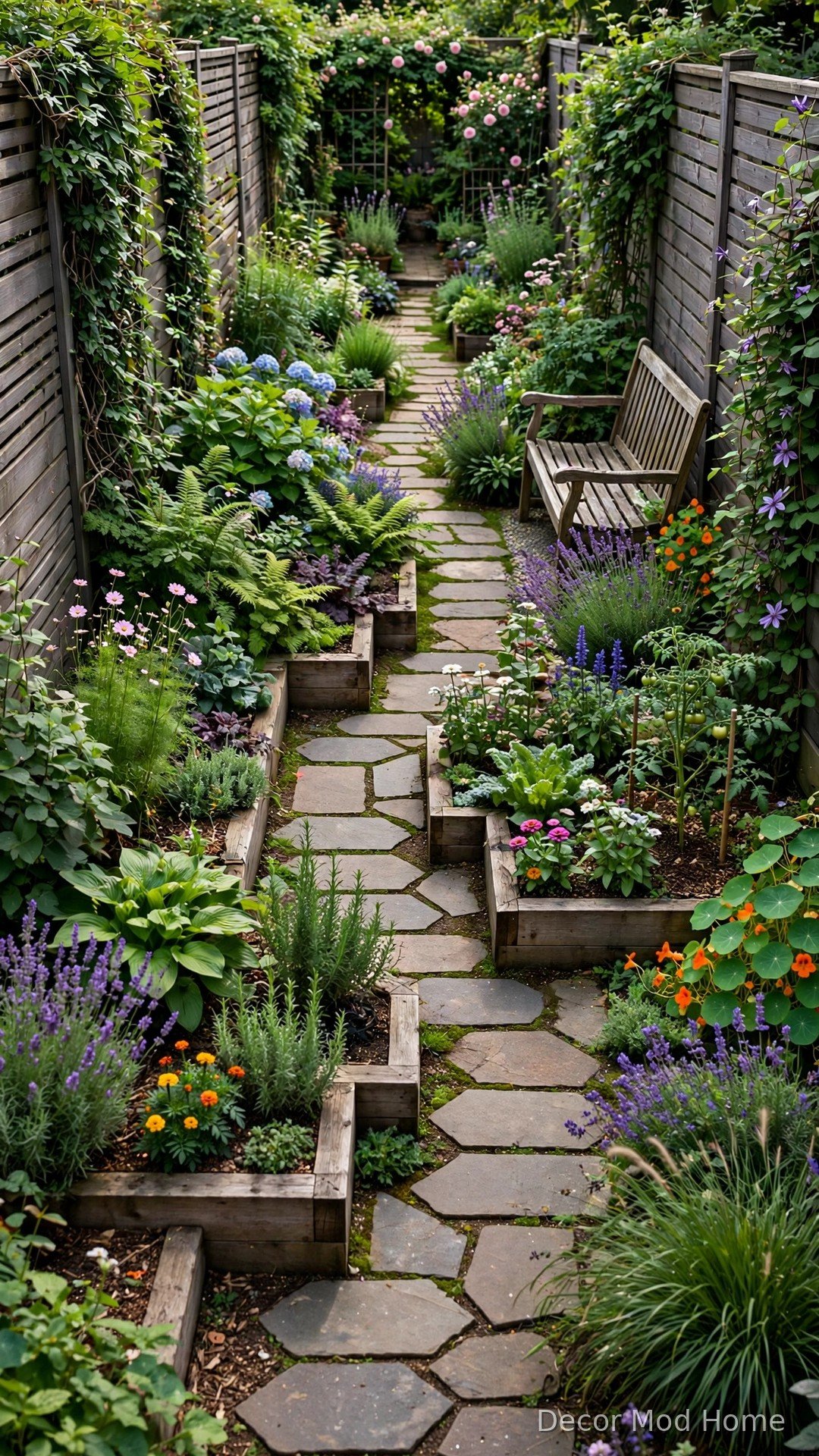
A dead-straight view from door to fence can make a rectangle feel like a bowling lane. The fix is to offset your zones slightly — shift the lounge a few feet left, angle the fire pit area right — so the eye zigzags through the garden instead of shooting straight down it. This staggered rhythm creates a sense of discovery; each turn reveals something new, and the yard feels wider because you experience its full width. You do not need big moves: even a 2-foot shift in the path, a curved bed edge, or a bench placed at a slight angle is enough. Think of it as choreography for the eye — a gentle meander is always more interesting than a runway.
5. Plant Deep Borders Along Both Sides
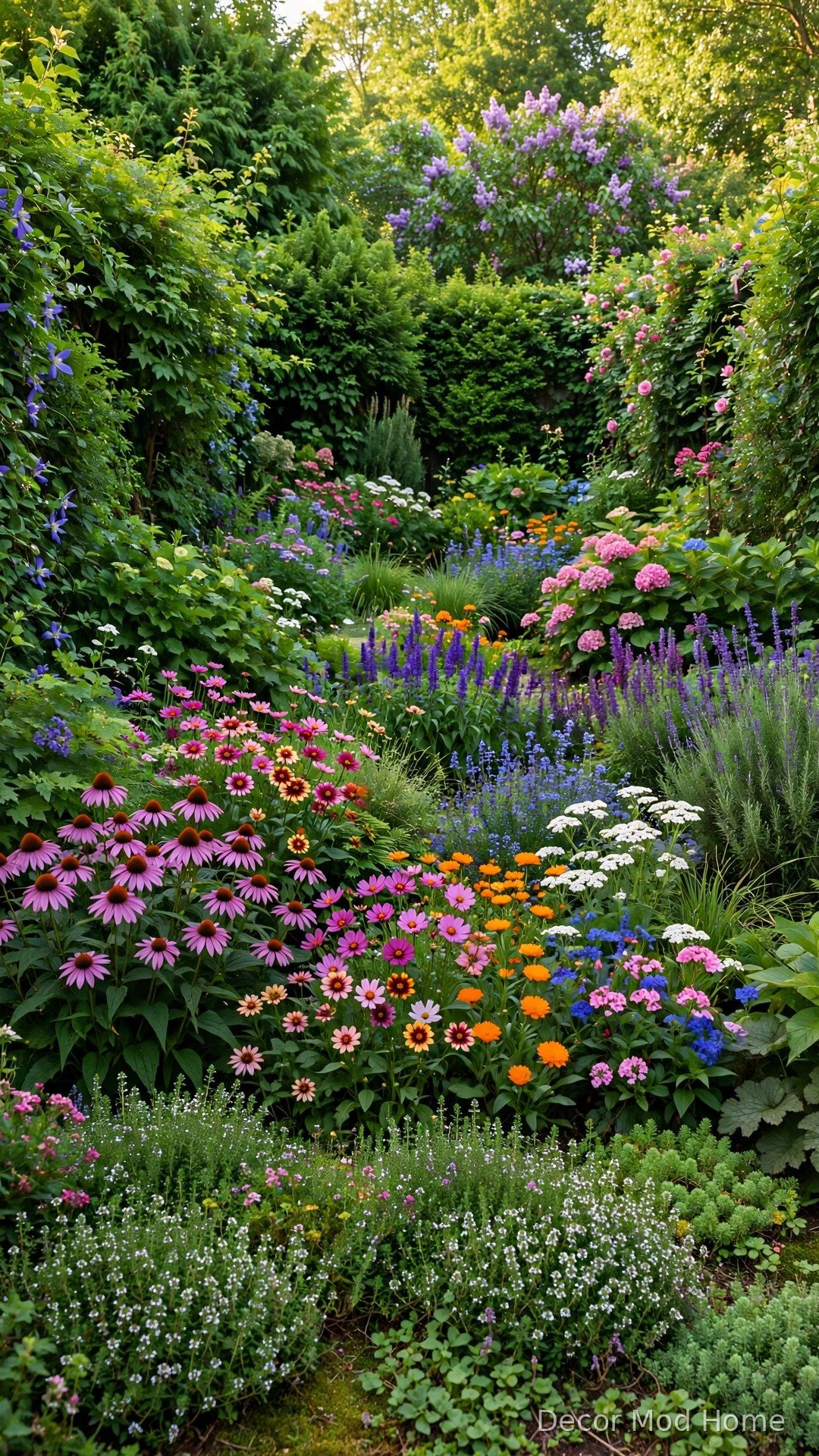
In a narrow yard, the side fences are your biggest design opportunity. Deep planting beds — 3 to 4 feet at minimum — along both fences do three jobs at once: they hide the hard boundaries, add lush layers of color and texture, and visually “push” the fences outward so the middle feels roomier. Layer tall shrubs or small trees at the back, mid-height perennials in the middle, and low groundcover at the front. Repeat key plants down the length for rhythm, and include at least a third evergreens so the borders look good in winter too. This is also where your budget goes furthest: a $500 border planting transforms a yard more than almost any other single move.
6. Give the Far End a Destination
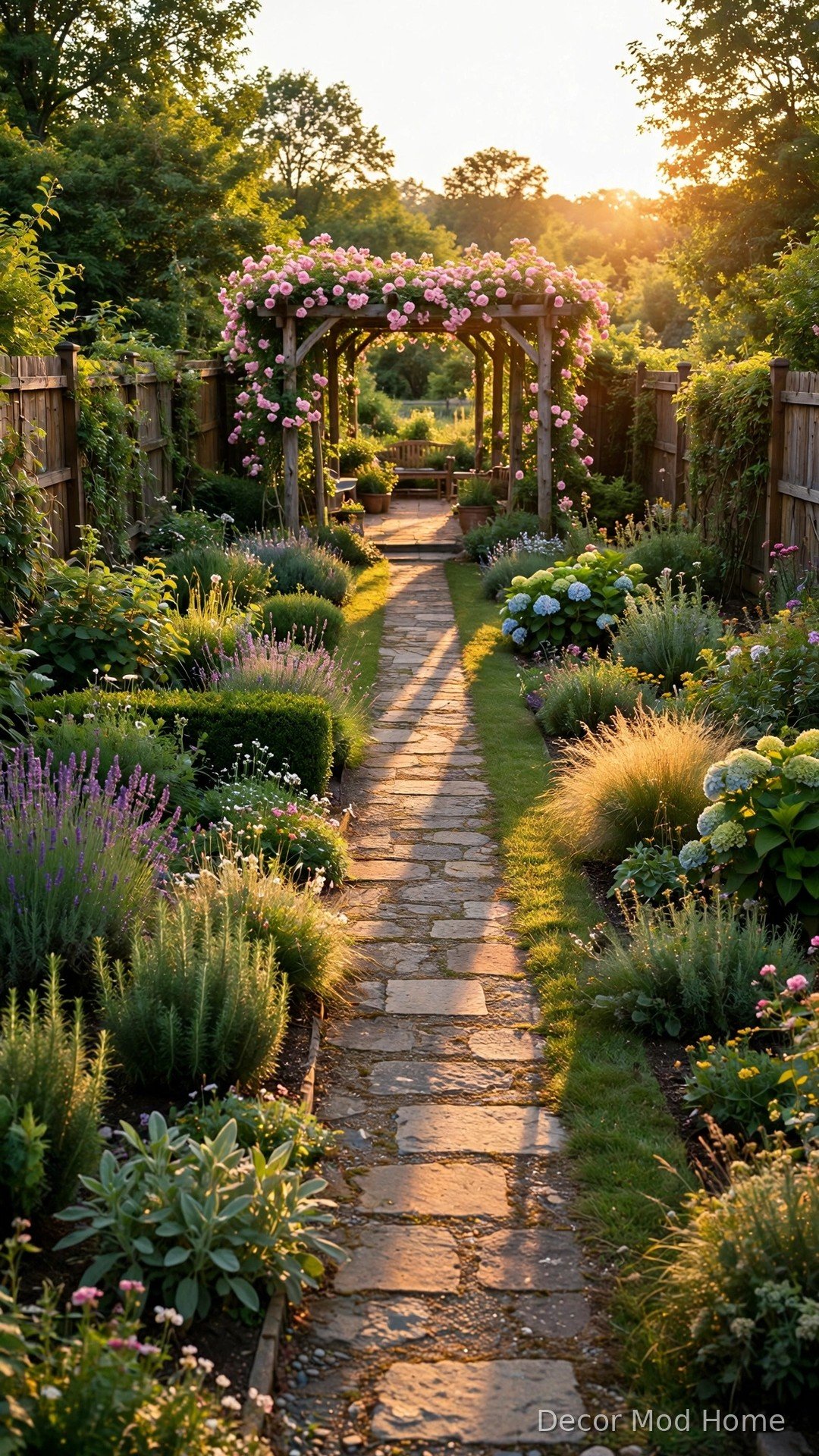
Every rectangle needs a reason to walk to the back. A pergola draped in roses, a garden shed with a green roof, a round fire pit terrace, or even a simple bench under a flowering tree gives the far end purpose — and gives the whole layout a focal point that draws the eye through every zone. Without a destination, the back of the yard becomes dead space; with one, the entire garden gains depth and intention. Make the destination slightly visible from the house — a glimpse of the pergola roof or the glow of the fire pit — so it acts like a magnet. This is the exclamation point of your layout, so let it be a little bit dramatic.
7. Soften the Shape with a Circular Lawn
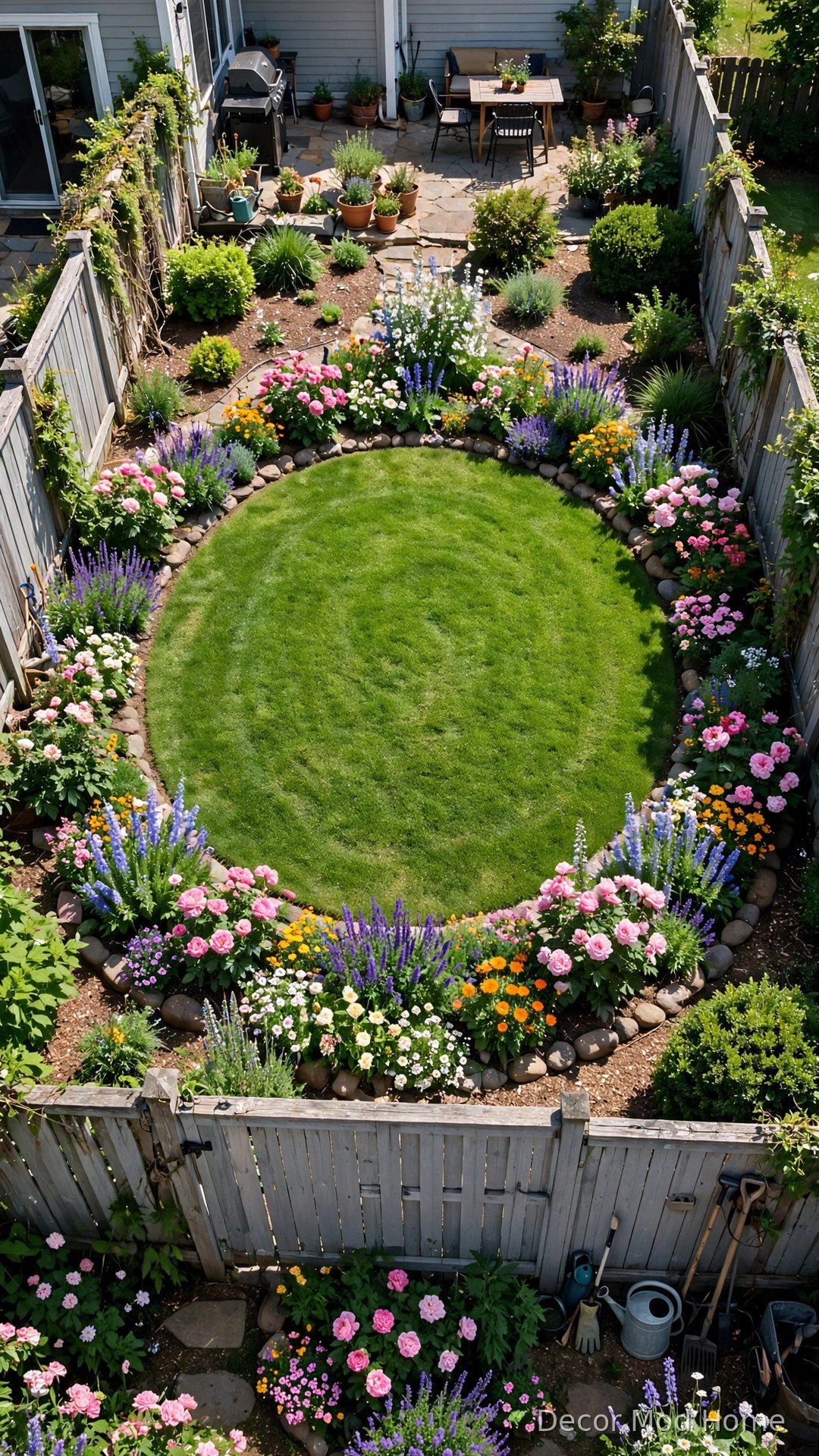
A circle inside a rectangle is a classic designer move, and it works wonders. Carving a circular or oval lawn into the middle of a rectangular yard instantly breaks the boxy geometry and creates a calm green heart for the garden. The curved edge leaves generous crescent-shaped beds around it — perfect for deep, billowy planting that hides the corners. A circle also gives you a natural gathering shape: chairs around a fire bowl, kids playing, a picnic blanket all feel right on a round lawn. Use a garden hose to lay out the curve before you cut the edge, stepping back to the house to check the shape from the main viewpoint.
8. Sink a Fire Pit Lounge Midway
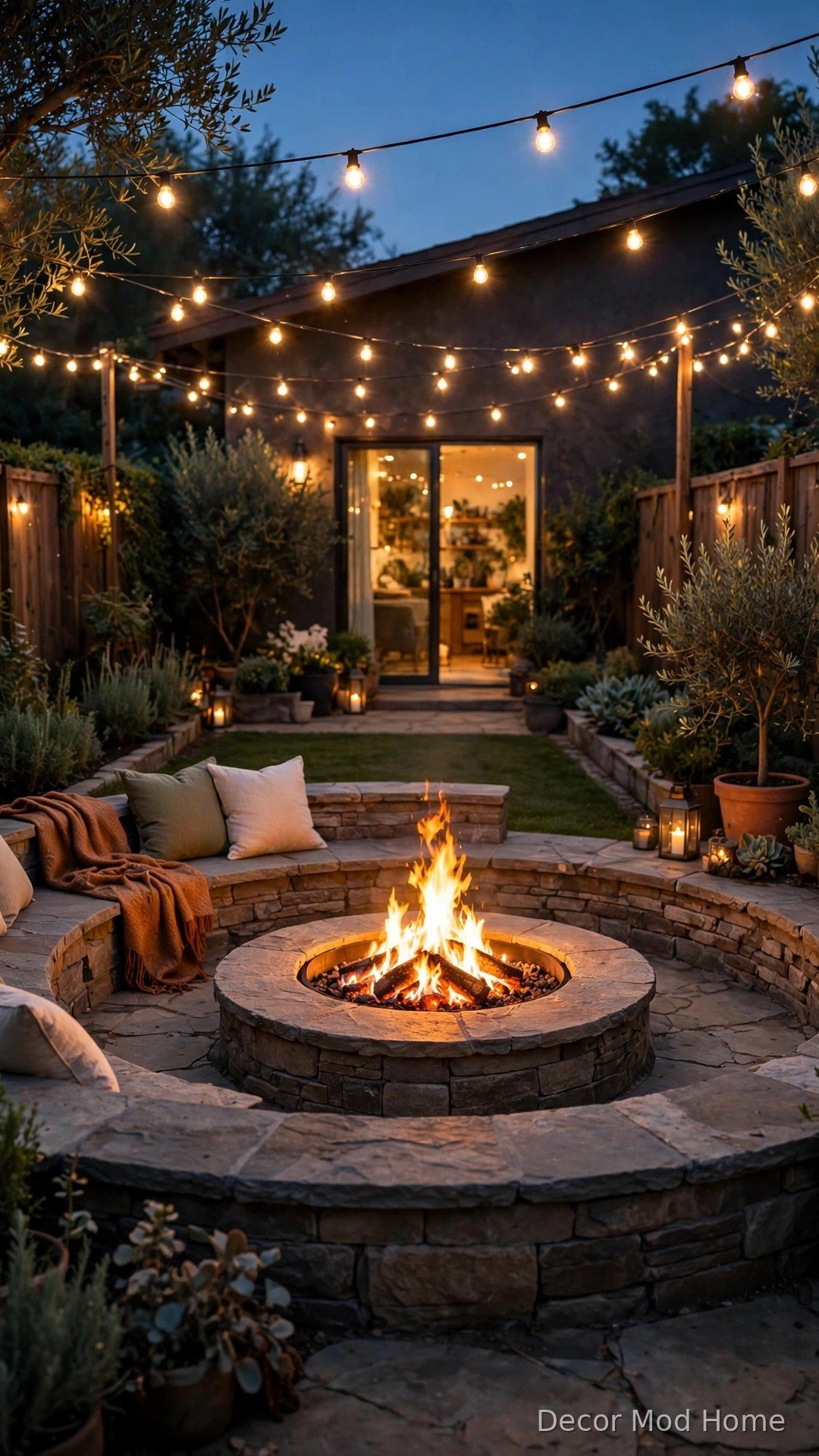
Place a fire pit lounge at the midpoint of the rectangle and it becomes the social heart of the whole yard — close enough to the house for easy hosting, far enough to feel like an escape. A circular arrangement of built-in benches or curved seating around the fire naturally suits the shape and contrasts beautifully with all those straight lines. Keep the fire zone slightly sunken or ringed with a low stone wall to define it as its own room. At dusk, the glow becomes a second focal point visible from the kitchen window, stretching the garden’s usable hours deep into the evening. Budget tip: a simple gravel circle, four Adirondack chairs, and a portable fire bowl deliver 90% of the magic for a fraction of a built-in’s cost.
9. Run a Pergola Walkway Down One Side

If the center of your rectangle is reserved for lawn or patio, run a pergola walkway down one side instead. A vine-covered pergola creates a shaded promenade that adds height, architecture, and a delicious sense of journey to a flat yard. Plant climbing roses, wisteria, or grapevines at the posts and within two seasons you will have a green tunnel that feels like a secret garden. The walkway naturally leads to whatever destination waits at the far end, and the vertical structure balances the yard’s horizontal stretch. Even a simple kit pergola — four posts and a slatted roof — transforms a plain side path into the most romantic spot in the garden.
10. Zone with Three Materials: Deck, Gravel, Lawn
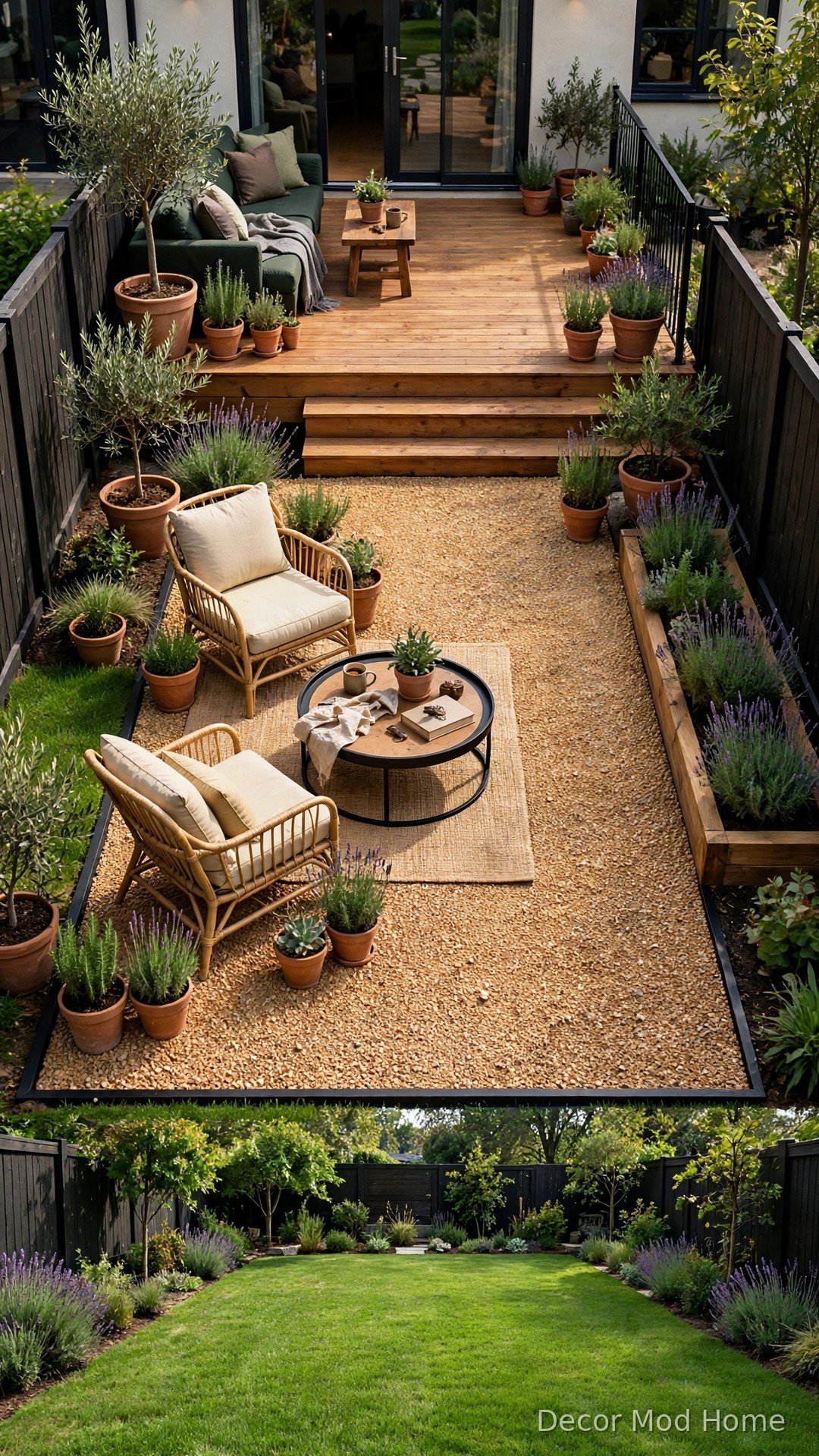
You do not need walls to divide a rectangle — ground materials do it beautifully. Try this classic trio: a warm wooden deck for the dining terrace near the house, honey-colored gravel for the middle lounge or fire zone, and fresh green lawn for the far retreat. Each material signals a different use and a different mood underfoot, so the zones read clearly even in a small yard. The transitions matter most: a crisp steel or stone edge between materials keeps everything looking sharp rather than patchy. This approach is also budget-friendly, since gravel and lawn are among the cheapest surfaces you can lay, letting you splurge on the deck where guests gather most.
11. Line the Fences with Raised Beds
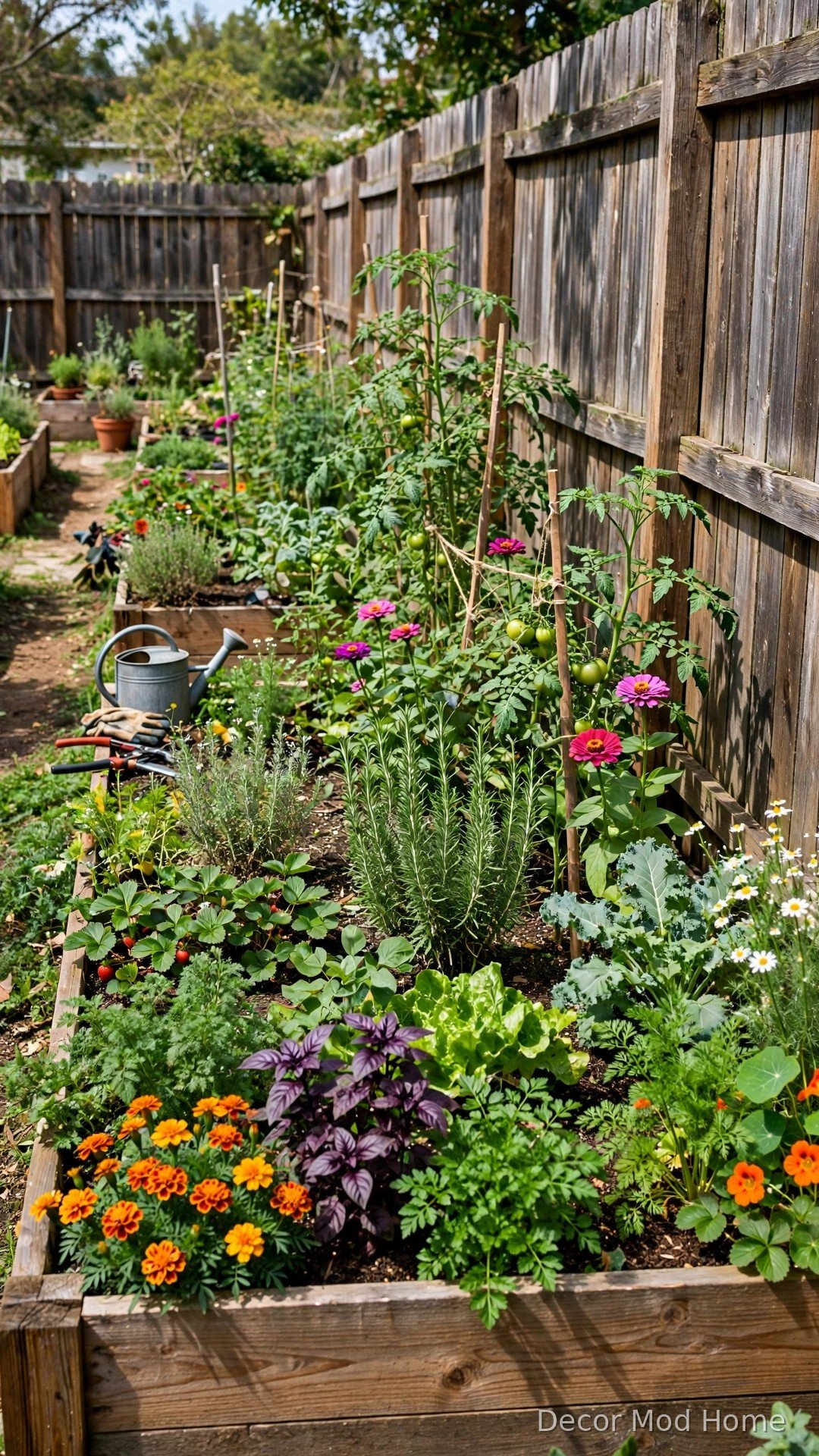
Raised beds along the fence line turn the least useful strip of a rectangular yard — that awkward 2-foot gap — into the most productive one. Cedar or corten-steel beds 12 to 18 inches tall bring vegetables, herbs, and cut flowers up to a comfortable working height while adding strong horizontal lines that echo the yard’s shape. Run them the full length for a kitchen-garden feel, or cluster three or four near the patio for easy harvesting while you grill. Fill the bottom half with logs and branches (the hugelkultur trick) to save on soil costs. Edible planting along the fence also softens the boundary beautifully — a fence you harvest from never feels like a barrier.
12. Pause Midway with a Water Feature
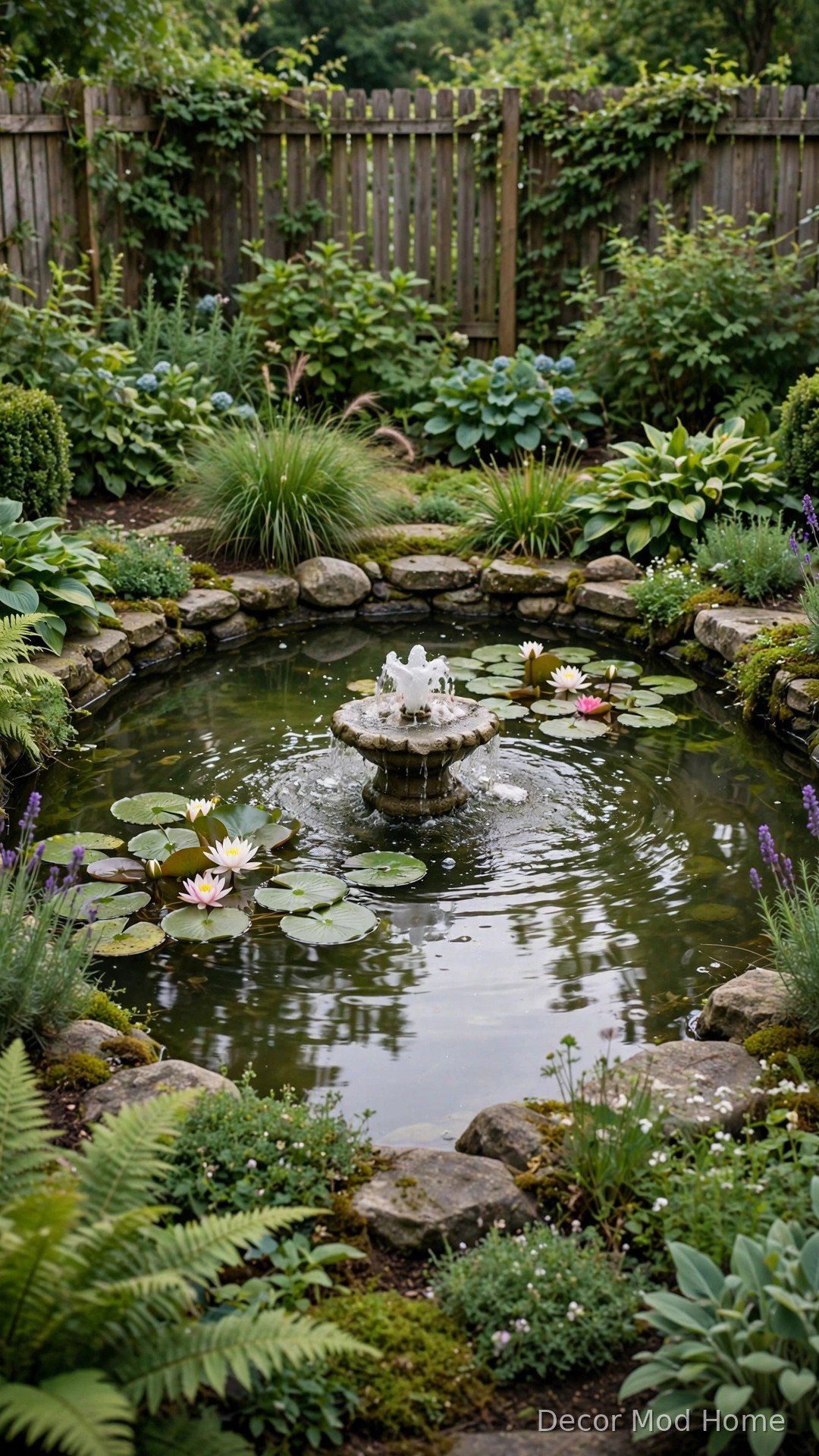
A small pond, a bubbling urn, or a slim rill of water placed at the middle of the rectangle does something no plant can: it makes the garden feel alive. The sound of moving water masks street noise and gives the middle zone a tranquil identity of its own — a place to pause between the social patio and the far retreat. You do not need much space: a 4-foot round pond or a single basalt column fountain fits even a narrow yard. Site it where you can see and hear it from the house, ideally catching reflections of the sky. Add a couple of water lilies and a small spotlight, and your modest middle zone becomes the most memorable part of the garden.
13. Canopy the Dining Zone with String Lights
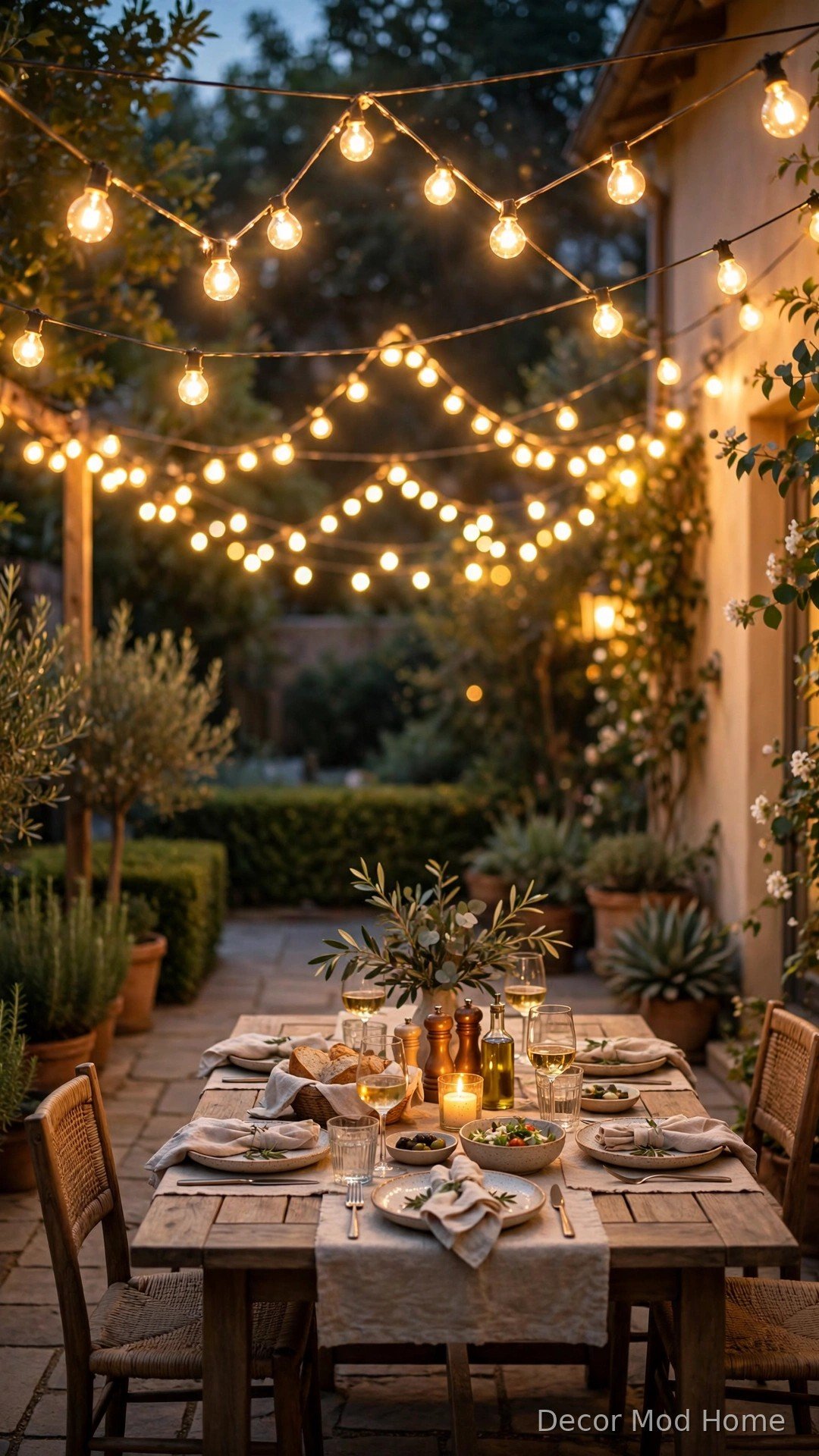
Nothing transforms a rectangular backyard after dark like a canopy of warm string lights over the dining terrace. Zigzag commercial-grade festoon lights between the house wall and two sturdy posts (or the fence) to create a glowing ceiling that defines the entertaining zone and makes it feel like an outdoor restaurant. Hang them 8 to 9 feet high with a gentle sag between runs — the catenary curve is what makes them look magical rather than utilitarian. Choose warm-white 2700K bulbs for that golden glow, and put them on a timer so the garden lights itself every evening. For under $100, this single addition doubles the hours you will actually use your yard.
14. Tuck a Play Zone into the Far Corner
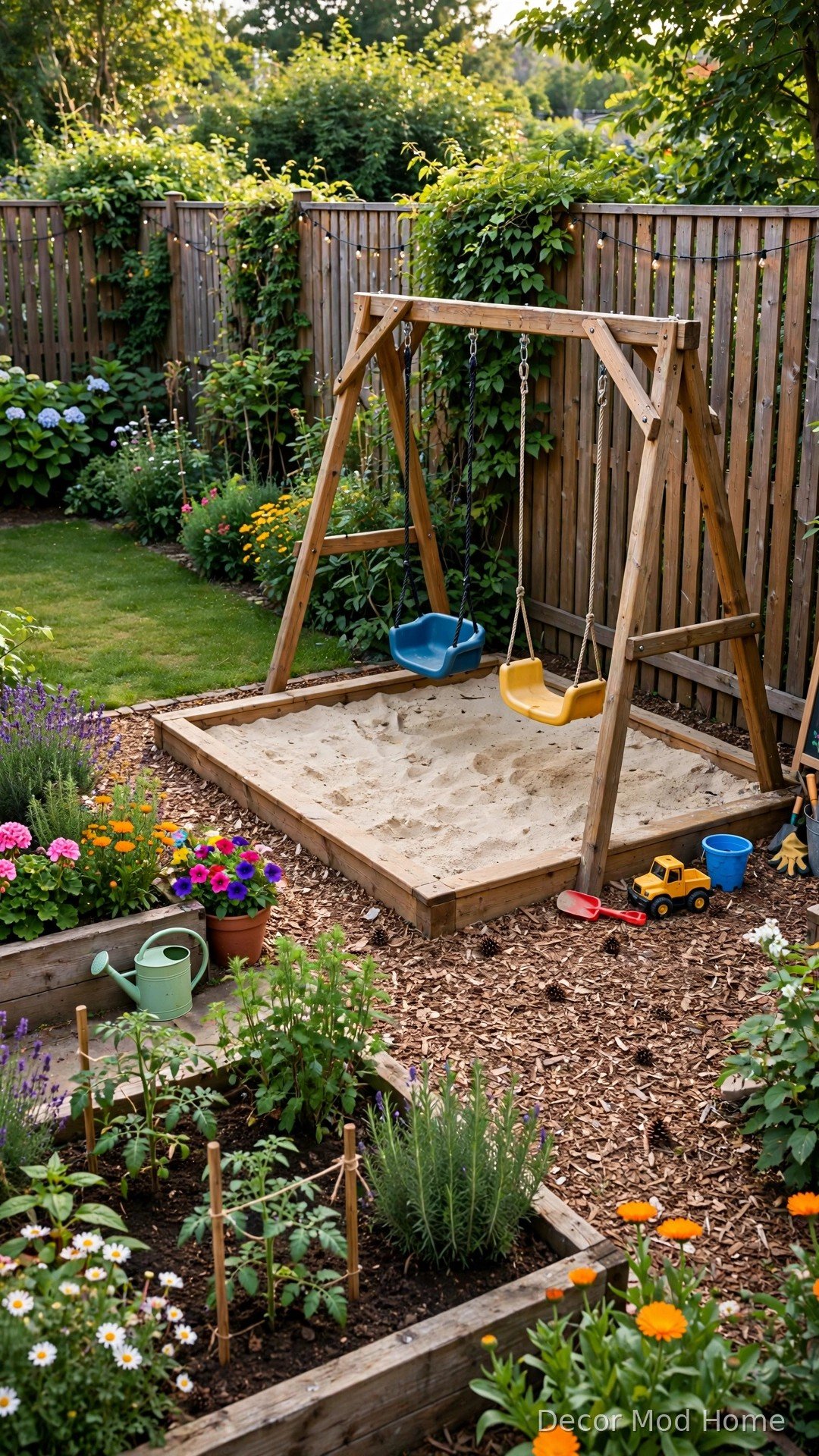
Families: claim the far corner of the rectangle for the kids and everyone wins. A swing set, a small climbing frame, or even just a sandbox with a storage bench gives children their own territory while keeping toys and noise at the maximum distance from the house. Use a soft surface — bark mulch or rubber tiles — to define the zone clearly and cushion tumbles. A low hedge or a row of tall grasses between the play area and the adult lounge keeps sight lines open for supervision while giving each zone its own identity. As kids grow, the same corner converts easily: swap the swings for a hammock, a reading nook, or a potting bench.
15. Frame Everything with Layered Evergreens
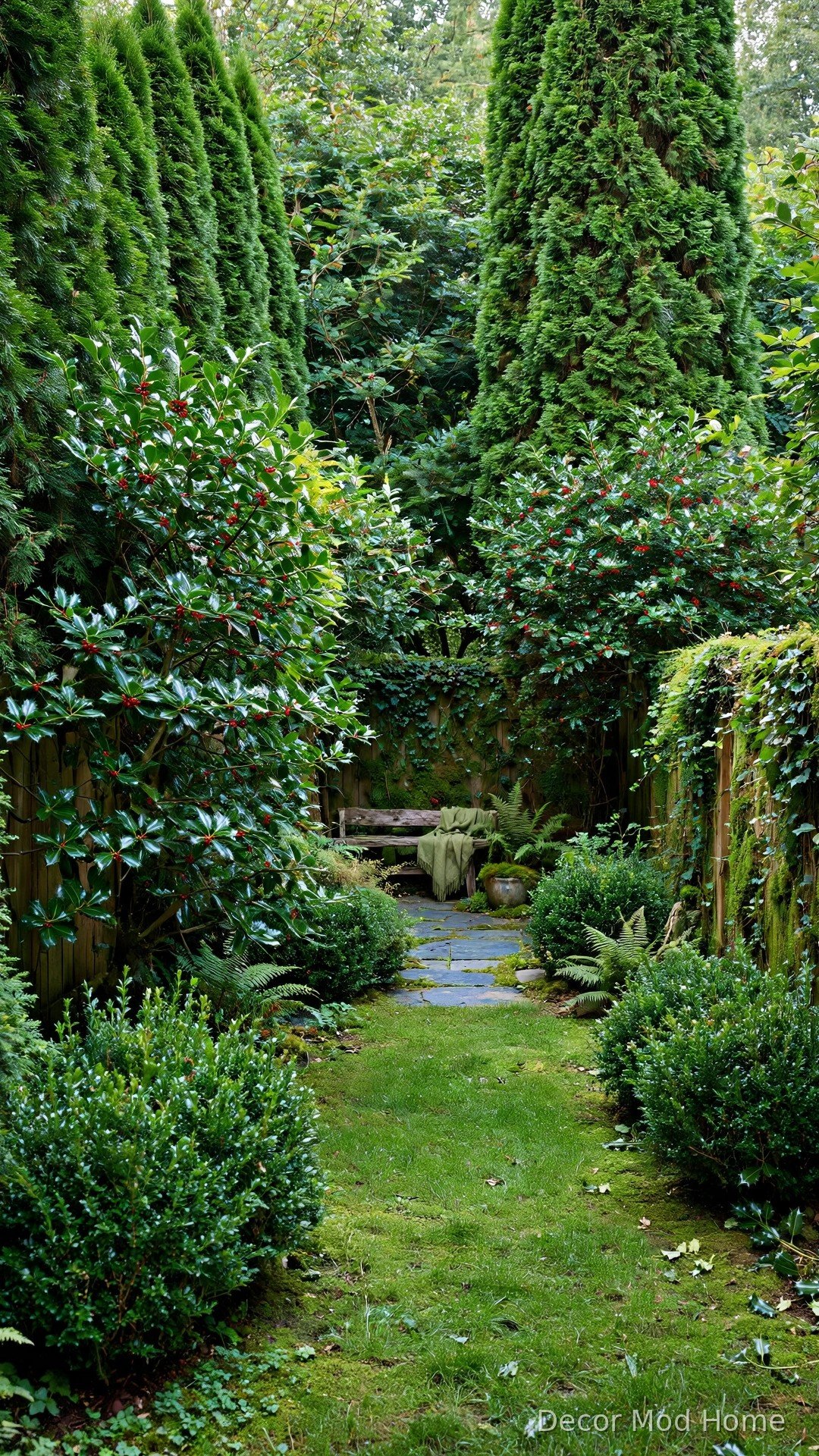
The finishing touch for any rectangle is privacy planting that makes the fences disappear. Layer evergreens along the boundaries — tall arborvitae or laurel at the back, mid-height hollies or yews in front, low boxwood or grasses at the base — and the yard gains a green enclosure that feels like a private estate rather than a suburban strip. Stagger the planting rather than lining trees up like soldiers; a naturalistic drift looks fuller and grows together faster. This is a long game — most evergreens need 3 to 5 years to knit together — so plant the largest specimens your budget allows at the start. Once the green walls close in, your rectangle stops feeling like a yard and starts feeling like a sanctuary.
Frequently Asked Questions
What is the best layout for a long narrow rectangular backyard?
Divide the length into three zones — dining terrace near the house, lounge or fire pit in the middle, and a green destination at the far end — connected by one clear path. This “three garden rooms” approach makes a narrow yard feel larger because your eye reads three experiences instead of one corridor. Offset the zones slightly so the view zigzags rather than shooting straight down the rectangle.
How do you make a rectangular backyard look wider?
Plant deep beds along both side fences to push the boundaries outward visually, use horizontal lines (wide pavers, long benches, layered hedges) to emphasize width, and add a circular lawn or curved bed edges to break the boxy geometry. Avoid running everything lengthwise — a few strong crosswise elements, like a pergola beam or a wide step, trick the eye into reading width.
Where should the patio go in a rectangular backyard?
Almost always directly against the house, spanning as much of the yard’s width as you can. A full-width patio anchors the home to the garden, keeps dining steps from the kitchen, and leaves the rest of the rectangle free for lawn, planting, and a far-end destination. Give it at least 12 feet of depth so furniture never feels squeezed.
How much does it cost to landscape a rectangular backyard?
A DIY refresh — new borders, gravel paths, string lights, and a fire pit zone — can run $1,500 to $4,000 for an average suburban rectangle. A professionally designed and installed layout with a deck or patio, irrigation, and mature planting typically lands between $10,000 and $25,000. The highest-impact budget moves are deep side borders, a defined path, and a far-end focal point.
Your Rectangle Is a Hidden Advantage
A rectangular backyard is not a limitation — it is a head start. The shape practically designs itself once you think in zones: terrace, lounge, and destination, tied together with one confident path and hugged by deep green borders. Pick the idea that excited you most — maybe the fire pit midway, the string-light canopy, or that far-end pergola — and start there this weekend. Small moves compound fast outdoors. Pin your favorite layouts from this list, and explore more outdoor inspiration here on Decor Mod Home to keep the ideas growing. Your best garden is already taking shape — one zone at a time.


