Toddler Bedroom Ideas: 15 Cute, Practical & Stylish Ideas for a Cozy Little Room
Creating a toddler bedroom is all about finding the right balance between comfort, safety, organization, and personality. At this age, children need a space that feels cozy and playful while also supporting sleep, reading, creativity, and independent play. The best toddler bedroom ideas don’t require a huge budget or a complete makeover. Simple changes such as soft colors, low storage, playful wall decor, cozy bedding, and a dedicated reading corner can make a big difference.
Whether you’re decorating a small toddler bedroom, boy’s room, girl’s room, shared bedroom, or Montessori-inspired space, these ideas can help you create a beautiful room that grows with your child. The goal is a bedroom that looks Pinterest-worthy but remains practical for everyday family life.
1. Create a Soft Neutral Toddler Bedroom
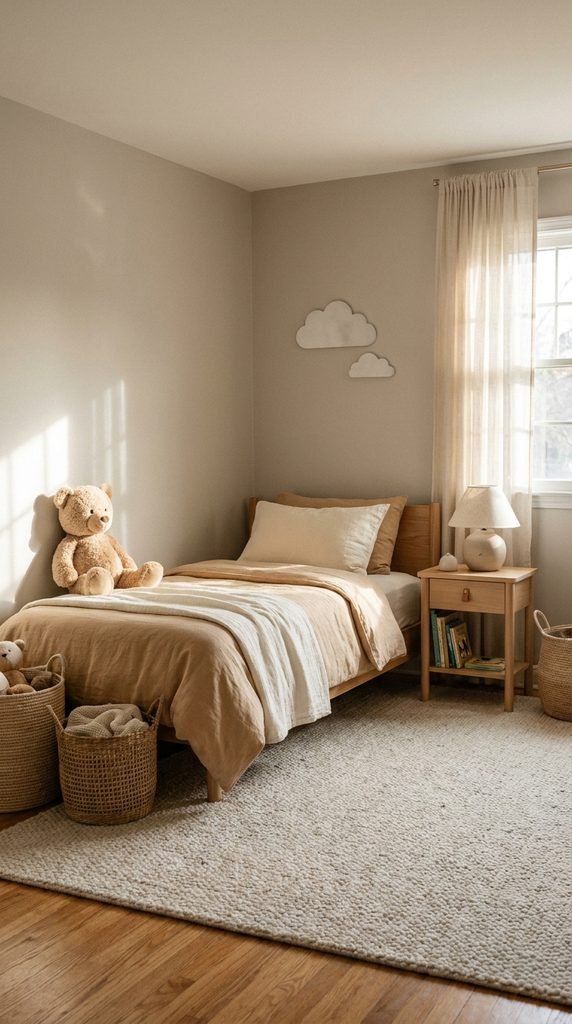
A neutral toddler bedroom creates a calm environment without making the space feel boring. Instead of using bright colors on every wall, consider warm beige, creamy white, soft taupe, light greige, or muted sage. These shades provide a peaceful backdrop for sleep while giving you plenty of flexibility to add colorful toys, artwork, books, and accessories. Natural wood furniture also works beautifully with neutral walls because it introduces warmth and texture. Choose a simple toddler bed, soft bedding, a comfortable rug, and a few age-appropriate decorative pieces to keep the room welcoming without making it visually overwhelming.
The biggest advantage of a neutral design is that it can easily grow with your child. Rather than replacing everything when your toddler becomes a preschooler, you can simply change the artwork, bedding, and accessories. Add personality through stuffed animals, colorful books, framed prints, or removable wall decals. Keep larger furniture pieces timeless so the room remains functional for several years. This approach is especially useful for parents who want a stylish toddler bedroom that feels connected to the rest of their home’s modern interior design.
2. Add a Cozy Reading Corner
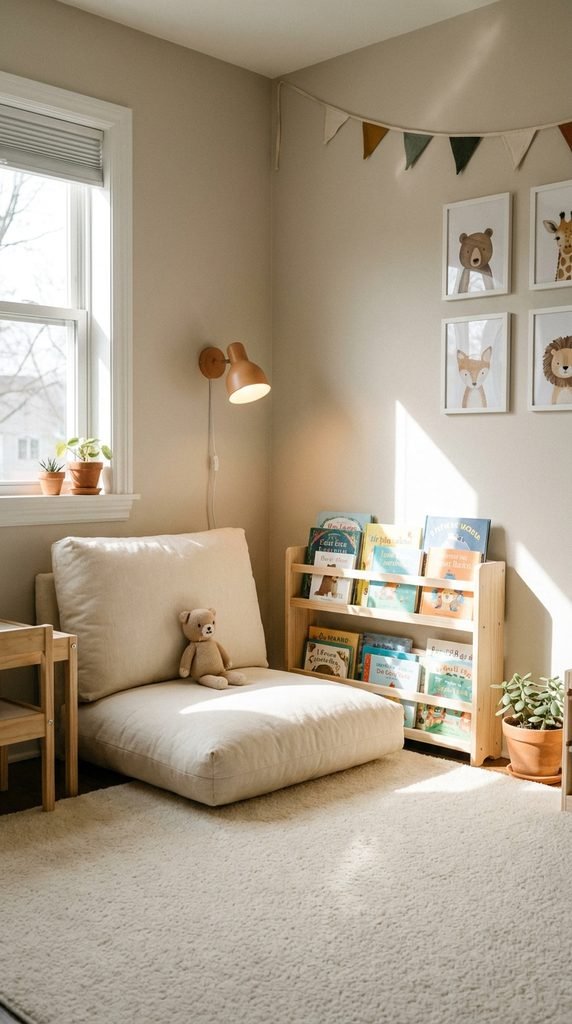
A dedicated reading corner can turn an unused area of a toddler’s bedroom into a meaningful little space for learning and relaxation. Place a low bookshelf where your child can easily see and reach the books. Add a soft floor cushion, small beanbag, toddler-sized chair, or padded mat where they can sit comfortably. Keeping the shelves low encourages children to choose books independently and can make reading feel like a fun part of their everyday routine. A small lamp or soft wall light can make the corner feel especially inviting during quiet afternoon reading.
You don’t need a large bedroom to create a reading nook. Even a narrow corner beside the bed or a small section near the window can work. Rotate books regularly so the selection stays interesting without overcrowding the shelf. You can also add a washable rug, a few stuffed animals, and simple artwork above the area. Avoid placing heavy objects where a toddler could pull them down, and securely anchor furniture to the wall. The result is a cozy toddler bedroom feature that supports imagination while adding visual charm.
3. Use a Montessori-Inspired Toddler Bedroom
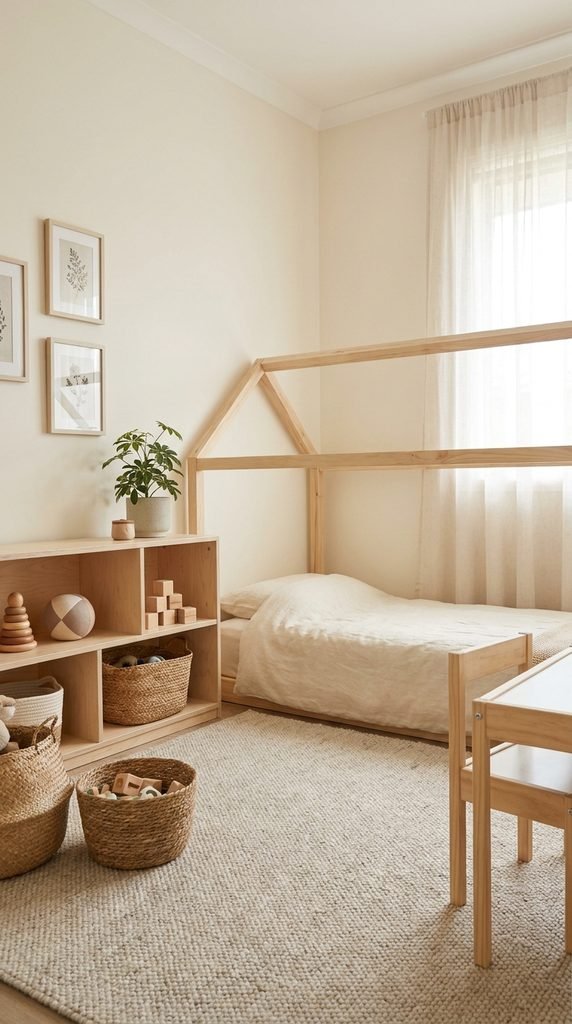
A Montessori-inspired toddler bedroom focuses on independence and accessibility. Instead of placing everything out of reach, use child-sized furniture and low storage that allows your toddler to interact with the room more independently. A low bed, accessible bookshelf, small table, and open toy baskets can help children make simple choices throughout the day. The design can also be visually calming because Montessori rooms typically favor natural materials, simple forms, and limited clutter. Light wood, cotton textiles, woven baskets, and soft neutral colors work particularly well for this style.
The key is to design the room around your child’s developmental needs while maintaining appropriate safety measures. Secure bookshelves, dressers, and other furniture to the wall, keep cords out of reach, and choose age-appropriate furnishings. You can create defined zones for sleeping, reading, and playing so the room feels organized even when your toddler is actively using it. A Montessori-inspired room doesn’t have to follow strict rules; simply borrow the principles of independence, accessibility, simplicity, and purposeful organization.
4. Design a Cute Toddler Girl’s Bedroom
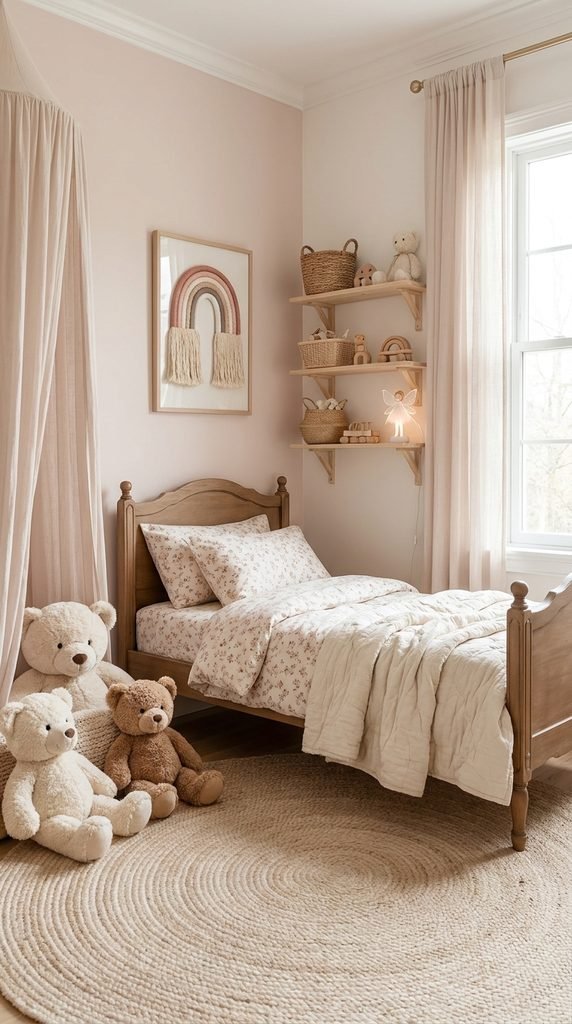
A toddler girl’s bedroom can be sweet and playful without relying entirely on traditional pink decor. Soft blush, dusty rose, lavender, cream, peach, and warm white are beautiful alternatives that create a gentle atmosphere. Consider adding floral artwork, rainbow prints, butterflies, stars, or simple nature-inspired patterns to give the room personality. Keep the foundation neutral with natural wood furniture and cream textiles, then use smaller accessories to introduce color. This makes it easier to refresh the room as your child grows and develops new interests.
For a more timeless look, avoid filling every surface with themed decorations. Instead, choose one or two design elements as focal points, such as a statement wall mural or beautiful bedding. Add a plush rug, a few favorite stuffed animals, and accessible storage for toys and books. Removable wall decals can also be a great option because they allow you to change the room without repainting. The finished bedroom should feel cheerful and imaginative while still providing a peaceful environment for naps and nighttime sleep.
5. Create a Fun Toddler Boy’s Bedroom
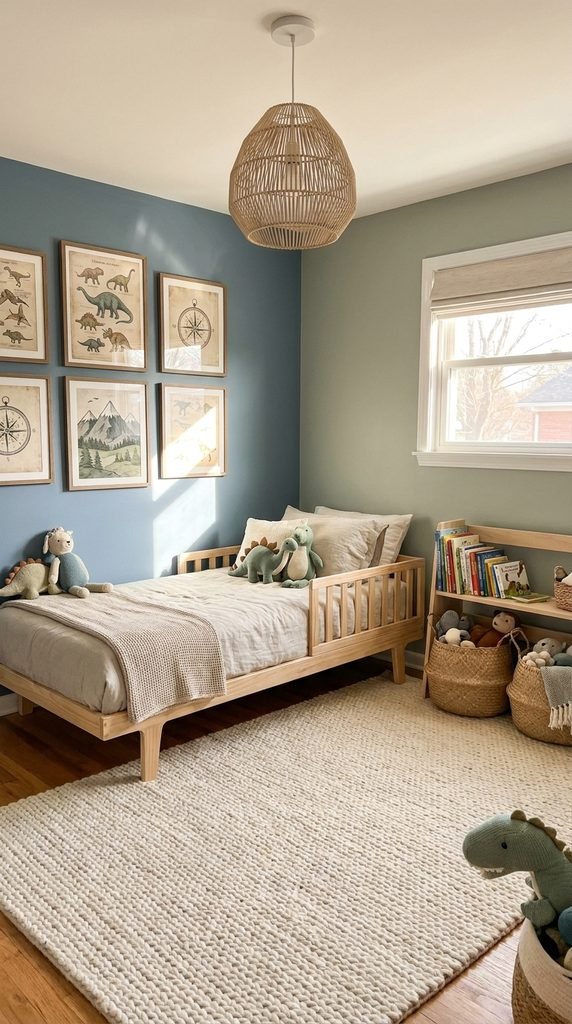
For a toddler boy’s bedroom, you can create a fun atmosphere with colors and themes that encourage imagination without making the room feel overly busy. Muted blue, sage green, warm beige, terracotta, and soft gray are versatile choices. Popular themes include dinosaurs, animals, outer space, transportation, camping, forests, and adventure. Instead of covering the entire room with one theme, use artwork, bedding, toys, and small accessories to introduce the concept. This creates a more sophisticated bedroom that can evolve as your toddler gets older.
Storage is particularly important because toys can quickly take over a child’s room. Use large woven baskets for stuffed animals, labeled bins for small toys, and a low bookshelf for books. Keep the floor relatively open so your toddler has room to play. A washable rug can make the space more comfortable while protecting the floor during everyday activities. Combine playful elements with simple furniture and a calm background to create a room that feels both energetic and relaxing.
6. Add a Playful Accent Wall
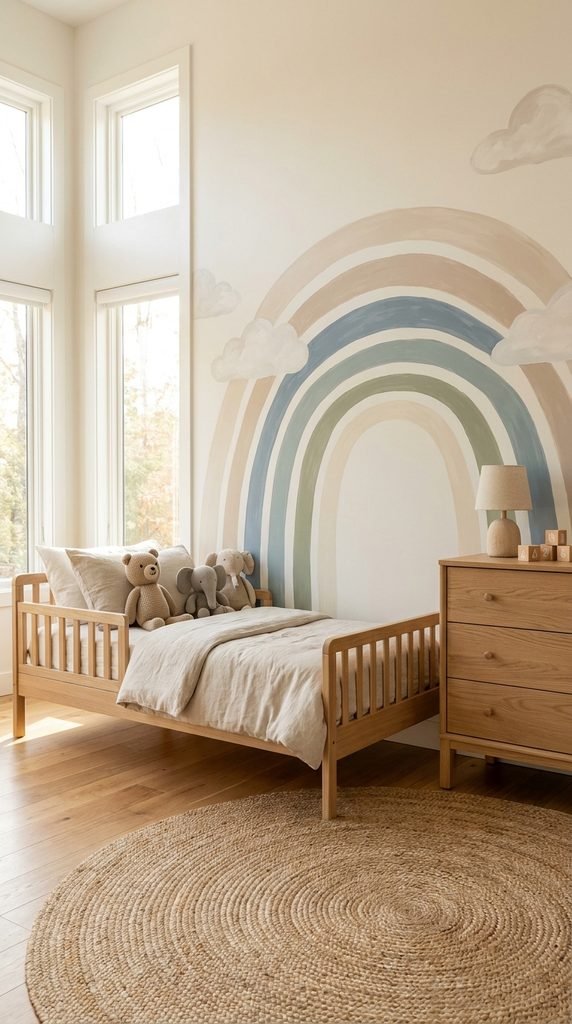
An accent wall is one of the easiest ways to transform a toddler bedroom without decorating every wall. You can use paint, removable wallpaper, decals, or a simple mural to create a focal point behind the bed or play area. Popular choices include soft rainbows, clouds, tiny stars, abstract shapes, woodland scenes, mountains, or simple botanical patterns. If you prefer a modern look, choose muted colors rather than extremely bright shades. The accent wall should complement the rest of the room instead of competing with furniture and toys.
Removable wallpaper and decals are especially useful for renters or parents who expect their child’s interests to change quickly. A dinosaur wall might be perfect today but less exciting a few years later. By keeping the main furniture neutral, you can easily replace the accent wall treatment when necessary. Before installing anything, make sure the materials are appropriate for indoor use and properly secured. A carefully chosen accent wall can give a toddler room a major visual upgrade while requiring relatively little furniture or decor.
7. Make Toy Storage Easy and Accessible
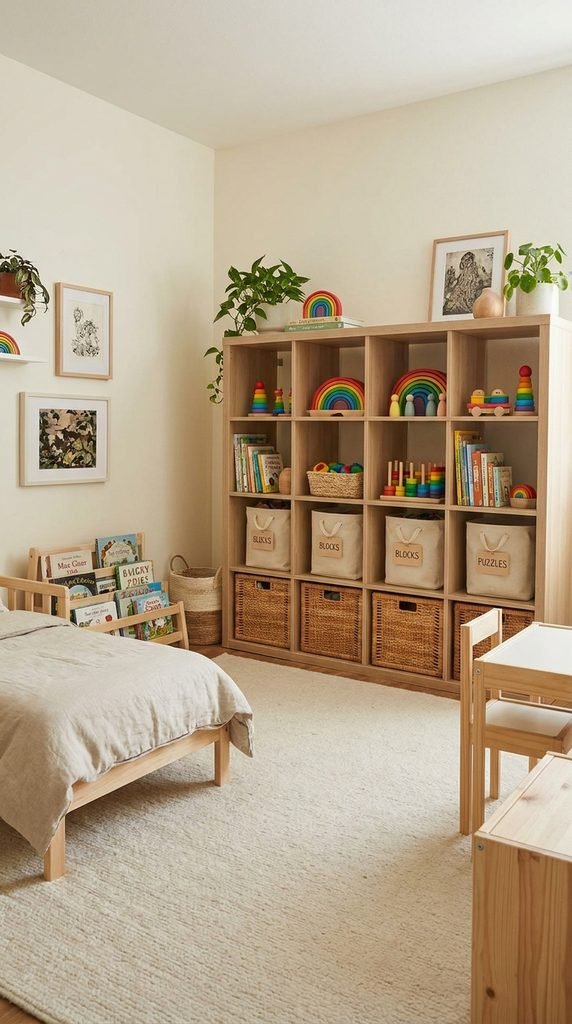
Good storage can make a huge difference in a toddler bedroom because children often have an impressive collection of toys, books, stuffed animals, and craft supplies. Instead of hiding everything inside a large cabinet, create a combination of open and closed storage. Low cubbies can display favorite toys, while baskets can hide smaller pieces and stuffed animals. A low bookshelf makes books accessible, while a small dresser provides space for clothing. Keeping frequently used items within your toddler’s reach can also make cleanup easier and encourage independence.
Try to avoid filling every shelf and basket to maximum capacity. Leave some empty space so your child can easily return toys to their proper place. Rotate toys every few weeks to keep the room interesting while reducing visible clutter. Furniture should be securely anchored, especially tall shelving and dressers. Storage doesn’t have to look like traditional children’s furniture either. Woven baskets, natural wood bins, and neutral fabric containers can create a stylish appearance while still providing the practical organization a busy toddler bedroom needs.
8. Choose a Cozy Canopy Bed Look
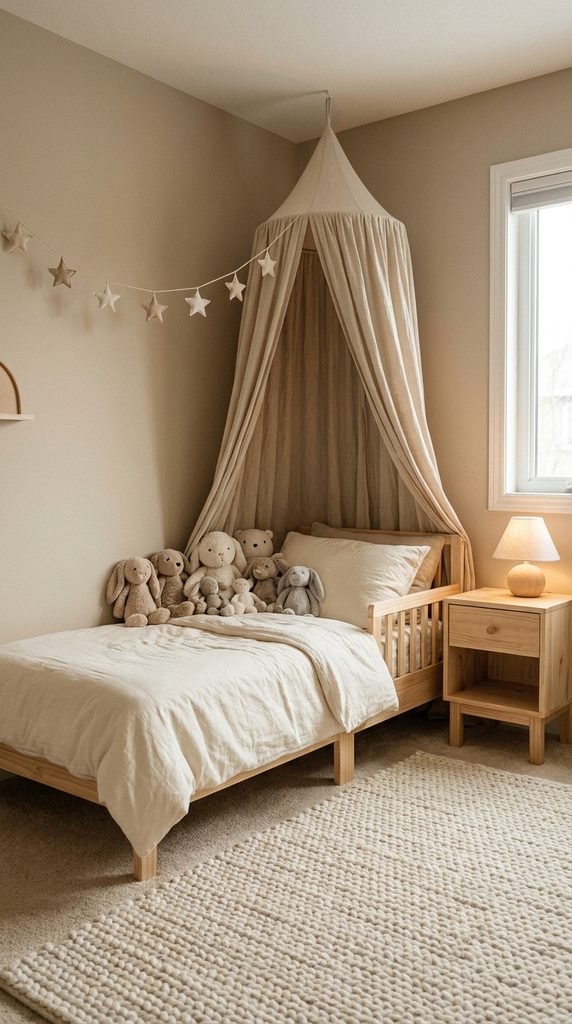
A simple canopy can instantly make a toddler bedroom feel magical and cozy. Rather than using a complicated bed frame, consider a lightweight fabric canopy positioned around the sleeping area. Soft white, cream, blush, or muted sage fabric can create a dreamy atmosphere without overwhelming the room. Pair the canopy with simple bedding, a few stuffed animals, and a soft rug. The goal is to create a comforting sleeping zone that feels special while maintaining a clean overall design.
When using a canopy or hanging decoration in a child’s room, safety should always come first. Follow the manufacturer’s installation instructions and keep cords, ribbons, strings, and loose fabric securely out of reach. Avoid placing anything that could become a strangulation or entanglement hazard near the sleeping area. You can achieve a similar cozy aesthetic with a properly installed decorative canopy or a simple architectural bed frame designed for children. A little fabric and thoughtful styling can create a memorable bedroom without requiring a complete redesign.
9. Create a Small Toddler Bedroom That Feels Bigger
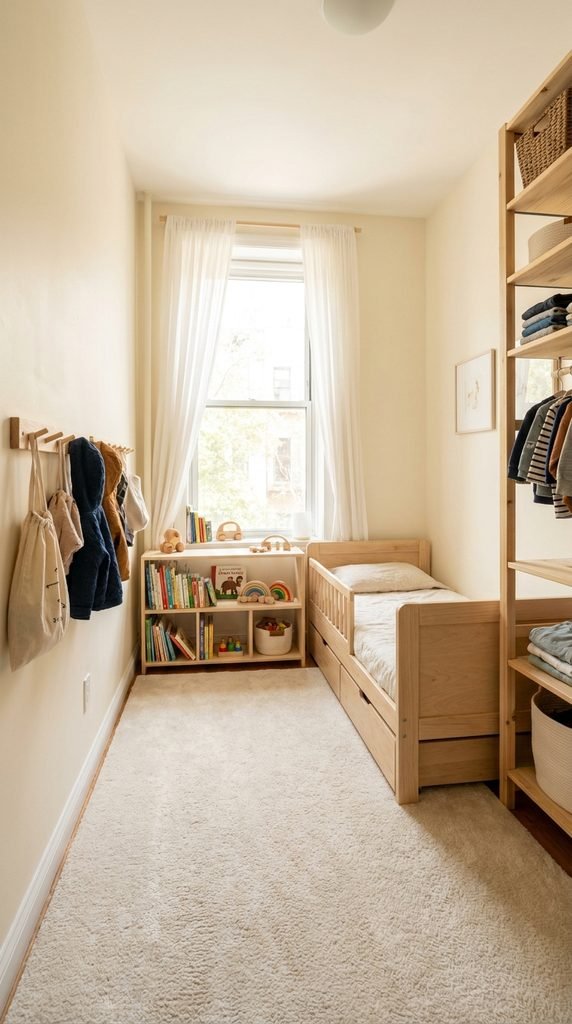
Small toddler bedrooms can still be beautiful and functional when every piece of furniture has a purpose. Choose a compact bed, narrow dresser, and slim bookshelf rather than oversized furniture. Light wall colors can make the room feel more open, while furniture with exposed legs can create a sense of visual space. Use vertical walls for artwork, hooks, and shelves rather than filling valuable floor space. A large mirror can also make a small room appear brighter and more spacious, provided it is securely installed and positioned safely.
Organization becomes especially important in a small bedroom. Use under-bed storage for seasonal clothing or extra bedding and baskets for toys. Keep the floor as open as possible so your toddler has room to play. Avoid adding too many decorative objects simply because they look cute in photographs. A few carefully selected accessories can have more impact than dozens of small items. The best small toddler bedroom ideas focus on simplicity, smart storage, flexible furniture, and a calm visual palette.
10. Add a Cozy Floor Rug
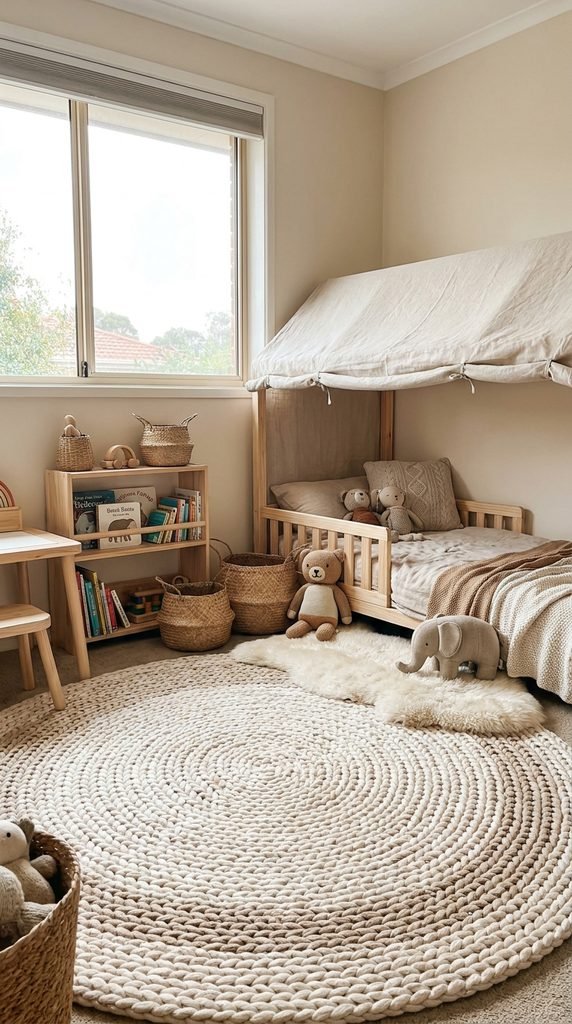
A soft rug can make a toddler bedroom warmer, more comfortable, and visually complete. Children spend plenty of time sitting, crawling, playing, and reading on the floor, so a comfortable surface can be especially useful. Choose a washable or easy-to-clean rug in a color that works with the rest of the room. Cream, beige, light gray, muted patterns, and soft earthy colors are versatile choices. A subtle geometric or playful design can add personality without dominating the room.
When selecting a rug, consider both practicality and safety. Look for a rug with a non-slip backing or use an appropriate rug pad to help prevent sliding. Avoid excessively shaggy styles that can make cleaning difficult or trap small toys. For smaller rooms, a round rug can soften the layout, while a larger rectangular rug can visually connect the bed and play area. A well-chosen rug adds texture and comfort while helping define different zones within the bedroom.
11. Use Nature-Inspired Toddler Decor
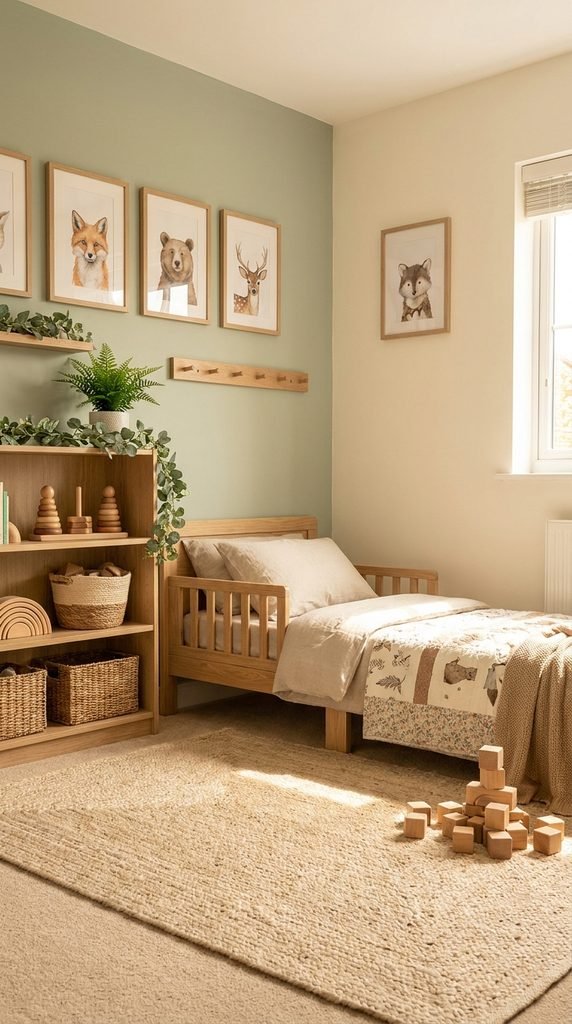
Nature-inspired decor is a beautiful choice for parents who want a calming toddler bedroom with plenty of personality. Woodland animals, leaves, clouds, mountains, rainbows, and gentle botanical patterns can create a playful environment without relying on overly bright colors. Combine sage green, warm beige, cream, muted brown, and natural wood for an organic palette. Wooden toys and woven baskets reinforce the theme while adding texture. Nature-inspired artwork can also encourage curiosity and imagination.
You can introduce the theme gradually rather than purchasing an entire matching collection. Start with a piece of wall art, a patterned blanket, or a few woodland-inspired accessories. Natural materials such as cotton, linen, rattan, and unfinished or lightly finished wood can make the room feel warm and inviting. If adding plants, choose child-safe options and keep them securely out of reach. The result is a peaceful toddler bedroom that feels connected to nature while remaining modern and easy to maintain.
12. Create a Dedicated Toddler Art Station
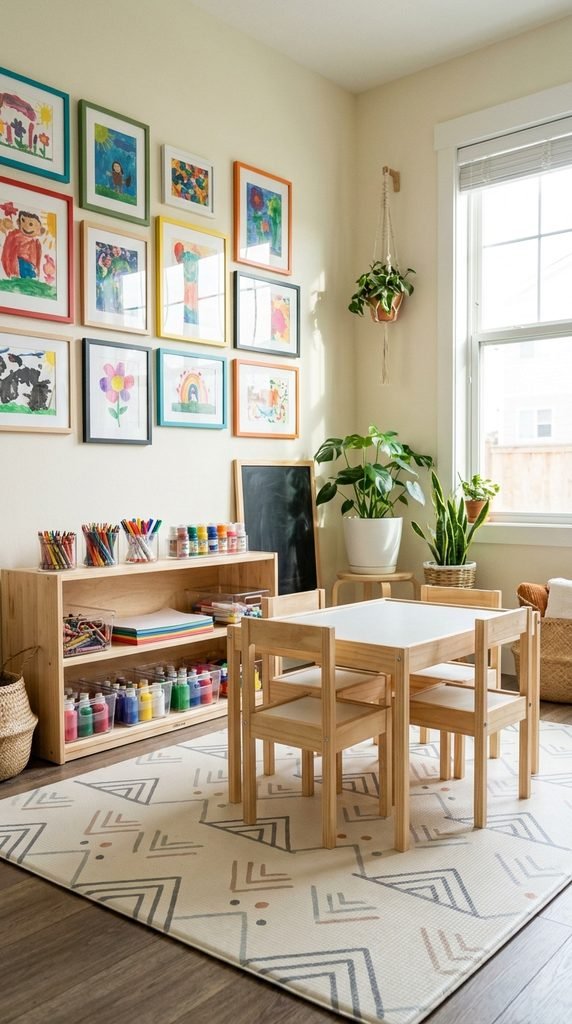
A small art station can give your toddler a dedicated place to draw, color, and explore creative activities. A toddler-sized table and chair can fit into a corner of the bedroom without taking up too much space. Add low storage containers for crayons, washable markers, paper, and age-appropriate craft materials. You can display some of your child’s artwork above the table using simple frames or a rotating picture ledge. This makes the room feel personal while celebrating your toddler’s creativity.
Keep the art area separate from the sleeping zone when possible. This helps establish a visual difference between active daytime activities and nighttime relaxation. Choose washable surfaces and easy-to-clean flooring or mats because spills and messes are part of the process. Only provide materials that are appropriate for your child’s age and supervise activities when necessary. A well-designed art station doesn’t need to be elaborate; even a tiny table with organized supplies can become one of the most loved features in the room.
13. Layer Soft Lighting
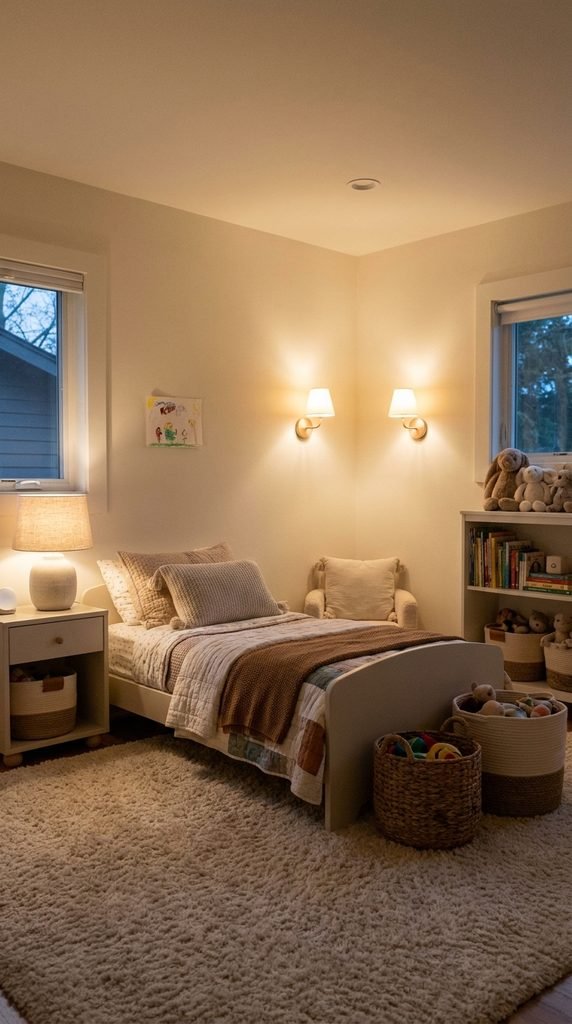
Lighting can dramatically change the atmosphere of a toddler bedroom. Instead of relying on one bright ceiling light, layer several gentle sources. A warm ceiling fixture can provide general illumination, while a small lamp or wall light can create softer light for bedtime reading. A subtle night-light can also help children who feel uncomfortable in complete darkness. Choose warm, comfortable lighting that creates a relaxing atmosphere rather than harsh, cool illumination.
Lighting should also be practical and carefully positioned. Keep electrical cords secured and out of your child’s reach, and select fixtures designed for safe residential use. A dimmable light can be especially useful because you can use brighter illumination during playtime and lower levels during the bedtime routine. Consider the location of switches as well so adults can easily control the room without disturbing a sleeping child. Thoughtful lighting can make a toddler bedroom feel more peaceful while supporting different activities throughout the day.
14. Add Personalized Wall Decor
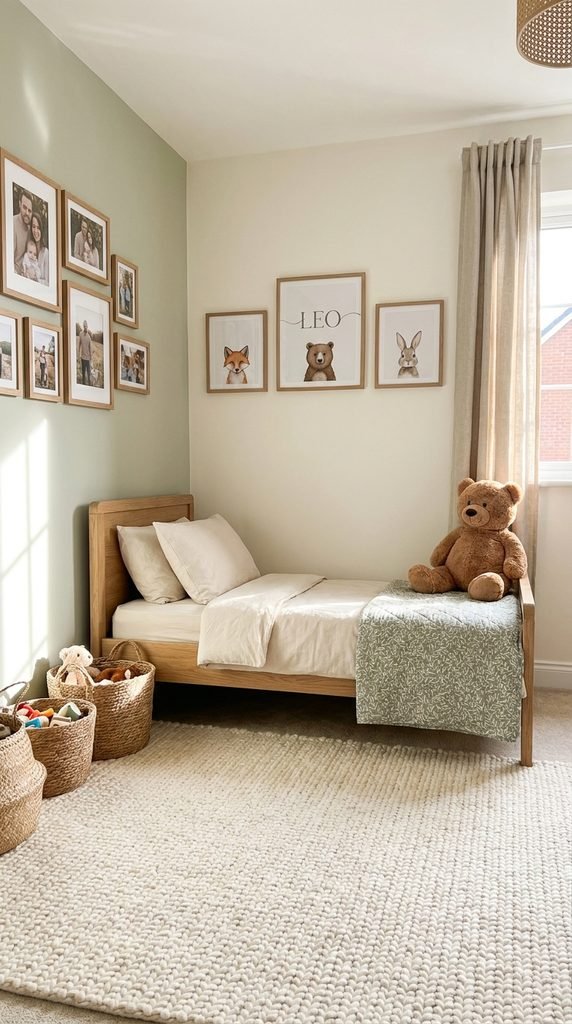
Personalized decor can make a toddler bedroom feel uniquely theirs. Consider displaying your child’s name, initial, favorite animal, or a collection of family photographs. Simple framed prints can add personality without creating excessive visual clutter. You might also create a small gallery wall using coordinated artwork in different sizes. Keep the colors connected to the rest of the room so the personalized elements look intentional rather than randomly added.
The easiest way to keep personalized decor flexible is to use frames, removable decals, and interchangeable artwork. This allows you to update the room as your toddler’s interests change. Avoid placing heavy frames, mirrors, or shelves in locations where they could fall onto the bed or play area, and anchor wall-mounted items securely. Personal touches don’t need to be expensive. A child’s drawing, a favorite family photograph, or a simple initial print can often have more emotional value than expensive decorative pieces.
15. Design a Toddler Bedroom That Grows With Them
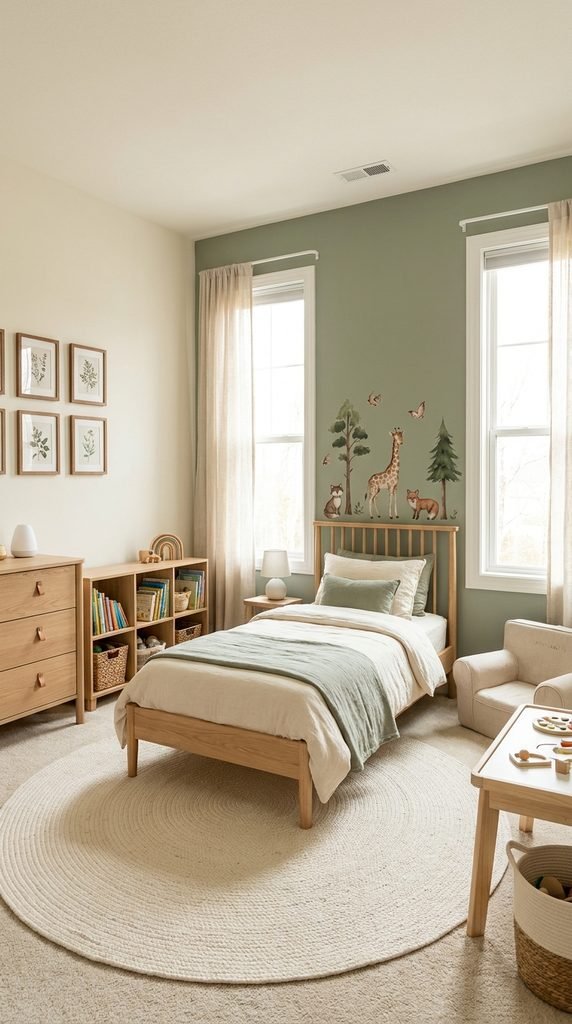
One of the smartest toddler bedroom ideas is to design for the future instead of creating a room that only works for one stage. Invest in timeless furniture that can transition as your child grows. A convertible crib-to-toddler bed, adaptable storage, neutral dresser, and quality bookshelf can remain useful for years. Keep major pieces relatively simple and introduce age-specific personality through bedding, artwork, toys, and removable wall decor. This approach saves money and reduces the need for frequent complete makeovers.
Think about how the room could function when your toddler becomes a preschooler. Will there be enough storage for larger clothing and more books? Is there space for a small desk later? Can the bed or furniture be adjusted? Planning ahead doesn’t mean making the bedroom feel too grown-up. You can still include playful details and favorite characters, but use easily replaceable accessories for them. A flexible foundation gives you the freedom to update the room without starting over every few years.
Final Thoughts
The best toddler bedroom ideas combine beauty with everyday practicality. Whether you prefer a neutral Montessori-inspired room, a colorful themed bedroom, a cozy reading nook, or a clever small-space layout, focus first on what your child actually needs. Comfortable sleeping space, accessible storage, open play areas, soft lighting, and age-appropriate organization can make the room both functional and inviting.
Remember that a toddler’s room doesn’t need to look perfect all the time. Toys, books, drawings, and stuffed animals are part of childhood. Create a flexible foundation, add personality through affordable accessories, and leave enough open space for your child to play and explore.
Frequently Asked Questions
What colors are best for a toddler bedroom?
Soft neutrals, muted greens, dusty blues, warm beige, cream, blush, and other gentle shades can create a calm atmosphere. You can add brighter colors through artwork, toys, and accessories.
How do I organize a small toddler bedroom?
Use low storage, baskets, under-bed storage, narrow furniture, and vertical wall space. Keep frequently used toys and books accessible while storing less-used items elsewhere.
What should I put in a toddler bedroom?
Essential items typically include an age-appropriate bed, clothing storage, accessible book and toy storage, comfortable lighting, and a safe open area for play.
How can I make a toddler bedroom grow with my child?
Choose timeless furniture and neutral foundational colors, then use removable wall decor, bedding, artwork, and accessories to reflect changing interests.
What should be in a toddler’s bedroom?
A toddler’s bedroom should include a comfortable, age-appropriate bed, soft bedding, accessible toy and book storage, a cozy rug, gentle lighting, and a safe open area for play. Keep furniture securely anchored and avoid unnecessary clutter.
What are some ideas for a 3-year-old’s bedroom?
For a 3-year-old, consider a low bed, colorful or neutral wall decor, a small reading corner, accessible bookshelves, toy baskets, and a dedicated play area. Choose flexible furniture and removable decor so the room can easily grow with your child.
How to set up a toddler room?
Start by creating separate zones for sleeping, playing, reading, and storage. Place the bed in a calm area, keep favorite books and toys within easy reach, add practical storage, and use soft lighting and comfortable textures to create a cozy atmosphere.
How to style a small kids bedroom?
Use light colors, compact furniture, vertical storage, under-bed baskets, and wall-mounted shelves to maximize space. Keep the floor open for play and choose multifunctional furniture whenever possible. A simple color palette and limited decor can also make the room feel larger.