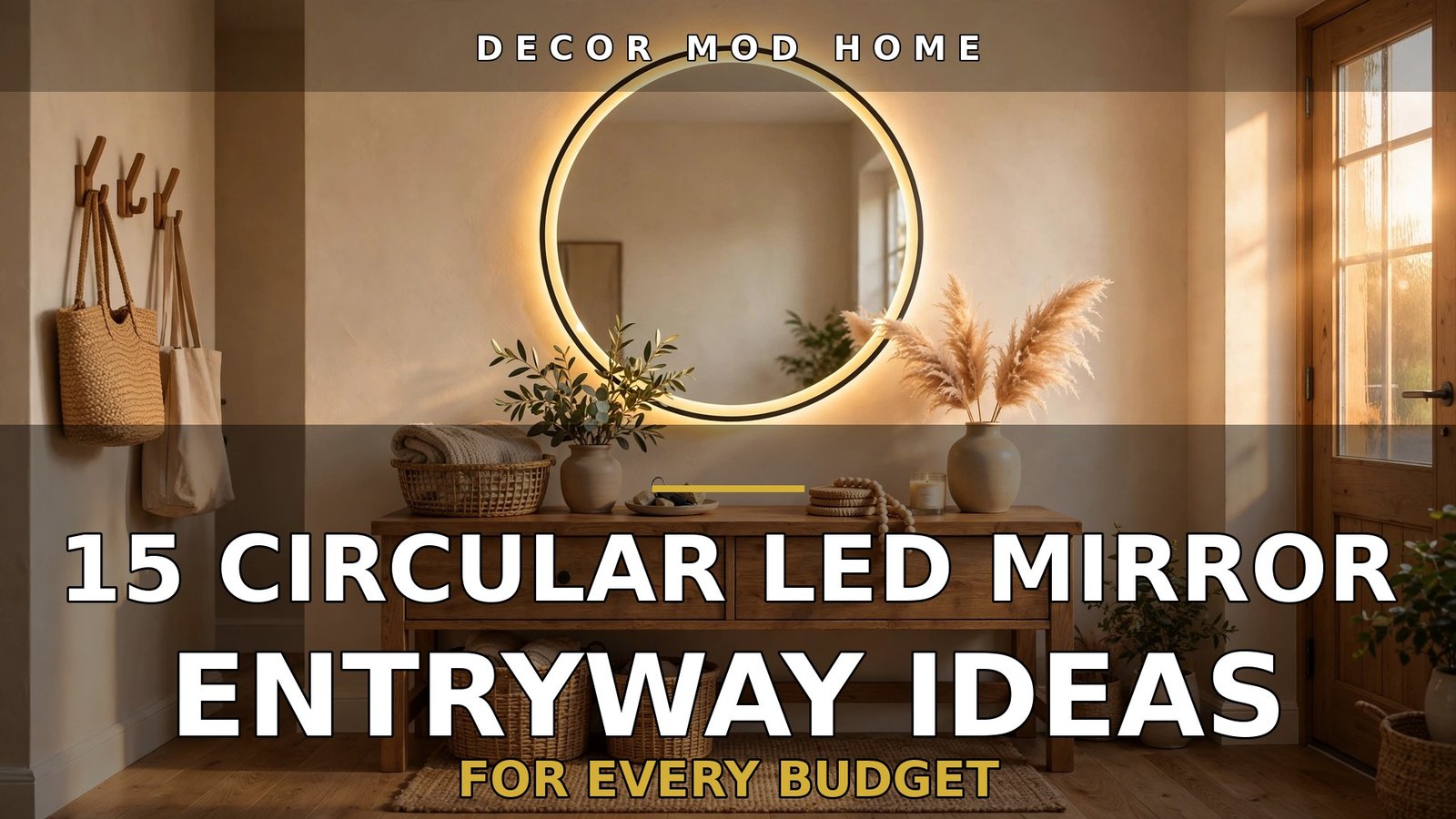
15 Circular LED Mirror Entryway Ideas for Every Budget
You do not need a designer budget to get the designer look. A circular LED mirror in the entryway delivers that warm, welcoming halo glow for a fraction of what most people expect — and with a few clever styling tricks, even the most affordable mirror can look like a high-end find. This list is all about circular LED mirror entryway ideas for every budget: smart affordable picks, DIY glow hacks, renter-friendly mounting, and styling secrets that make a modest mirror the star of your foyer. Let’s make your entryway glow without emptying your wallet.
1. Score a Stunning Round LED Mirror for Under $100
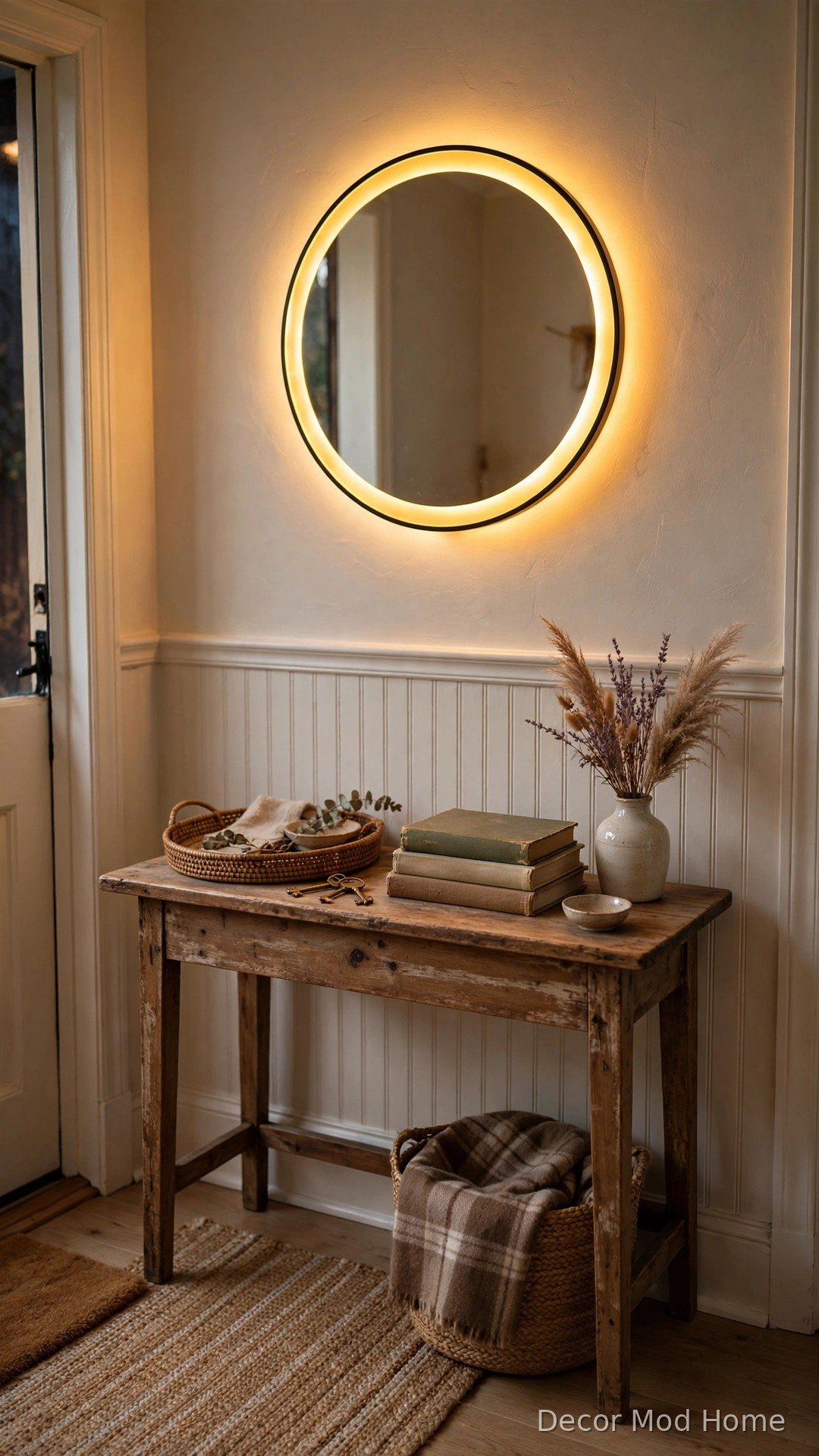
Here’s the industry’s best-kept secret: some of the best-looking circular LED mirrors cost less than a dinner out. Big-box retailers and online marketplaces regularly sell 24- to 32-inch round LED mirrors with warm backlighting for $60 to $100, and at a glance they’re nearly indistinguishable from models three times the price. Look for the specs that actually matter: 2700K–3000K color temperature, a CRI above 80 for flattering light, and an anti-fingerprint coating if you have kids. Skip paying extra for brand names and focus on those three numbers. Read the review photos, not just the studio shots — real homes reveal the true glow. An affordable mirror hung at the right height with thoughtful styling beats an expensive one hung carelessly every single time.
2. DIY a Halo Glow Behind Any Round Mirror
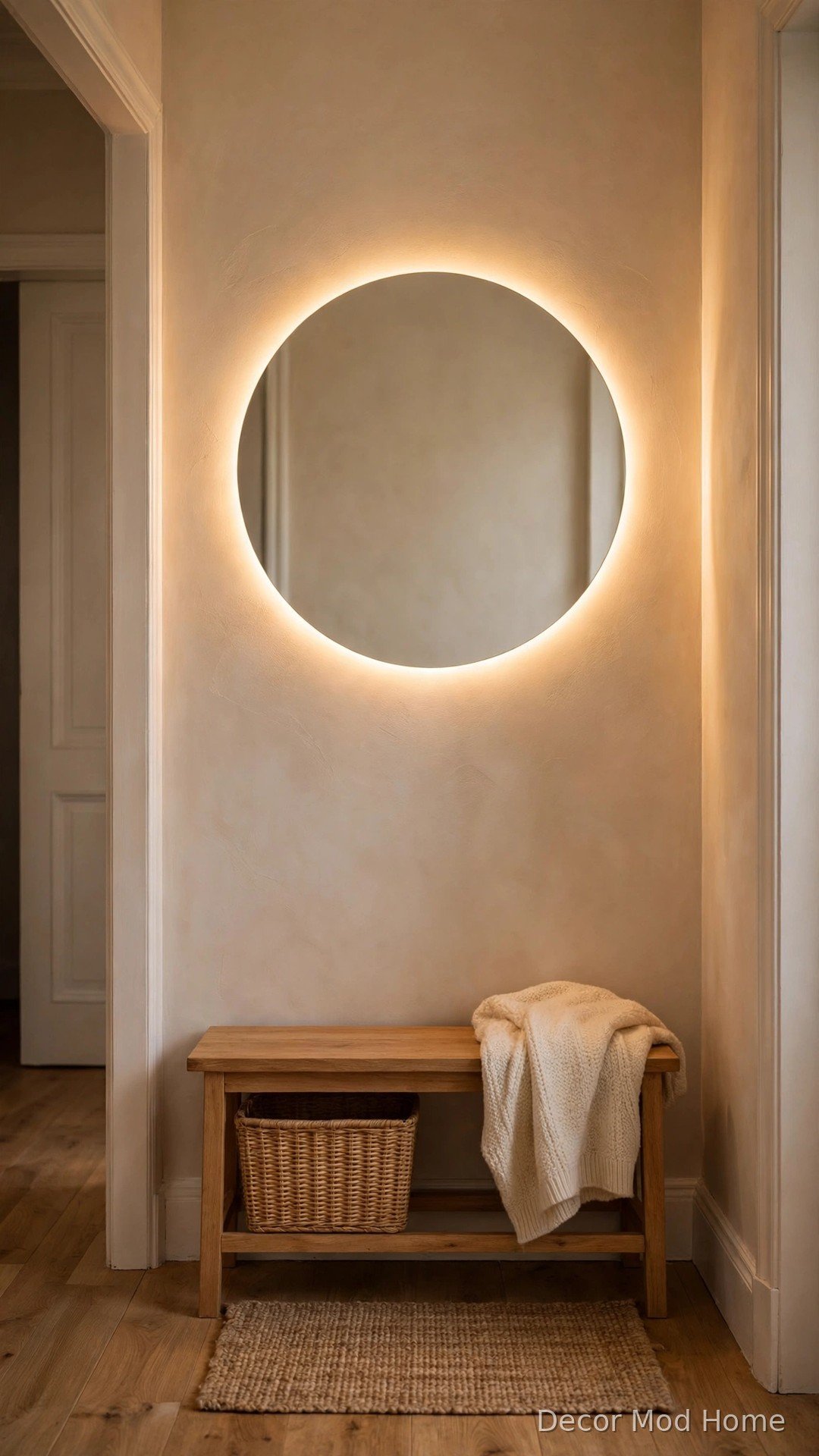
Already own a plain round mirror you love? Give it the LED treatment for about $15. A strip of warm-white adhesive LED tape light mounted in a circle on the wall behind the mirror creates a convincing halo effect — from the front, guests will assume it’s a built-in backlit model. Cut the strip to wrap just inside the mirror’s diameter, stick it to the wall, and hang the mirror over it with a small spacer (adhesive foam pads work) so the light spills around the edges. Plug it into a nearby outlet and hide the slim wire behind furniture, or go battery-powered for a truly wireless install. This hack works on thrifted mirrors, frameless circles, even rattan-framed boho pieces. It’s the single cheapest way to get the glowing-mirror look.
3. Renter-Friendly: Lean It Instead of Hanging It
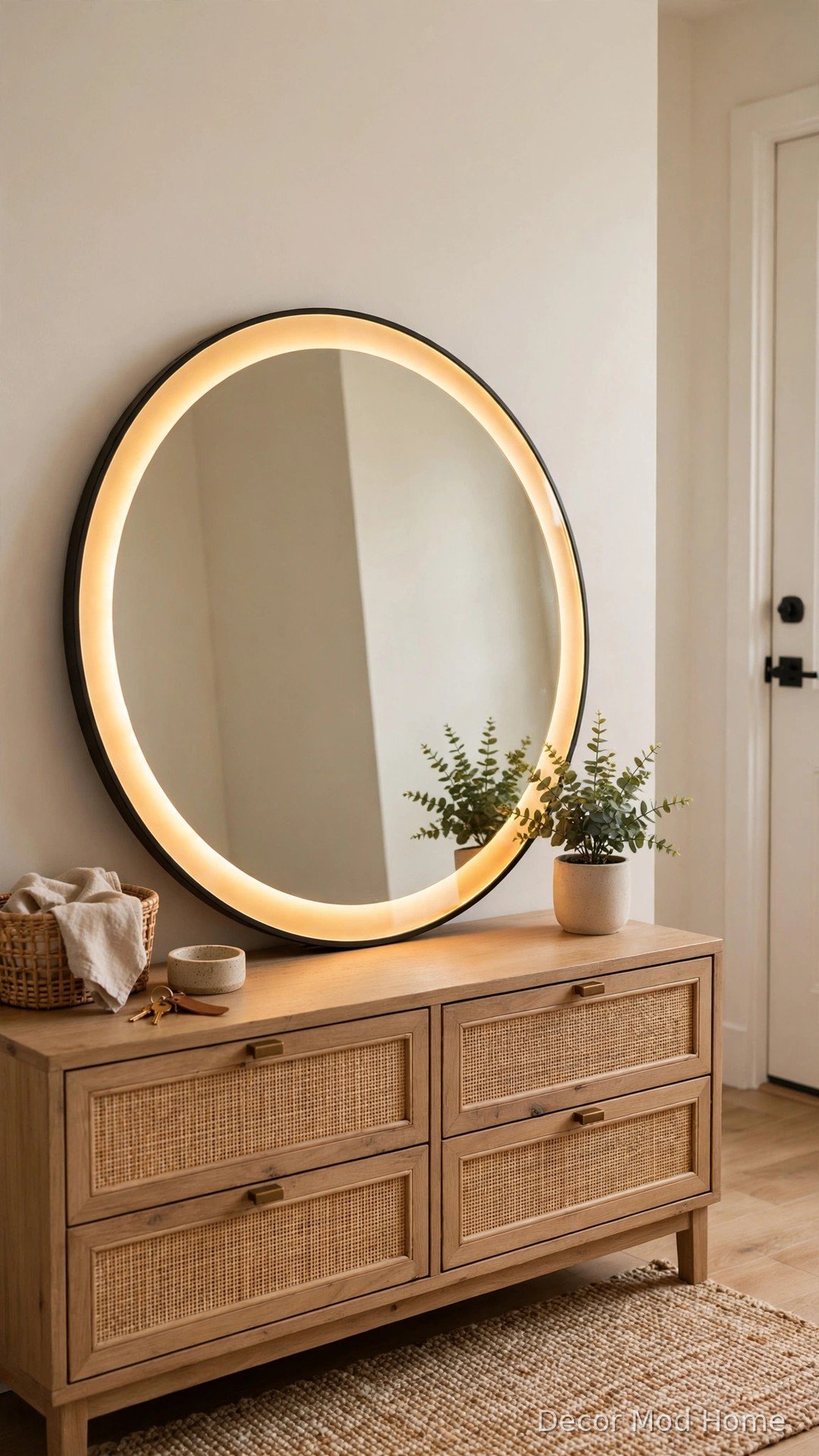
No drilling allowed? No problem. A 28- to 36-inch round LED mirror leaning on a console table or low dresser looks intentionally styled — like something from a design magazine shoot — and requires zero holes in the wall. Rest the bottom edge securely on the furniture surface and tilt the top back against the wall at a slight angle; two discreet adhesive strips rated for the weight add peace of mind. Run the power cord down behind the furniture to the nearest outlet, or choose a battery-powered model and skip cords entirely. The leaned look reads relaxed and editorial, and styling around it is easy: a small stack of books to anchor one side, a trailing plant on the other. When you move, the whole vignette moves with you.
4. Thrift the Frame, Add Your Own Light
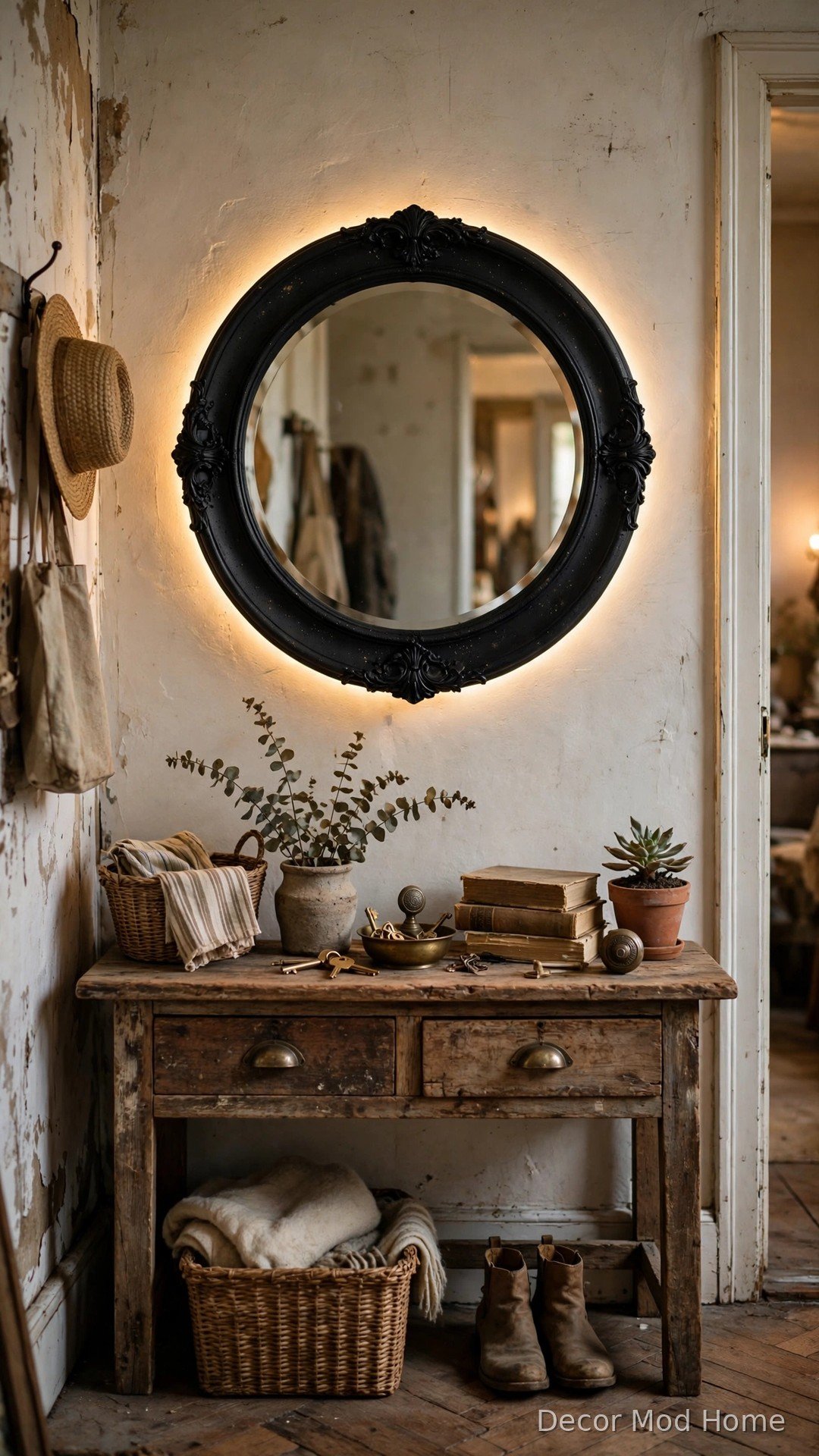
Thrift stores and flea markets are full of gorgeous round mirrors with dated finishes — heavy gold frames, scratched wood, brass that’s seen better days — selling for $10 to $25. That’s your canvas. A quick coat of matte black, warm white, or brushed-brass spray paint transforms the frame in an afternoon, and then the $15 LED-strip halo trick from idea #2 turns it into a “designer” LED mirror for under $40 total. Sand lightly, prime, and use two thin coats for a smooth finish; metallic spray paints look remarkably convincing on old wood and resin frames. This is also the most sustainable way to get the look, and no one — no one — will guess your glowing entryway centerpiece started life in a charity shop bin.
5. Style a $30 Console Table Like a Designer Piece
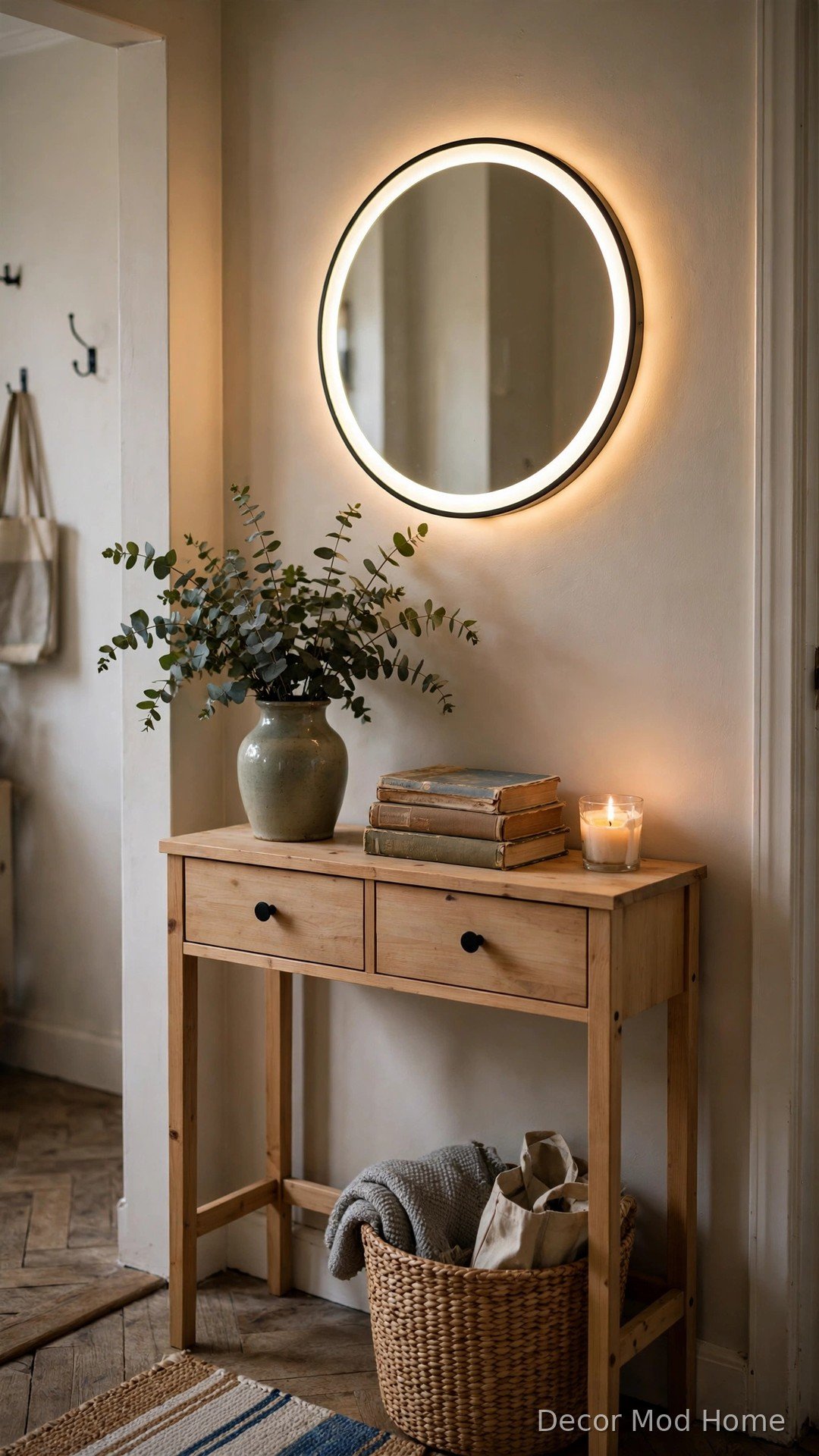
The mirror gets the attention, but the surface below it does half the work — and it doesn’t need to be expensive. A secondhand console, a narrow IKEA-style table, or even a sturdy wall-mounted shelf becomes a designer moment with the right styling: a thrifted tray to corral keys, a small vase with grocery-store eucalyptus, one stack of coffee-table books from a used bookstore, and a candle. Keep it to odd numbers and varying heights — the classic designer formula — and leave breathing room so it reads curated, not crowded. The LED mirror’s glow washing over this little scene at night is what sells the luxury. Total cost for the surface styling: often under $30 if you thrift it.
6. Warm Up Harsh LEDs on a Budget
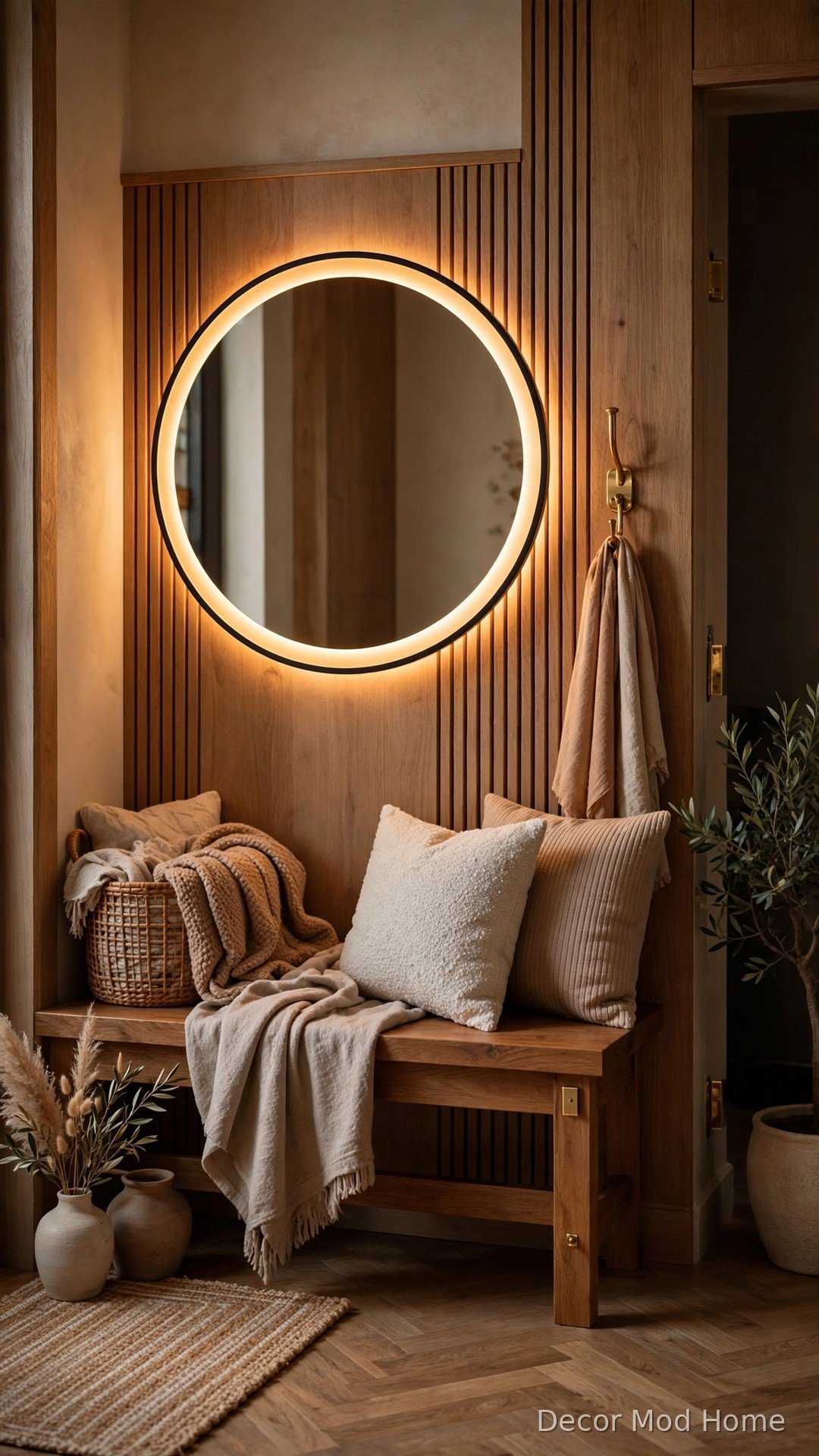
Found a great deal on a mirror but the light is an icy, unflattering blue-white? Don’t return it — warm it up. If the mirror has adjustable color temperature, dial it to 2700K and you’re done. If it’s fixed cool-white, a sheet of warm amber lighting gel (sold for photography, a few dollars for a large sheet) cut to fit behind or over the LED edge shifts the tone dramatically toward candlelight warmth. For plug-in models, swapping the whole setup for a $12 smart plug with dimming gives you brightness control that instantly softens the feel at night. And remember: surrounding the mirror with warm-toned decor — wood, brass, amber glass — tricks the eye into perceiving the light as warmer than it measures. A “too cool” bargain mirror is a fixable problem, not a lost cause.
7. The 24-Inch Sweet Spot for Small Entries
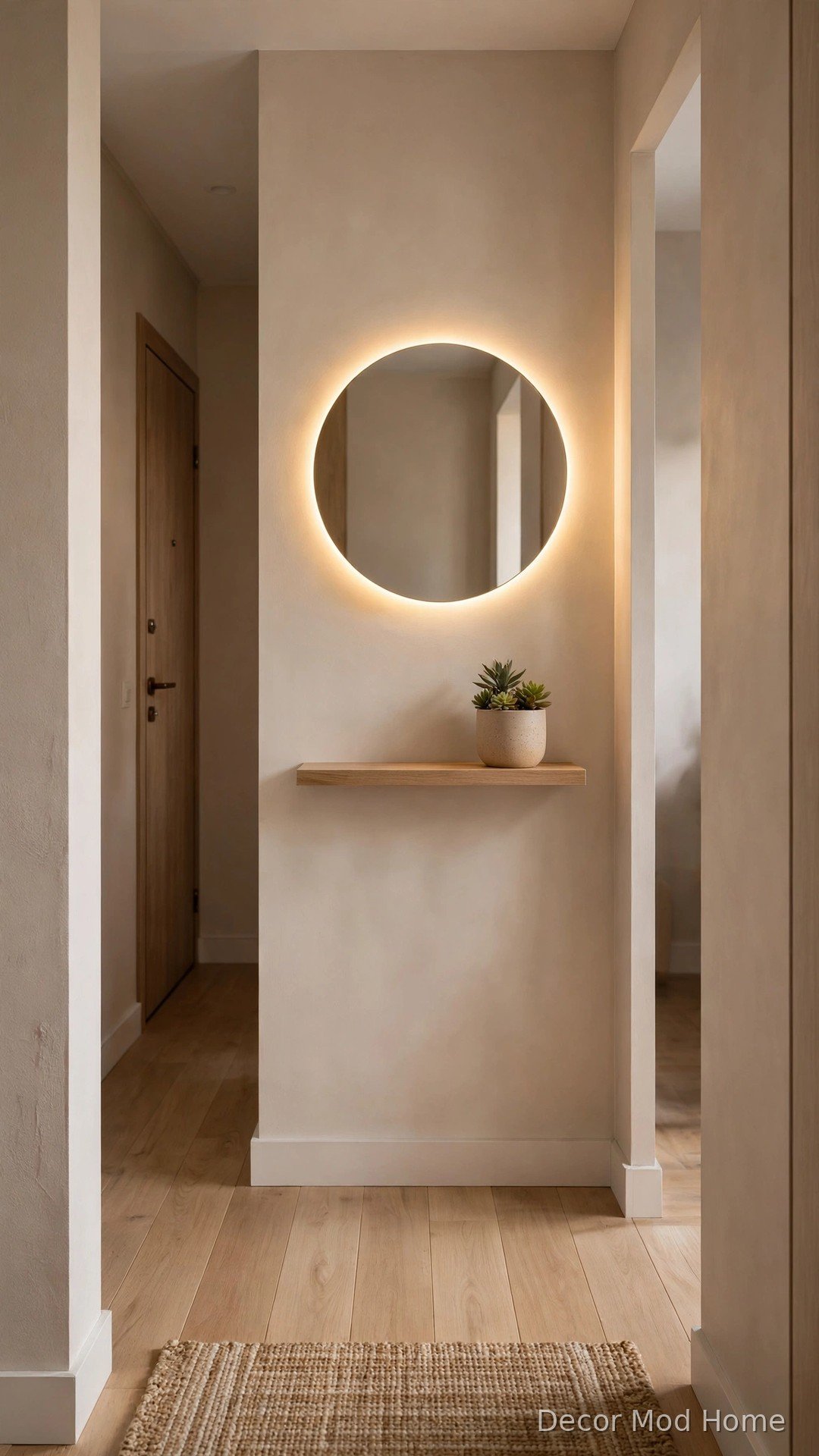
Bigger isn’t always better — or cheaper. For narrow hallways and apartment entries, a 24-inch circular LED mirror hits the sweet spot: large enough to make an impact, small enough to cost significantly less than 32- and 36-inch models, and perfectly proportioned over a slim console or bench. The smaller diameter also means the LED ring draws less power and the mirror is light enough to hang on a single sturdy hook — no stud-finding drama. Style it with one deliberate element below, like a narrow floating shelf with a small plant, to keep the composition balanced. In a tight entry, a well-chosen 24-inch mirror with a strong halo reads far more expensive than an oversized mirror crammed into a space it doesn’t fit.
8. Go Cordless: Battery-Powered LED Mirrors
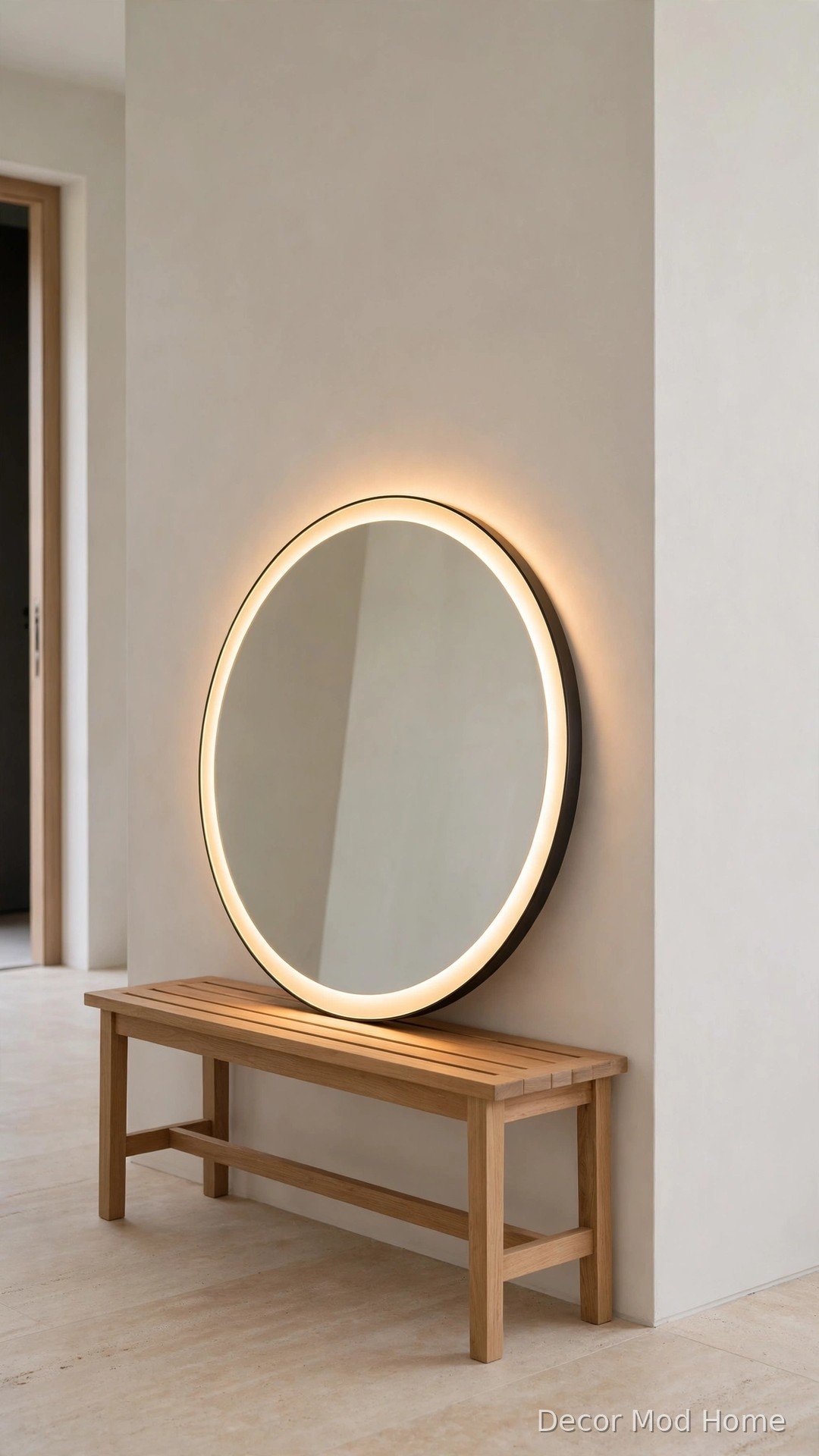
No outlet near your entryway? Battery-powered circular LED mirrors have quietly become excellent — and they free you from cord-hiding gymnastics entirely. Most run on rechargeable USB packs hidden behind the glass, giving 4 to 8 hours of glow per charge depending on brightness; at typical entryway use (an hour or two of evening ambience), that’s a charge every few days, or weekly on a timer. Look for models with a remote or touch dimmer so you’re not constantly reaching behind the glass. They’re ideal for renters, for walls far from outlets, and for the leaning-mirror trick where a dangling cord would ruin the look. Pro tip: buy a model with a removable battery pack so you can swap in a spare while one charges — uninterrupted glow.
9. Layer Thrifted Finds Around the Glow
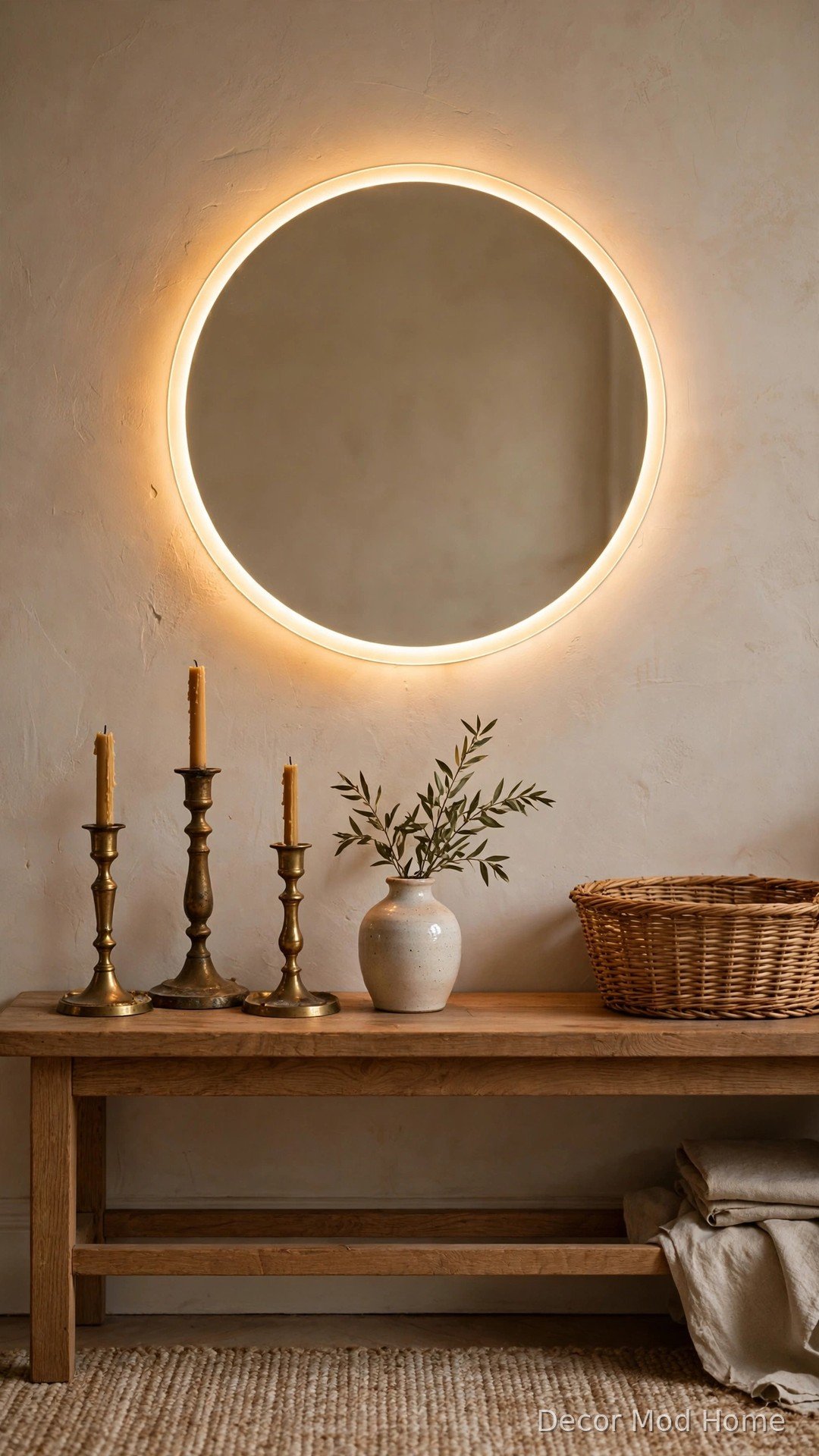
The LED halo is your spotlight — now give it something to illuminate. Thrifted brass candlesticks, a $5 ceramic vase, a woven basket from a flea market: arranged in the mirror’s warm wash of light, humble finds look like curated collectibles. The trick is letting the glow do the styling work for you — light is the most flattering filter there is, and it costs nothing. Group items in threes at varying heights on the console below, and add one living element (a pothos cutting in water, a $4 grocery herb) for life. Keep the palette tight — warm metals, wood, cream — so the vignette reads intentional. Guests will compliment your “expensive” taste; your secret is a $40 mirror and a Saturday morning at the thrift store.
10. Frame It Yourself with Peel-and-Stick Trim
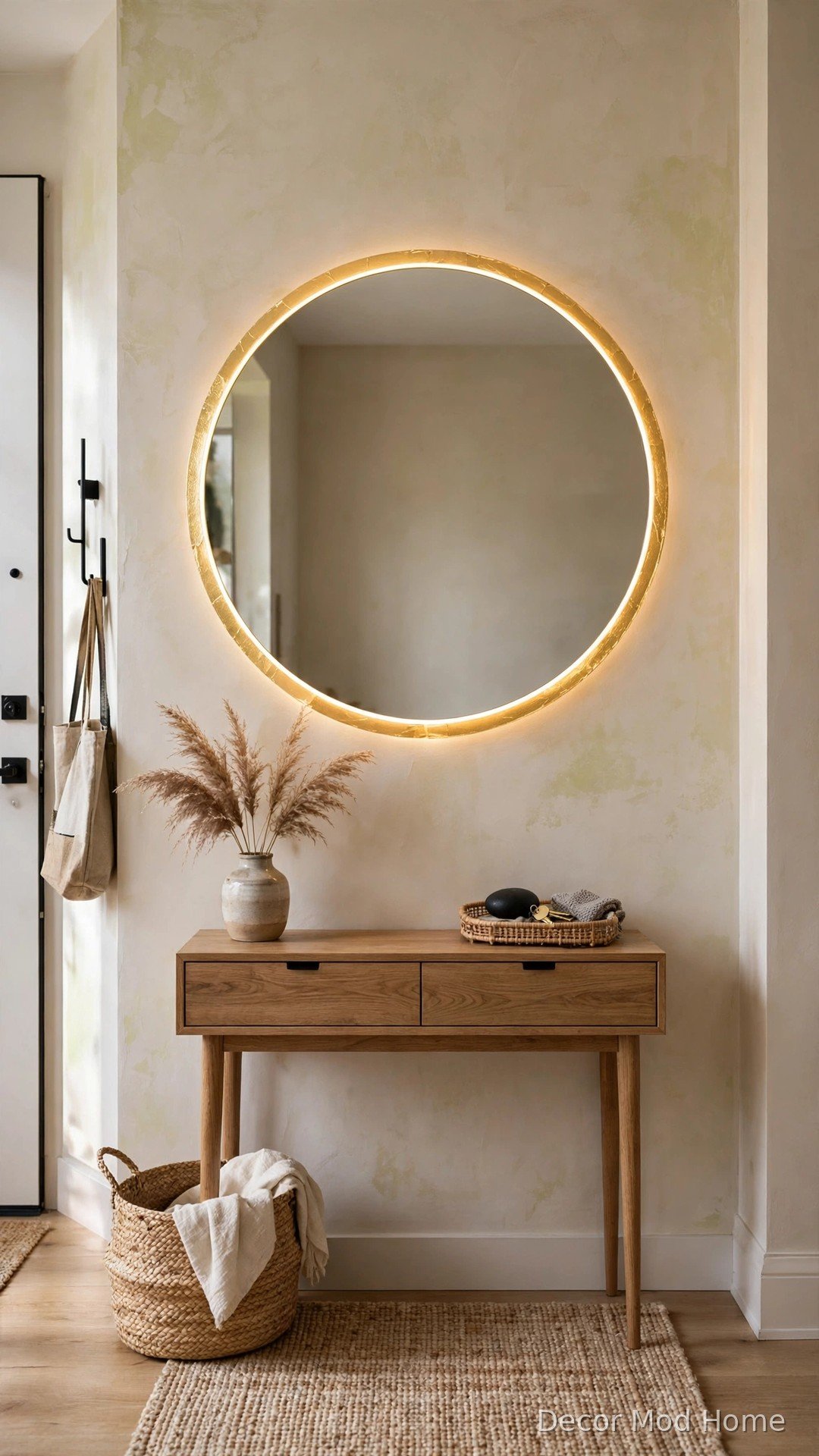
A frameless LED mirror is often the cheapest option — and with $10 of peel-and-stick trim, it becomes a custom piece. Flexible adhesive molding (sold for furniture upcycling) wraps neatly around the mirror’s edge: choose a thin gold trim for glam, matte black for modern, or natural rattan-look for boho warmth. Clean the edge with rubbing alcohol first, apply slowly in sections, and trim the join at the bottom where it’s least visible. The trim catches the LED glow and reads as a real metal or wood frame from more than a foot away. Pair your newly “framed” mirror with matching hardware on the console — a $3 pack of adhesive hooks in the same finish — and the whole entry looks deliberately designed rather than budget-assembled.
11. One Mirror, Two Moods: Day and Night Styling

Get double the design mileage from one affordable mirror by styling for two moments. By day, the LED mirror is a bright, practical piece — keep the console tidy and functional: a tray for keys and sunglasses, a small dish for mail. By evening, dim the LEDs (or switch on just the halo via a smart plug schedule) and the same corner becomes moody ambience: light a candle, and the flicker plus the halo turns your entry into a boutique-hotel arrival. The styling shift takes thirty seconds — tuck the mail tray in a drawer, light the candle — but it makes a budget mirror feel like a considered lighting scheme. If your mirror has a memory function, it’ll return to your favorite evening setting automatically. One purchase, two atmospheres, zero extra cost.
12. Double Your Light: Hang It Opposite a Window
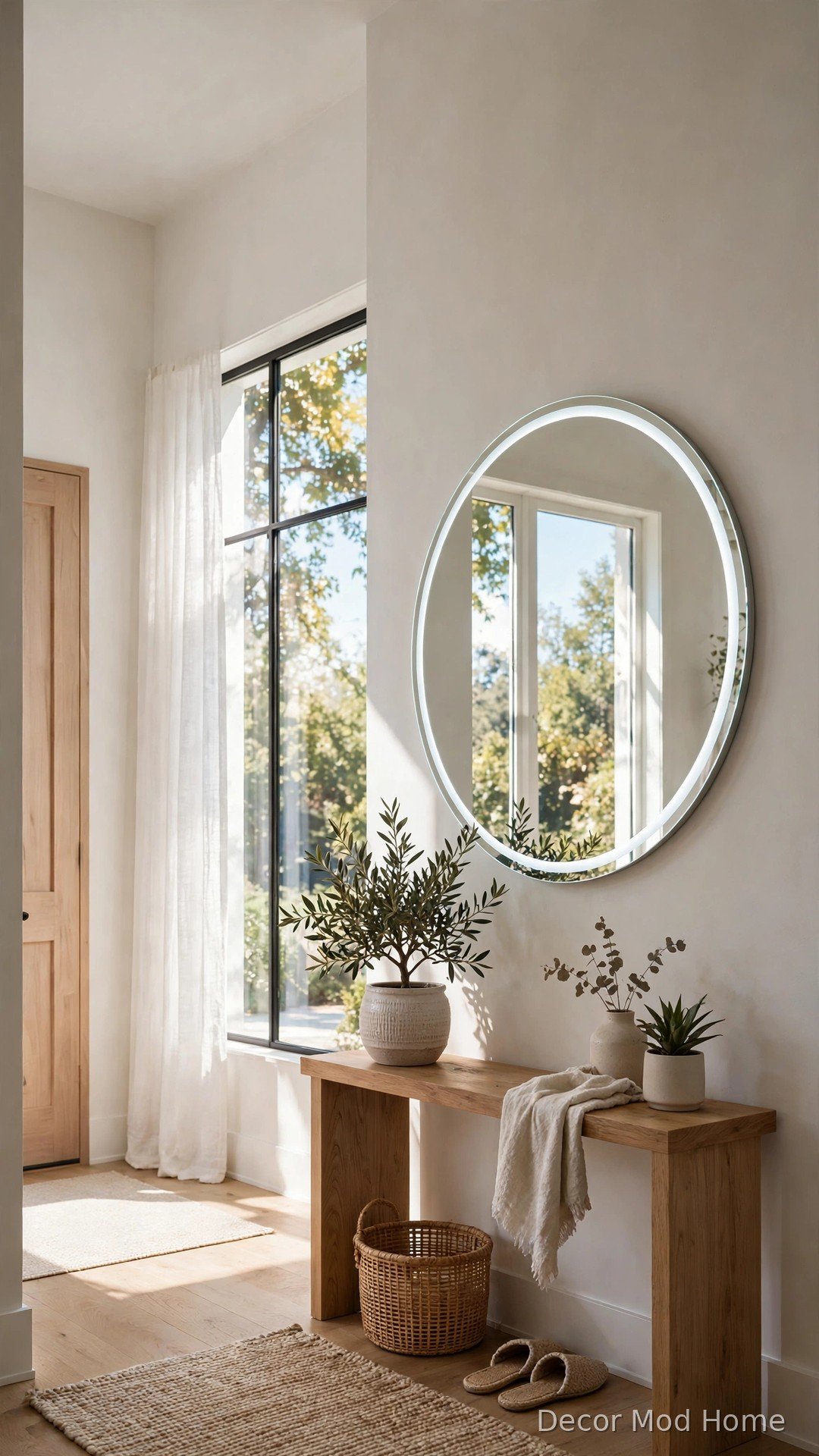
The best lighting upgrade is free: placement. Hanging your circular LED mirror on the wall opposite a window — or opposite your front door’s glass panels — bounces daylight deep into the entry all day, so the LEDs only need to work after dark. The mirror effectively becomes a second window, doubling both natural and artificial light in a dim hallway. This trick matters most in small, dark entries where every photon counts, and it makes even a basic LED mirror perform like a premium one because the room itself is brighter. If there’s no window to borrow, opposite a light-colored wall still helps — pale paint reflects the halo back into the room instead of swallowing it. Position first, purchase second.
13. Add Dimming for $12 with a Smart Plug
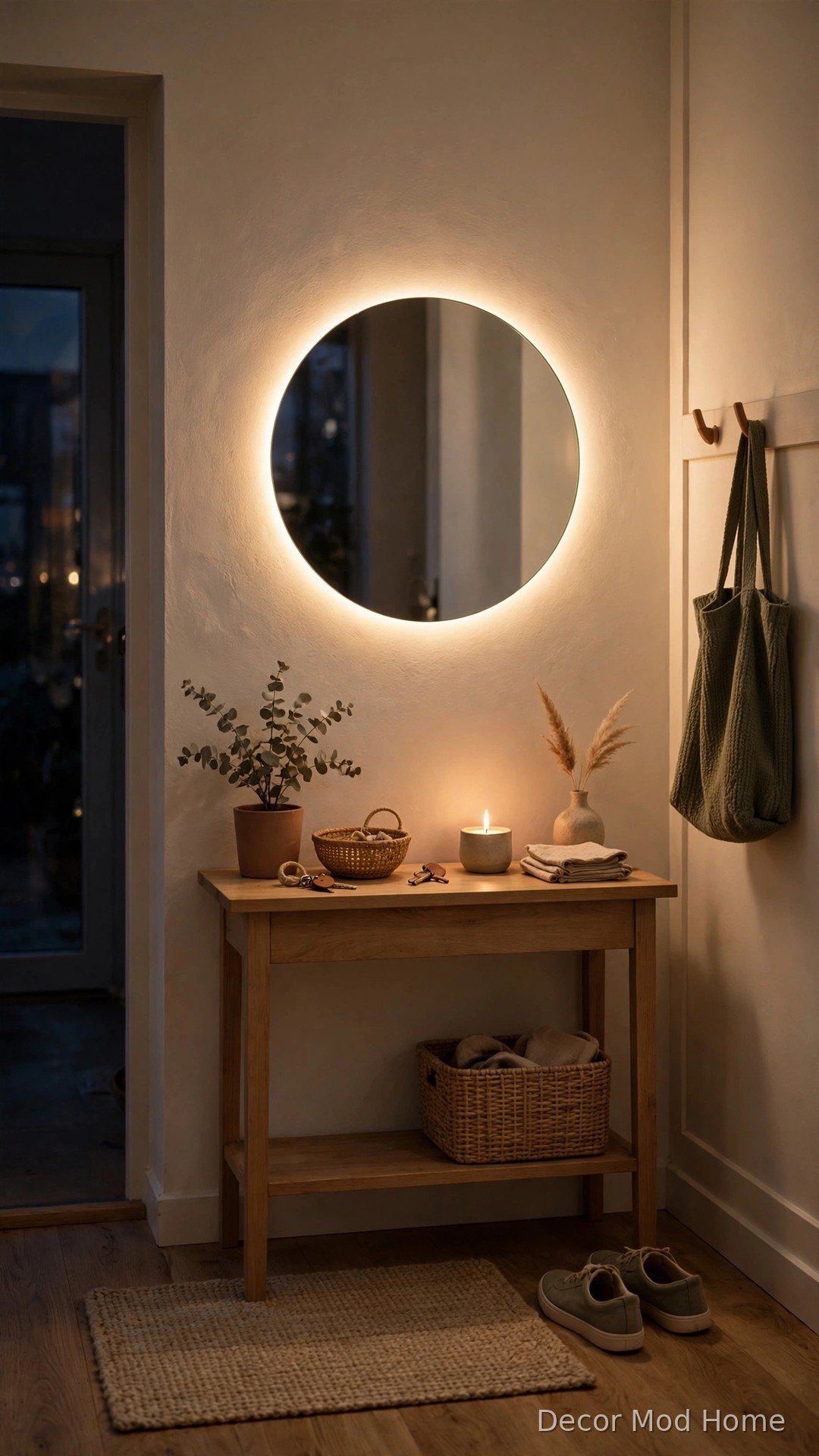
Here’s the cheapest luxury upgrade in this entire list: a $12 dimmable smart plug. Plug your LED mirror into it and you gain app and voice dimming, scheduling (on at sunset, off at midnight), and vacation-mode randomness — features that $300 “smart” mirrors charge a premium for. The scheduling alone transforms the experience: your entryway greets you with a warm glow every evening without you touching a thing, and you’ll never again realize at bedtime that you left the mirror blazing. Check that your mirror’s LEDs are dimmable (most are; if unsure, the product Q&A usually confirms it) and that the plug supports dimming, not just on/off. Twelve dollars, ten minutes of setup, and your budget mirror behaves like a high-end smart fixture.
14. Style the Surface Below, Not Just the Wall
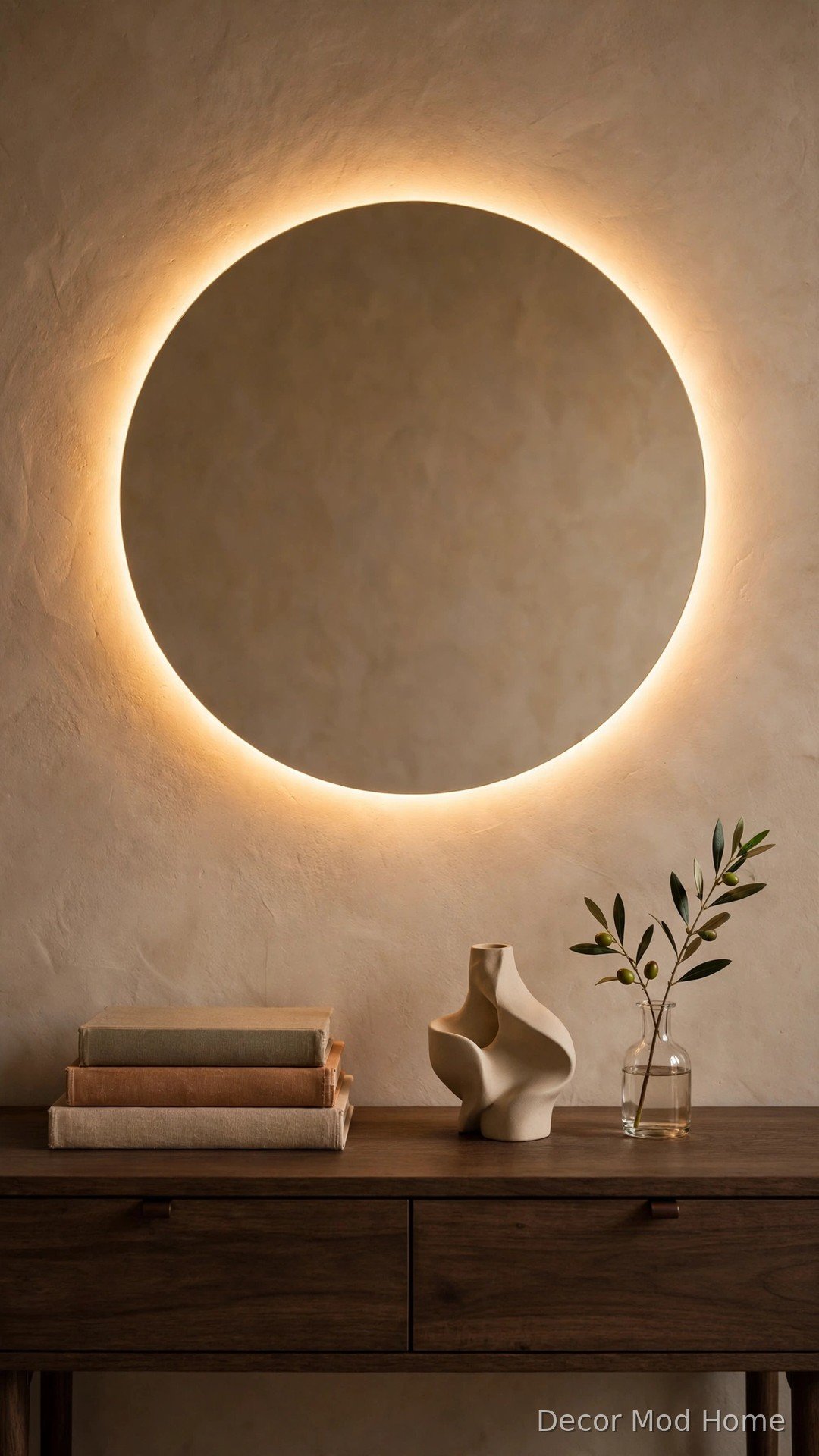
Beginners style the mirror; designers style everything the mirror’s light touches. The 2 to 3 feet of console, bench, or shelf beneath your circular LED mirror sits in the most flattering light in your home — use it. A low stack of books with a small sculptural object on top, a lidded basket hiding clutter, a bud vase with a single stem: arranged in the halo’s wash, these read as a styled shelfie. Keep the center clear directly under the mirror’s middle so the composition breathes, and push taller items slightly off-center for that effortless designer asymmetry. This costs nothing if you shop your own home — raid bookshelves and tabletops for candidates. The mirror provides the spotlight; you just have to give it something worth illuminating.
15. Keep the Glow: Budget Cleaning That Protects LEDs
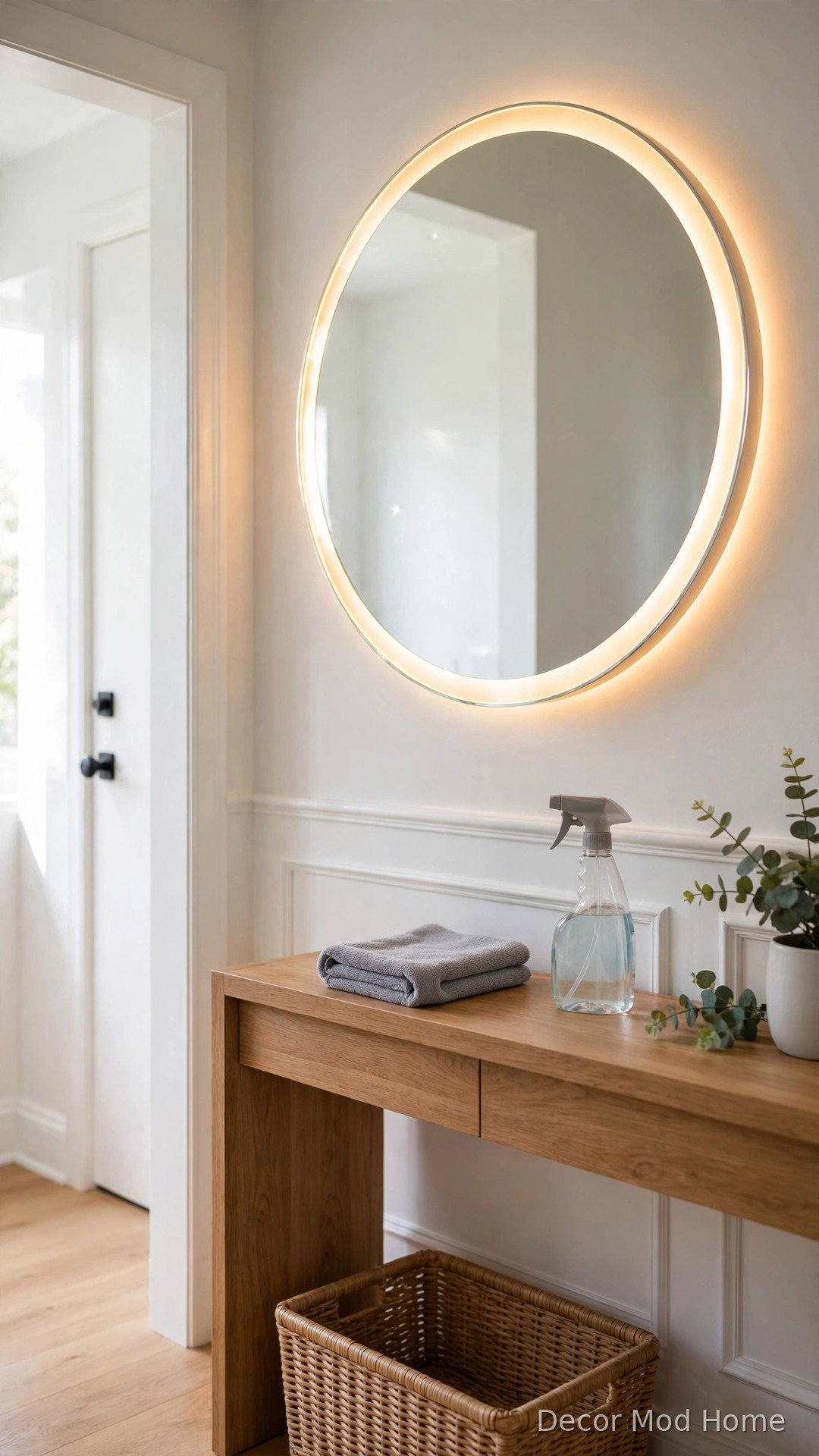
A budget mirror stays looking premium only if you maintain it — and the right care costs pennies. Dust the LED edge weekly with a dry microfiber cloth; dust buildup dims the halo noticeably over months. Clean the glass with a 50/50 mix of distilled water and white vinegar in a spray bottle (pennies per bottle) rather than harsh ammonia cleaners, which can damage LED seals and anti-fog coatings over time. Never spray liquid directly at the LED edge — mist the cloth, then wipe. Check plug-in cords yearly for wear, and if your mirror has a removable battery, don’t leave it on the charger 24/7; lithium packs last longest between 20 and 80 percent. Ten minutes of care a season keeps your affordable mirror glowing like the day you hung it — for years.
Frequently Asked Questions
How much should I spend on a circular LED mirror for my entryway?
You can get a great-looking 24- to 32-inch circular LED mirror for $60 to $120. Focus on 2700K–3000K color temperature and a CRI above 80 rather than brand names. Mirrors above $200 mostly buy you premium frames and smart features — both of which you can DIY for far less with the tricks in this list.
Can I make a regular round mirror look like an LED mirror?
Yes — mount a $15 strip of warm-white adhesive LED tape in a circle on the wall behind the mirror, using small foam spacers so light spills around the edges. From the front it reads as a built-in halo. Battery-powered strips make it fully wireless and renter-friendly.
Are cheap LED mirrors safe and reliable?
Generally yes, if you buy from reputable sellers and check for standard safety certifications on the listing. Look for cool-to-the-touch LEDs, a properly rated power adapter, and good review photos from real buyers. Avoid no-name listings with zero reviews or stock-photo-only images.
What’s the best renter-friendly way to mount an LED mirror?
Lean a 28- to 36-inch mirror on a console table with discreet adhesive strips for security, and use a battery-powered model or hide the cord behind furniture. No holes, no damage, and the leaned look is genuinely stylish — not a compromise.
A Glowing Entryway Is Closer (and Cheaper) Than You Think
A welcoming entryway isn’t about how much you spend — it’s about light, placement, and a little styling courage. Start with one idea from this list: score an affordable mirror, try the $15 halo hack, or simply lean a mirror you already own in a better spot. Small moves, warm glow, big transformation. Pin your favorite ideas, and explore more entryway inspiration here on Decor Mod Home to keep the glow going. Your most welcoming entryway is one smart, budget-friendly circle of light away.