18 Brilliant Small Entryway Ideas to Try Now
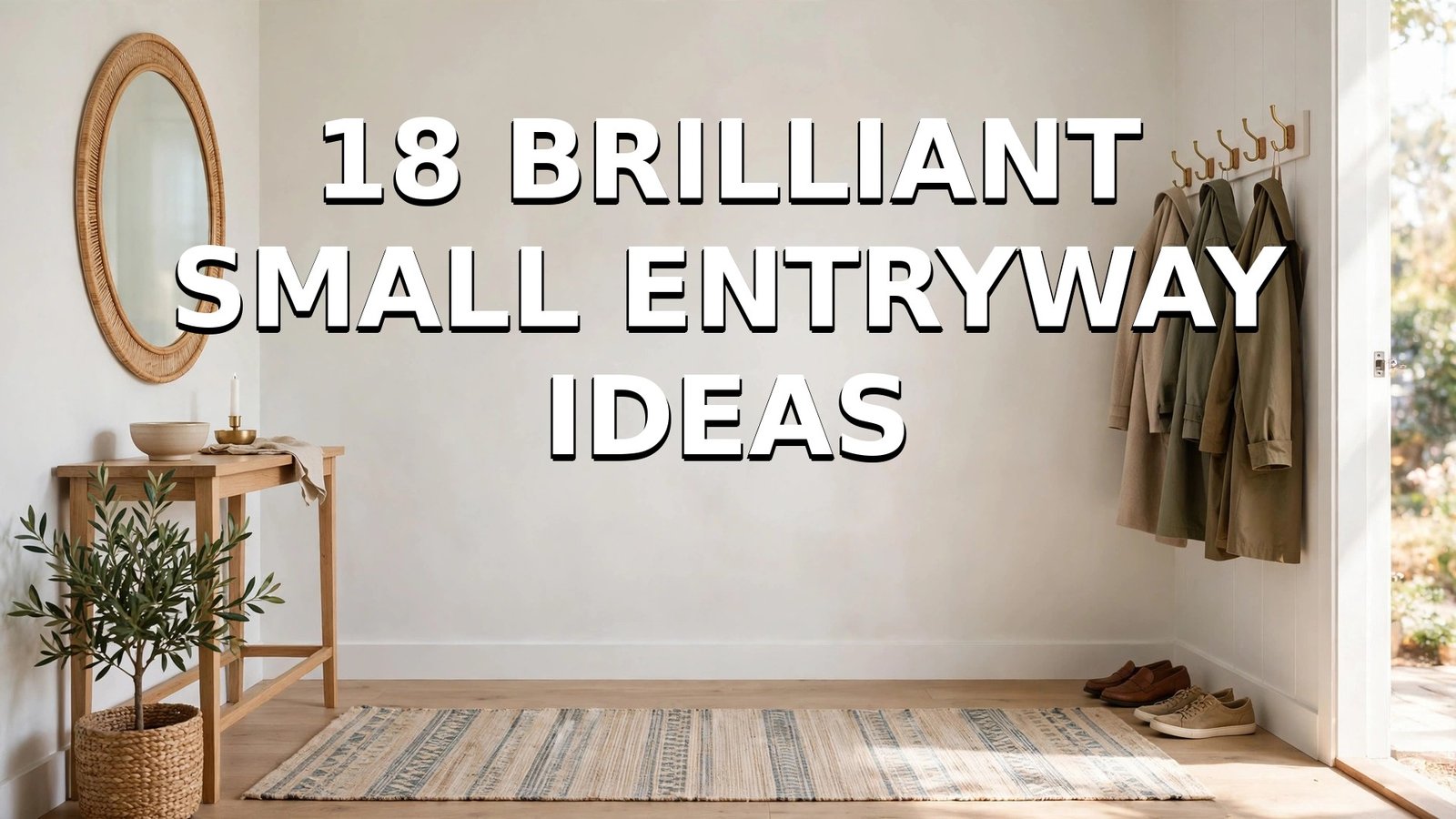
Your entryway sets the tone for your entire home — it is the first thing you see when you walk in and the last thing guests remember on their way out. The good news is that a small foyer is not a design dead end. These 18 brilliant small entryway ideas prove that a few square feet are more than enough to create a space that feels welcoming, organised and full of personality. From slim furniture that hugs the wall to clever vertical storage and light-boosting tricks, each idea below is chosen to make the most of tight dimensions without ever feeling cluttered. Pick the ones that fit your space, mix and match, and watch your little entrance punch far above its weight.
1. Float a Slim Console Table
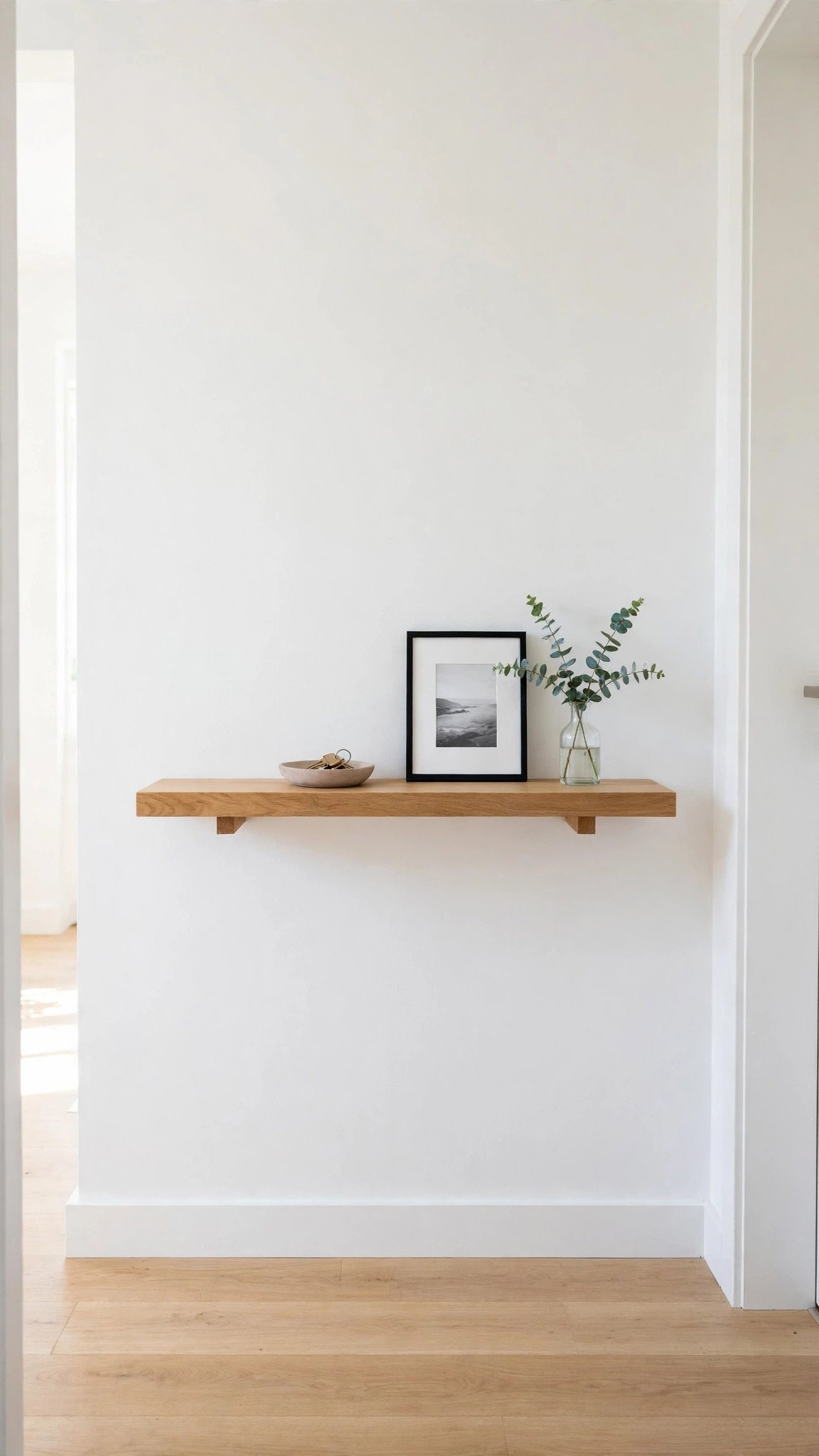
A console table is the classic entryway anchor, but in a small space depth matters more than length. Look for a table no deeper than 25–30 cm — it gives you a landing spot for keys, post and a small lamp without swallowing the walkway. Wall-mounted floating consoles are even better because the visible floor underneath keeps the room feeling open. Style it lightly: a small tray for everyday bits, one framed photo and a bud vase. Keep the top two-thirds clear so it reads as calm rather than crowded. In very narrow halls, a 120 cm wide table in a pale wood or white finish disappears visually against the wall while still doing all the hard work.
2. Hang a Mirror to Double Light and Space
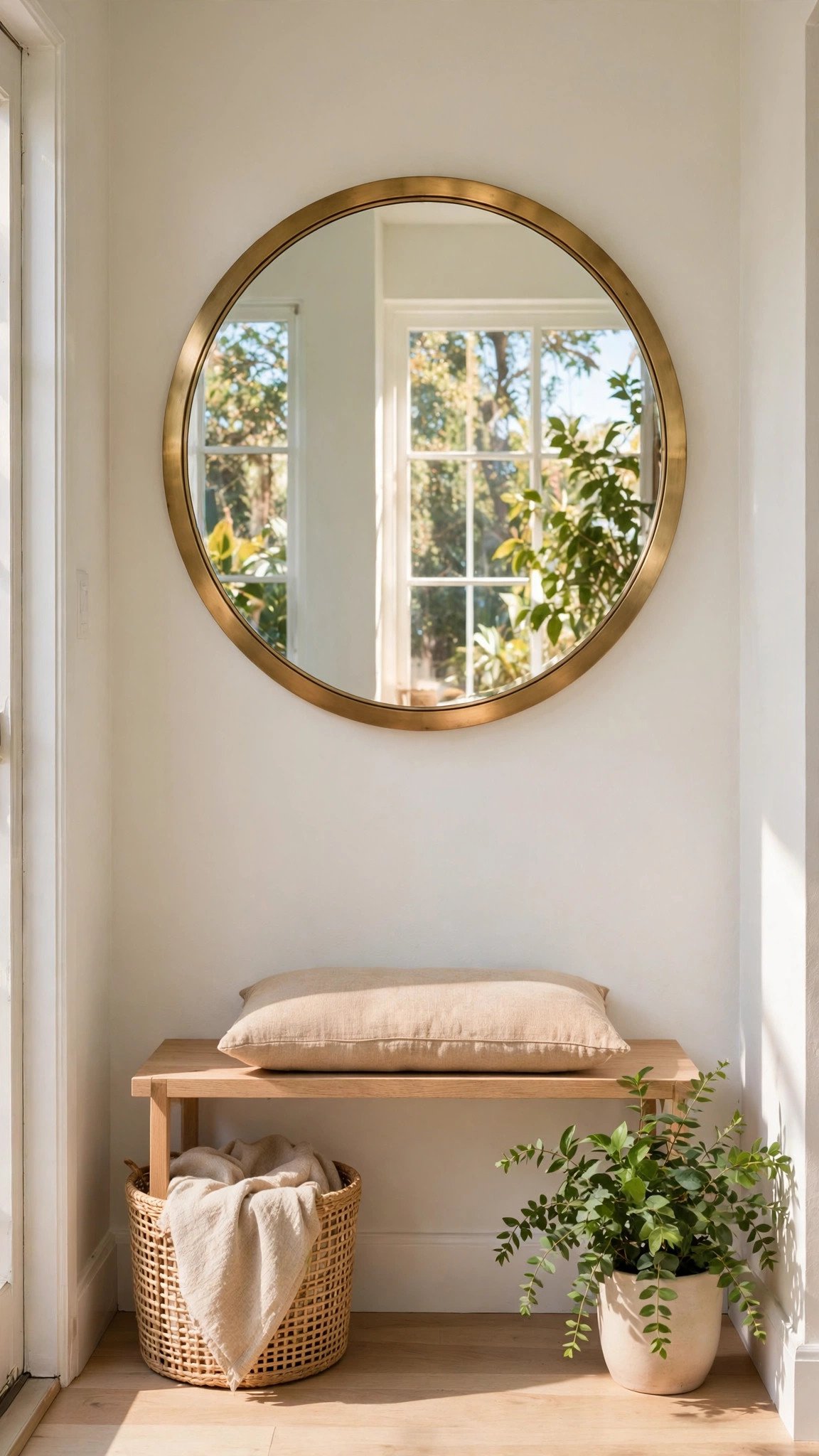
Nothing opens up a poky entryway faster than a well-placed mirror. Hang a large round or arched mirror opposite (or beside) a window or the front door’s glazed panel and it will bounce daylight deep into the space, instantly making it feel twice as wide. Choose a thin frame in brass, black metal or light oak to keep the look airy. A full-length leaning mirror works too if you have a spare 40 cm of wall, and it doubles as a last-look check before you leave. For maximum effect, keep the wall colour light and let the mirror reflect something pretty — a plant, artwork or the pendant light.
3. Mount a Row of Sturdy Wall Hooks
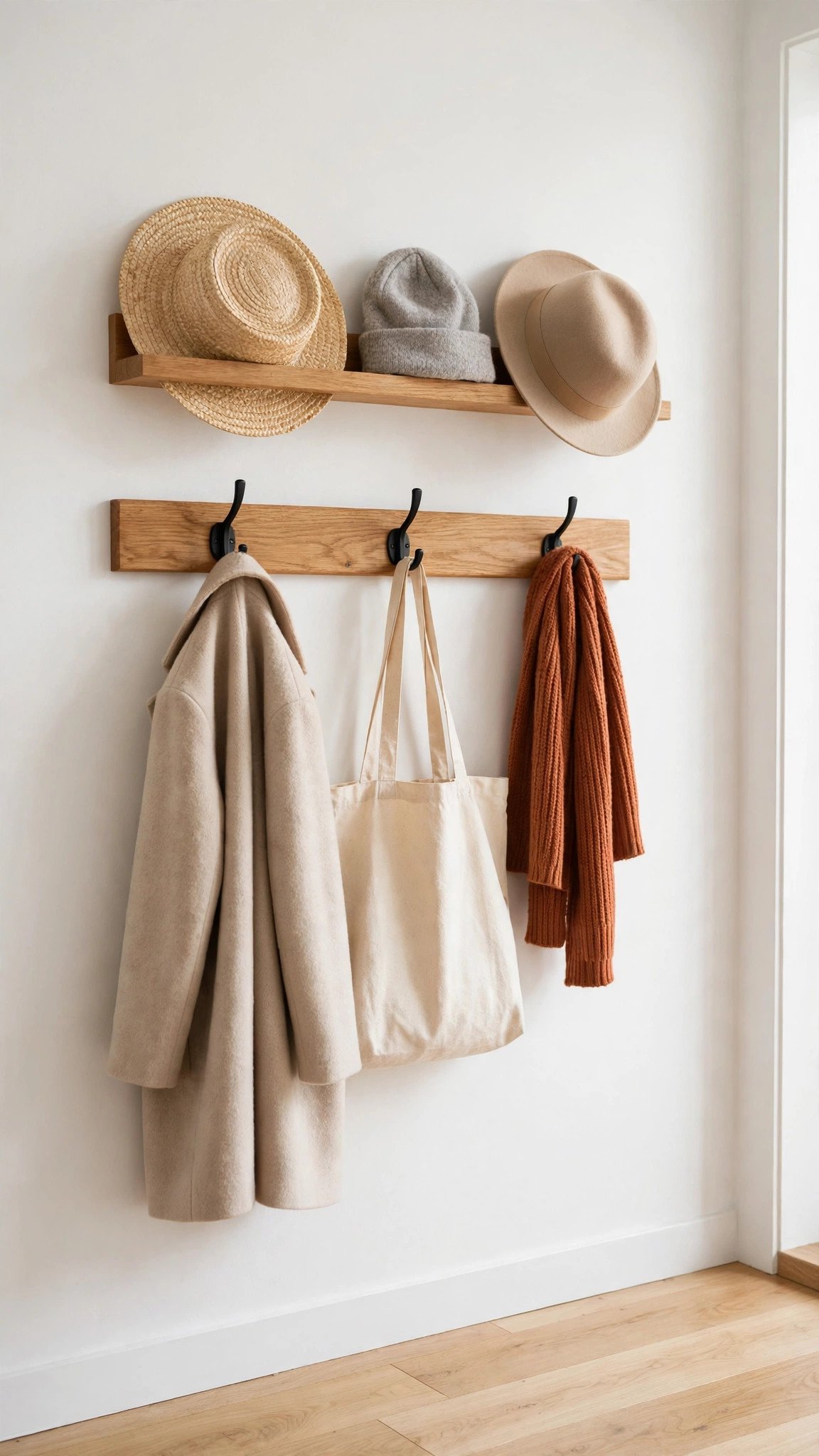
When floor space is precious, go vertical. A solid wooden or metal hook rail mounted at about 150–160 cm gives every family member a dedicated spot for coats, bags and scarves with zero footprint. Choose hooks with a double arm — one for a coat, one for a bag — and space them 20–25 cm apart so heavier winter coats do not crowd each other. In rental homes, look for rails that fix with strong adhesive strips or over-door brackets. A row of five matching hooks in matte black or brushed brass looks intentional rather than improvised, and you can add a slim shelf on top for hats and sunglasses.
4. Add a Narrow Shoe Cabinet, Not a Shoe Rack
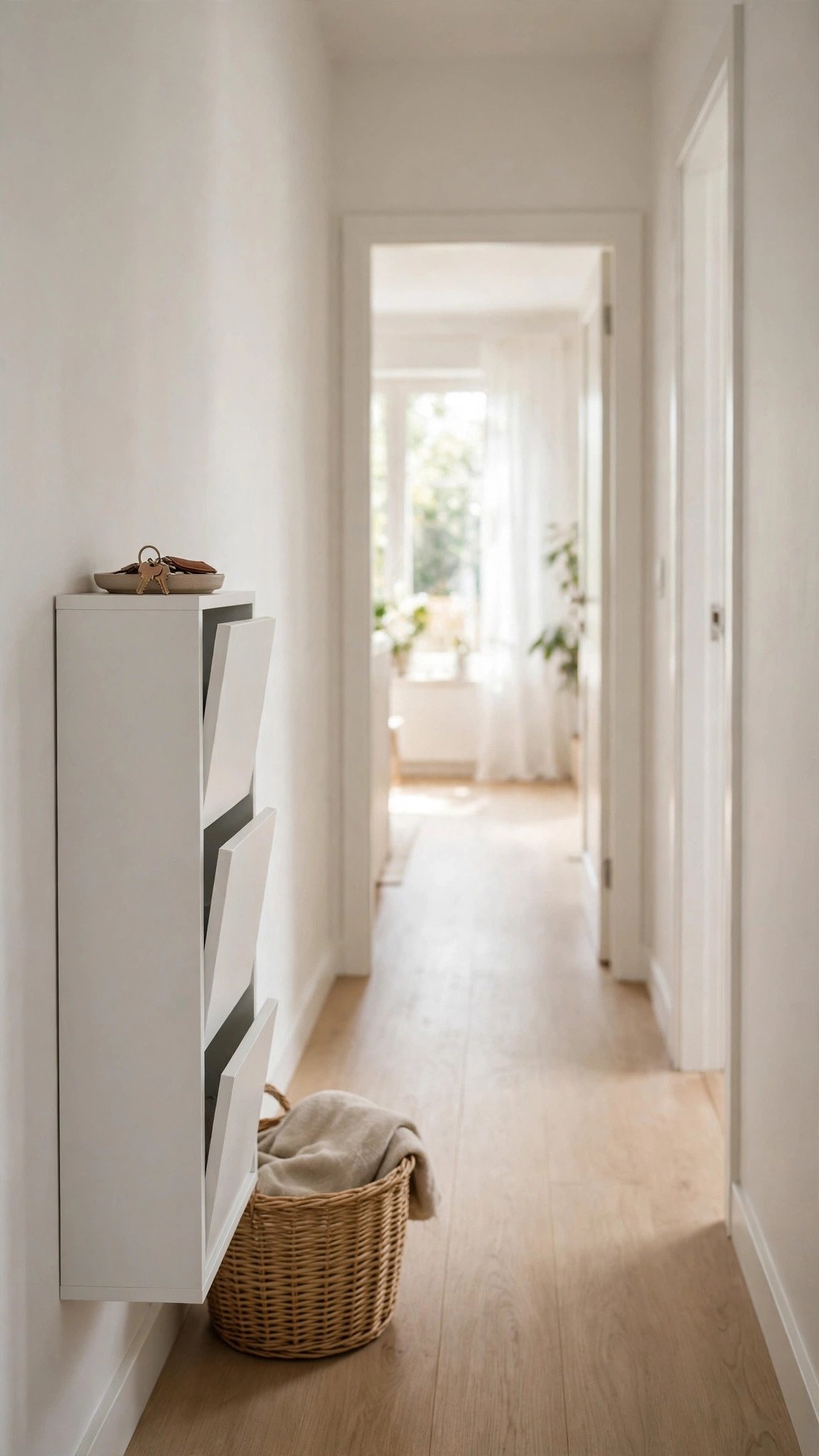
Open shoe racks are clutter magnets. A slim tilt-out shoe cabinet — around 15–20 cm deep — hides a dozen pairs behind clean doors and doubles as a console top for keys and post. White or light-grey finishes blend into the wall, while oak fronts warm up a neutral scheme. Anchor it with a small tray on top to catch keys, and keep one woven basket beside it for the pair of shoes currently in rotation so the cabinet stays a closed, tidy system. If your hallway is under 90 cm wide, choose a cabinet no deeper than 17 cm so two people can still pass comfortably.
5. Choose a Storage Bench That Does Double Duty
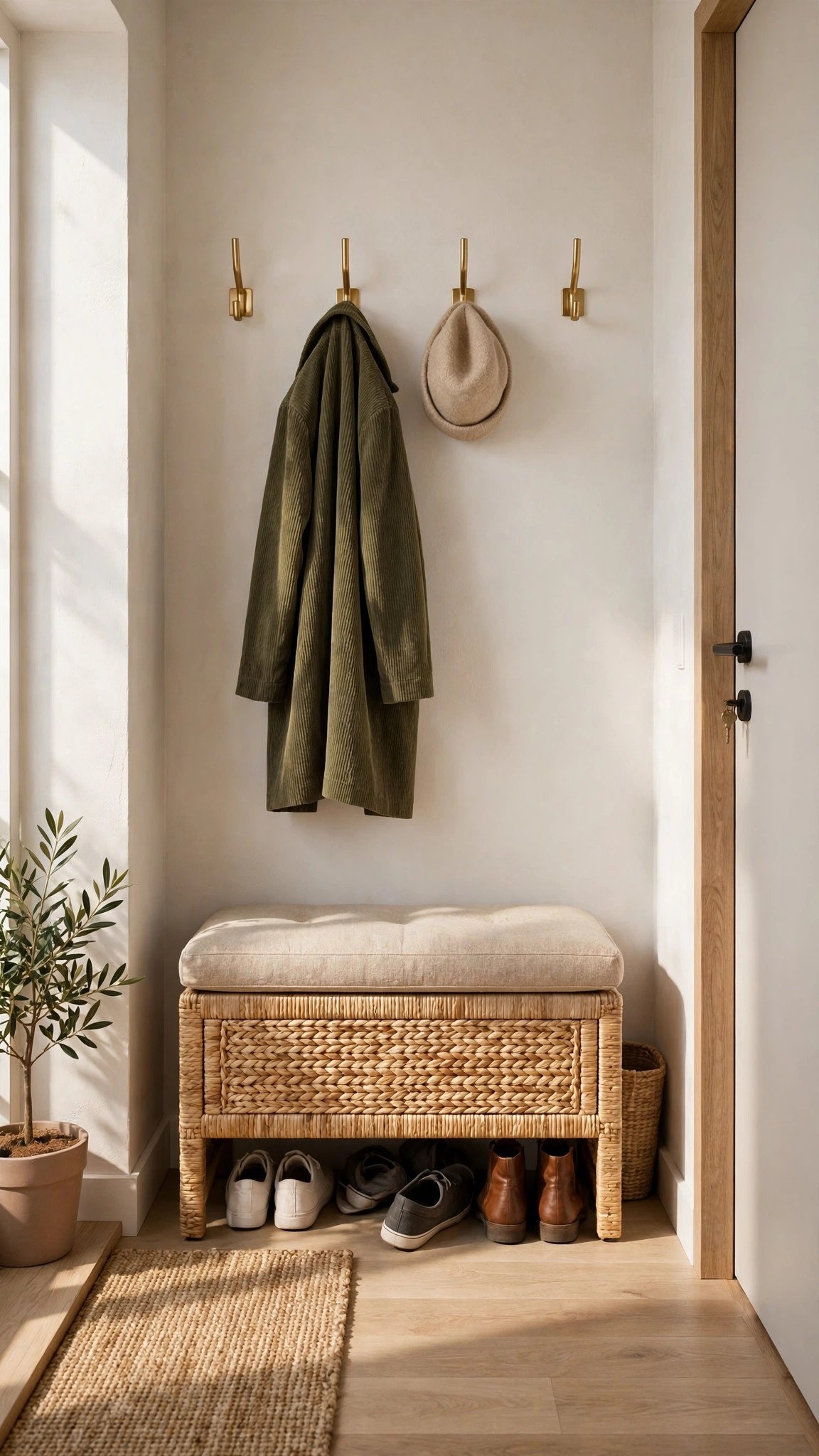
A bench gives you somewhere to sit while pulling on boots, and the lift-up or drawer base swallows gloves, dog leads, reusable bags and umbrellas. For small entryways, pick a bench under 90 cm wide with a depth of 35–40 cm. Upholstered tops in a wipeable fabric add comfort; woven seagrass or rattan fronts keep it breathable and light-looking. Tuck a pair of shoes underneath and add a slim cushion in a washable cover. Position it against the longest clear wall, never in the swing of the front door, and you gain seating plus hidden storage in one neat footprint.
6. Define the Zone with a Runner Rug

A rug tells the eye exactly where the entryway begins and ends, which makes even an open-plan corner feel like a proper foyer. In narrow halls, a runner 60–80 cm wide and washable — look for low-pile cotton, jute or indoor-outdoor weaves — handles muddy boots without stress. Patterns with a small repeat hide dirt between cleans far better than plain light colours. Leave 10–15 cm of bare floor on each side so the space still breathes, and use a thin rug pad to stop slipping on hard floors. A bordered or striped runner also draws the eye forward, making a short hall feel longer.
7. Install Floating Shelves Above the Door Swing

The wall above head height is free real estate in a small entryway. Two floating shelves mounted at 180 cm and above hold baskets of seasonal bits — sunscreen in summer, hats and gloves in winter — plus a trailing plant and a favourite framed print. Keep the shelves shallow (15–20 cm) and the styling light so they read as decor, not storage. Stagger lengths for a designer look, and paint the shelf brackets the same colour as the wall so they vanish. This is also the perfect perch for a small speaker or a scented candle that greets you with fragrance the moment you step inside.
8. Light It Like You Mean It
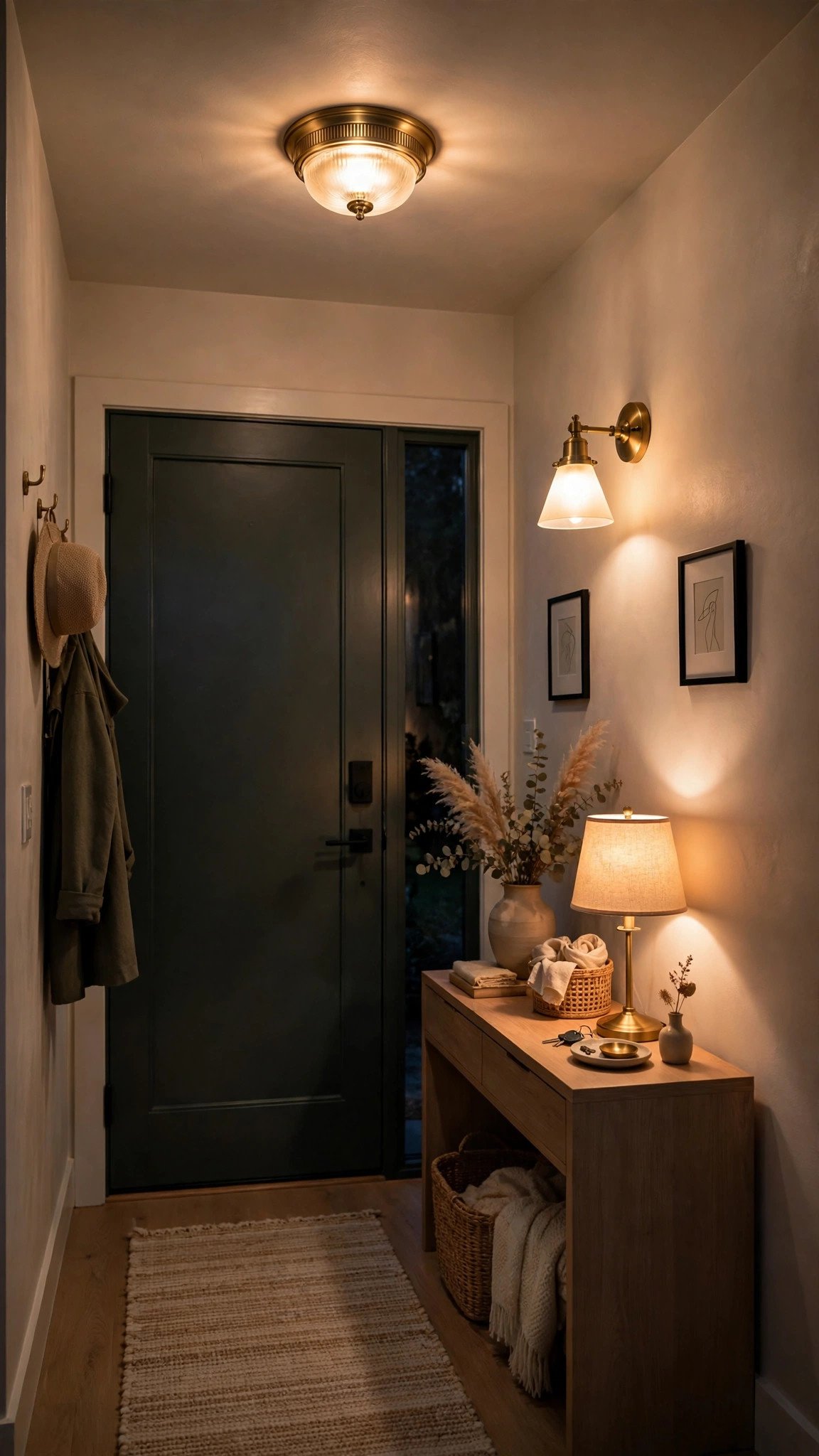
Small entryways often suffer from a single dim ceiling bulb. Layer the light instead: a flush-mount or semi-flush ceiling fixture for general glow, a plug-in wall sconce or picture light for warmth, and a small table lamp on the console for that welcoming evening pool of light. Choose warm-white bulbs (2700–3000K) — they flatter skin tones and make paint colours glow. A statement pendant hung at 200–210 cm clearance draws the eye up and makes low ceilings feel taller. Put the main light on a dimmer or smart bulb so the entryway can shift from bright daytime to soft evening mode.
9. Try a Fold-Down Wall Table
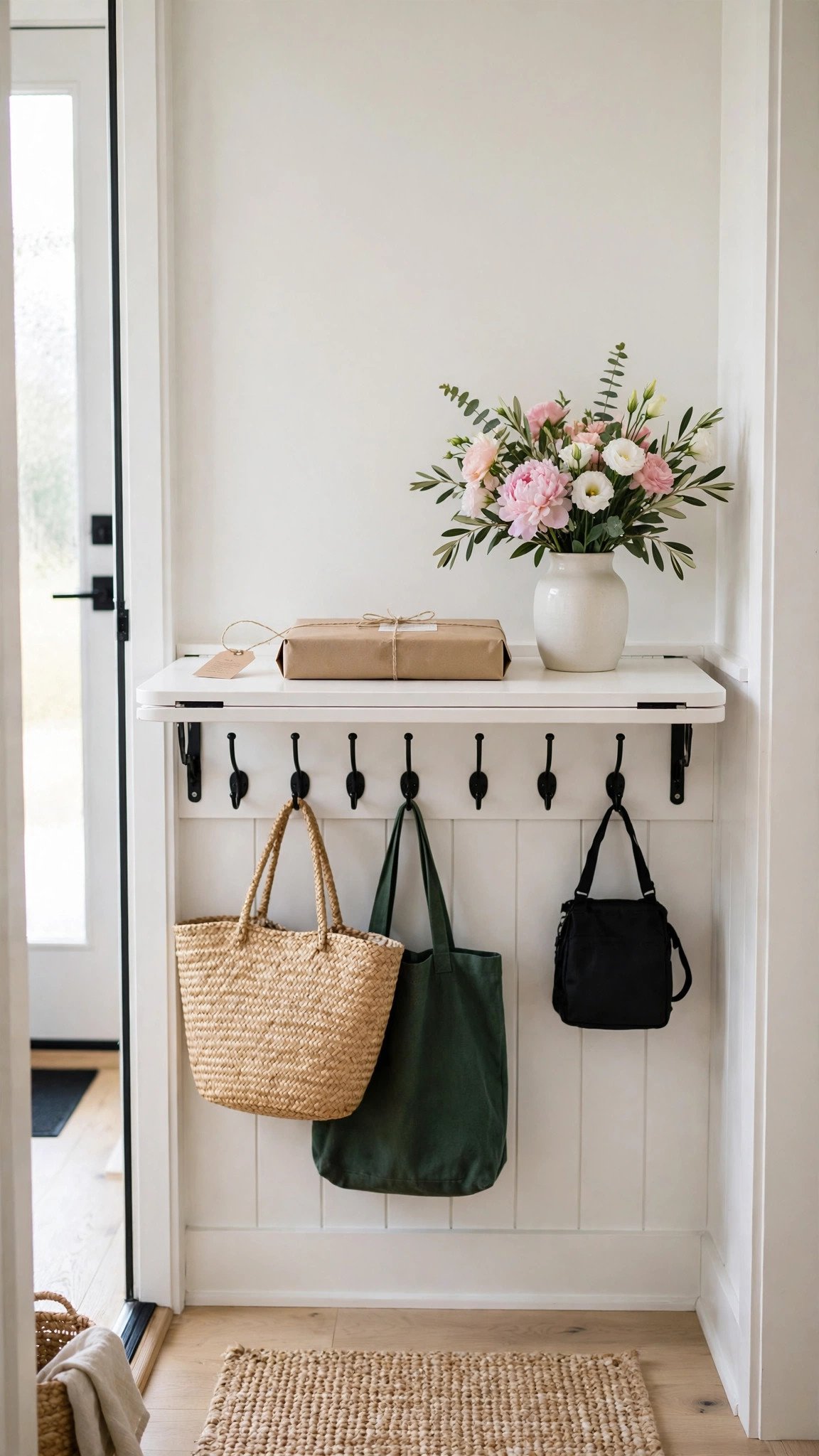
Need a surface sometimes but not always? A wall-mounted drop-leaf table flips down to hold parcels, a laptop bag or a vase of flowers, then folds flat against the wall when you need full walkway width. Look for a sturdy bracket rated for at least 15 kg and a top around 60 × 40 cm — big enough to be useful, small enough to vanish. Paint it the same colour as the wall for a built-in feel. Underneath, mount two hooks for bags so the zone stays functional even when the table is folded away. It is a brilliant trick for entryways that double as package-drop spots.
10. Build a Simple Mail and Key Station
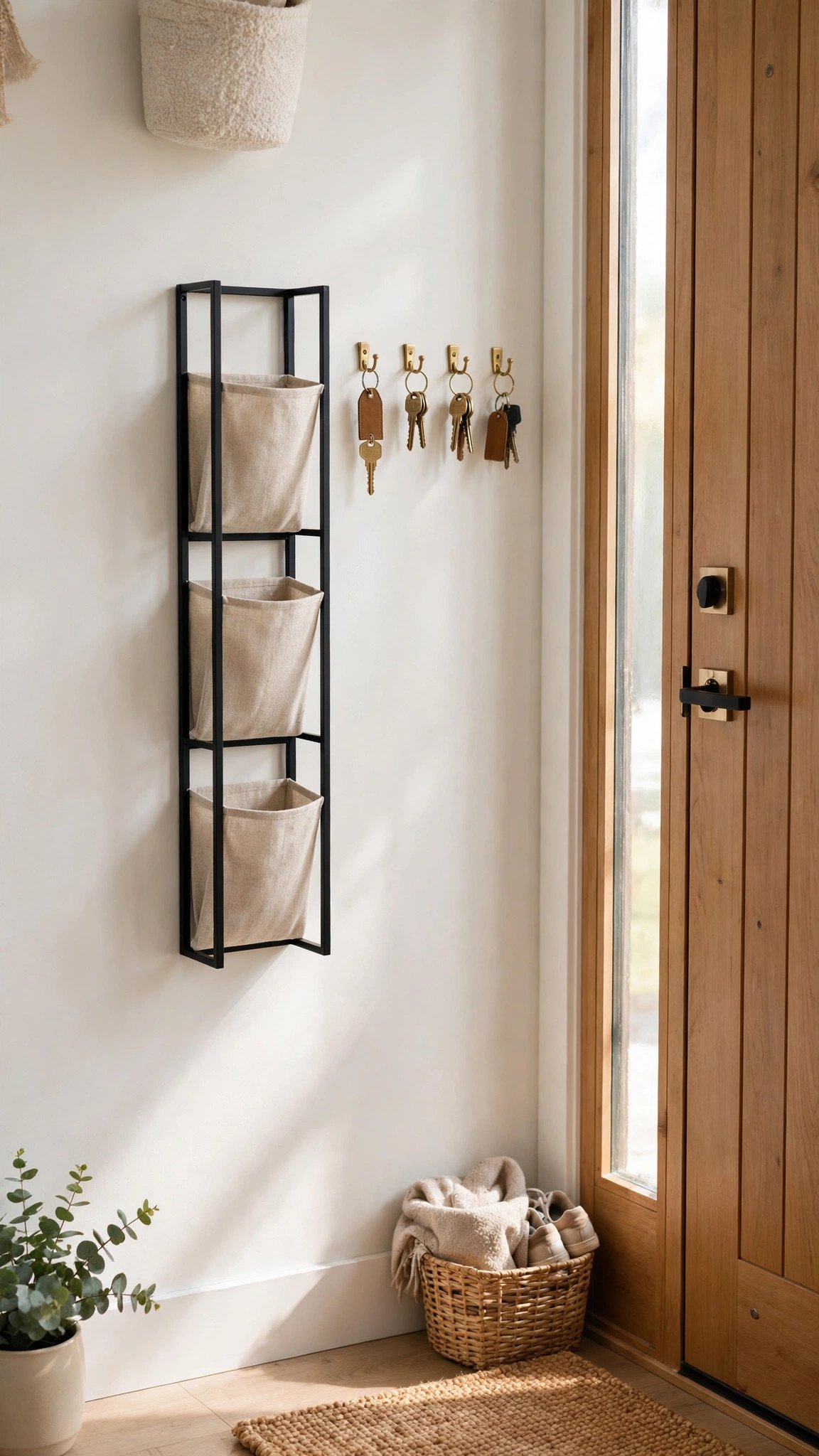
Paper clutter is what makes small entryways feel chaotic. Dedicate one slim wall organiser — a wall-mounted file holder with three slots (incoming, outgoing, to-file) plus a row of small hooks or a magnetic strip for keys — and the chaos stops at the door. Position it at eye level beside the door you use most, within arm’s reach as you enter. Label the slots so the whole household uses the system. Pair it with a small lidded bin underneath for recycling junk mail immediately. Ten minutes of sorting post at the door each evening keeps the entryway permanently clear.
11. Paint or Paper One Feature Wall
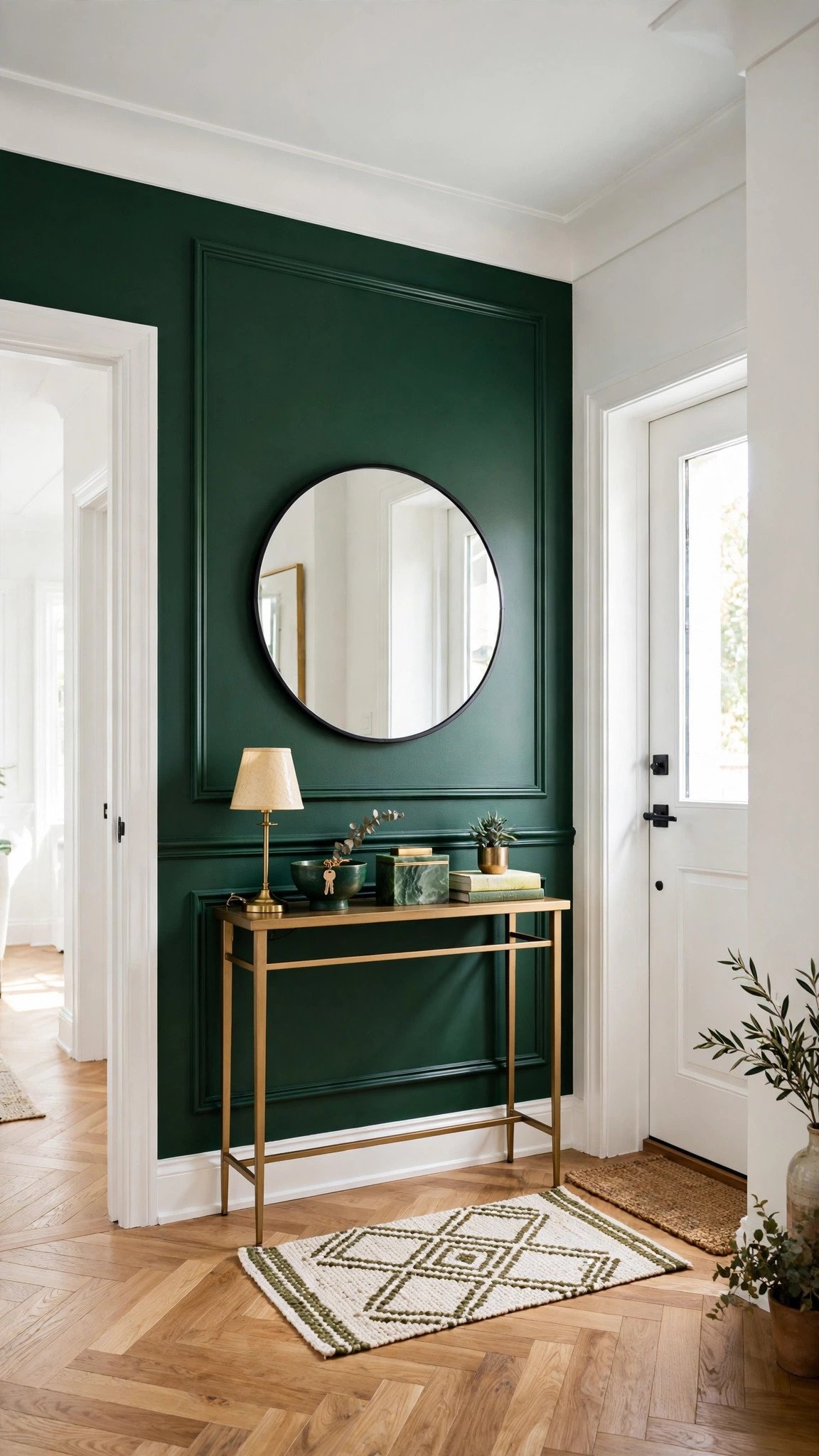
Bold colour in a small space is not risky — it is strategic. One deep, saturated wall (think forest green, inky navy or warm terracotta) adds depth that makes the other walls recede, so the room feels larger, not smaller. If paint feels permanent, try a peel-and-stick wallpaper with a small-scale pattern; botanical prints and subtle geometrics add personality without overwhelming. Keep the ceiling and trim crisp white for contrast, and echo the wall colour in one accessory — a cushion, a planter, a frame. The result is a jewel-box entryway with real character in a single weekend project.
12. Use an Over-Door Organiser on a Cupboard
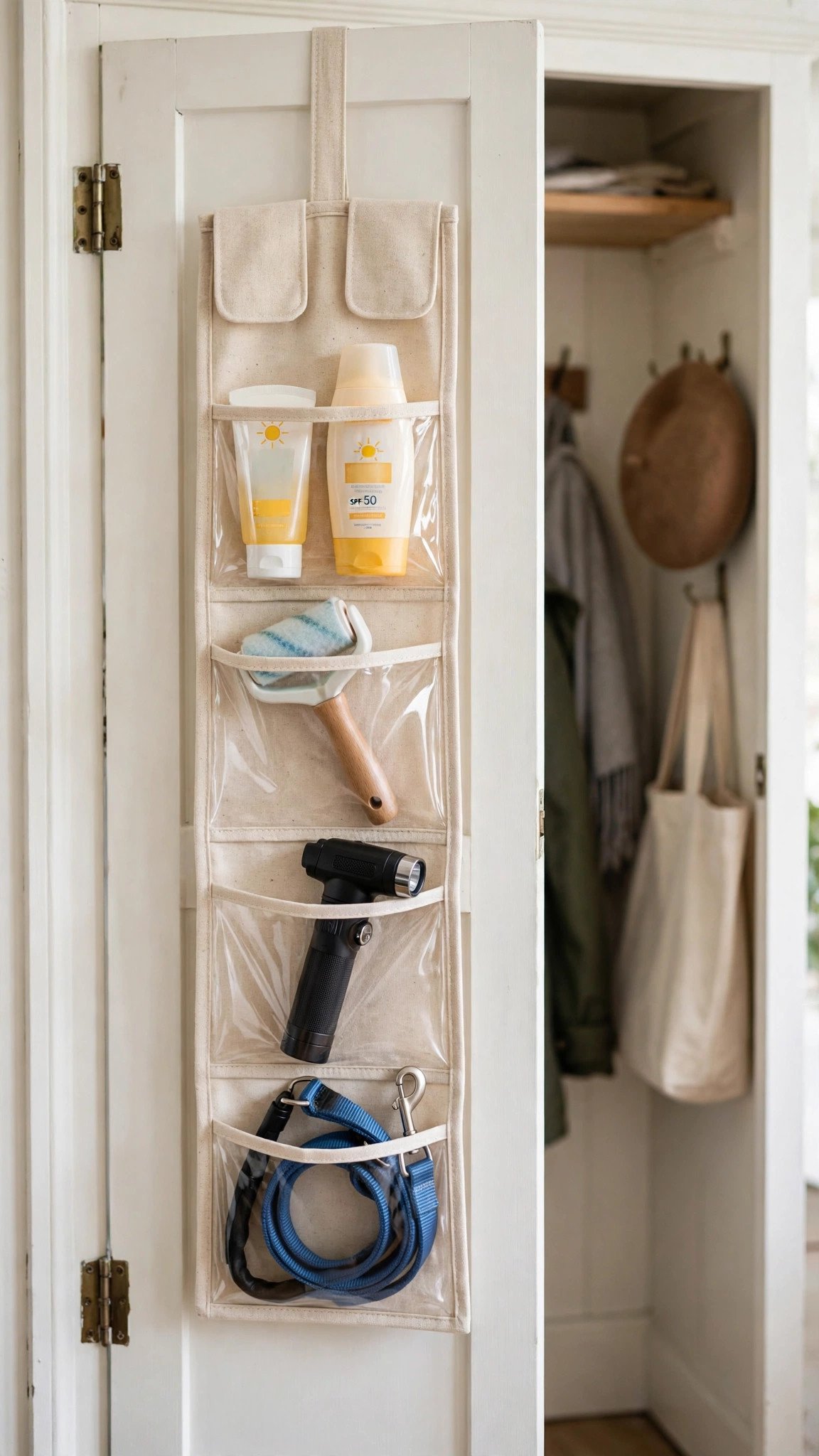
The back of the coat-cupboard or under-stairs door is hidden storage gold. A fabric or wire over-door organiser with clear pockets corrals sunscreen, spare masks, lint rollers, torches and pet supplies — all the small things that otherwise colonise the console. Choose a slim profile (under 8 cm deep) so the door still closes cleanly, and hooks that fit your door thickness without screws if you rent. Dedicate the top pockets to grab-and-go items and the lower ones to lesser-used bits. It keeps everyday essentials invisible yet instantly reachable, which is exactly what a small entryway needs.
13. Add a Tall, Narrow Plant
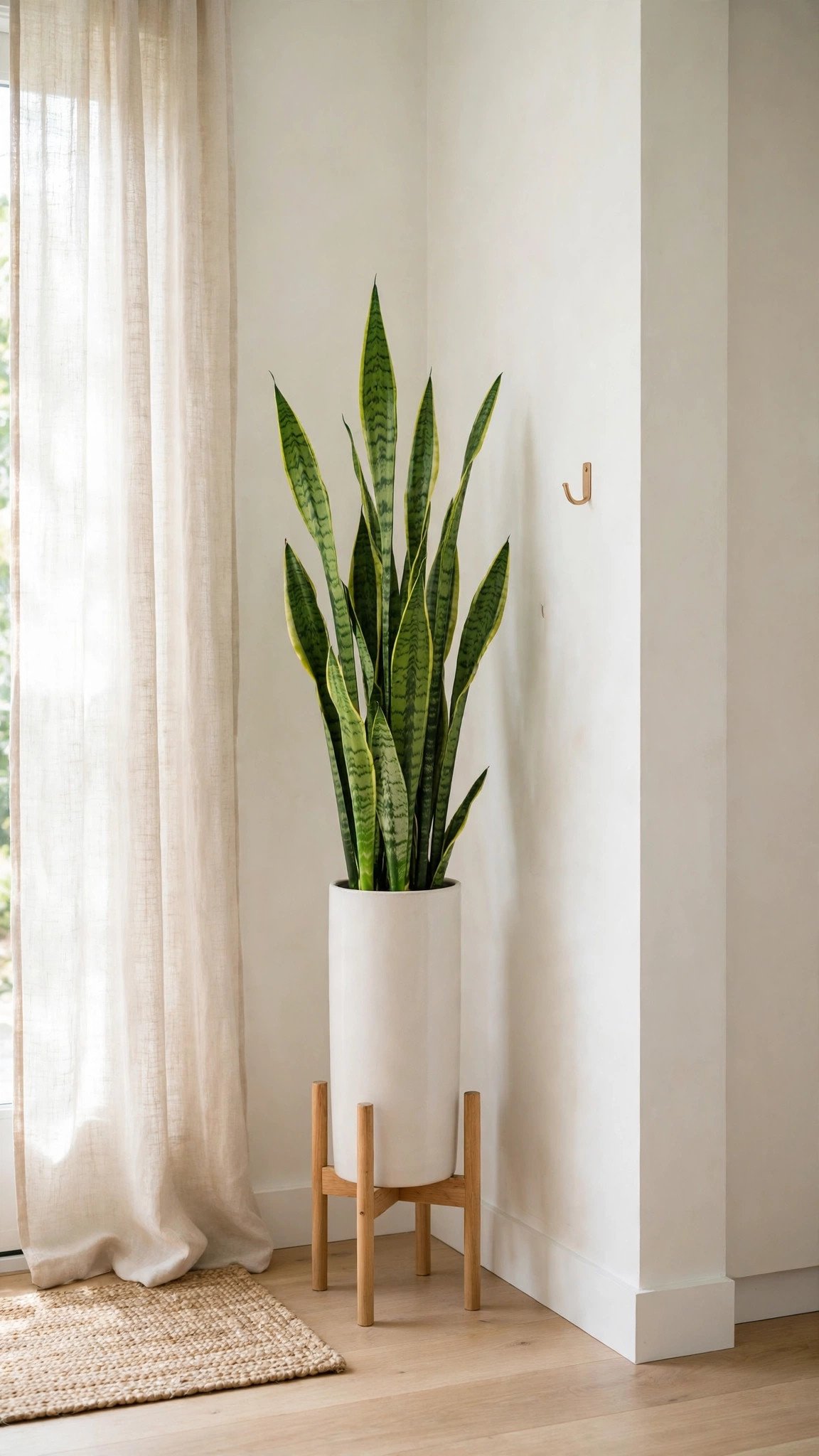
Greenery softens hard edges and makes a small entryway feel alive. Pick upright growers with a small footprint — a snake plant, ZZ plant or a slim olive tree in a tall cylinder pot occupies under 30 cm of floor. Low-light tolerant varieties suit windowless halls; if yours is dark, a good-quality faux stem in a beautiful pot still delivers the effect with zero maintenance. Raise the pot on a small plant stand to add height without width, and choose a pot colour that echoes your rug or artwork. One confident plant beats a crowd of tiny pots every time.
14. Corral Clutter in Beautiful Baskets
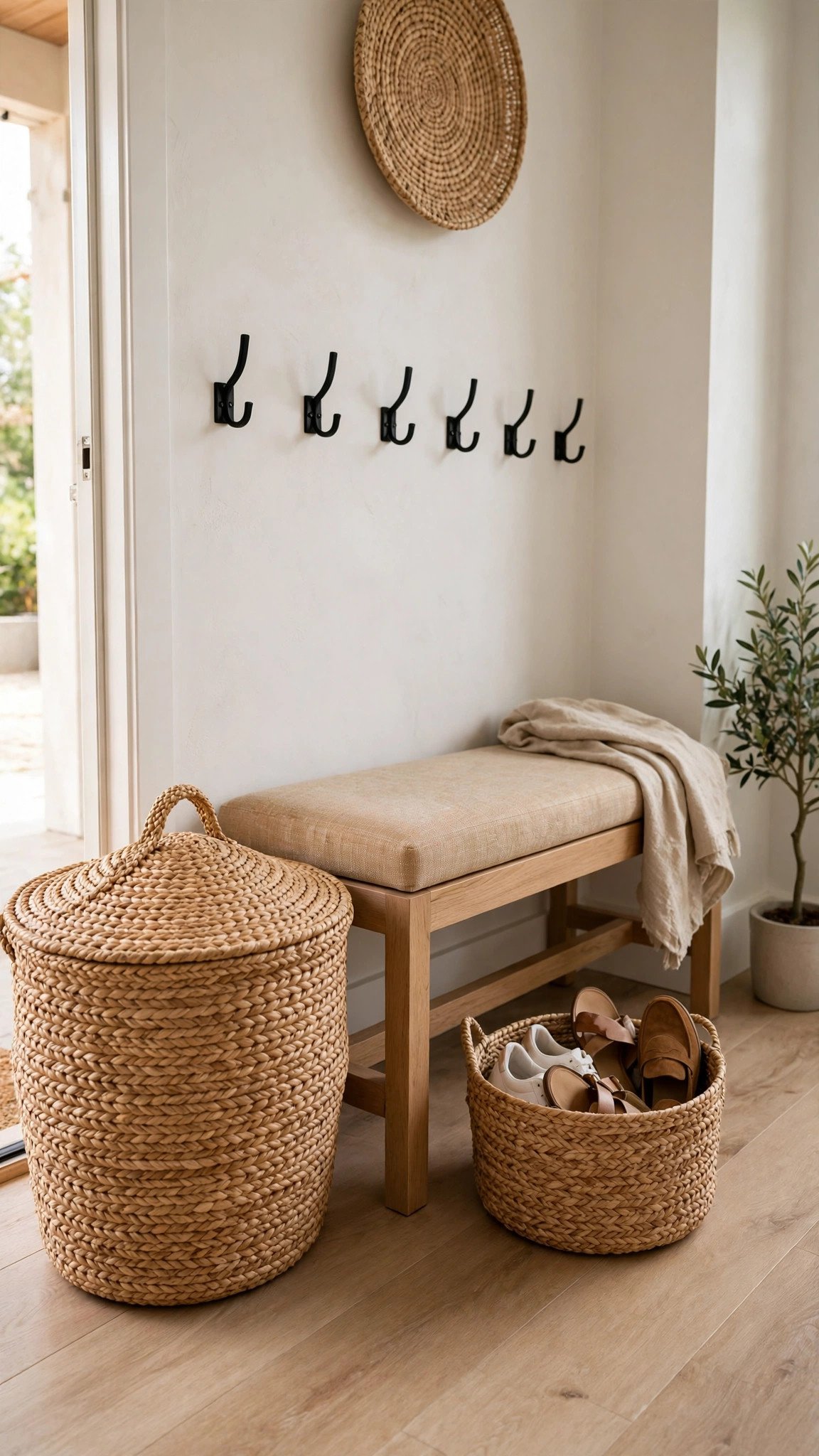
Baskets are the small entryway’s best friend: they hide visual noise while adding warm texture. Use one large lidded basket for the household’s daily overflow — reusable bags, the dog lead, spare umbrellas — and a smaller open one for the shoes in current rotation. Seagrass, water hyacinth and felt all look soft against hard flooring. Label baskets per person if you share the space, and give each a strict one-in-one-out rule so they never become junk bins. Tucked under a bench or beside the console, baskets turn necessary mess into part of the decor.
15. Create a Mini Gallery Wall
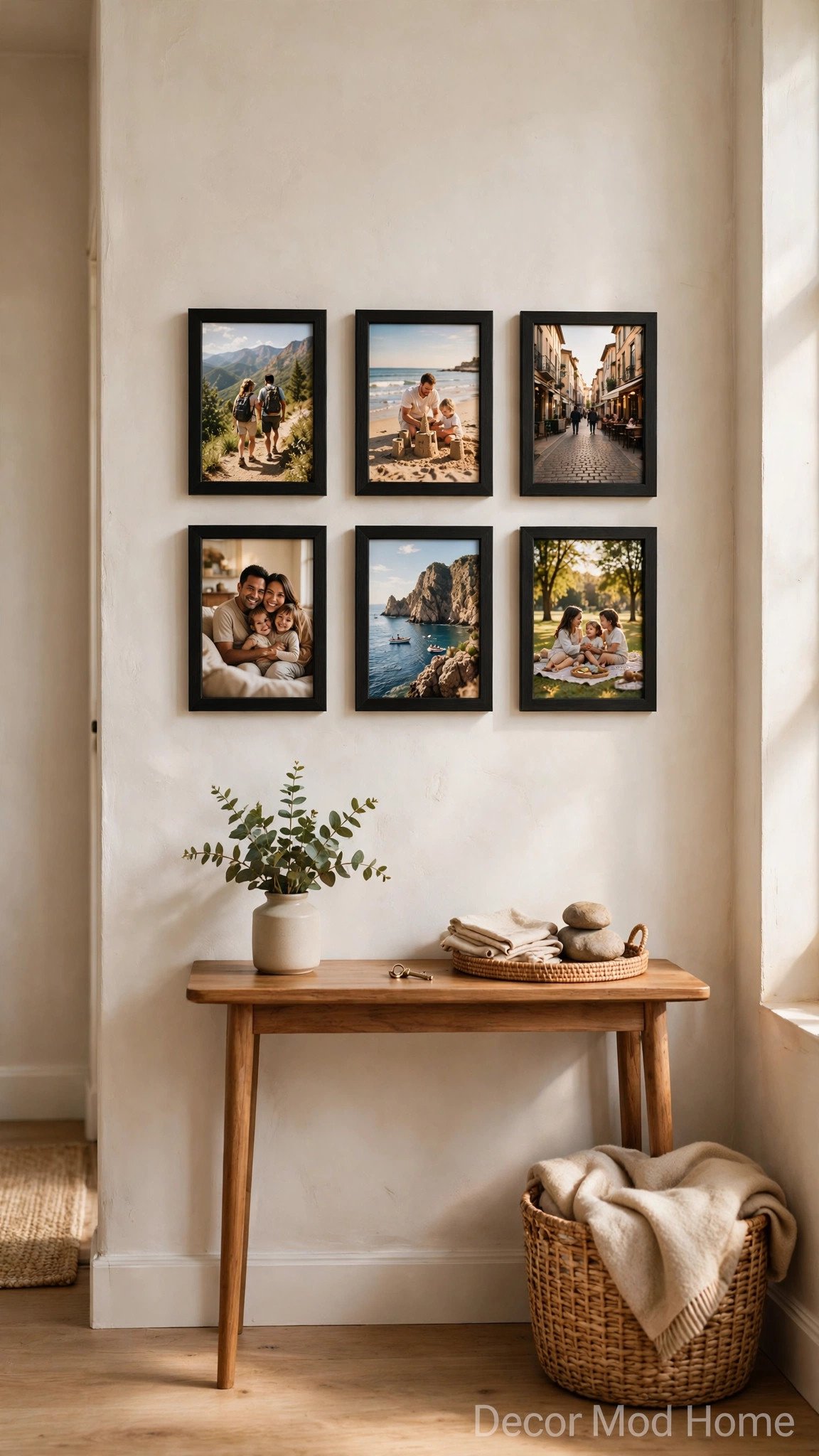
Bare walls make a small entryway feel unfinished. A tight cluster of 4–6 small frames — family photos, travel prints, a favourite quote — arranged in a neat grid or a gentle salon hang gives the space a personal, collected feel. Keep frames consistent (all black, all oak, or all white) so the grouping reads as one intentional piece. Hang the centre of the arrangement at eye level (around 145 cm) and keep the outer edges 15–20 cm clear of door frames and light switches. In a narrow hall, run the gallery up the wall beside the door rather than across it.
16. Choose a Slim Coat Tree or Valet Stand
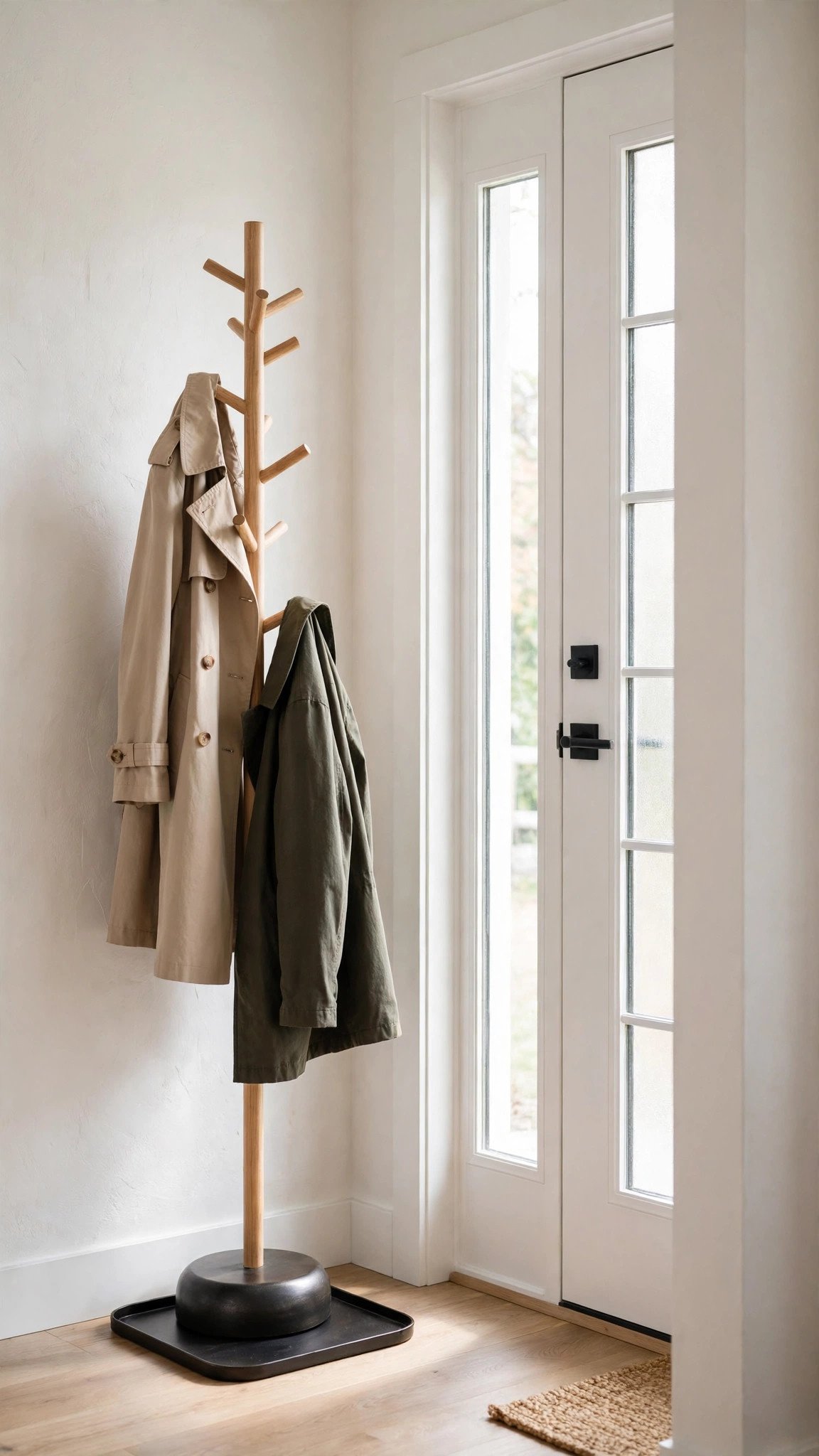
If wall hooks do not suit your space, a slim coat tree with a footprint under 40 cm offers the same vertical storage in a freestanding form. Look for a stable weighted base and staggered pegs so coats hang without bunching. Wooden valet-style stands in oak or walnut look like furniture rather than utility. Place it in a corner just inside the door — the dead zone beside the door swing is ideal — and limit it to two or three everyday coats; out-of-season jackets live in a bedroom wardrobe. Add a small drip tray beneath in wet months to protect the floor.
17. Install a Pegboard for Flexible Storage
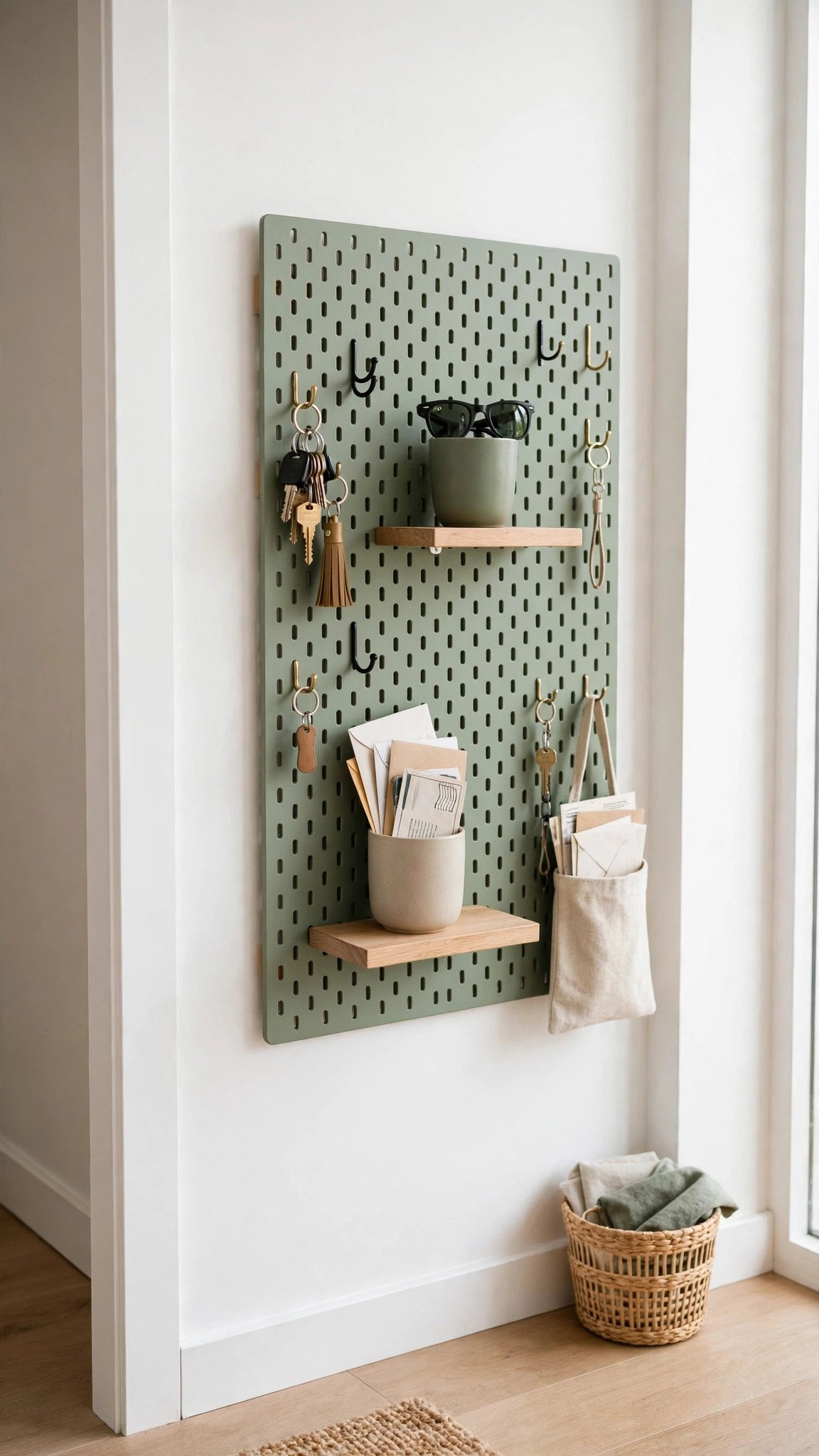
A pegboard turns one wall into endlessly reconfigurable storage. Mount a 60 × 90 cm board and dress it with hooks, small shelves and cups for keys, sunglasses, post, headphones and the dog lead. Paint it the wall colour for a seamless built-in look, or in a bold accent for a playful focal point. Because everything hangs on movable pegs, the layout evolves with the seasons — more hooks for scarves in winter, a shelf for sunscreen in summer. Keep the bottom third clear of the walkway and the whole system stays tidy, visible and completely adaptable.
18. Finish with Scent and a Personal Touch
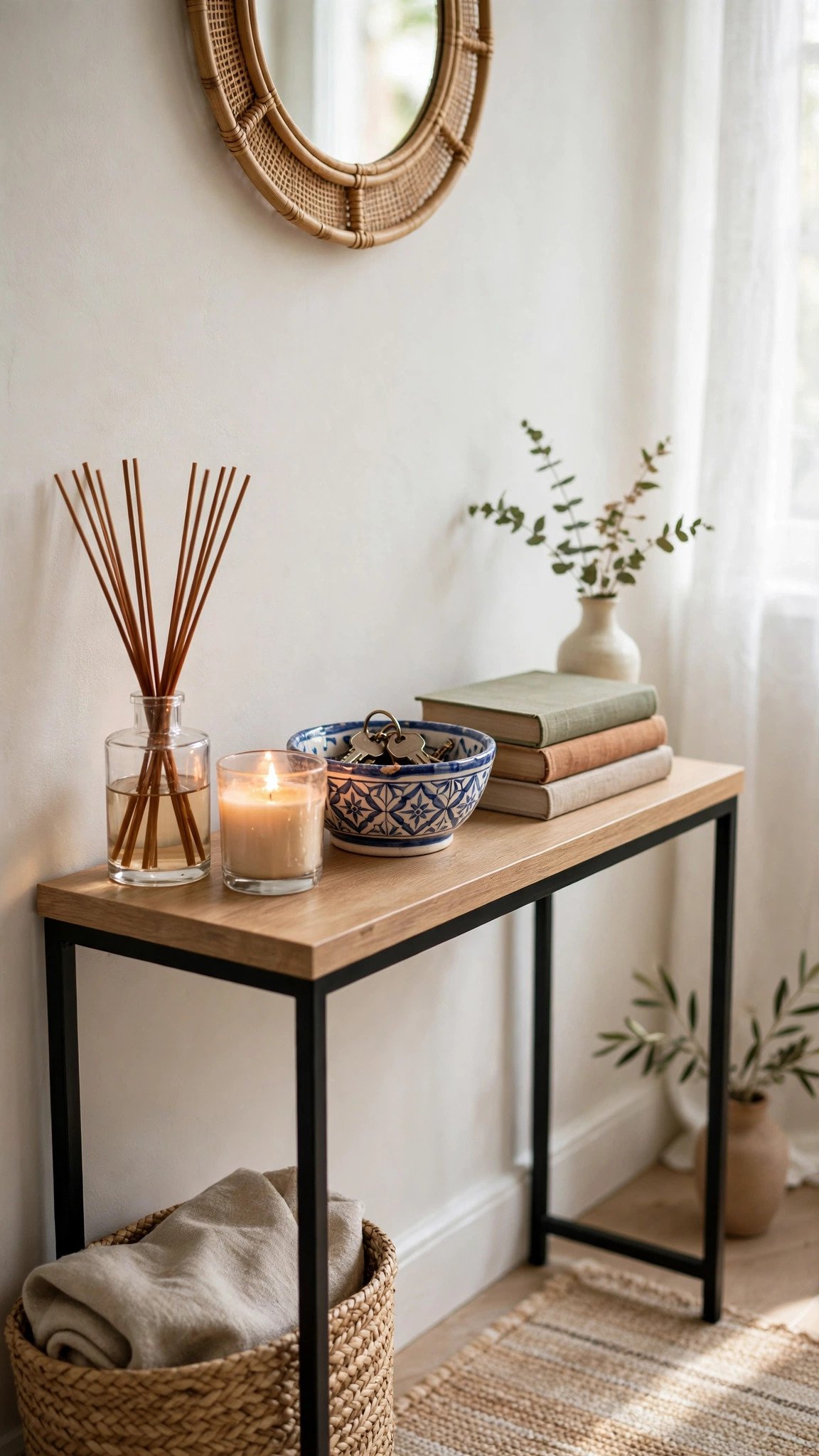
The final layer of a brilliant entryway is invisible: scent. A reed diffuser, a candle or a plug-in in a warm fragrance — cedar, amber, fresh linen — makes coming home feel like an exhale. Pair it with one personal touch that is purely yours: a bowl from your travels holding keys, a framed photo that makes you smile, a small stack of favourite books on the console. These details cost almost nothing and take up almost no space, yet they transform a functional pass-through into a space that genuinely feels like home. Never underestimate the power of the last five per cent.
FAQs
How do you decorate a small entryway without cluttering it?
Give everything a home and keep surfaces mostly clear. Choose slim, wall-hugging furniture, hide everyday mess in closed storage like tilt-out shoe cabinets and lidded baskets, and limit open decor to three or four styled pieces per surface. A consistent colour palette and one statement element — a mirror, a rug or a feature wall — deliver impact without visual noise.
What is the best furniture for a tiny entryway?
Pieces under 30 cm deep are the golden rule: slim consoles, tilt-out shoe cabinets, wall-mounted fold-down tables and storage benches under 90 cm wide. Favour vertical storage (hook rails, pegboards, floating shelves) over anything that eats floor space, and choose furniture with legs or wall-mounted designs so you can see the floor beneath — visible floor always makes a room feel bigger.
How can I make my entryway look bigger?
Use the classic small-space toolkit: a large mirror to bounce light, pale wall colours with one deeper accent, a runner that draws the eye forward, and lighting at two or three heights. Keep the floor as visible as possible with floating or legged furniture, and resist the urge to fill every wall — a little breathing room reads as spaciousness.
What colours work best in a small entryway?
Light, warm neutrals — soft white, warm greige, pale sage — keep things bright and open, while one saturated accent wall in deep green, navy or terracotta adds depth and personality. Whatever palette you choose, repeat it in at least three places (rug, artwork, a cushion or planter) so the small space feels deliberately designed rather than accidental.
A Small Entryway with a Big Welcome
A small entryway is not a limitation — it is an invitation to be intentional. With slim furniture, smart vertical storage, layered light and a few personal touches, even the tiniest foyer can feel warm, organised and completely you. Start with the one idea that solves your biggest frustration, whether that is shoe chaos, dark corners or nowhere to drop your keys, and build from there. Loved these ideas? Pin your favourites, share this guide with a friend wrestling with a tiny hallway, and tell us in the comments which of the 18 brilliant small entryway ideas you are trying first — we read every single one.