15 Side of Driveway Landscaping Ideas to Try
The strip of ground beside your driveway is easy to overlook, yet it shapes the very first impression your home makes. With the right side of driveway landscaping ideas, that narrow, often-forgotten stretch can become a polished frame for your house, a welcoming path for guests, and a garden feature you actually enjoy. Whether your drive is long and sweeping or short and straight, the edges offer a wonderful chance to add colour, texture, and structure without a major redesign.
In this guide, you will find fifteen practical ideas that suit real homes and real budgets. Some take an afternoon, others grow more beautiful over a season or two, but every one of them is designed to work alongside cars, foot traffic, and changing weather. Pick one idea to start with, or combine two or three for a layered look that feels thoughtful rather than cluttered.
Before you begin, take a few minutes to look at your driveway with fresh eyes. Notice where the sun falls in the morning and afternoon, where rain gathers, and where people naturally step when they get out of a car. These small observations will guide your choices far better than any catalogue, because the best planting works with your home’s light, soil, and daily habits rather than against them. Keep the overall shape simple, repeat a few reliable plants, and leave breathing room around each one so the border can settle and fill out gracefully.
Cost is another practical consideration. A beautiful driveway edge does not require expensive materials or a professional designer. Stone offcuts, a bulk bag of bark mulch, and a handful of healthy nursery plants can achieve a surprisingly polished result, especially if you prepare the soil well and water new planting through its first summer. Think of this project as a series of small, satisfying improvements rather than one overwhelming weekend, and enjoy watching the border come together.
1. Create a Layered Flower Border
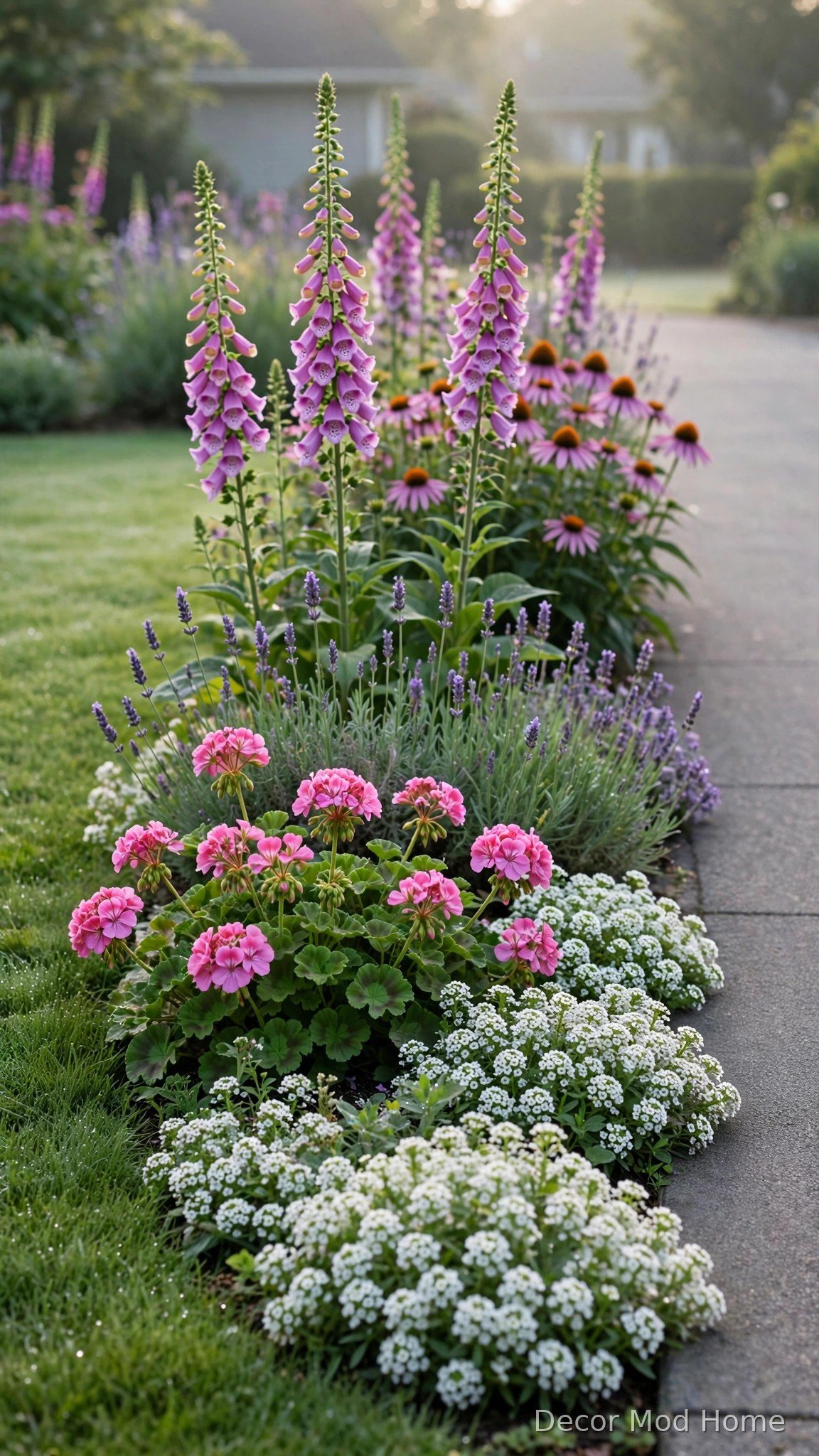
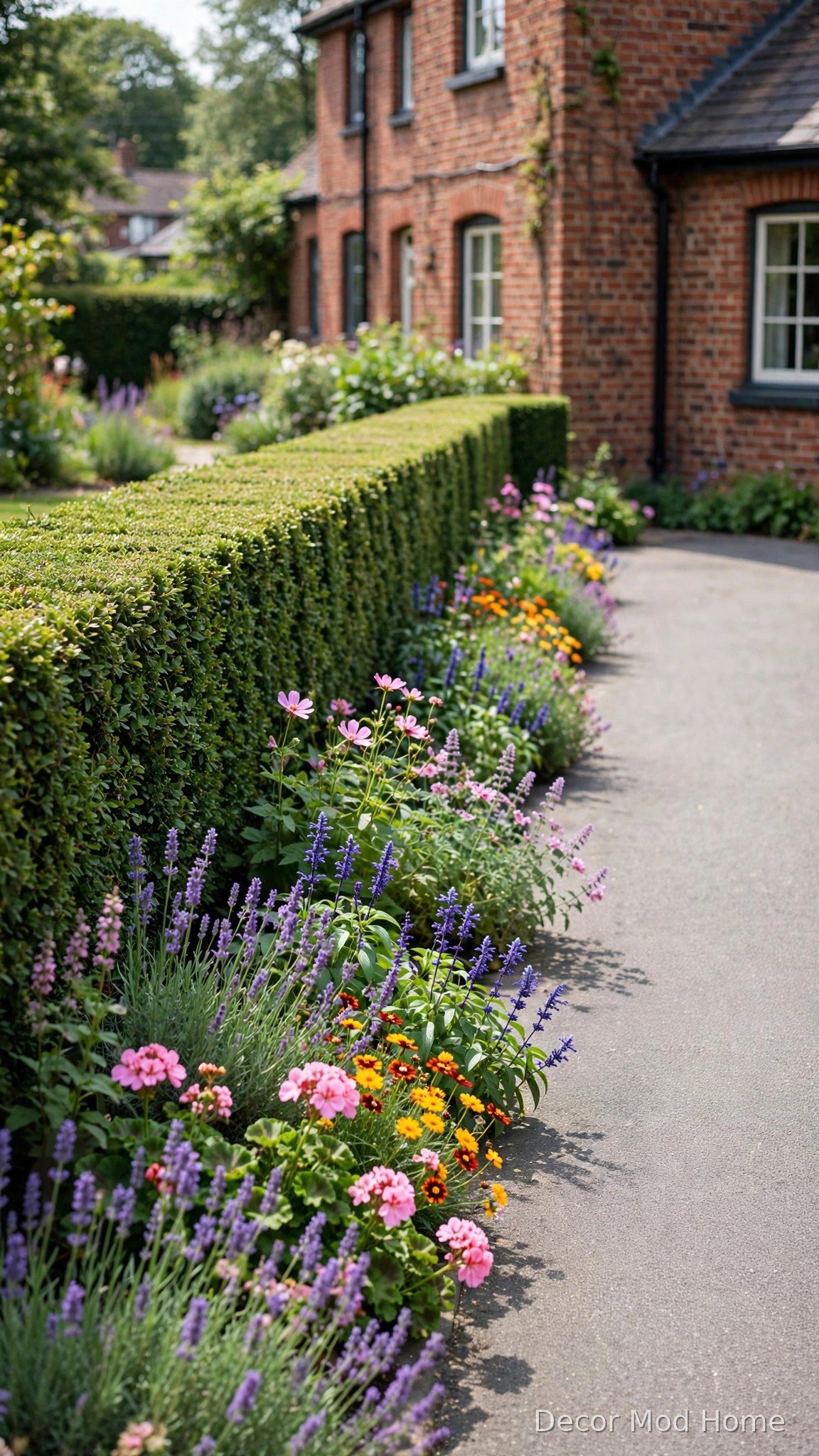
A layered flower border is one of the simplest ways to make the side of your driveway feel intentional. Plant taller blooms such as foxgloves, salvias, or echinacea towards the back, with mid-height geraniums and lavenders in the middle, and low-growing alyssum or lobelia along the front edge. This stepped arrangement gives depth, keeps plants from spilling onto the drive, and ensures something is always in flower. Choose a palette of two or three colours that echo your front door or window frames, and repeat those shades along the whole length for a calm, cohesive finish that looks professionally planned.
2. Plant a Ribbon of Ornamental Grasses
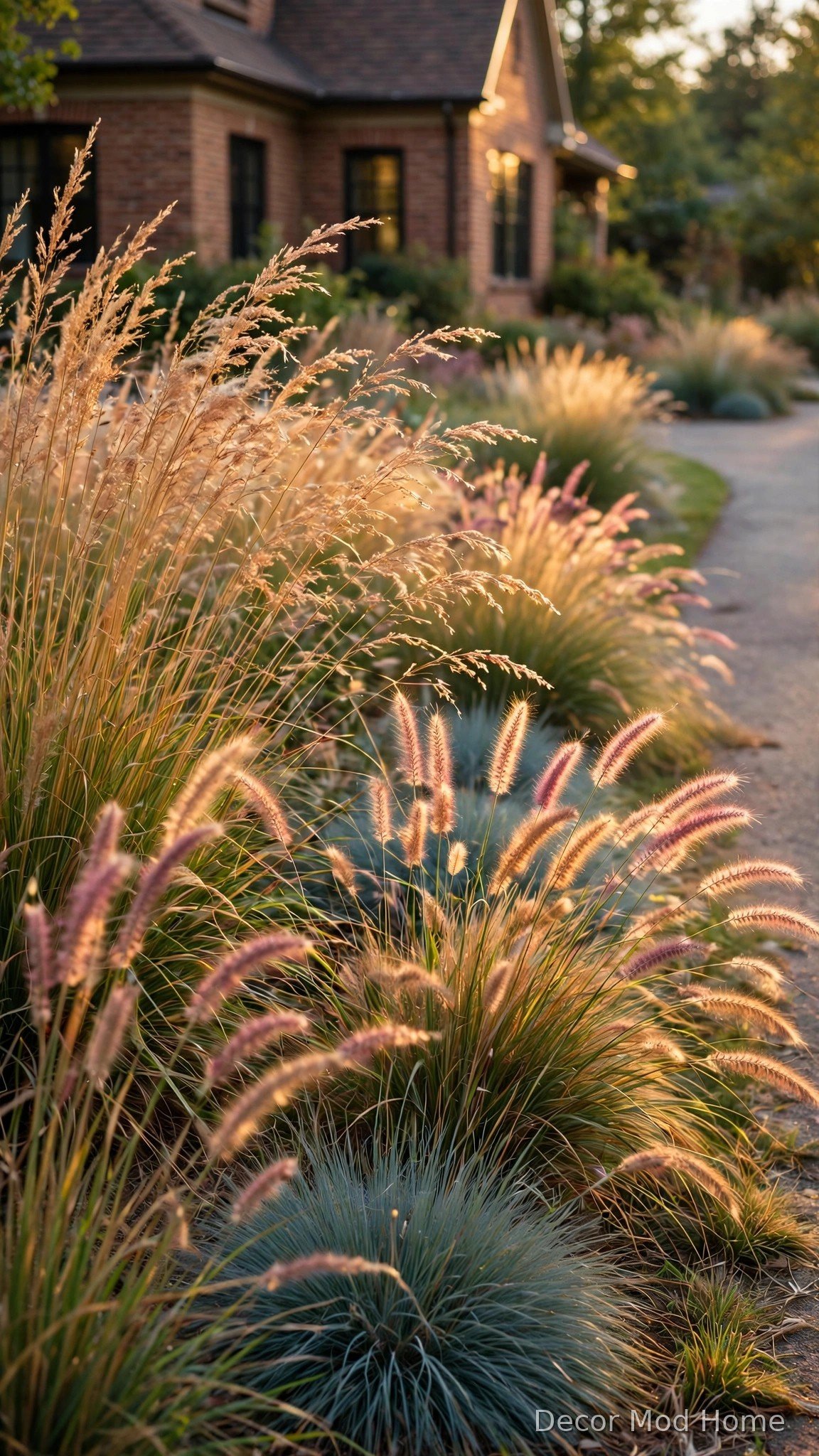
Ornamental grasses bring movement, softness, and year-round structure to a driveway edge. Varieties such as miscanthus, fountain grass, and blue fescue sway gently in the breeze and need very little attention once established. Plant them in drifts rather than single specimens, leaving generous space between clumps so each one can reach its full shape. Their fine foliage contrasts beautifully with brick, gravel, and concrete, while their seed heads catch the light in autumn and winter. Cut them back once in early spring, and they will return stronger, fuller, and ready for another season.
3. Edge the Drive With Natural Stone

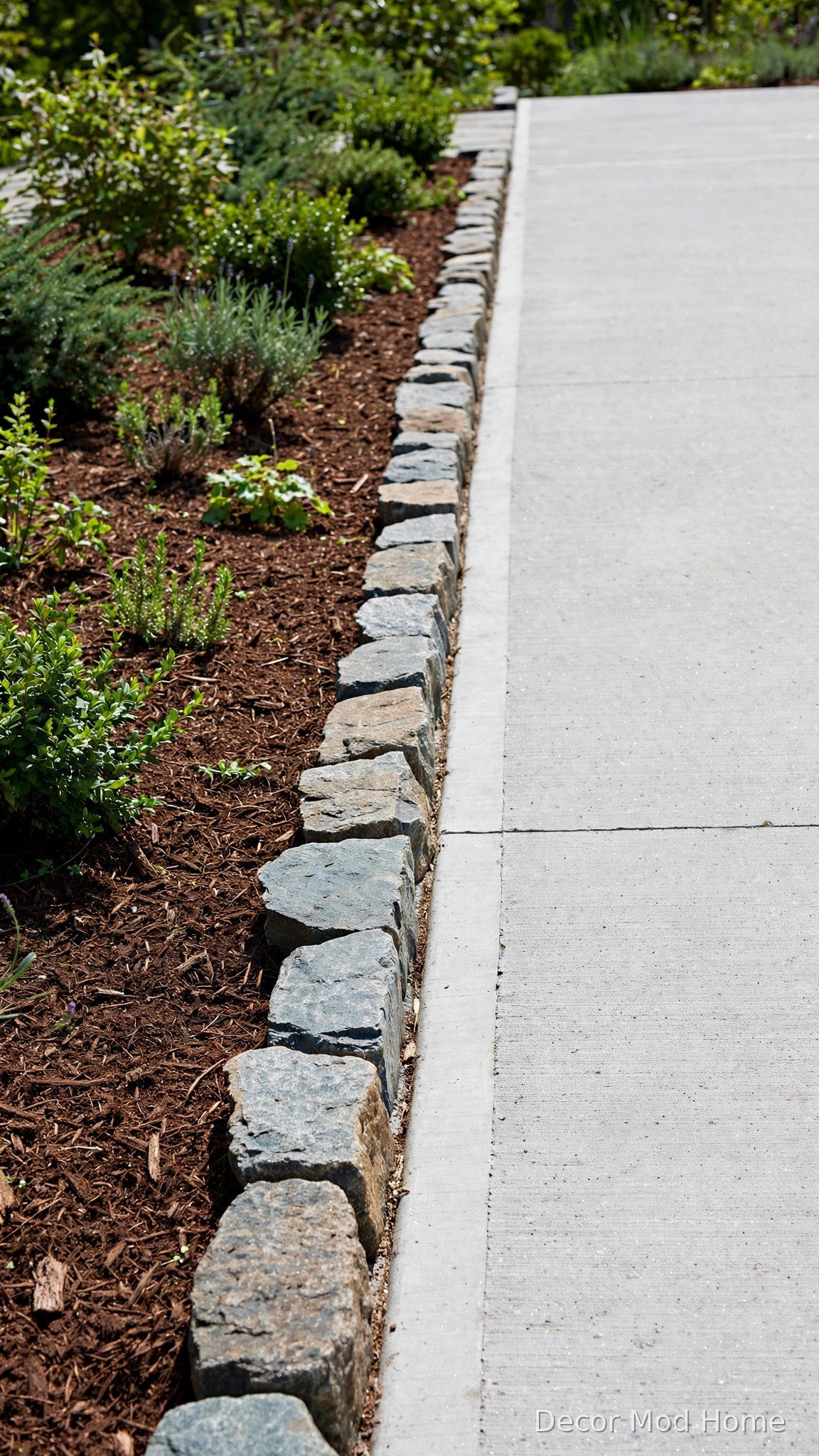
A clean stone edge instantly separates the driveway from the planting and stops soil and mulch from creeping onto the surface. Low, irregular stones, granite setts, or reclaimed bricks all work well, depending on the character of your home. Lay them slightly proud of the soil so lawn mowers and strimmers can pass neatly along the line, and bed them firmly into a shallow trench with compacted gravel beneath. This small structural detail makes the whole border look finished, even before anything is planted, and it protects your edging from being knocked about by car doors and tyres.
4. Mulch Generously Around Shrubs
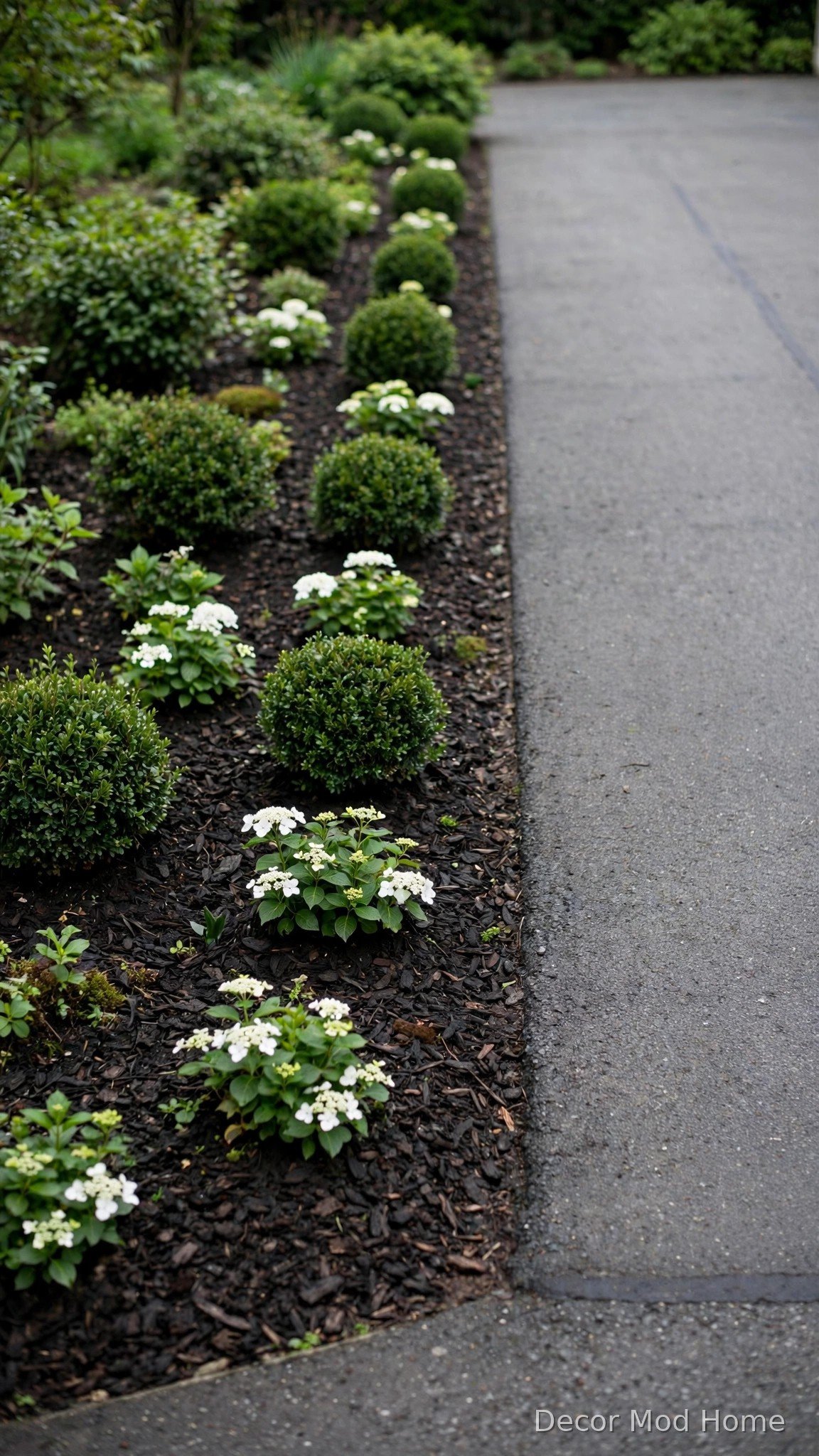
A deep layer of bark mulch does three jobs at once: it suppresses weeds, holds moisture in the soil, and gives the bed a rich, uniform appearance. Pair it with compact shrubs such as dwarf hydrangeas, hebes, or box balls, spaced so their canopies will eventually just touch. Keep mulch a few centimetres away from stems to prevent rot, and top it up once a year in spring. The dark background makes green foliage and bright flowers stand out, while the tidy surface means the border looks cared for even between planting seasons or during dry spells.
5. Line the Edge With Lavender
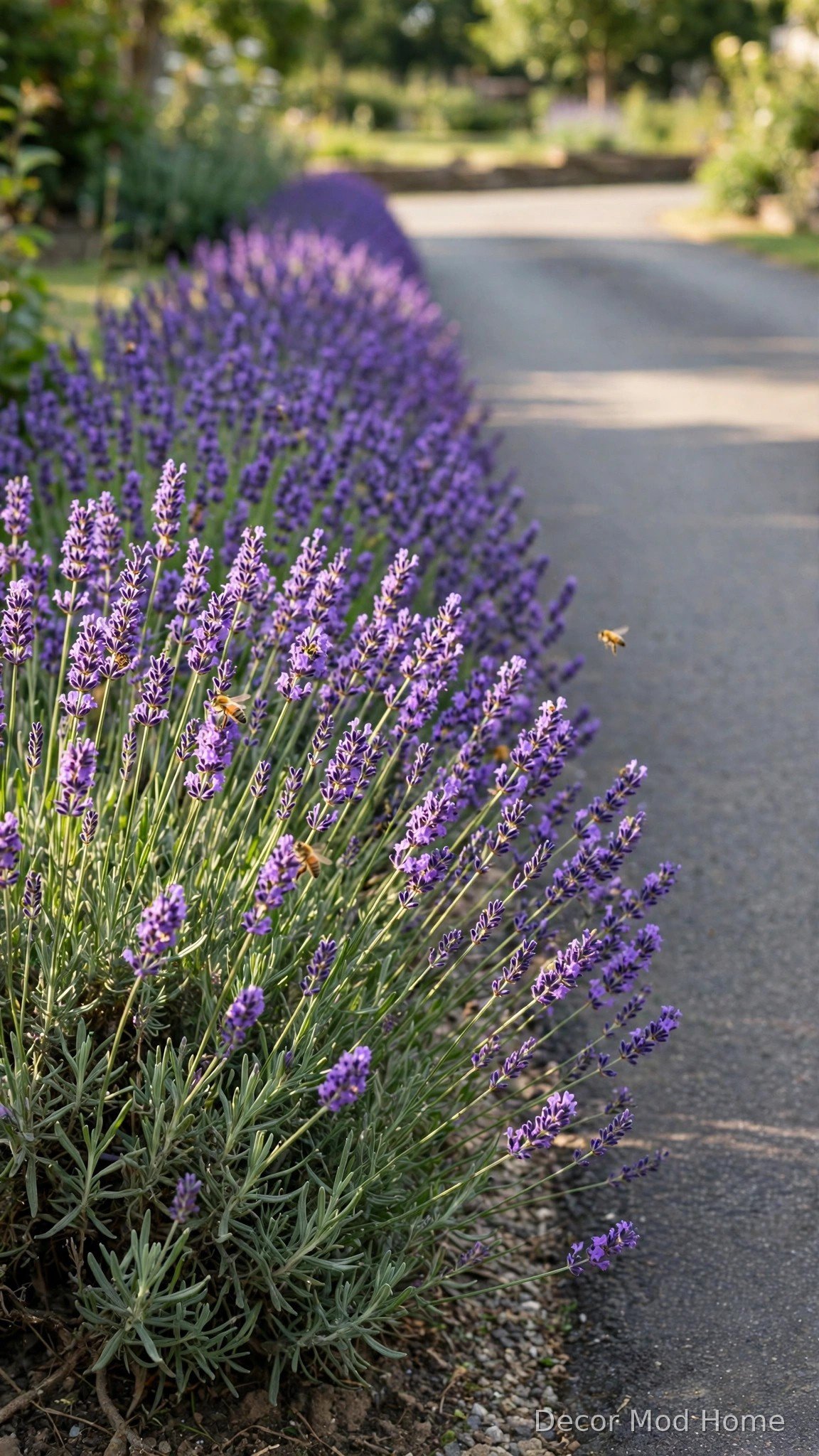
Lavender is a wonderful choice beside a driveway because it is tough, fragrant, and beautiful for months at a time. A single row of English lavender creates a soft, perfumed boundary that brushes gently against passers-by and welcomes visitors with scent as well as colour. It thrives in full sun and free-draining soil, so it suits the warm, sheltered conditions found alongside most drives. Shear plants lightly after flowering to keep them compact, and replace any woody specimens every few years. In summer, the purple haze above grey-green foliage looks effortlessly elegant.
6. Add a Gravel Strip With Stepping Stones
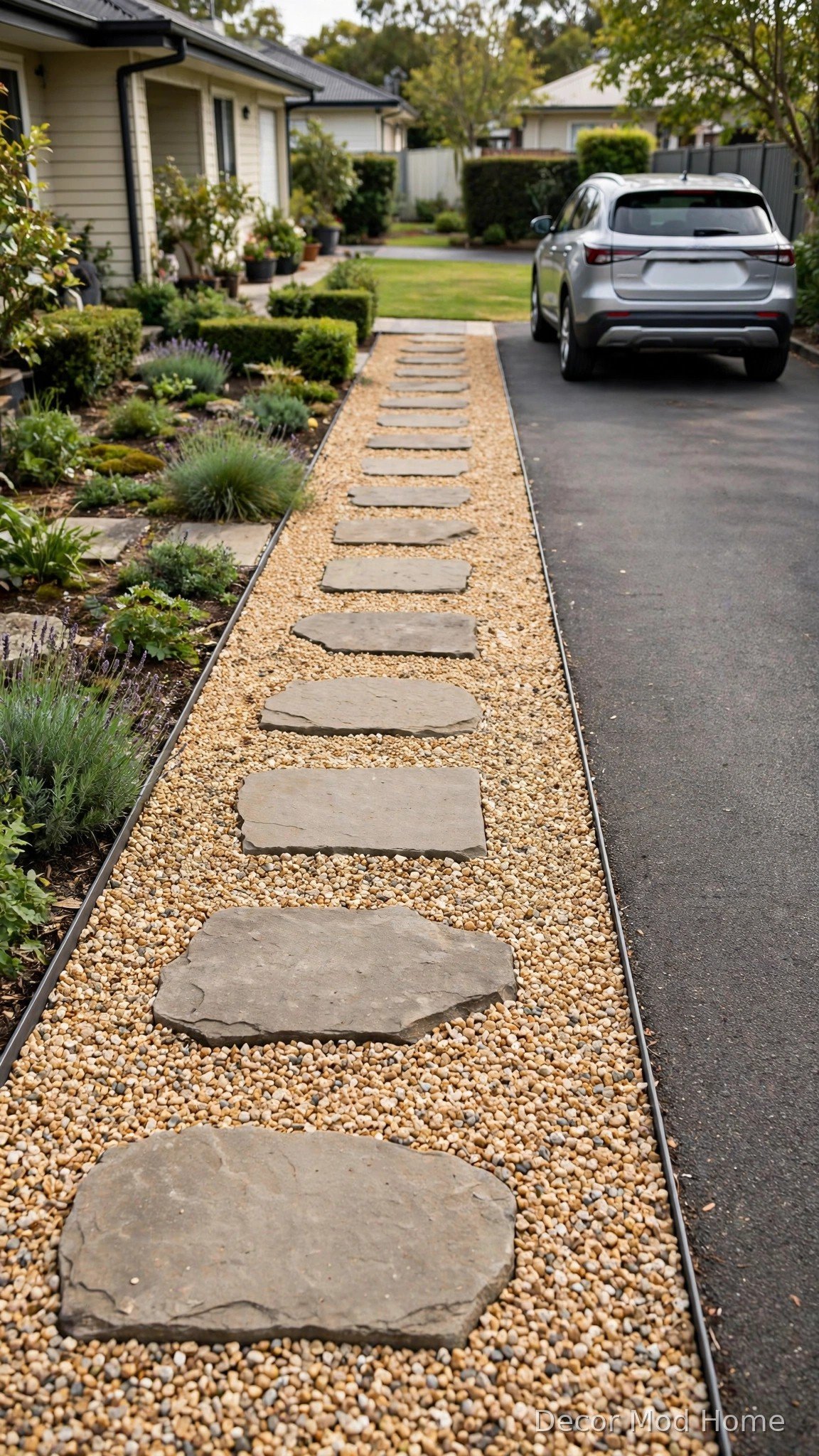
If people often step out of cars onto the grass, a gravel strip with flat stepping stones is a practical and attractive answer. Lay a weed-suppressing membrane, then spread a layer of pea gravel or crushed stone in a tone that complements your driveway. Set large, flat stepping stones at comfortable stride intervals, bedding each one level so heels and pushchairs pass safely. The gravel drains quickly after rain, keeps shoes clean, and creates a clear, generous landing zone. Edge the strip with steel or stone to keep the gravel contained and looking neat all year.
7. Clip a Low Hedge for Structure
A low, clipped hedge gives the side of a driveway a sense of order and permanence that flowers alone cannot provide. Box, yew, or privet can be kept at knee height with two light trims a year, forming a crisp green frame that looks smart in every season. If you prefer a softer outline, try lavender cotton or dwarf pittosporum, which can be lightly shaped without losing their natural charm. A hedge also helps to screen bins, meter boxes, or neighbouring boundaries, and it provides a reliable backdrop that makes seasonal planting in front of it look even more vibrant.
8. Rotate Seasonal Colour Through the Year
Seasonal rotation keeps a driveway border feeling fresh without replanting the whole bed. Start with spring bulbs such as crocuses, daffodils, and tulips tucked between shrubs, follow with summer bedding like petunias, marigolds, or begonias, and finish with autumn chrysanthemums and ornamental kale. Keep the permanent structure of shrubs and grasses in place, and treat the gaps as pockets for colour that changes with the seasons. This approach lets you experiment with new combinations each year, and it means there is always something lively to notice when you pull into the drive.
9. Carpet the Ground With Ground Cover

Ground-cover plants are ideal for narrow or awkward strips where mowing is difficult and bare soil quickly turns weedy. Creeping thyme, creeping Jenny, periwinkle, and low-growing sedums spread to form a living carpet that suppresses weeds and softens hard edges. Many varieties tolerate light foot traffic, and thyme releases a lovely scent when stepped on. Choose sun-loving types for open drives and shade-tolerant ones for north-facing sides, and plant densely so the cover knits together quickly. Once established, a ground-cover bed needs little more than an occasional tidy and a feed in spring.
10. Build Low Raised Planters
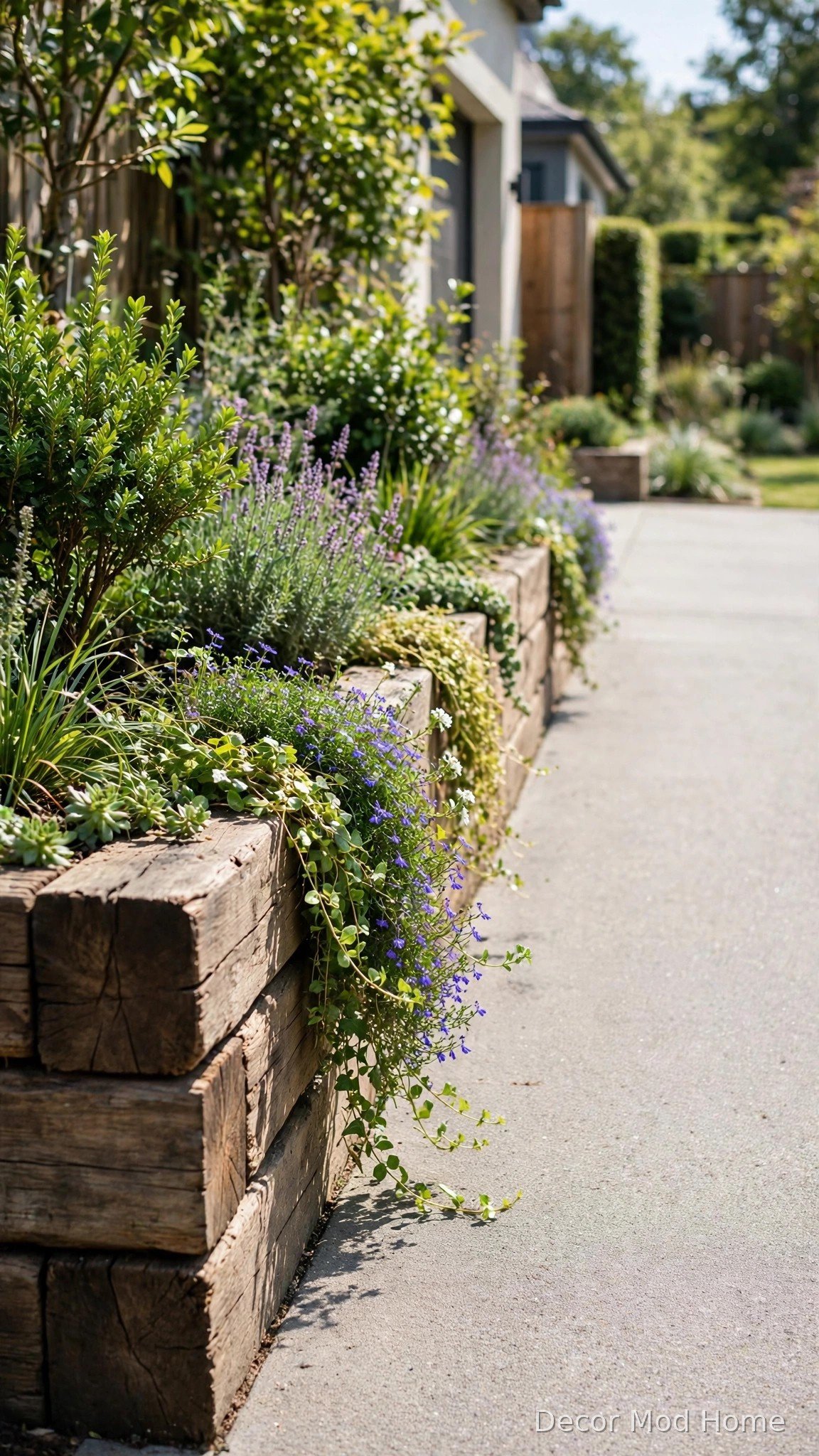
Low raised planters bring planting up to a comfortable height and give a driveway edge a clean, architectural feel. Timber sleepers, rendered blockwork, or brick planters all work well, kept to a height of about thirty to forty centimetres so they read as edging rather than walls. Fill them with good-quality compost mixed with garden soil, and plant a combination of small shrubs, perennials, and trailing plants that spill gently over the edge. Raised beds drain well, warm up quickly in spring, and make weeding and watering far easier, which is a real advantage on a busy family driveway.
11. Light the Edge With Solar Path Lights
Solar path lights make a driveway safer and more welcoming after dark, and they show off your planting in a completely new way. Space small, warm-white lights evenly along the edge, angling them so they wash across the foliage rather than shining directly into drivers’ eyes. Choose simple, sturdy designs in black or bronze that disappear during the day, and avoid mixing colours or styles along one run. For a more polished finish, add a few low uplights beneath a feature tree or large shrub. The result is a soft, inviting glow that guides visitors and makes your home look cared for at night.
12. Plant Slim, Columnar Trees
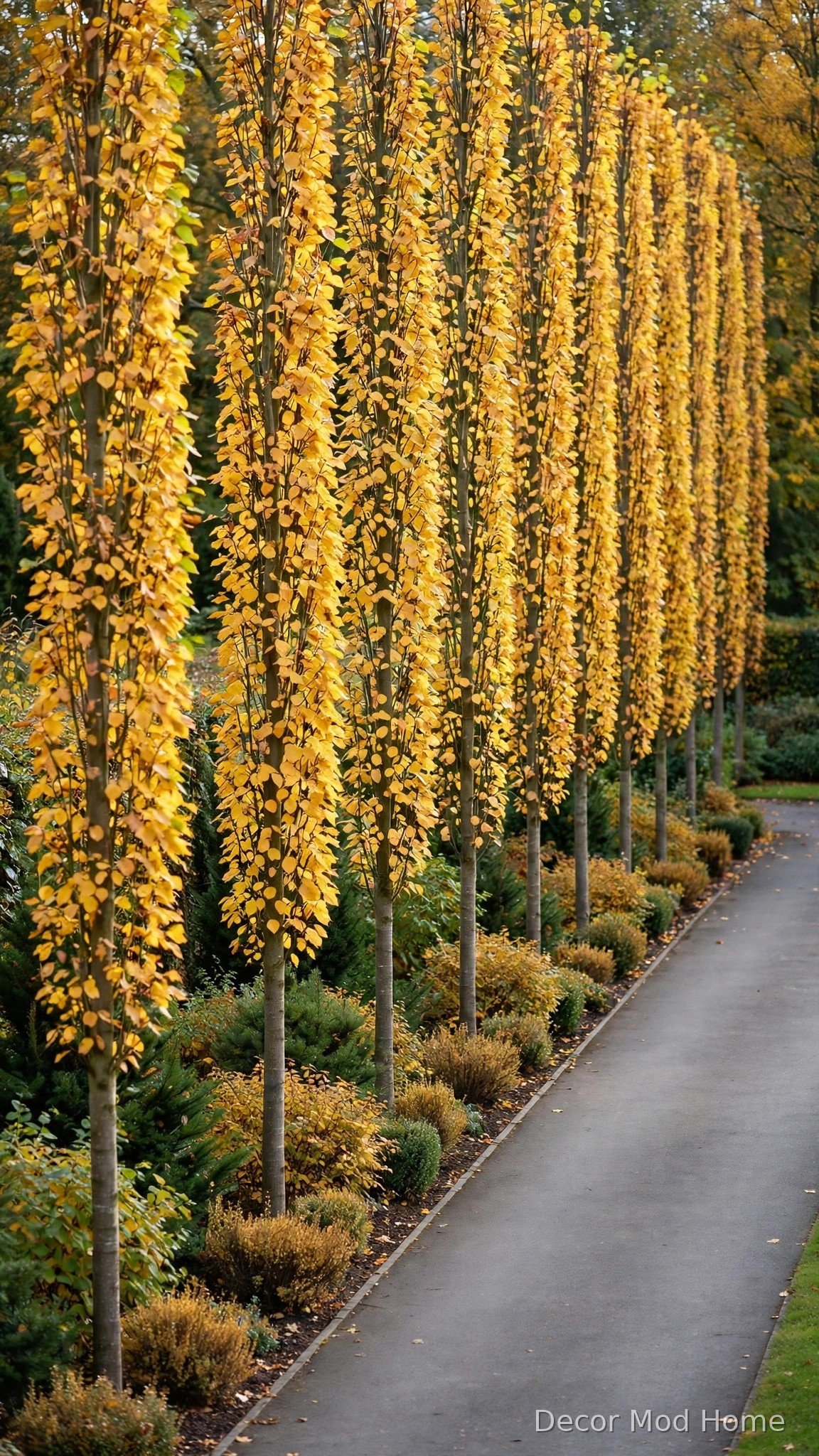
Columnar trees add height and elegance without overwhelming a narrow driveway border. Fastigiate hornbeam, columnar cherry, or Italian cypress in milder areas grow tall and narrow, framing the drive like a green avenue. Space them evenly, at least a metre from the driveway edge, so their roots and canopies have room to develop without lifting paving or brushing parked cars. Underplant with low shrubs or ground cover to keep the base tidy. In autumn, many columnar trees turn a rich gold or russet, giving the whole approach a beautiful seasonal finale.
13. Create a Pollinator-Friendly Strip
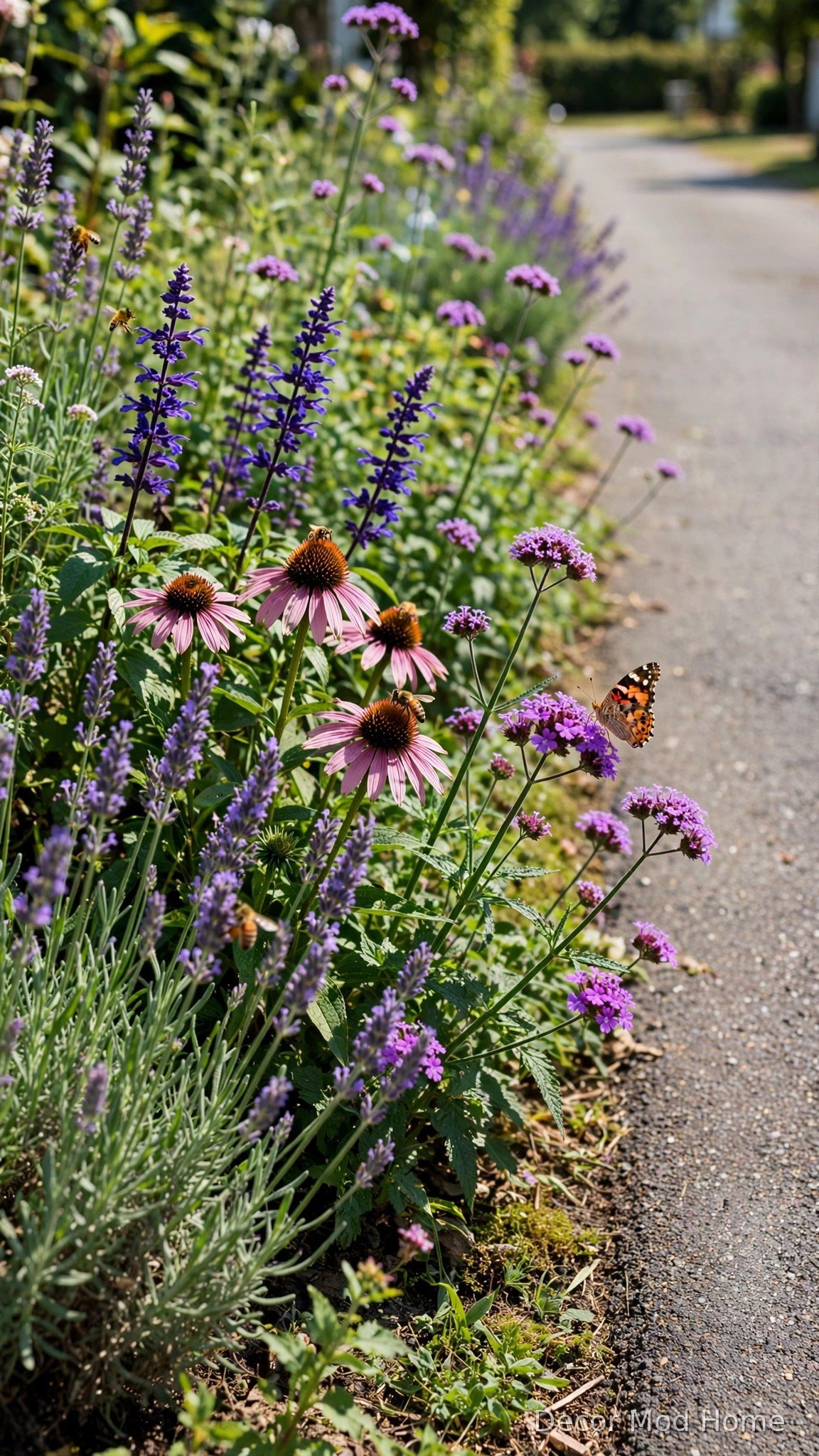
A pollinator strip turns an ordinary driveway edge into a lively, buzzing garden that supports bees, butterflies, and other beneficial insects. Plant a mix of nectar-rich perennials such as lavender, salvia, echinacea, and verbena, and leave a few gaps of bare soil for ground-nesting bees. Avoid pesticides, let some flowers set seed for birds, and add a shallow dish of water with pebbles for insects to land on. The planting looks natural and colourful from spring through autumn, and it is a lovely way to make even a small front garden feel purposeful and alive.
14. Pair Decorative Boulders With Succulents
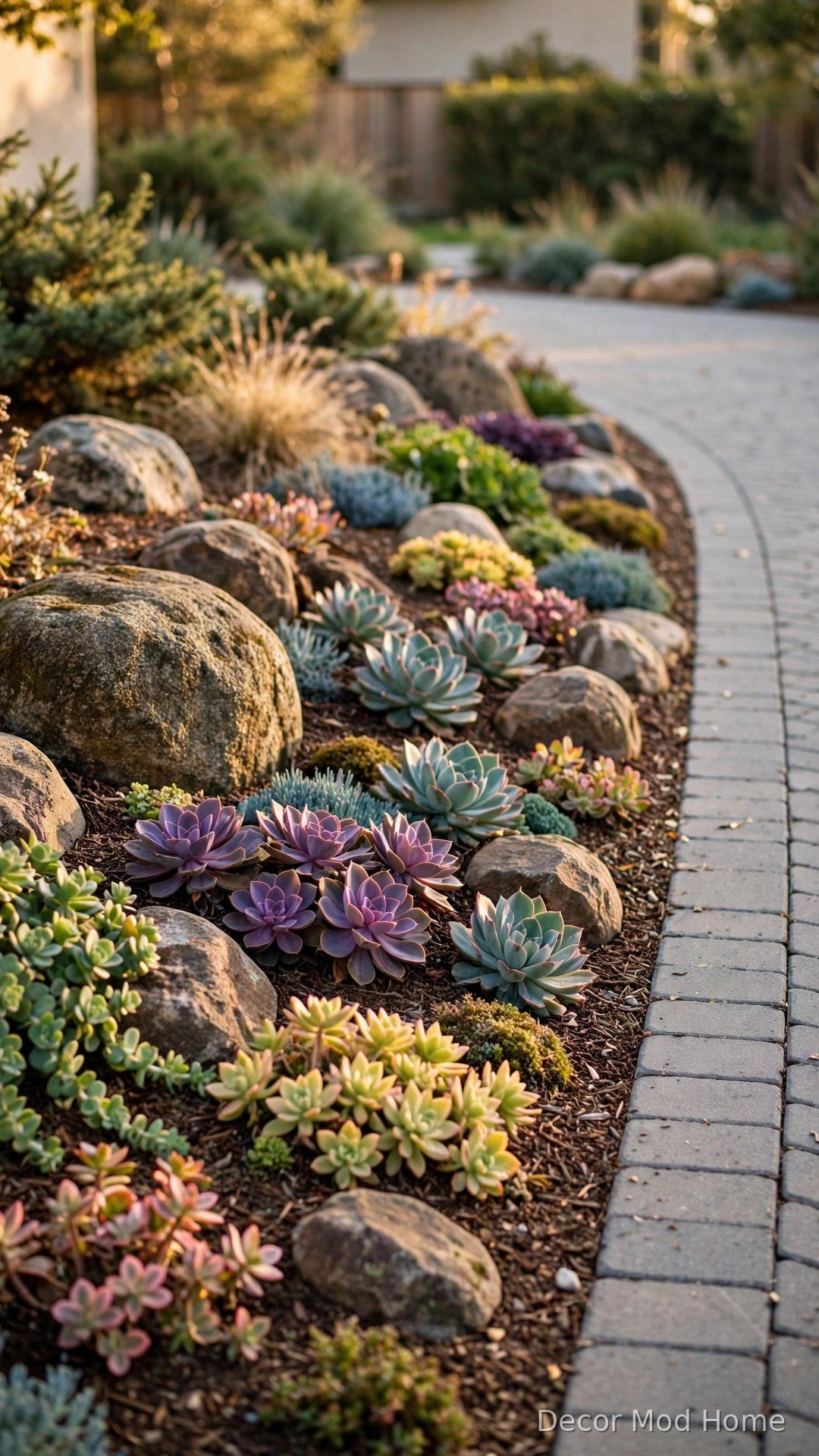
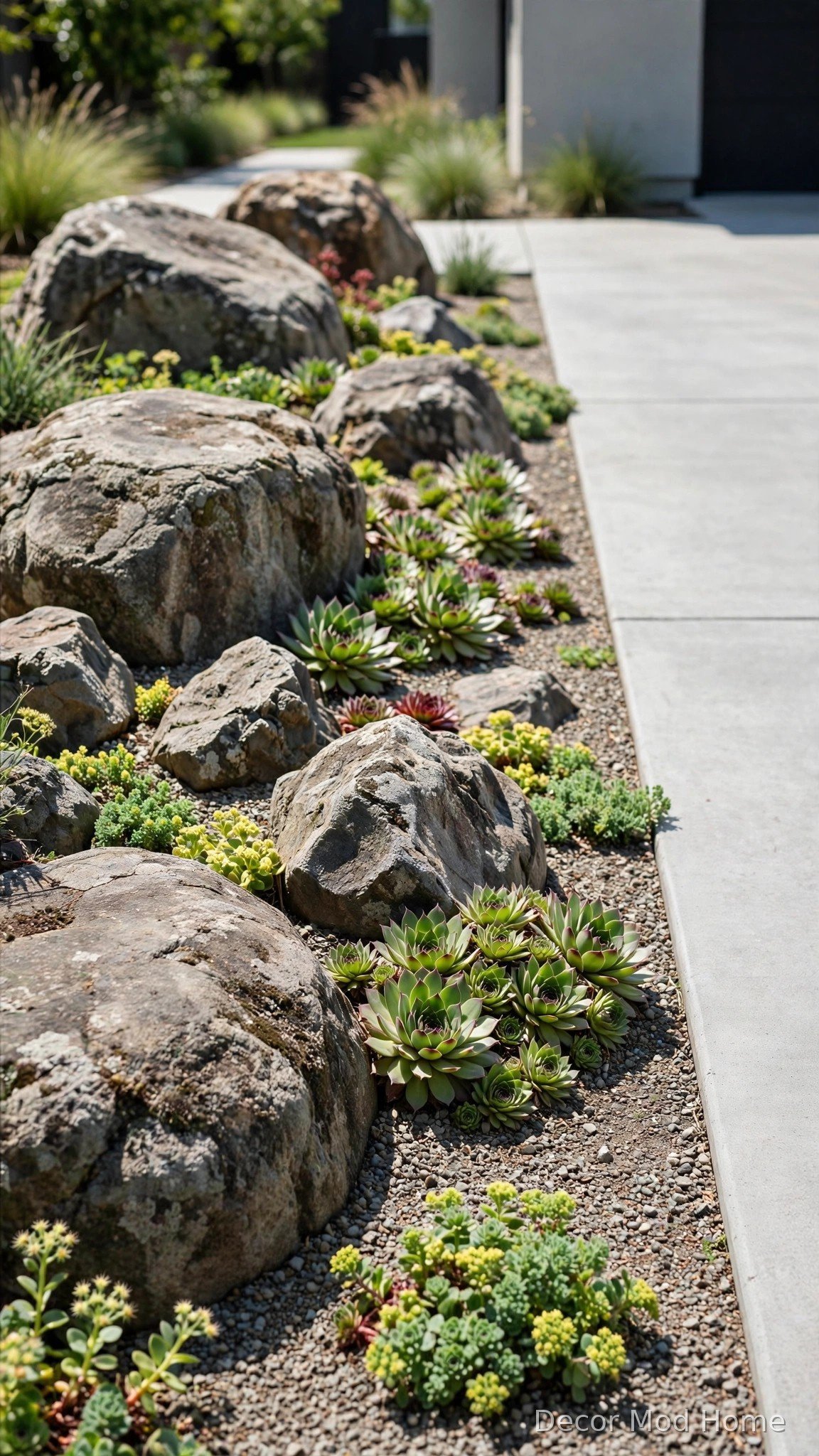
For a low-maintenance, modern look, combine weathered boulders with drought-tolerant succulents and gravel. Choose three or five boulders in different sizes and sink the largest third into the soil so they look naturally settled rather than placed. Around them, plant sedums, sempervivums, and agaves, leaving generous gravel mulch between specimens. This style suits sunny, well-drained drives and needs very little watering once established. The contrast between cool stone and sculptural foliage creates a striking, contemporary edge that stays handsome through heat, drought, and winter alike.
15. Curve the Bed Around a Focal Point
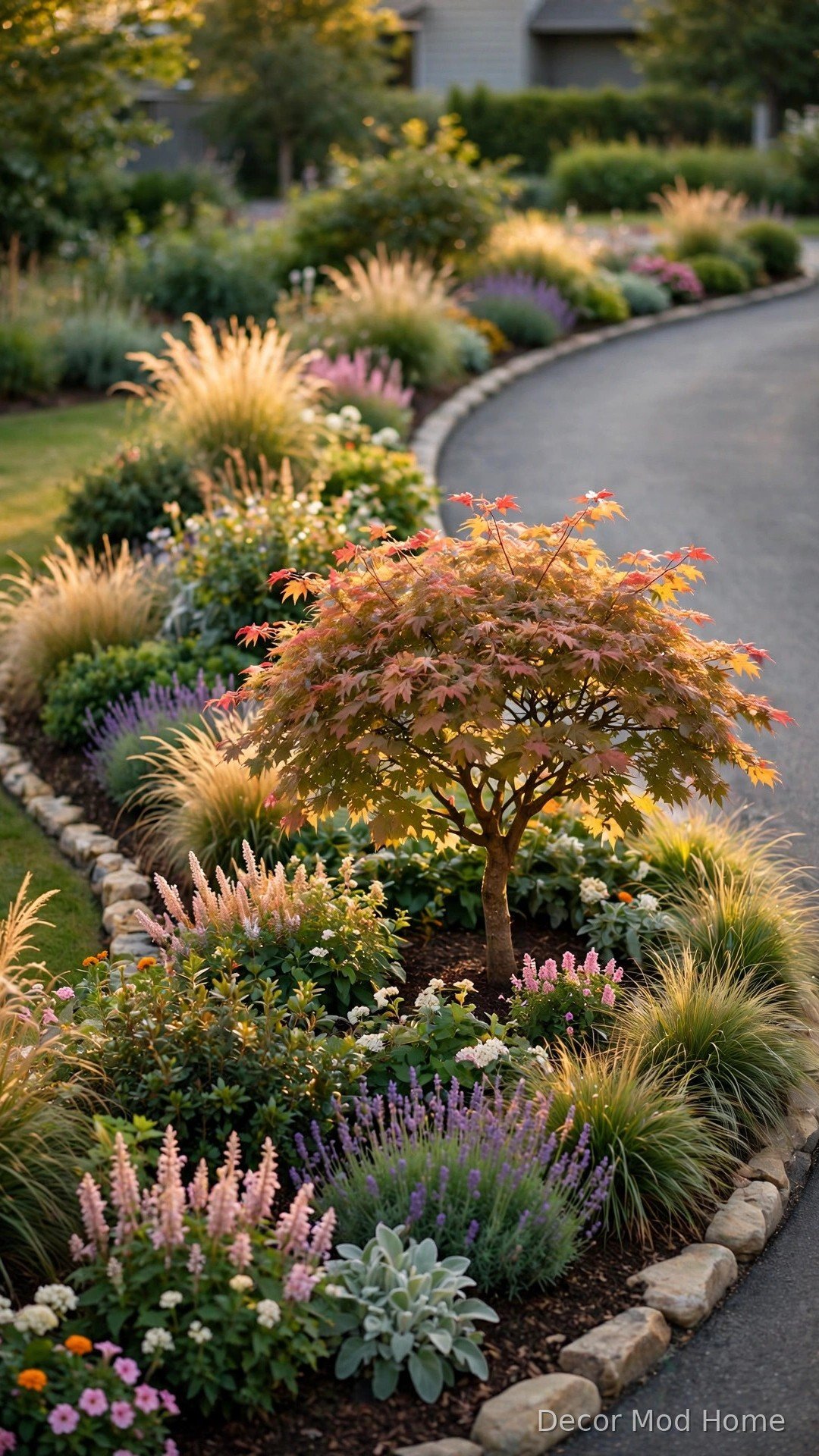
A gentle curve and a single focal point can transform a straight driveway edge from functional to memorable. Sweep the bed outwards near the entrance to create a wider planting pocket, then anchor it with something special: a handsome pot, a small ornamental tree, a birdbath, or a piece of garden sculpture. Plant around the feature in drifts, keeping the tallest planting close to the focal point and lower planting towards the drive. This curved shape slows the eye, makes the approach feel generous, and gives visitors something delightful to notice as they arrive at your door.
Frequently Asked Questions
What is the best plant for the side of a driveway?
The best plants are compact, tough, and tolerant of heat reflected from paving, occasional splashes, and light foot traffic. Lavender, ornamental grasses, dwarf shrubs, and hardy perennials such as salvia and echinacea are excellent choices. Avoid plants with aggressive roots near the driveway surface, thorny shrubs beside car doors, or anything that drops large quantities of fruit or sticky sap onto parked cars.
How wide should a driveway border be?
A border of sixty to ninety centimetres is enough for a single row of shrubs or a flower edge, while ninety centimetres to one and a half metres allows layered planting with a path or gravel strip. If space is tight, even a thirty-centimetre strip of ground cover or a neat hedge can make a real difference. Always leave enough room for car doors to open fully without crushing plants, and check that bins, prams, and wheelchairs can still pass comfortably along the drive.
How do I keep mulch and soil off the driveway?
Use a solid edging of stone, brick, or steel set slightly above the soil level, and keep the soil surface a few centimetres below the top of the edging. A gravel landing strip beside the drive also catches loose material before it reaches the paving. Sweep the edge regularly, and refresh mulch in spring rather than piling it high, so heavy rain cannot wash it across the driveway.
Can I landscape beside a driveway on a budget?
Yes, absolutely. Start with one clear improvement, such as edging and mulch, then add plants gradually. Ground cover, grasses, and lavender can be grown from small pots or divided from existing plants, and gravel plus stepping stones are far cheaper than repaving. Buying perennials in autumn, when many nurseries discount stock, is another simple way to stretch your budget while still achieving a polished result.
A Driveway Edge Worth Enjoying
Your driveway edge does not need to be grand to be beautiful. A neat border, a row of scented lavender, a drift of grasses, or a curve of planting around a favourite pot can change the way your whole home feels when you arrive. Start with the idea that suits your space, your soil, and your schedule, then let it grow. Even a single afternoon of edging, mulching, and planting can deliver a visible improvement, and each season will reward you with stronger plants, fuller borders, and more colour. With a little care and a few thoughtful plants, the side of your driveway can become one of the most rewarding corners of your garden. We would love to hear which idea you try first, so share your before-and-after photos and inspire someone else to make their driveway beautiful too.