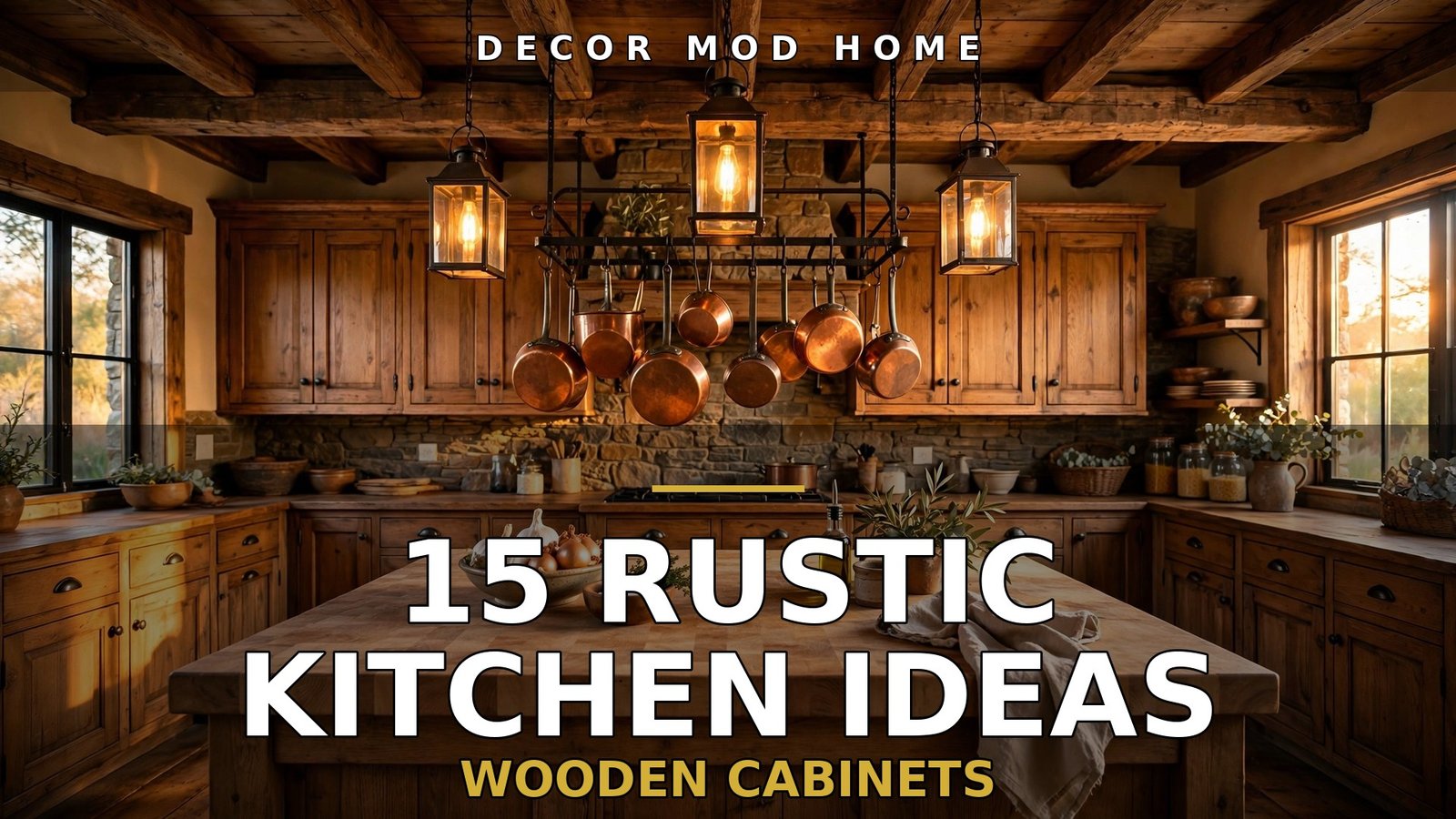
15 Rustic Kitchen Ideas with Wooden Cabinets
There is nothing quite like walking into a kitchen wrapped in warm wood — the scent of pine, the glow of lamplight on hand-hewn beams, cabinets with grain you can feel under your fingertips. These rustic kitchen ideas with wooden cabinets are all about that feeling: honest materials, timeless craftsmanship, and a coziness that makes everyone linger a little longer. Rustic does not mean rough or unfinished; done right, it is layered, warm, and quietly luxurious. Below you will find 15 designer-approved ideas that bring out the best in wooden cabinetry — from knotty pine and reclaimed barn wood to butcher block islands and wrought iron hardware — so you can build a kitchen that feels like home from the very first day.
1. Choose Knotty Pine Cabinets for Instant Cabin Charm
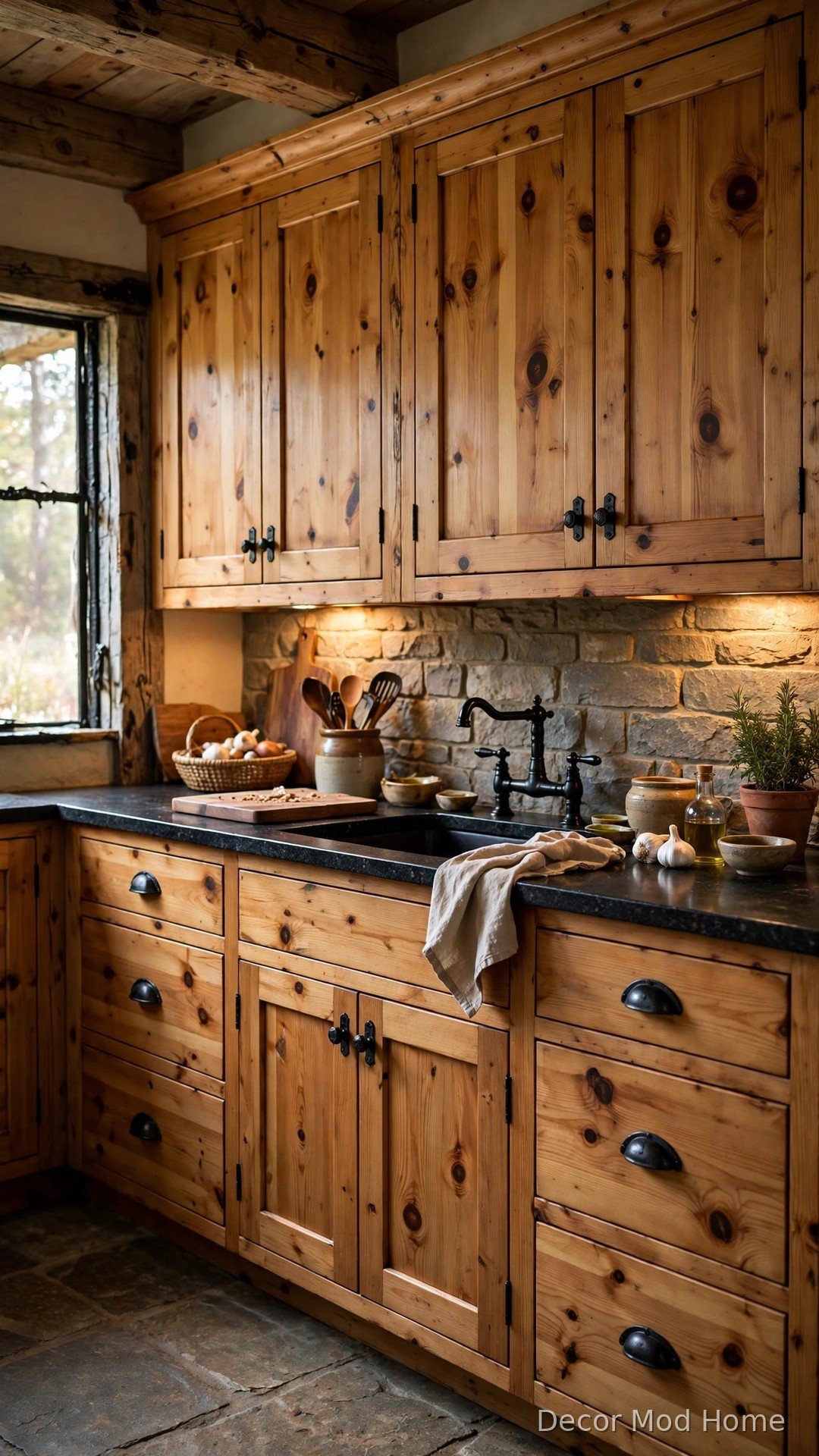
Knotty pine is the fastest route to rustic warmth. Its honey-toned grain, dark knots, and natural color variation give cabinets a lived-in, lodge-like character that painted finishes simply cannot imitate. For the most authentic look, choose a clear or light honey stain rather than a dark one — heavy dark stains hide the grain that makes pine special. Pair knotty pine lowers with a simple soapstone or honed black granite countertop to let the wood be the star, and keep upper cabinets minimal or replace a run of them with open shelving so the room stays light. Pine is a softer wood, so expect it to dent and patina over time — that is part of its charm, not a flaw. Seal it well around the sink and range, add black wrought iron cup pulls, and you have a kitchen that feels like a mountain retreat whether you live in the Rockies or the suburbs.
2. Go for Reclaimed Barn Wood Cabinet Doors
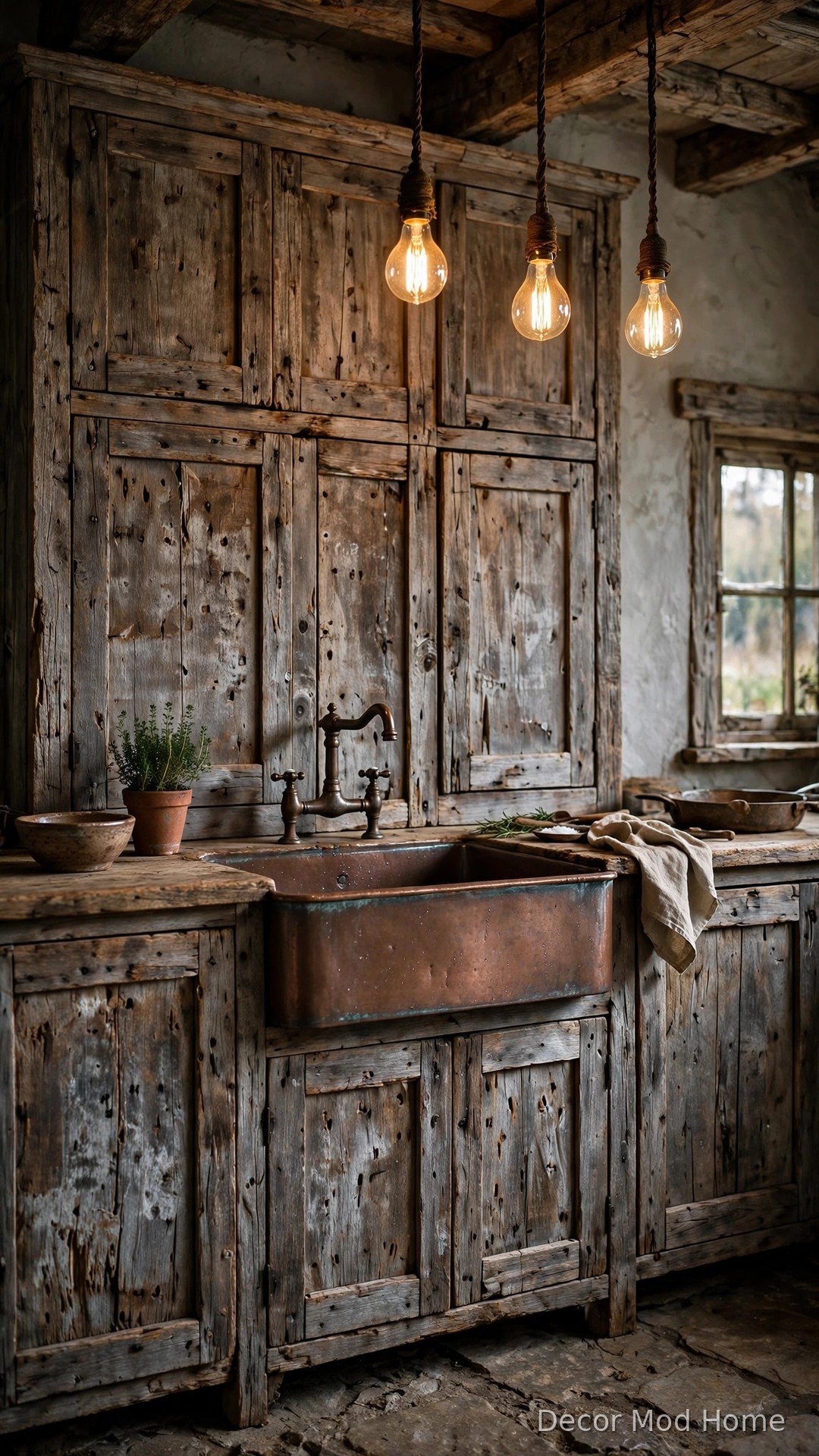
Few materials carry a story like reclaimed barn wood. Sourced from century-old barns, each plank brings weathered texture, nail holes, and a silvery-brown patina that new wood cannot fake. Use it for cabinet door fronts while keeping the cabinet boxes in a simpler stained wood — you get the full visual impact at a fraction of the cost and weight. Because reclaimed boards vary in tone, ask your cabinetmaker to blend boards from several lots so the color reads intentional rather than patchy. Seal reclaimed wood with a matte, food-safe finish to lock in the texture while keeping it wipeable. Pair it with a rugged stone floor, a copper farmhouse sink, and Edison bulb pendants for a kitchen that feels gathered over generations. One caution: source from a reputable dealer who kiln-dries and de-nails the lumber, so it is stable and safe in a kitchen environment.
3. Pair White Oak Cabinets with a Butcher Block Island
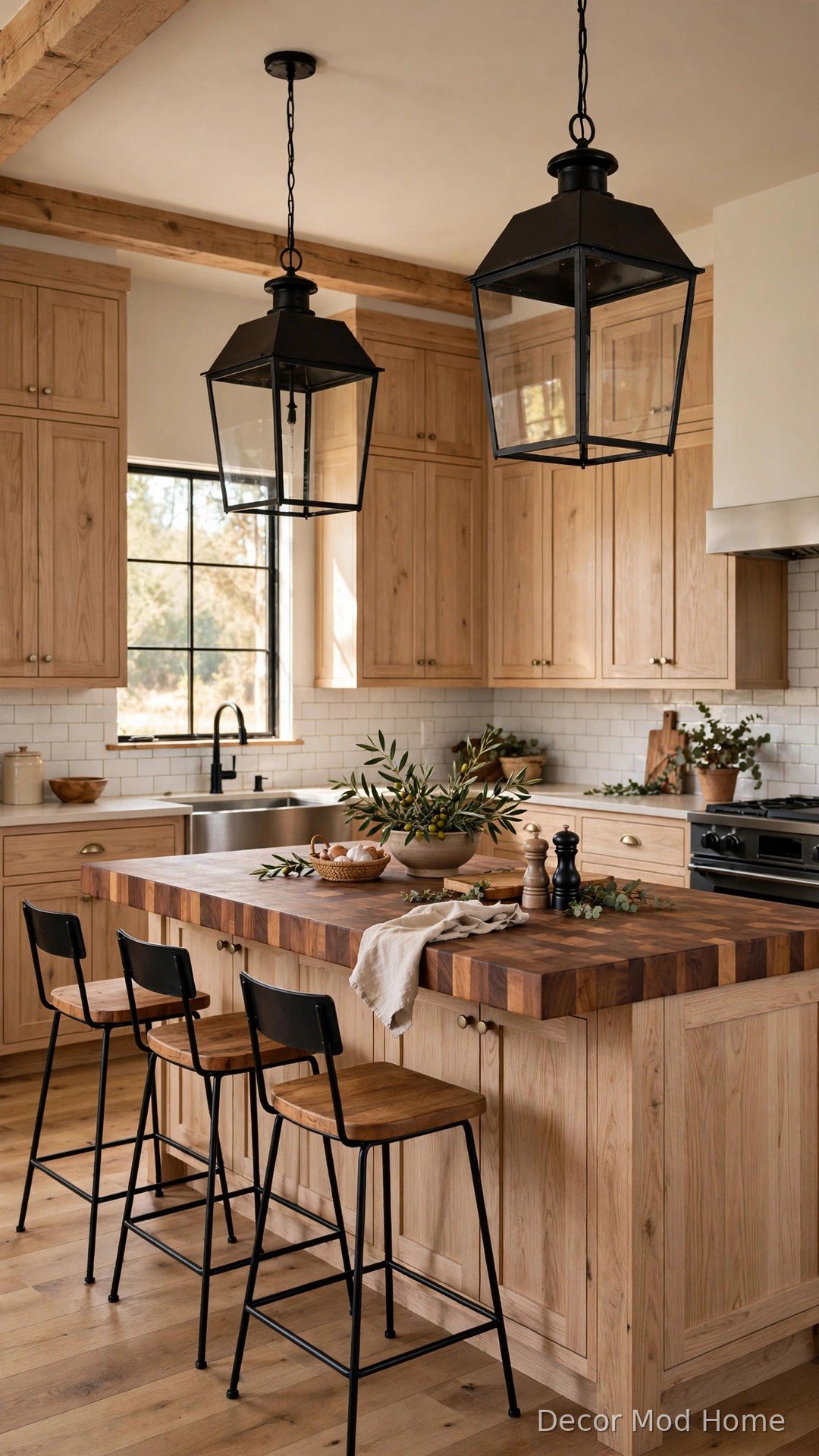
White oak brings rustic warmth with a refined edge. Its straight grain and warm tan tones feel crafted rather than rough, making it the perfect bridge between rustic and modern farmhouse styles. Use rift-sawn white oak for the perimeter cabinets in a natural or lightly fumed finish, then make the island the hero: a thick end-grain butcher block top in maple or walnut, at least 2 inches thick, with a waterfall or breadboard edge. The island becomes your prep station, breakfast bar, and gathering spot all at once. Finish butcher block with food-safe mineral oil or a hardwax oil, and re-oil every few months to keep it rich and protected. Add black metal bar stools with wood seats and a pair of oversized lantern pendants above, and the contrast between the pale oak perimeter and the deep-toned island gives the kitchen depth, warmth, and serious visual interest.
4. Swap Hardware for Wrought Iron Pulls
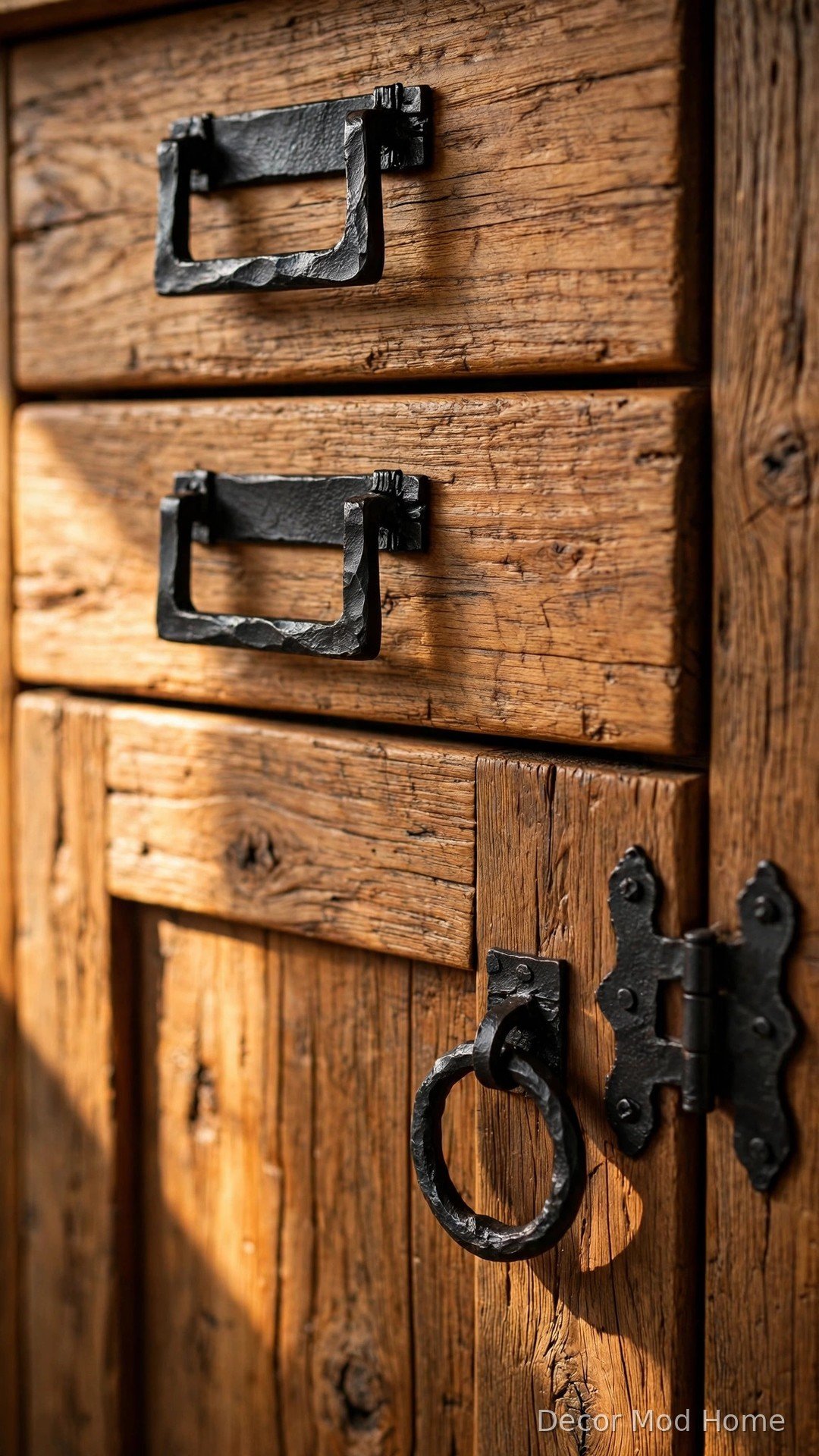
Sometimes the smallest change makes the biggest difference. Trading standard chrome or nickel pulls for hand-forged wrought iron instantly ages a kitchen in the best way — the matte black metal against warm wood reads like a blacksmith’s craft, not a catalog. Use chunky bin pulls on drawers and ring pulls or drop handles on doors for an authentic farmhouse feel. Wrought iron also pairs beautifully with exposed hinges; consider decorative H-hinges on a pantry or hutch cabinet to double down on the old-world character. The finish is forgiving: fingerprints barely show, and the metal only looks better as it wears. For cohesion, echo the iron in your faucet (matte black or oil-rubbed bronze), pendant light cages, and even the screws on open shelving brackets. It is an afternoon project with a transformation that feels like a full renovation.
5. Install a Fireclay Farmhouse Apron Sink
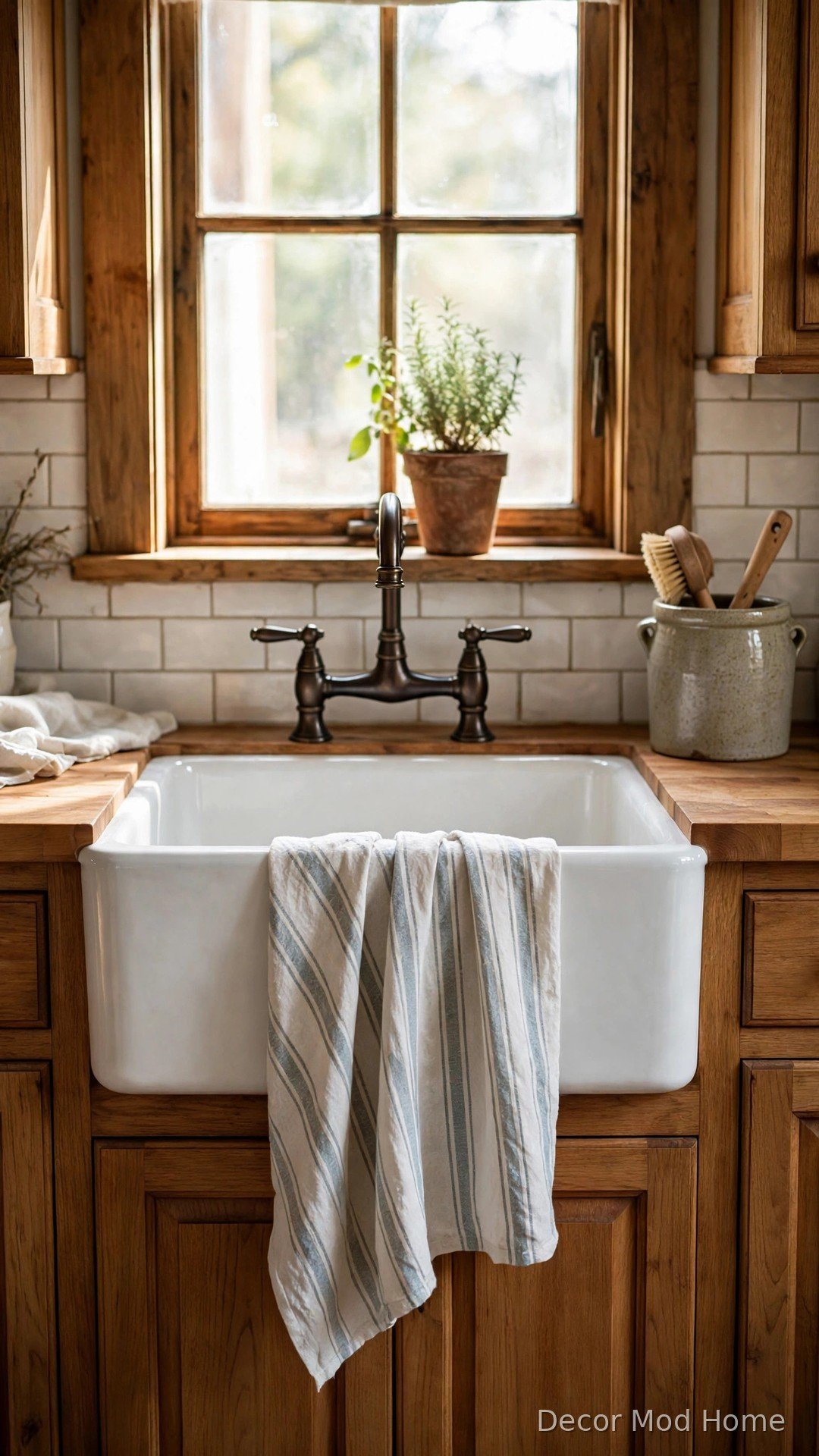
The apron-front sink is the beating heart of a rustic kitchen. A deep fireclay or cast iron farmhouse sink in warm white gives you a generous basin for stockpots and baking sheets while its exposed front becomes a design moment in itself. Set it into a run of wooden cabinets — the contrast between the crisp white sink and the warm wood grain is pure farmhouse magic. Choose a single-bowl design at least 30 inches wide for real functionality, and pair it with a bridge faucet in unlacquered brass or oil-rubbed bronze. Practical note: fireclay sinks are heavy, so confirm your cabinet base is reinforced to carry 100+ pounds. Style the moment with a striped linen runner draped over the apron, a wooden dish brush in a stoneware crock beside it, and a small potted herb on the windowsill above. It is the sink every rustic kitchen dreams about.
6. Add Open Shelving with Rustic Wood Brackets
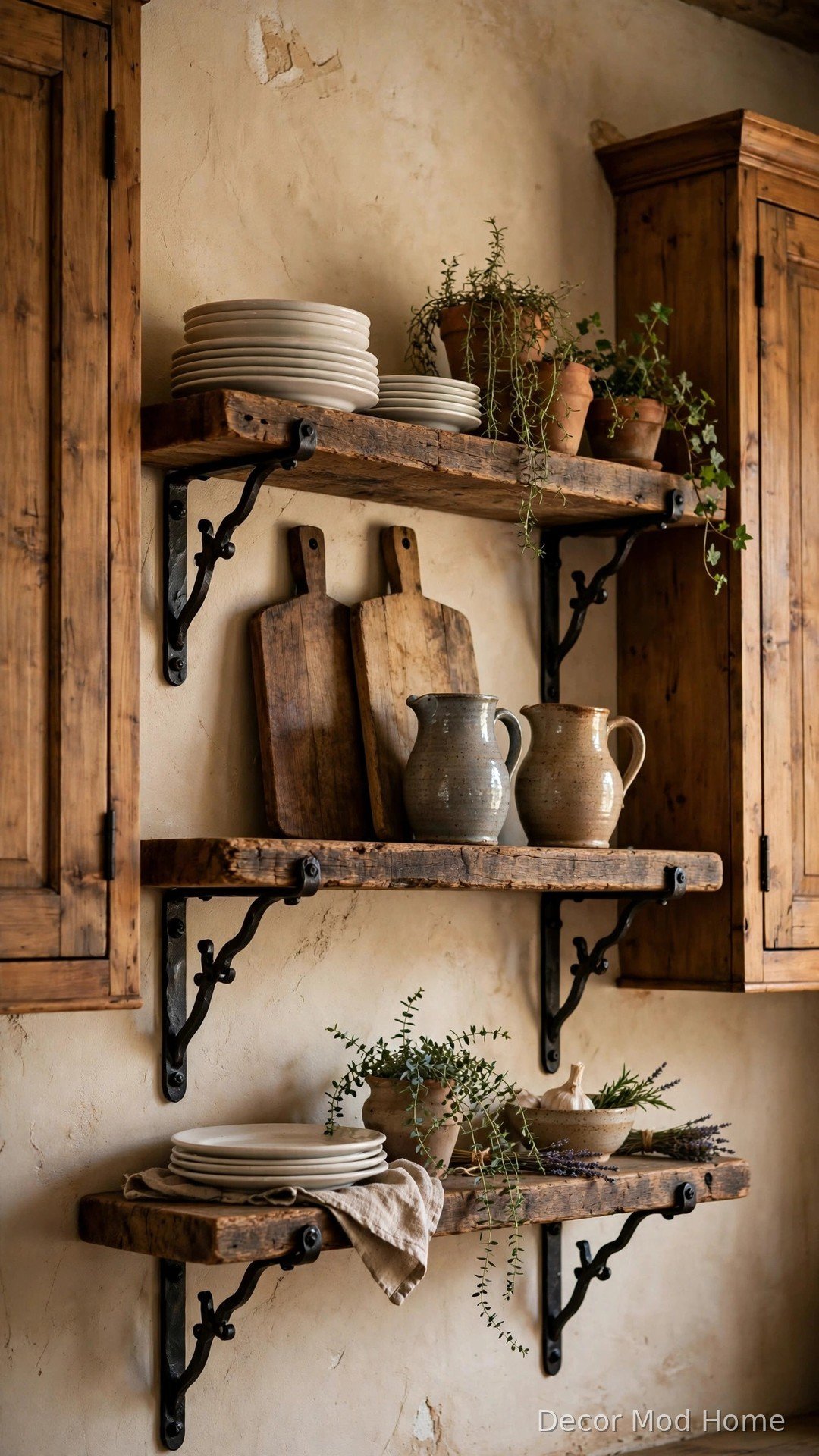
Replacing a stretch of upper cabinets with open shelving is the quickest way to make a rustic kitchen breathe. Thick reclaimed wood shelves — 2 inches or more — mounted on black iron or hand-forged brackets turn everyday dishes into decor. Style them with intention: stacks of white ironstone plates, wooden cutting boards leaned against the wall, stoneware pitchers, and a few trailing herbs in clay pots. Keep the palette tight — cream, wood, iron, green — so the shelves read curated, not cluttered. The practical upside is real: everything you reach for daily is at arm’s length. The one rule: only display what you use often, because open shelves in a kitchen collect a fine layer of cooking dust. A quick weekly wipe keeps them beautiful. Flank the shelving with your wooden uppers so the room keeps its storage, and the open section becomes the kitchen’s warm, personal focal point.
7. Mix Wood Tones: Hickory Lowers, Pine Uppers
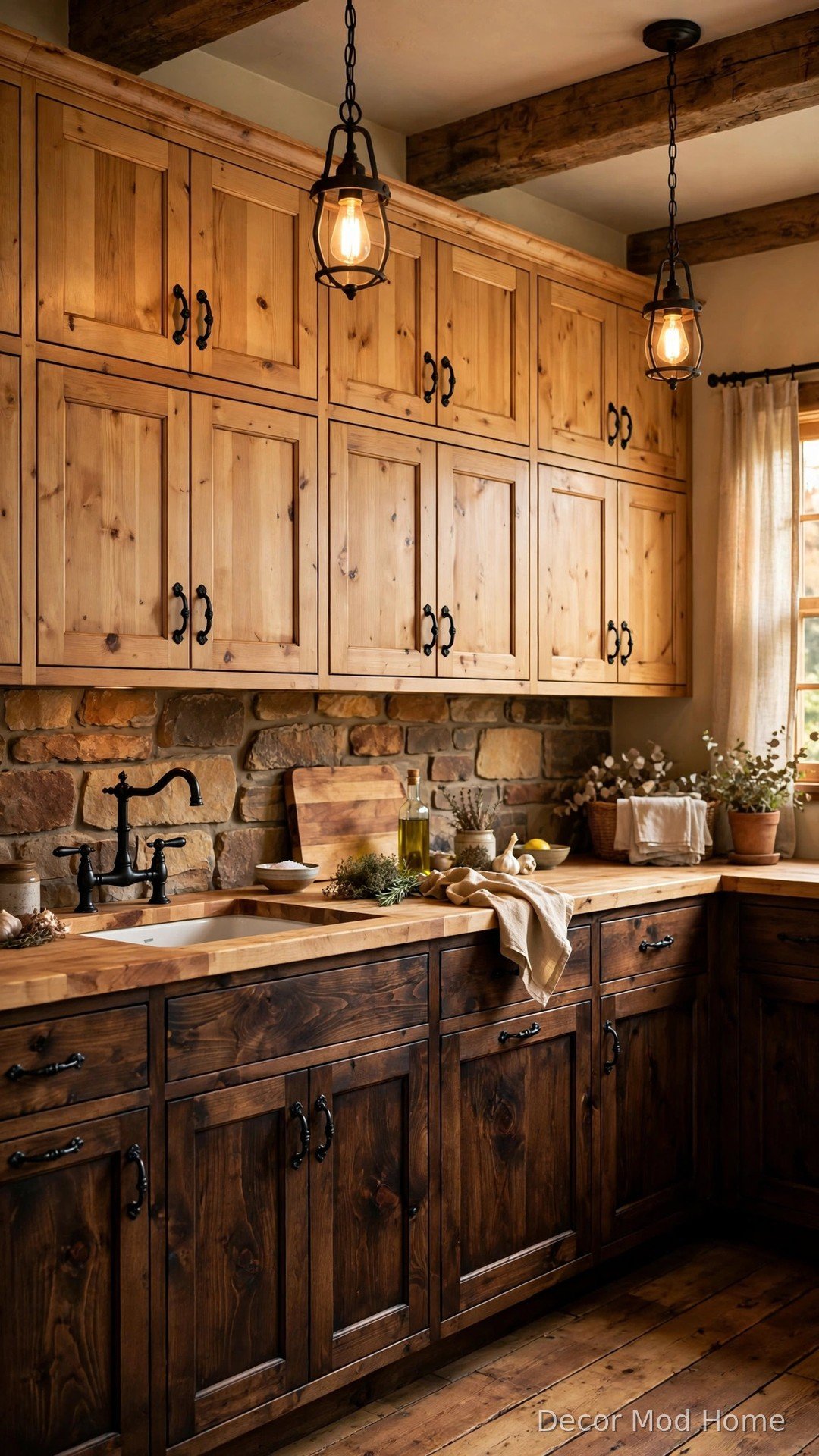
Matching every cabinet exactly can make a kitchen feel flat and one-note. Mixing wood tones — for example, rich hickory lower cabinets with lighter pine or whitewashed uppers — adds depth and a collected-over-time feel that is central to rustic style. The key is contrast with a common undertone: hickory’s dramatic grain and warm brown tones sit beautifully under pine’s golden honey, because both lean warm. Tie the two together with a unifying element — the same wrought iron hardware throughout, a single countertop material, or a stone backsplash that picks up both tones. Keep the ceiling, walls, and floor in quiet neutrals so the wood combination stays the star. This two-tone approach also lets you be practical: use durable, hard-wearing hickory where the abuse happens (lowers, island) and softer, lighter pine up high where it brightens the room.
8. Build a Wooden Range Hood Cover
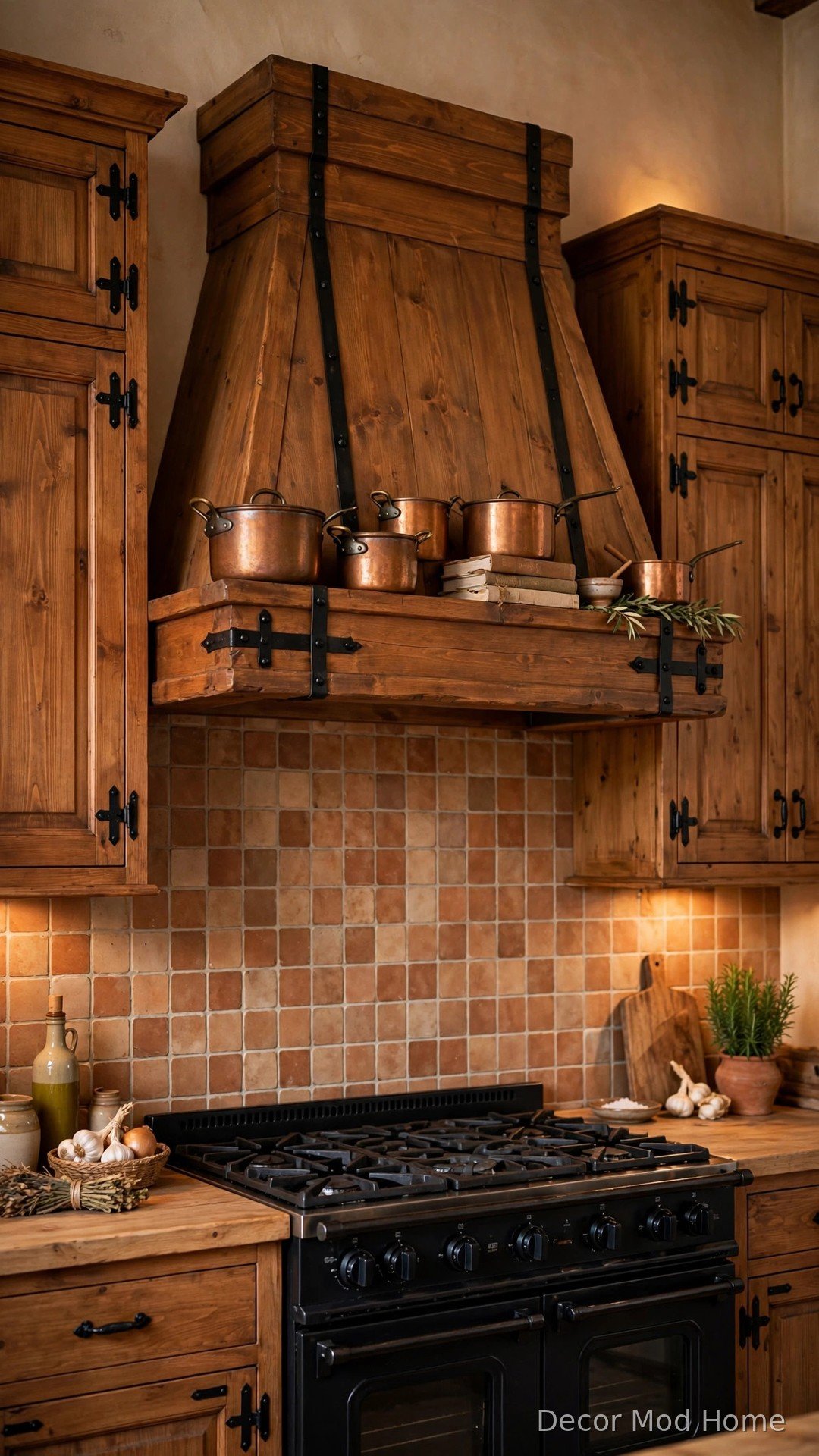
A stainless steel chimney hood can look cold and industrial in a rustic kitchen. Wrapping it in wood transforms it into the room’s architectural centerpiece. Build a custom hood cover from the same wood as your cabinets — or go bolder with reclaimed barn boards — in a simple tapered or arched shape. Add a chunky wood mantel shelf across the bottom of the hood for styling: a row of copper pots, a small stack of cookbooks, or a trailing plant softens the hard lines. Inside, a standard insert handles the ventilation; the wood is purely the beautiful shell. Finish the wood to match or complement your cabinetry, and consider corbels or iron straps for extra craftsman detail. It is a weekend carpentry project that delivers the single biggest visual upgrade in many rustic kitchens — the eye goes straight to the range wall, and now it deserves the attention.
9. Combine a Stone Backsplash with Wooden Cabinets
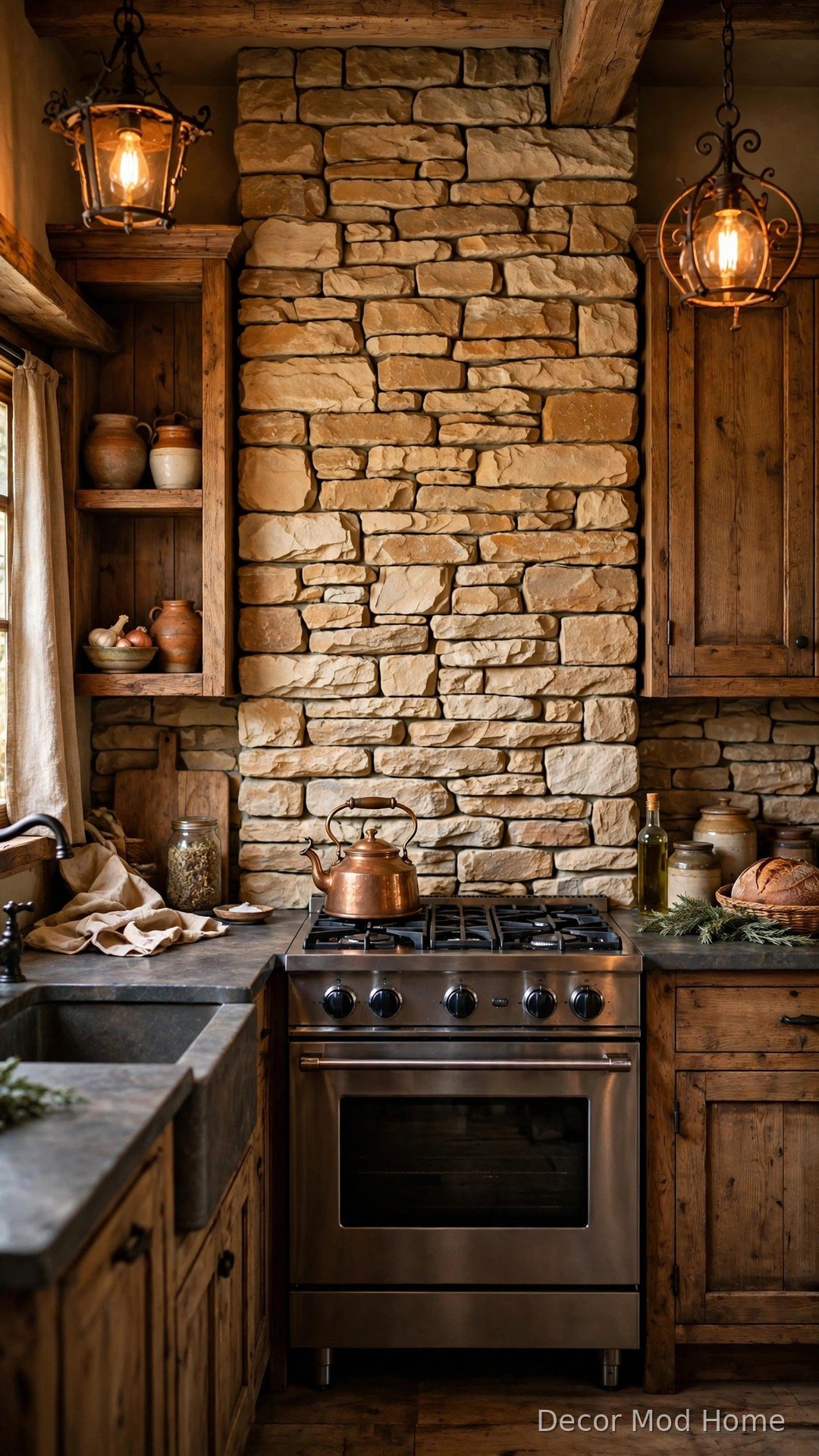
Wood and stone are rustic’s perfect pairing — one warm and crafted, the other cool and ancient. A stacked stone or ledgestone backsplash behind wooden cabinets adds rugged texture that makes the wood look even warmer by contrast. Choose stones in warm tans, creams, and soft grays rather than cool blue-grays, and keep the grout lines tight and in a matching tone so the texture reads as dry-stacked. Run the stone full height behind the range to the ceiling for maximum drama, and keep the remaining backsplash areas in the same stone for cohesion. Because stone is busy, keep the countertops quiet — honed soapstone, butcher block, or a simple honed granite in a solid tone. Seal the stone backsplash once a year; cooking splatter wipes off sealed stone easily. The result is a kitchen wall with the presence of a mountain lodge fireplace.
10. Make an Antique Pantry Cabinet the Focal Point
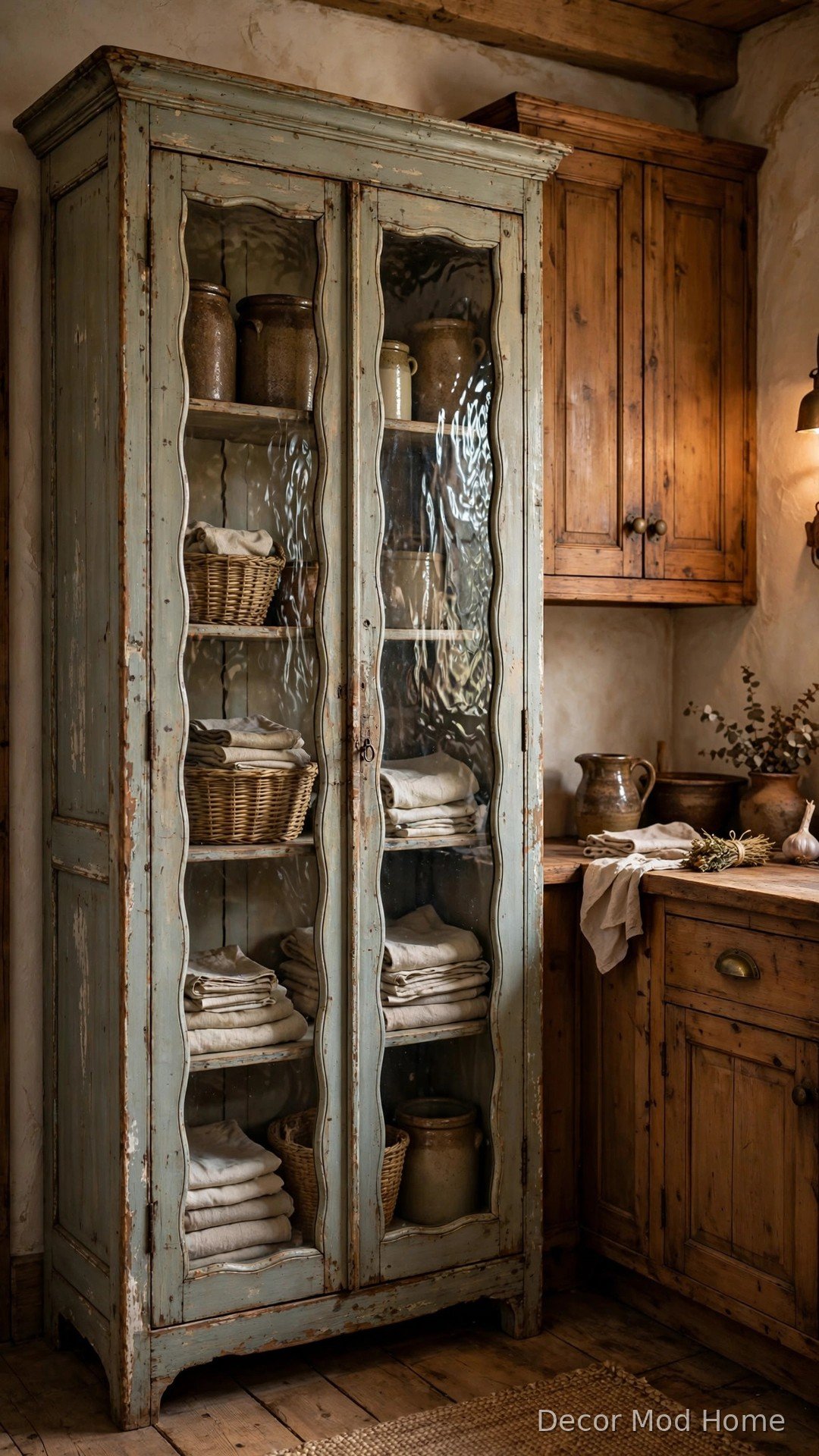
Every rustic kitchen needs one piece with a past. A tall antique pantry cabinet — a pie safe with punched tin doors, a Hoosier cabinet, or a simple farmhouse hutch — brings instant soul that new cabinetry cannot manufacture. Hunt architectural salvage shops, estate sales, and flea markets for a piece with original paint, worn edges, and wavy glass. Place it as a freestanding focal point at the end of a cabinet run or in a breakfast nook, styled with crocks, baskets, and linens. If the finish is too fragile for kitchen duty, have it professionally sealed with a clear matte topcoat. Wire the interior with a small LED puck light to show off your prettiest dishes. The beauty of a true antique is that it anchors the whole room: suddenly your new wooden cabinets look like they have always belonged with something old, and the kitchen gains a story.
11. Try Barn-Style Sliding Cabinet Doors
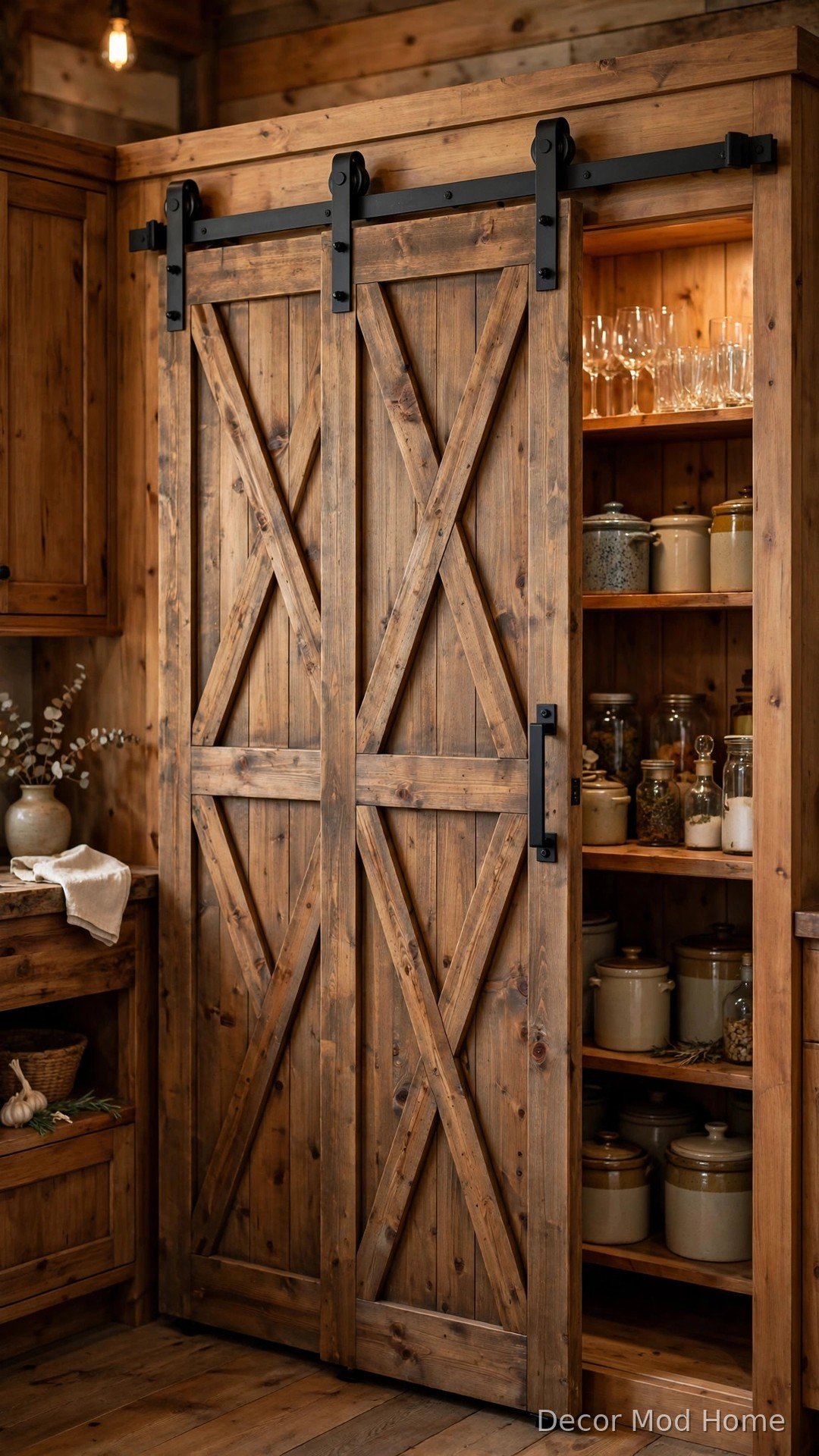
Replace a pair of standard cabinet doors — on a pantry, a hutch top, or a wide upper — with sliding barn-style doors and the whole kitchen gets a dose of farmhouse theater. Use Z-brace or X-brace wood doors in the same stain as your cabinets, hung on a matte black sliding rail with visible rollers. The hardware is the jewelry here: chunky black metal against warm wood. Sliding doors are also genuinely practical in tight kitchens, since they never swing out into walkways. For the best look, the doors should be at least 2 inches wider than the opening on each side so they fully cover it when closed. Keep the rest of the cabinetry simple so the barn doors read as an intentional accent, not a theme park. Style the open cabinet behind them with your prettiest glassware and crocks, because half the fun is sliding the doors to reveal what is inside.
12. Add Exposed Wood Ceiling Beams
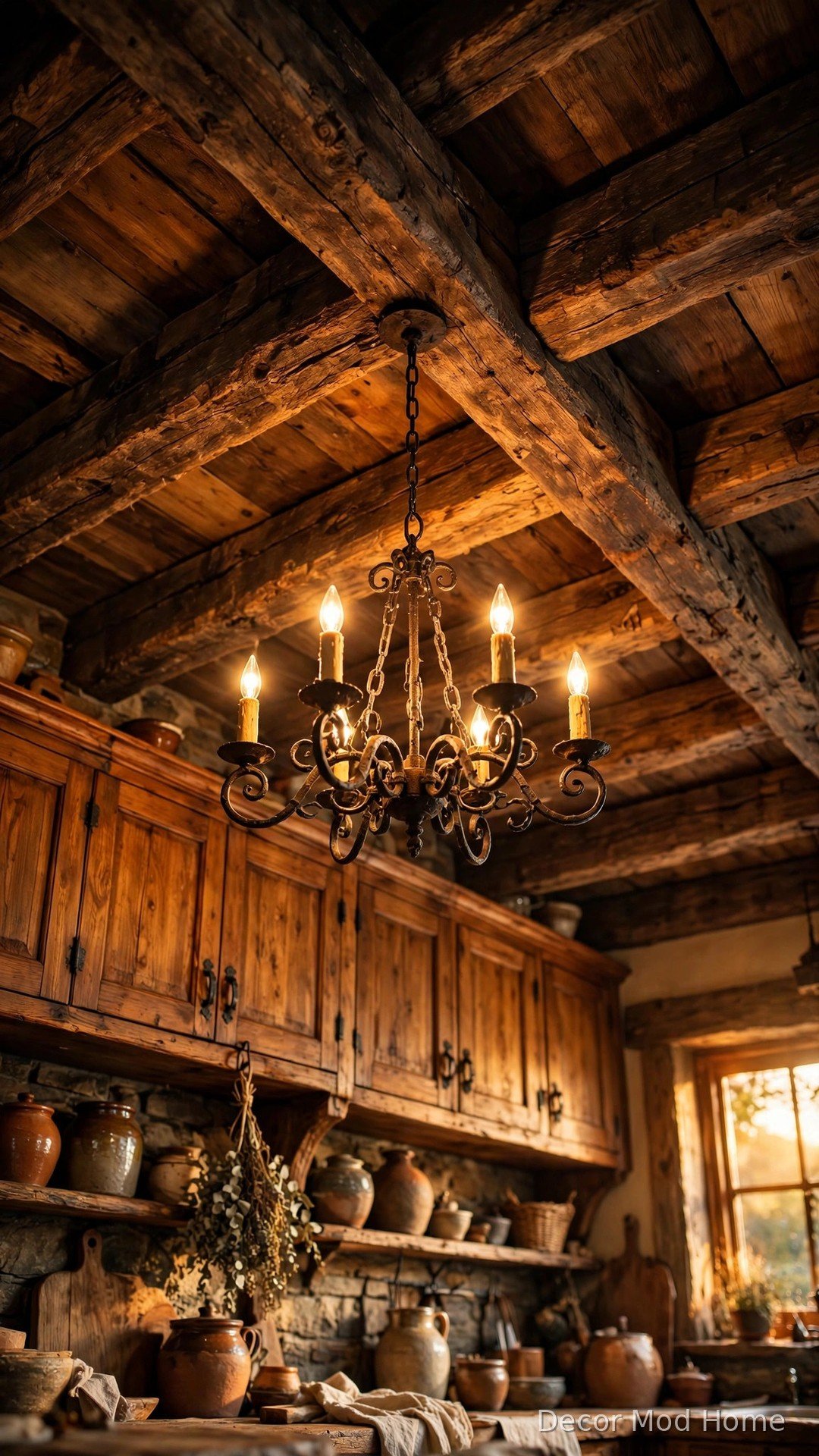
Nothing says rustic like looking up. Exposed wood beams — real reclaimed timbers or convincing box beams wrapped in wood — give a kitchen instant architectural weight and draw the eye upward, making even modest kitchens feel grand. For authenticity, choose rough-hewn or hand-scraped beams in a tone slightly darker than your cabinets; the contrast adds depth. Space them 4 to 6 feet apart, running across the shortest dimension of the room. If your ceiling cannot carry real timbers, hollow box beams in pine or white oak deliver the look at a fraction of the weight and cost. Hang a pair of lantern pendants or a wrought iron chandelier from the center beam to tie the ceiling into the room’s lighting story. Keep walls and cabinetry warm and simple so the beams remain the crown of the room — they are the frame that makes everything below feel intentional.
13. Light It Warm: Lantern Pendants and Edison Bulbs
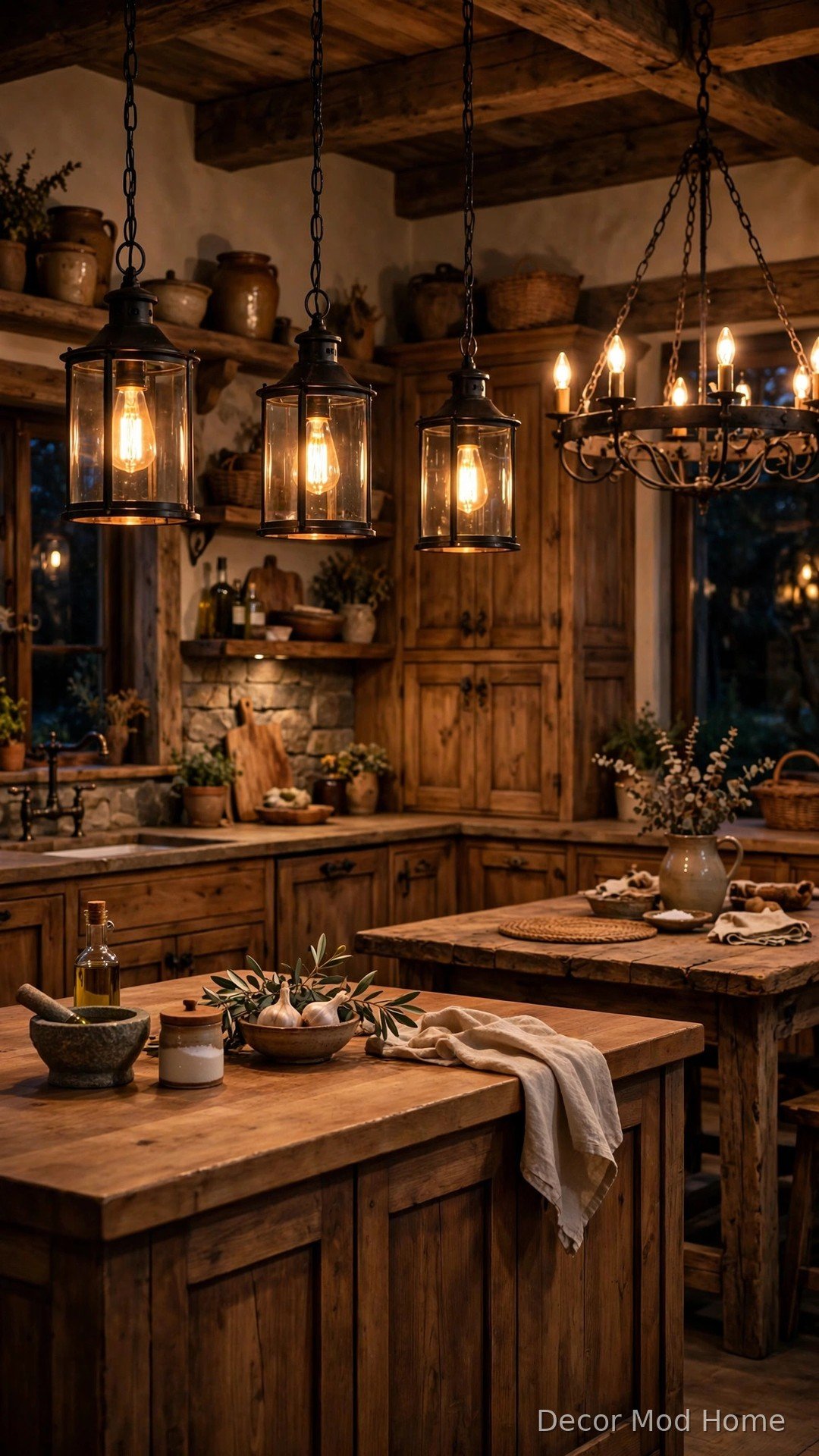
Rustic kitchens live or die by their lighting. Swap cool recessed cans for warmth: black metal lantern pendants over the island, a wrought iron chandelier over the table, and Edison or filament bulbs everywhere they show. The amber glow of a 2200K–2700K filament bulb flatters wood grain, warms skin tones, and makes the whole room feel like golden hour. Hang pendants 30 to 36 inches above the island countertop, and put every fixture on a dimmer so you can shift from bright prep light to a low, cozy glow for dinner. Do not forget under-cabinet lighting — a warm LED strip tucked beneath wooden uppers washes the backsplash in light and makes the cabinets appear to float. Avoid anything above 3000K; cool white light will fight every warm material you have chosen. Good lighting is the invisible ingredient that makes wood look its richest.
14. Display Copper Pots and Cast Iron
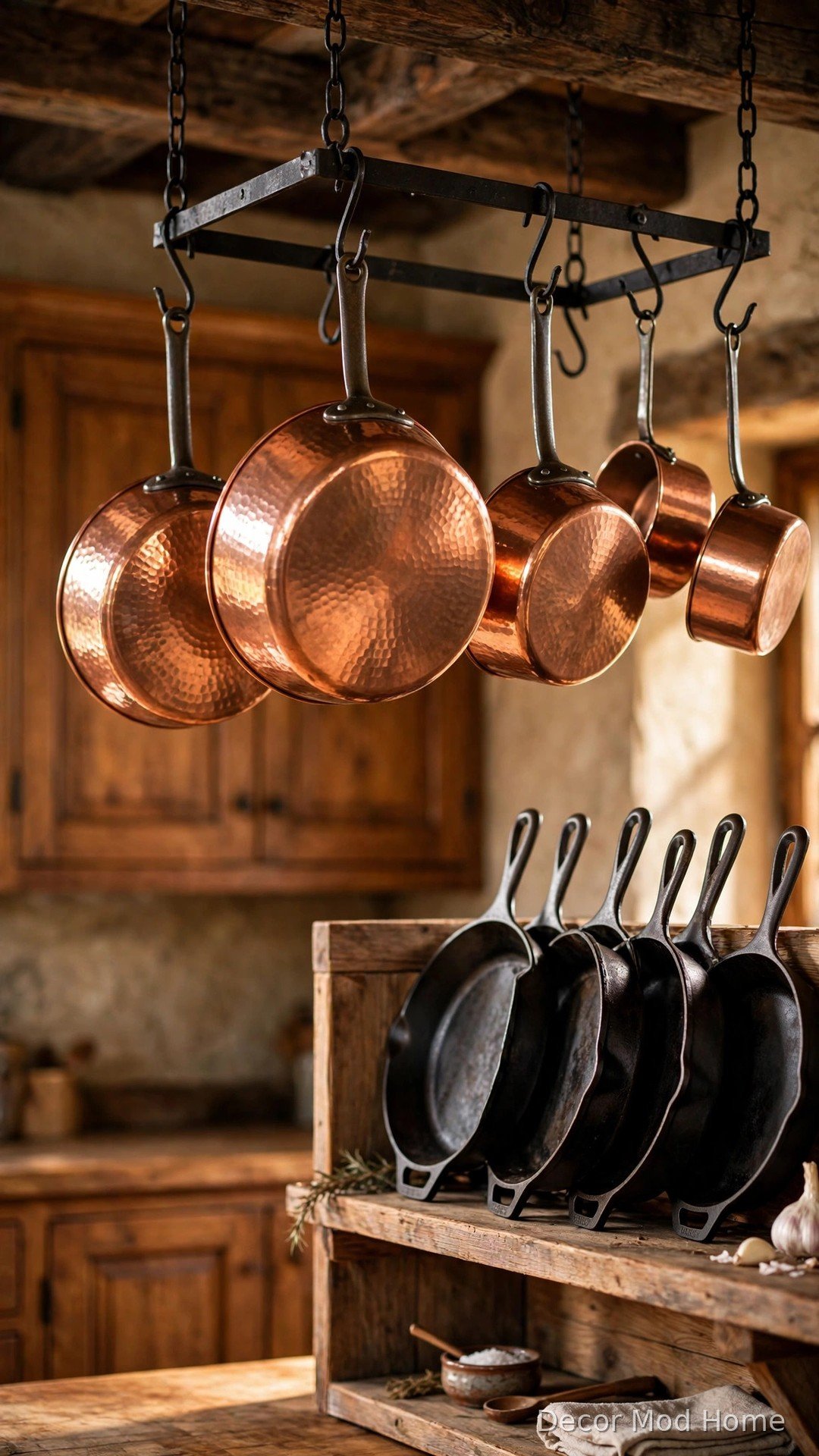
In a rustic kitchen, your cookware is the decor. A rail of gleaming copper pots hung from a ceiling-mounted rack or a row of cast iron skillets on open shelving adds warmth, shine, and a working-kitchen soul that no accessory can fake. Copper’s rosy glow is the perfect complement to wooden cabinets — hang a hammered copper pot rail over the island or beside the range where it catches the light. Seasoned cast iron, with its deep black patina, grounds the look and nods to generations of real cooking. Keep the display functional: hang the pans you actually use, within reach of the stove, and they will stay polished from use. A copper farmhouse sink or copper range hood echo the metal elsewhere in the room. This is decor that earns its keep — beautiful because it is used, and used because it is beautiful.
15. Anchor the Room with a Chunky Wood Farm Table
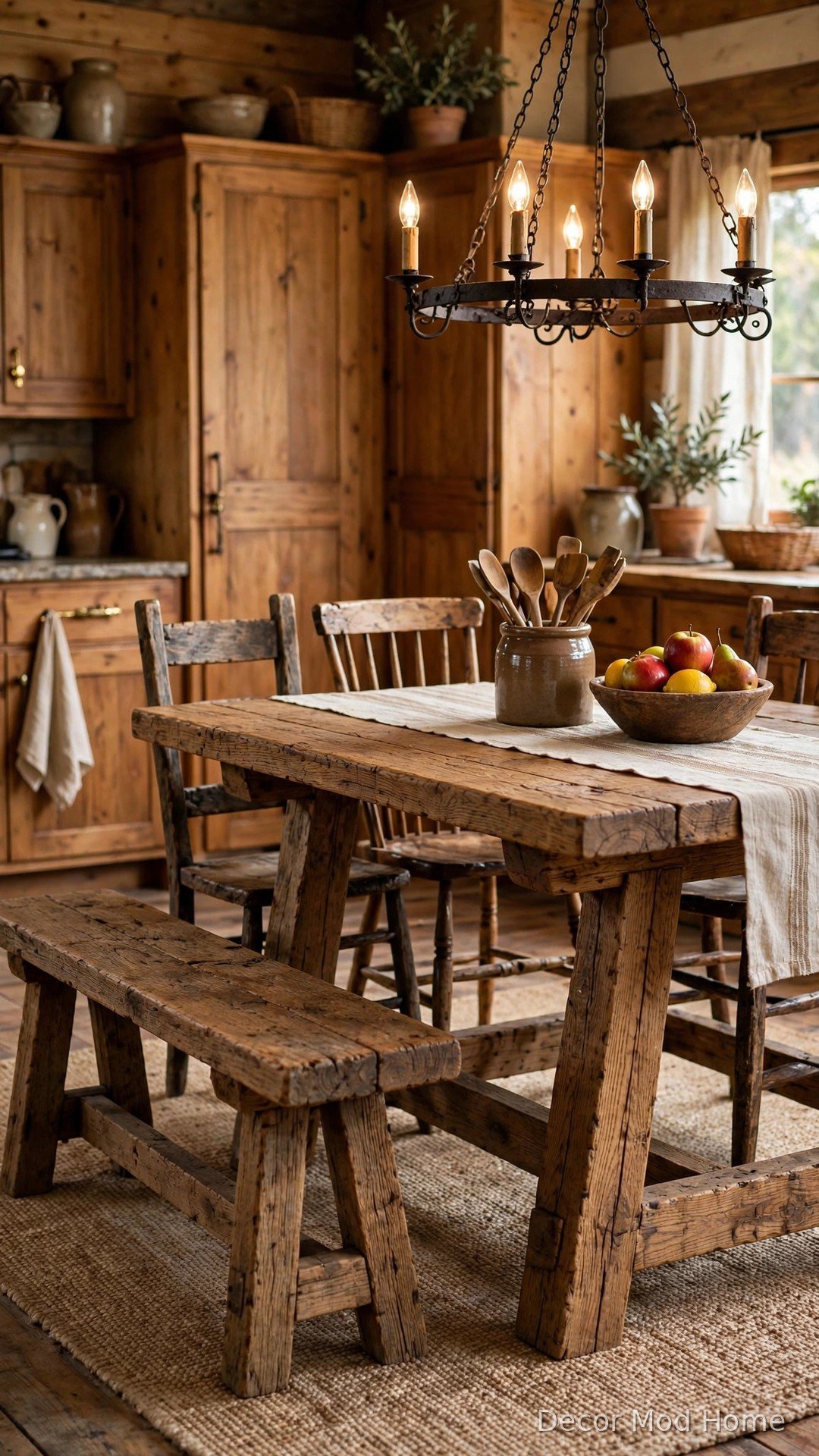
Forget a delicate dining set — a rustic kitchen wants a chunky farm table with presence. A thick-planked trestle table in oak, pine, or reclaimed wood, seating six to eight, becomes the room’s gathering heart: homework, holidays, morning coffee, and late-night talks all happen here. Choose a table with a distressed or matte oil finish that welcomes daily life — scratches and rings become patina, not damage. Pair it with a mix of seating: a long bench on one side for casual crowding, and mismatched wooden chairs on the other for collected charm. Hang a wrought iron or wood-bead chandelier low over the table (about 30 inches above the surface) to define the zone, and ground it all with a flatweave jute or vintage-style rug. Style the center with a simple runner, a crock of wooden spoons, and a low bowl of seasonal fruit — unfussy, abundant, and warm.
Frequently Asked Questions
What is the best wood for rustic kitchen cabinets?
Knotty pine, hickory, white oak, and reclaimed barn wood are the top choices. Knotty pine gives instant cabin charm with its honey tones and dark knots; hickory offers dramatic grain and excellent durability; white oak brings a refined rustic look with warm tan tones; and reclaimed barn wood delivers unmatched character with its weathered patina. Choose based on your budget and how formal or casual you want the kitchen to feel.
How do I keep wooden cabinets from looking dated?
Balance is everything. Pair wooden cabinets with current elements: a simple stone or quartz countertop, matte black or brass hardware, warm layered lighting, and clean-lined open shelving. Avoid heavy ornamentation and orange-toned stains, which read dated. Mixing wood tones — for example, darker lowers with lighter uppers — also keeps the look fresh and intentional rather than matchy-matchy.
Are rustic kitchens with wooden cabinets expensive?
They can be, but they do not have to be. The biggest savings come from refacing or restaining existing cabinets instead of replacing them, swapping hardware to wrought iron pulls, adding open shelving, and hunting salvage shops for antique pieces. A wooden range hood cover and warm lighting are high-impact, moderate-cost upgrades. Focus your budget on the elements you touch and see daily: hardware, lighting, and the island.
What colors go well with rustic wooden cabinets?
Warm neutrals are the natural partners: creamy whites, warm beige, soft sage, muted terracotta, and charcoal as an accent. Avoid cool blue-grays and stark whites, which fight the wood’s warmth. For walls, warm white or a soft limewash keeps things light; for textiles, natural linen, jute, and grain-sack stripes complete the rustic palette.
Your Rustic Kitchen Is Closer Than You Think
A rustic kitchen with wooden cabinets is not about perfection — it is about warmth you can feel the moment you walk in. Start with one idea that speaks to you: swap your hardware for wrought iron pulls, hang a pair of lantern pendants, or hunt down that antique pantry cabinet with a story to tell. Layer by layer, the wood, the iron, and the warm light will do the rest. Pin your favorite ideas from this list, and explore more kitchen inspiration here on Decor Mod Home to keep the ideas flowing. Your cozy, gathered-over-time kitchen is waiting — and it is going to be beautiful.