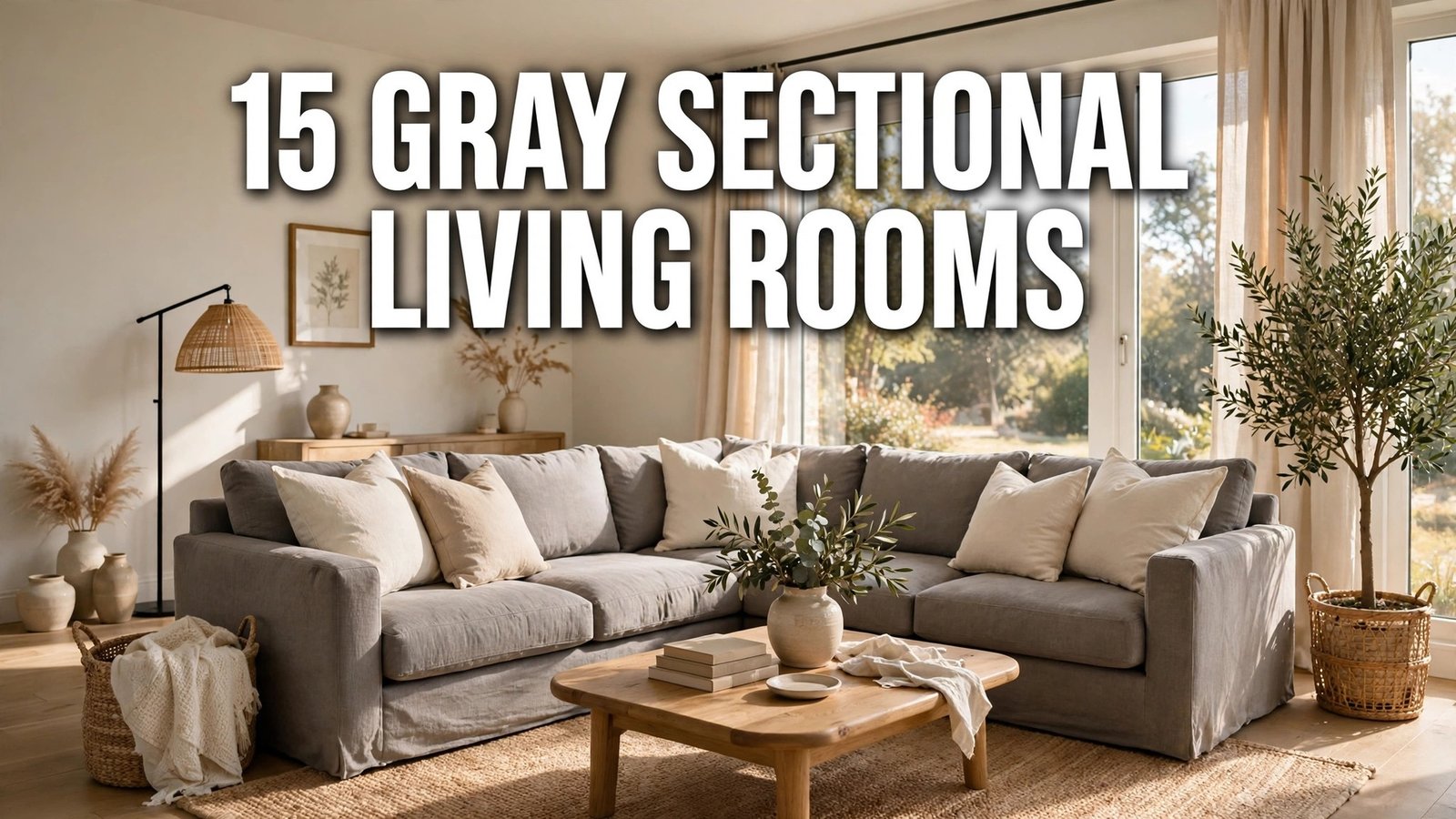
15 Neutral Living Room Designs with Gray Sectionals
There is a reason neutral living room designs with gray sectionals never really go out of style. Gray is the great peacemaker of the colour world — cool enough to feel modern, warm enough to feel welcoming, and calm enough to let every other choice in the room shine. A gray sectional anchors the space with generous, sink-in seating, while a neutral palette keeps everything feeling light, layered and expensive. The trick is in the details: the rug underfoot, the throw draped over one arm, the lamp glowing in the corner. Get those right and gray stops being ‘safe’ and starts being quietly stunning. Below are fifteen practical ways to style a gray sectional in a neutral living room — from warm greige walls to brass accents and layered lighting — each one easy to copy in a real home.
1. The Warm Greige Foundation
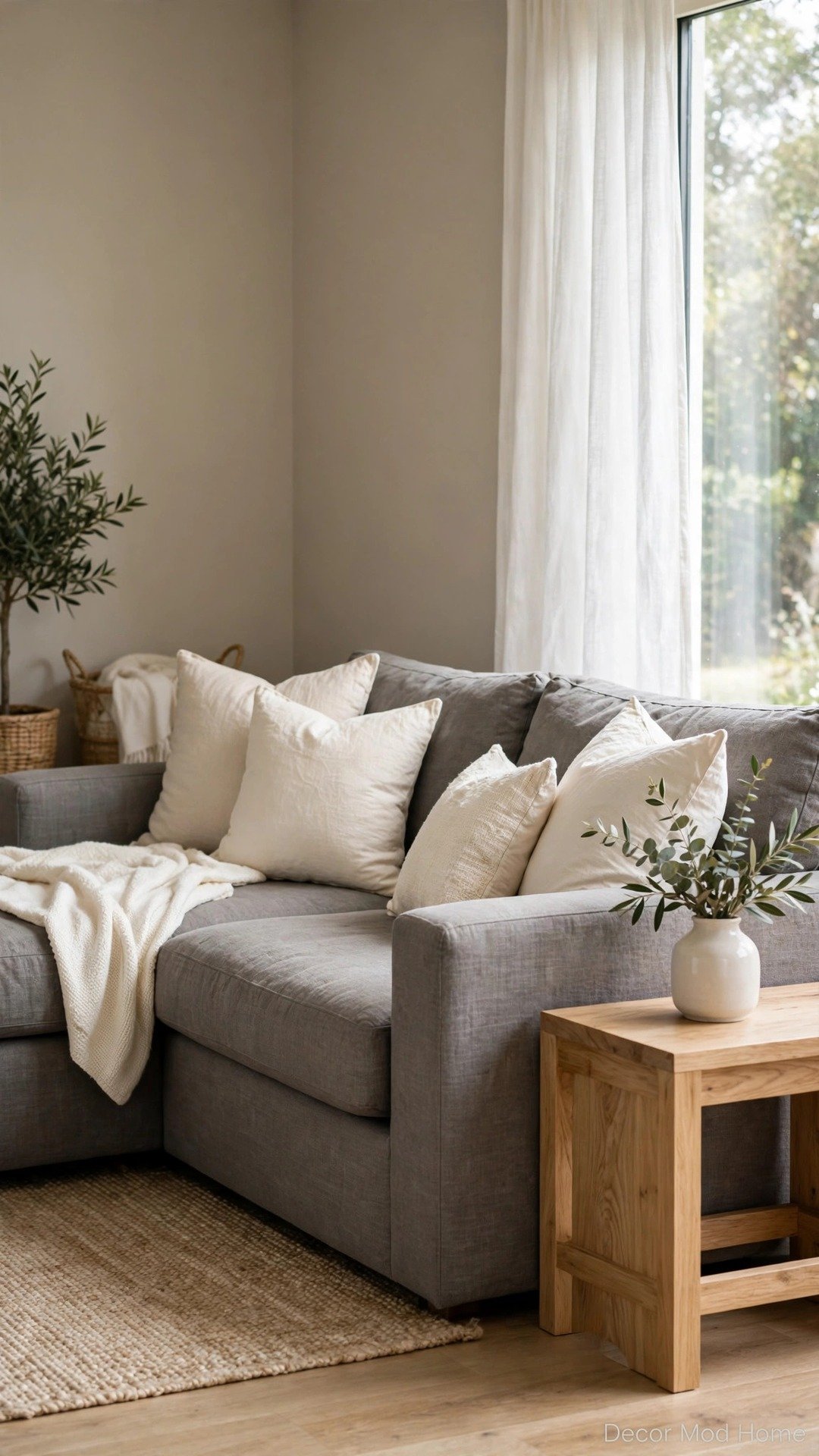
Paint is the cheapest transformation in the room, and for a gray sectional nothing works harder than a warm greige — that perfect midpoint between beige and gray. Cool grays on the wall can make a gray sofa look flat and chilly, while a greige with a whisper of warmth makes the same sofa look rich and expensive. Try shades with names like accessible beige or agreeable gray (both cult favourites for a reason) in a matte or eggshell finish, which hides scuffs better than flat paint in a busy living room. Keep the ceiling bright white to lift the space, and let the skirting boards match the ceiling for a crisp frame. The result is a soft, cocooning backdrop that lets every texture you layer on top — linen, wool, oak — read beautifully against it.
2. Layered Cream Textiles on a Gray Sectional
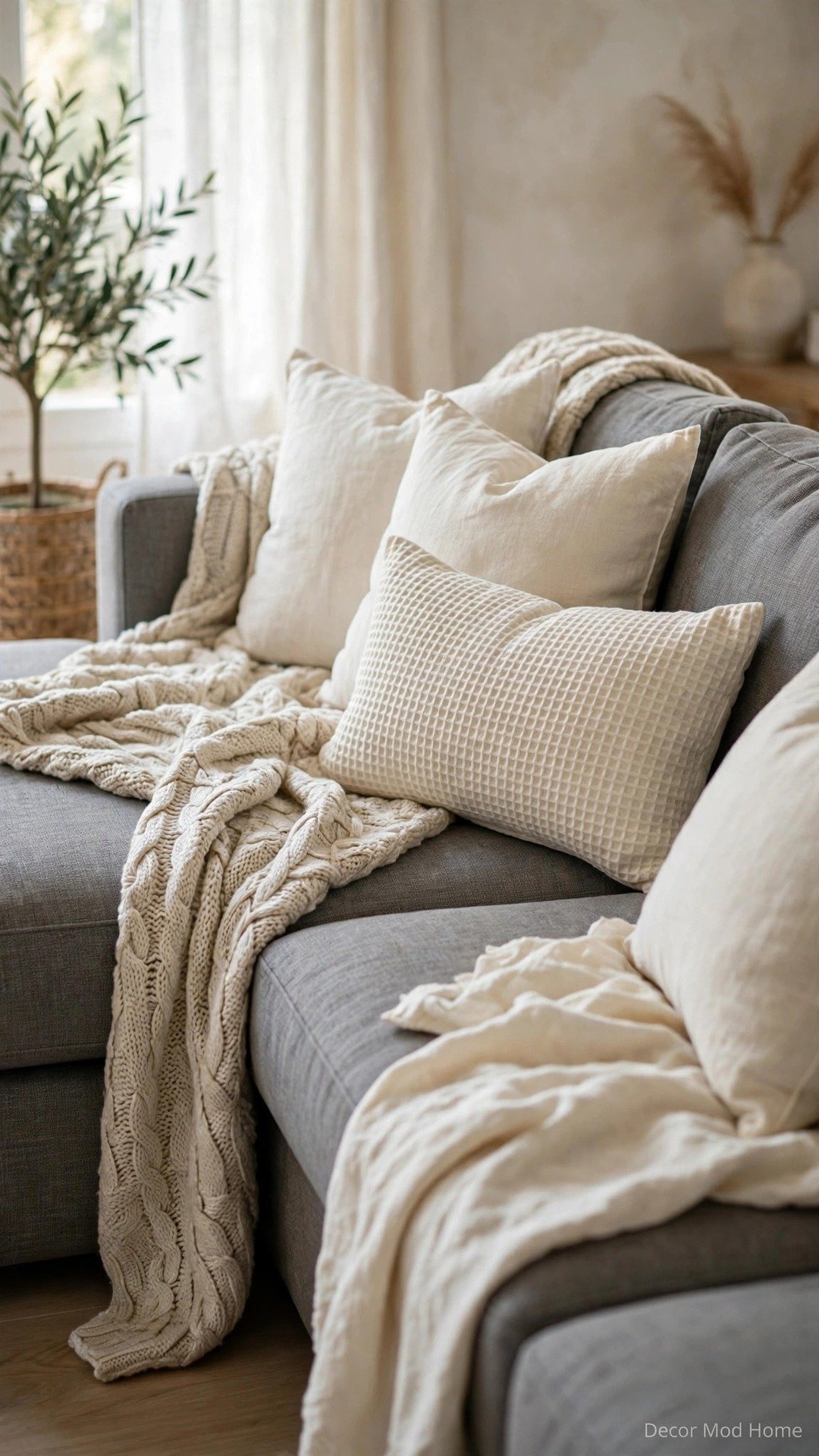
A gray sectional can look a little plain straight out of the showroom, and cream textiles are the fastest fix. Start with two or three cushion covers in ivory linen or cotton — the natural slubs in the fabric catch the light and stop the surface looking flat. Add a chunky knit throw in oatmeal or undyed wool, draped casually over one corner rather than folded like a hotel bed. Finish with a smaller lumbar cushion in a tactile weave, perhaps a waffle or a bouclé, to give the eye somewhere to land. Stick to creams, oatmeals and soft whites rather than brilliant white, which can look stark against mid-gray. The palette stays neutral, but the layers of fibre and weave make the sofa feel plush, collected and deeply inviting to sink into.
3. The Jute Rug Anchor
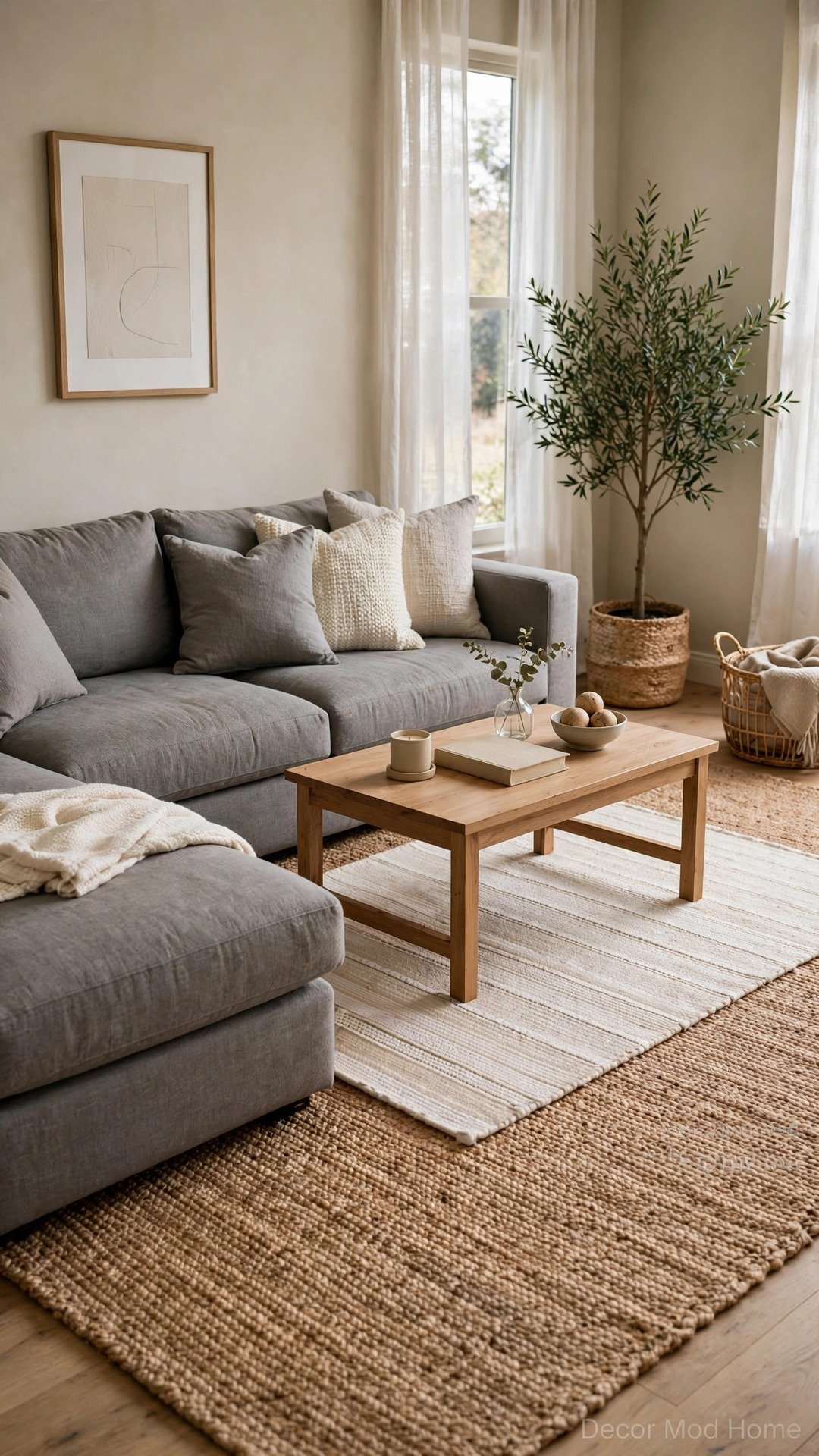
Every sectional needs a rug that is big enough to ground it, and natural jute is the neutral lover’s secret weapon. Choose a rug that extends at least 20–30 cm beyond the front edge of the sectional on every side — a too-small rug makes even a generous sofa look adrift. Jute’s honeyed, fibrous texture adds warmth underfoot and a relaxed, coastal-calm feel that softens gray’s modern edge. If you worry about jute feeling rough, layer a smaller, softer flat-weave rug in cream or ivory on top, centred under the coffee table. The two-tone layering looks designer-level but costs a fraction of one huge wool rug. Keep the rug’s weave simple and natural; the sectional and cushions are where any pattern should live.
4. Wood Tones That Warm Up Cool Gray
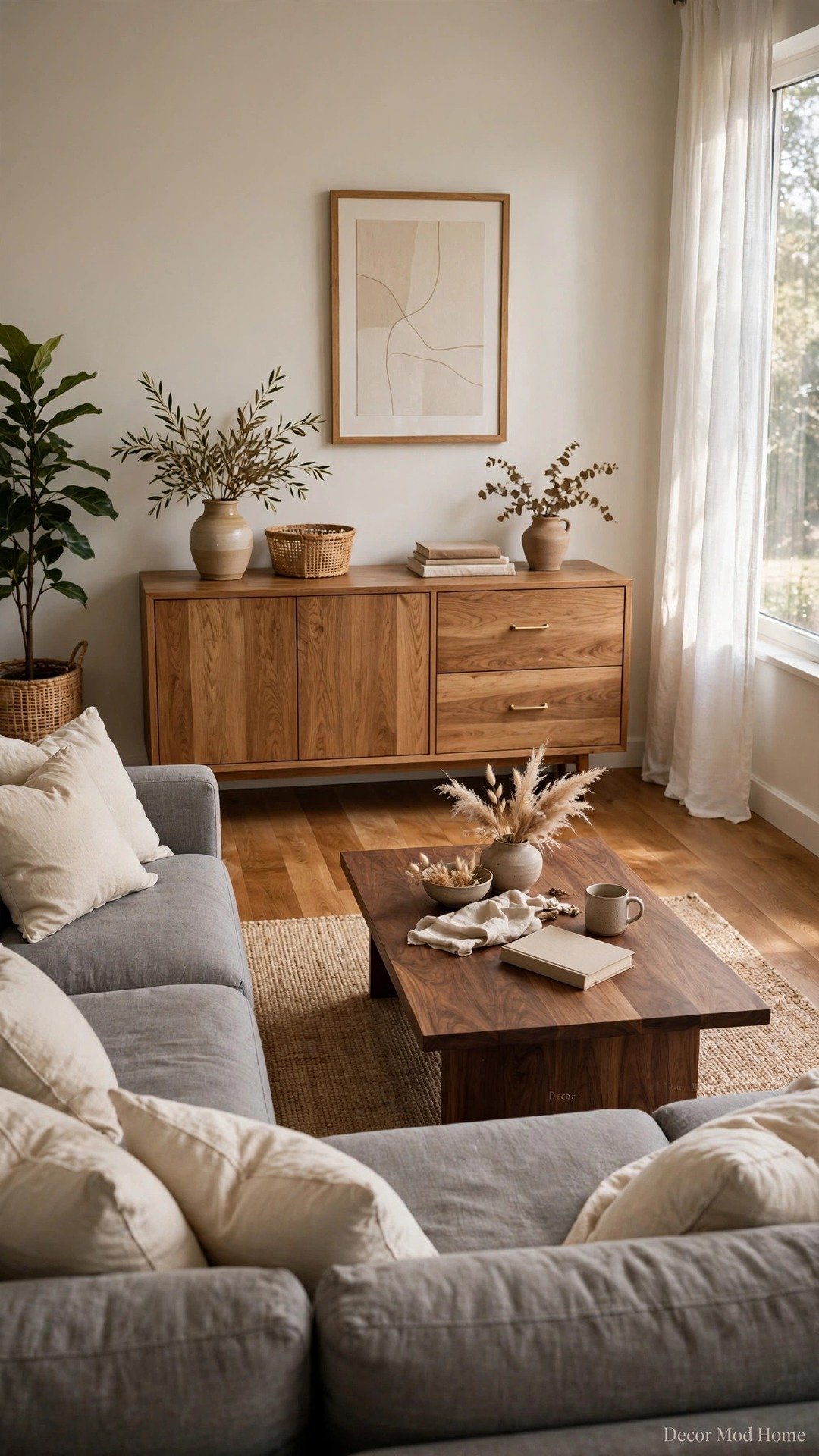
Gray has a reputation for feeling cool, and warm wood is the quickest way to balance it. An oak or walnut coffee table in front of the sectional instantly introduces honeyed tones that make the gray upholstery feel warmer by contrast. Repeat the wood at least twice more — a walnut sideboard against the wall, oak picture frames, a teak side table at the sectional’s end — so it reads as intentional rather than accidental. Medium wood tones (think smoked oak rather than orange pine) sit happiest with gray. If your flooring is already wood, echo its undertone in your furniture choices; if it is carpet, let a wooden coffee table and shelving carry the warmth instead. The visible wood grain also stops a neutral room feeling flat or one-note.
5. Brass and Gold Accents for Glow
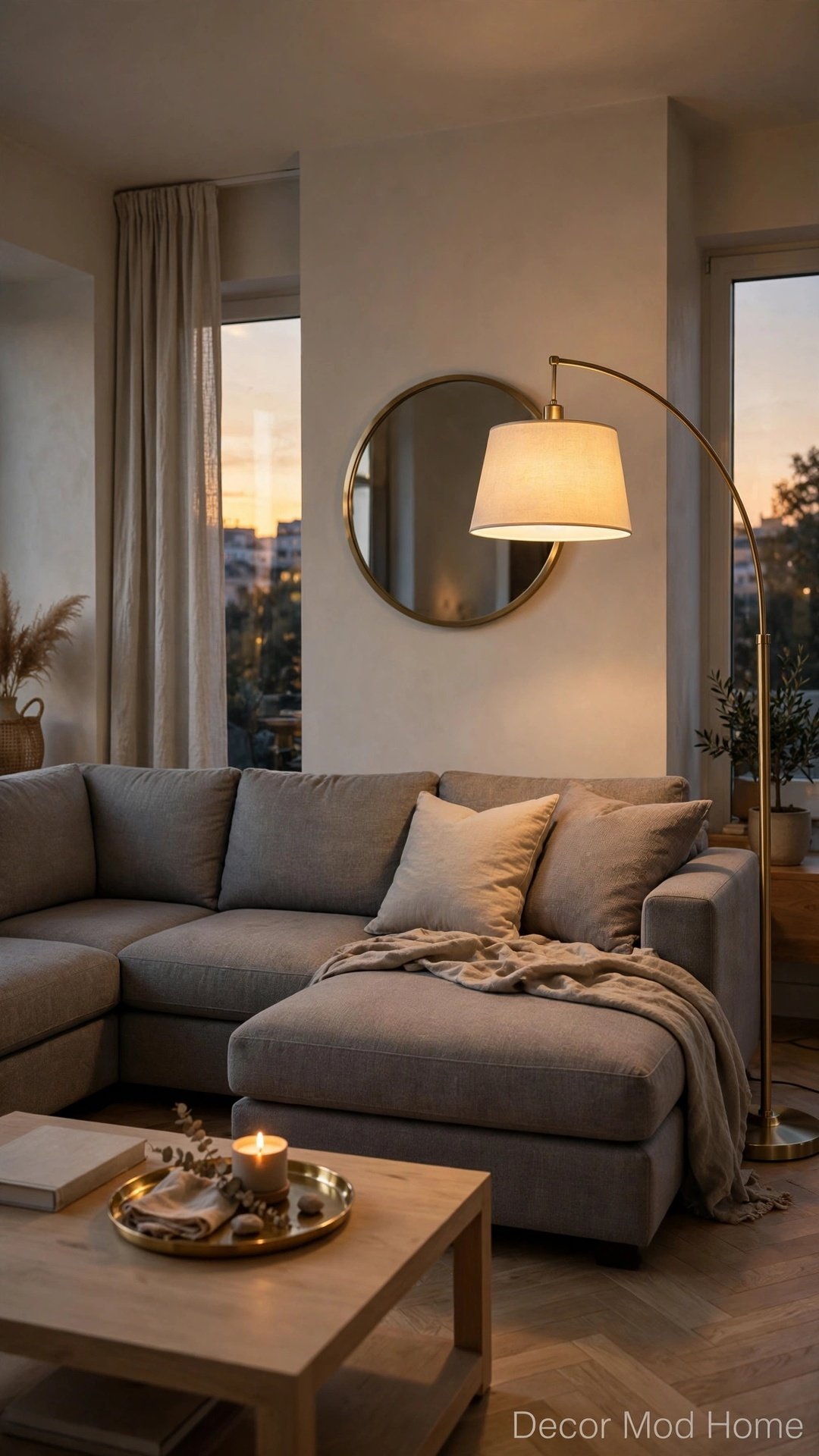
A little metallic warmth stops a gray-and-neutral room from feeling monochrome, and brushed brass is the perfect partner. Swap harsh chrome for a brass arc floor lamp curving over the sectional’s chaise end, or flank the sofa with small brass table lamps that pool warm light at sitting height. A round mirror with a slim brass frame above the mantel or console bounces light around and adds a jewellery-like glint. Keep the finish brushed or aged rather than mirror-polished — it feels softer and more timeless against gray fabric. The rule of three works well: three brass moments (a lamp, a tray on the coffee table, a pair of candlesticks) spaced around the room read as curated, never cluttered.
6. Black Contrast for Definition
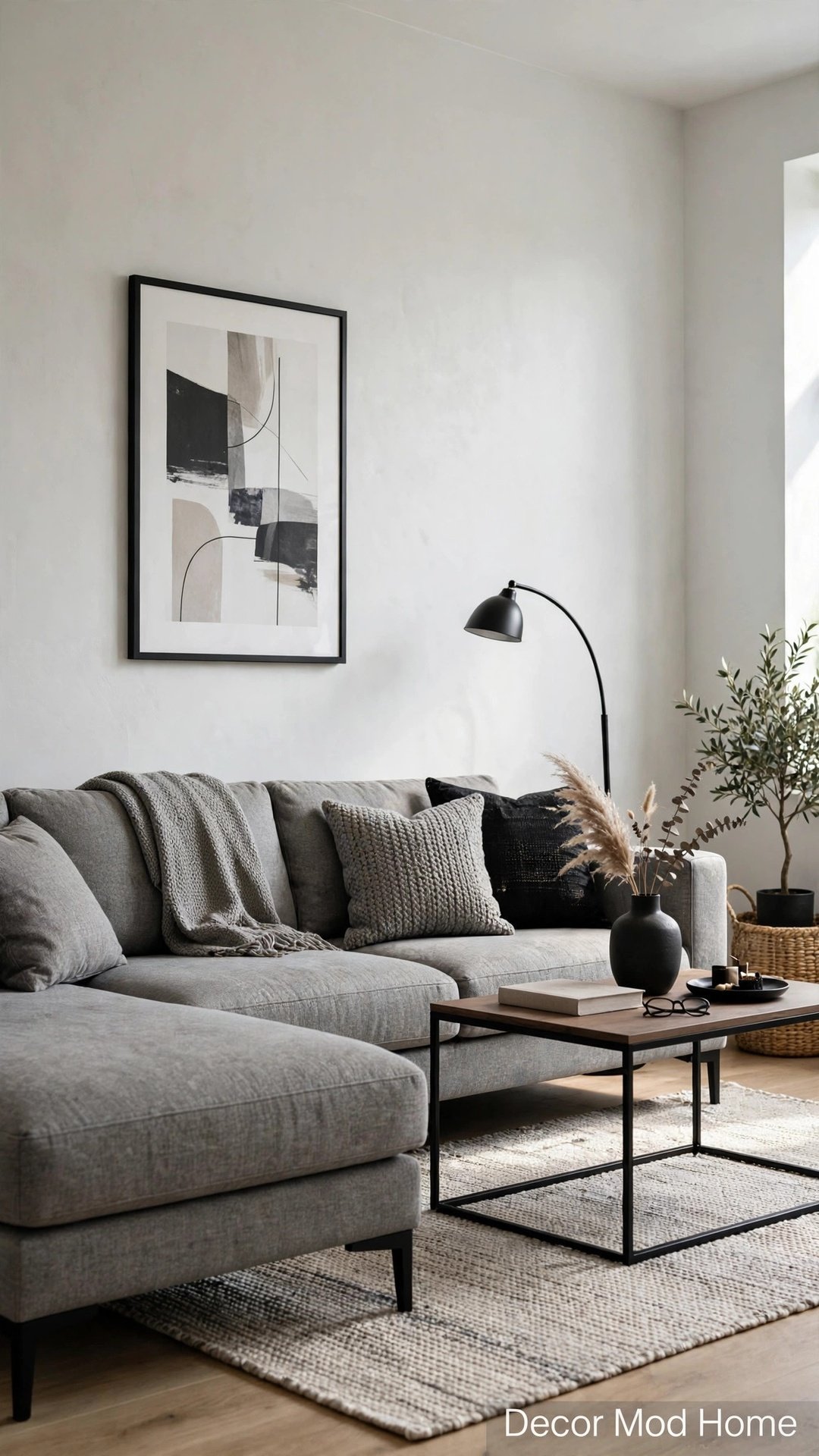
Neutral rooms can drift into beige soup without something dark to anchor them, and matte black is the ideal counterweight to a gray sectional. A slim black floor lamp, black-framed artwork, or a coffee table with black metal legs gives the eye a crisp outline and makes the softer neutrals around it look more deliberate. The trick is proportion: black should be about ten per cent of the room — punctuation marks, not paragraphs. Try black curtain rods, a black picture ledge, or the slender frame of a side table tucked beside the chaise. Against a mid-gray sectional, black adds graphic confidence without dragging the mood down, especially when balanced with warm lighting, pale walls and plenty of soft texture nearby.
7. Greenery Against Gray
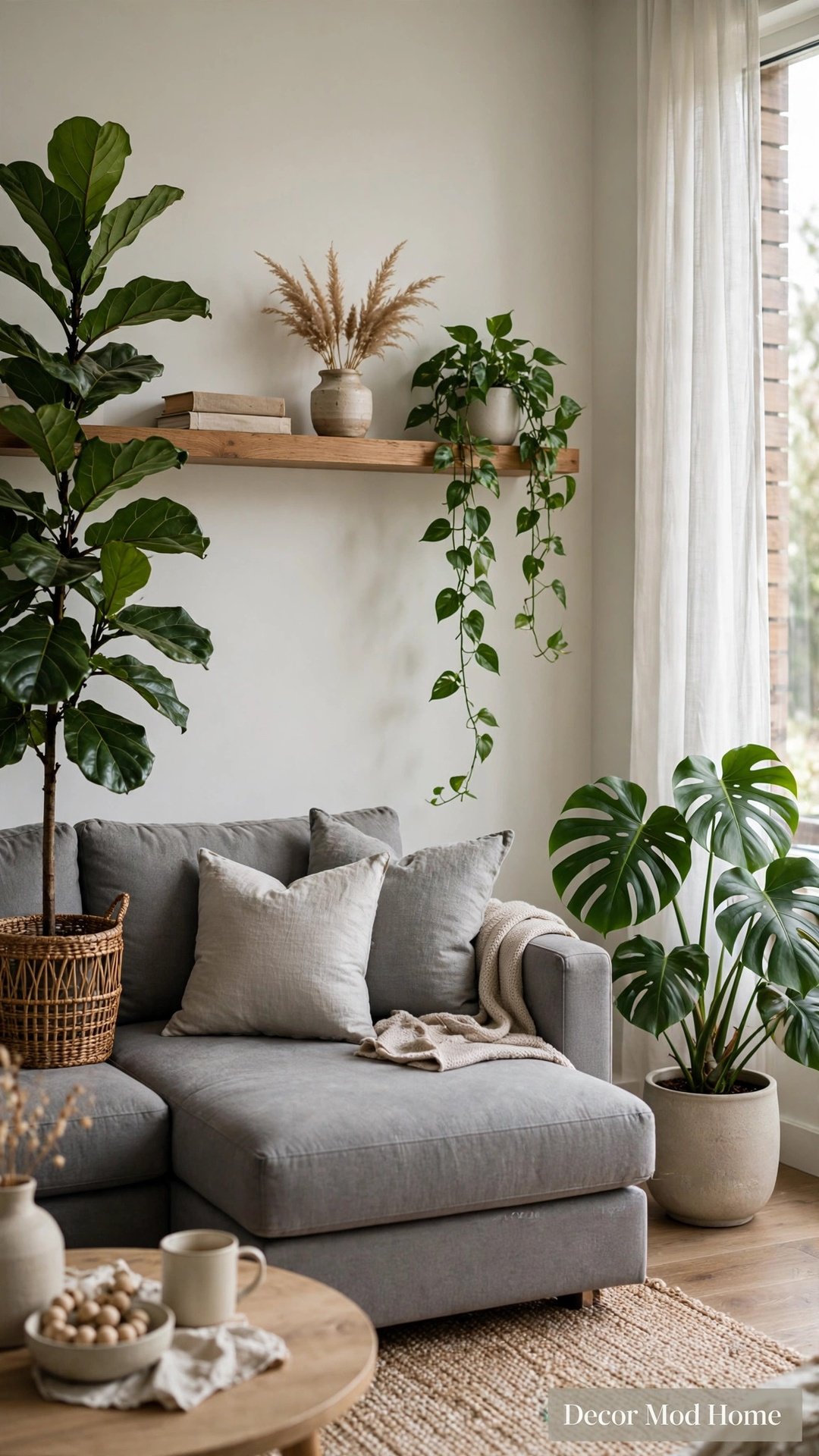
Nothing wakes up a neutral palette like living green, and plants are practically made for gray sectionals. A tall fiddle-leaf fig or olive tree in a natural woven basket beside the sectional adds height, life and a shot of colour that never clashes. Trail a pothos from a high shelf, or cluster two or three smaller plants — a snake plant, a ZZ plant — on the sideboard behind the sofa. The organic shapes of leaves soften the sectional’s straight lines, and green sits beautifully against every shade of gray, from pale dove to deep charcoal. If your thumbs are not green, one large, convincing faux olive tree still does the job; style it in a real ceramic or basket planter so it reads as intentional rather than apologetic.
8. A Gallery Wall in Soft Neutrals
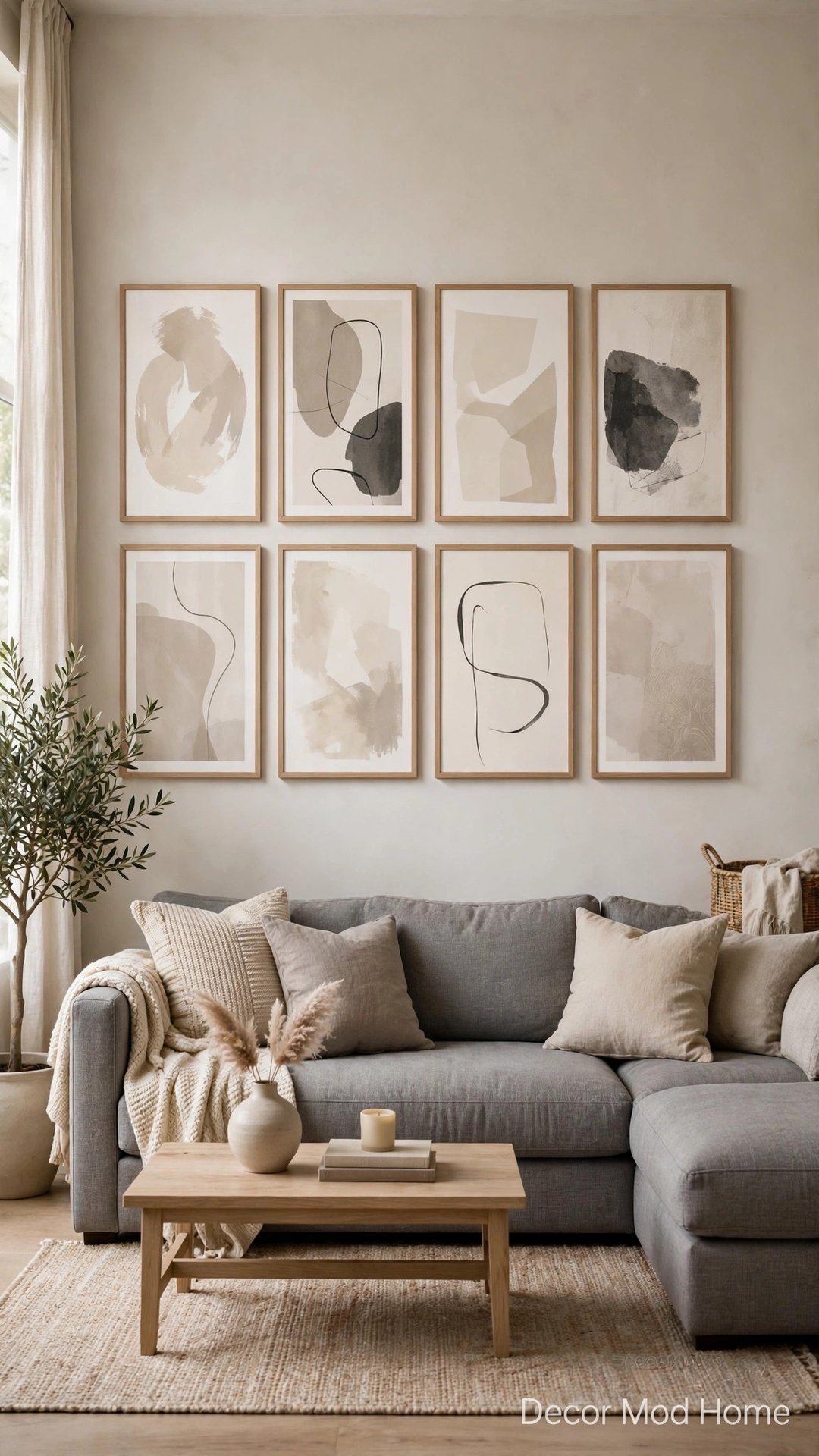
The big blank wall behind a gray sectional is begging for art, and a gallery wall in soft neutrals keeps the calm while adding personality. Gather six to nine frames in matching slim profiles — oak, black or white — and fill them with abstract prints in beige, taupe, charcoal and cream. Lay the arrangement on the floor first, keeping 5–8 cm between frames, then hang it so the centre sits roughly at eye level (about 145 cm from the floor). A gallery wall draws the eye up and makes the sectional feel styled rather than stranded against an empty wall. For a softer look, mix in one or two textile pieces, like a small woven wall hanging, to echo the room’s textures and add a handmade feel.
9. Bouclé and Wool Texture Play
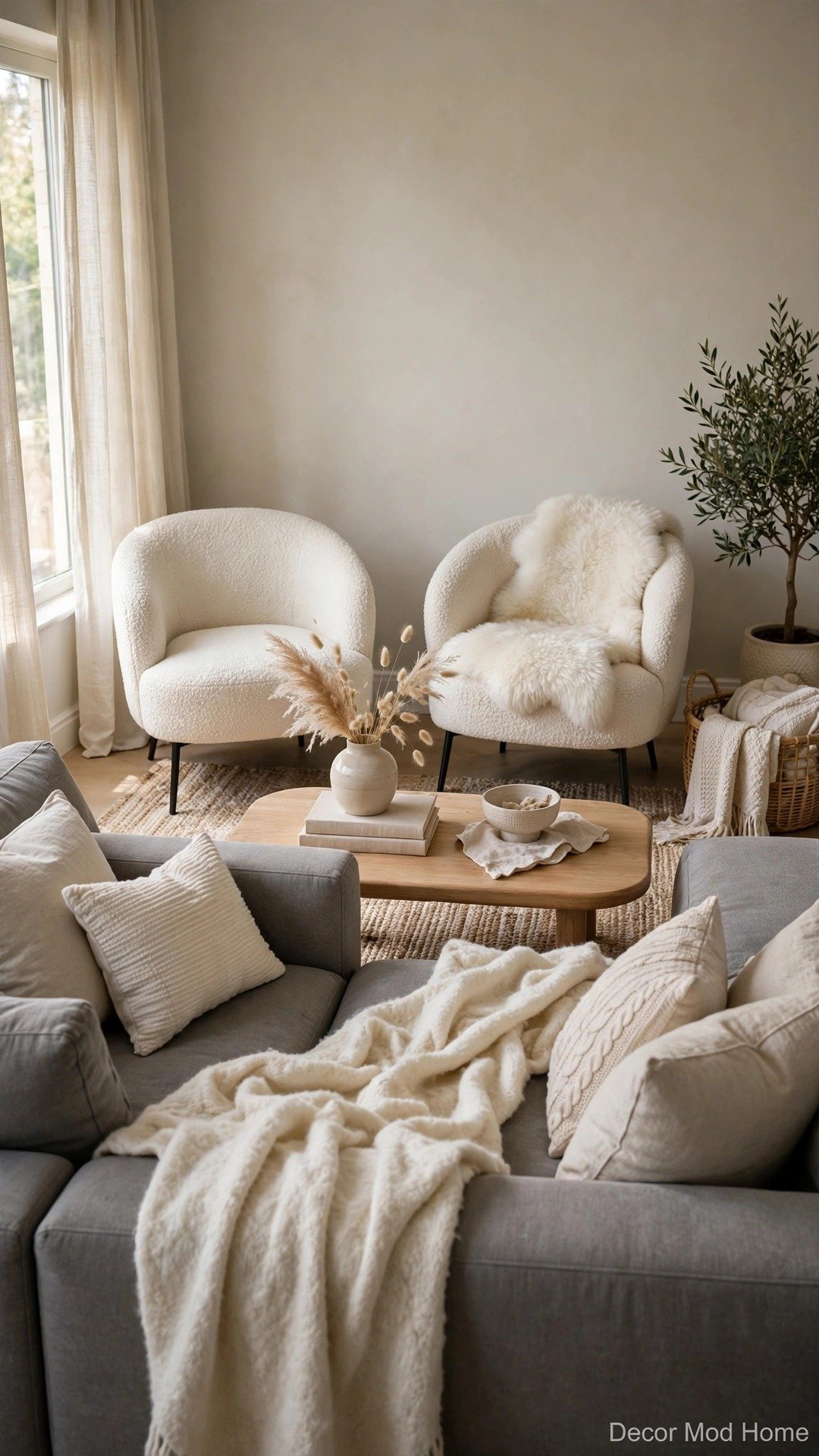
When the palette is quiet, texture has to do the talking — and few fabrics speak as softly as bouclé. A pair of ivory bouclé accent chairs opposite the gray sectional creates a delicious contrast: nubby and cloud-like against smooth, tailored gray. Layer in a pure wool throw in undyed cream, a sheepskin draped over one chair, and perhaps a high-pile rug underfoot to complete the sensory story. The magic is in mixing weaves that are all the same colour family but feel completely different to the touch. Keep patterns out of this corner and let texture be the pattern. The result feels expensive and cocooning — the kind of room guests sink into and immediately compliment.
10. The Ivory Coffee Table Pairing
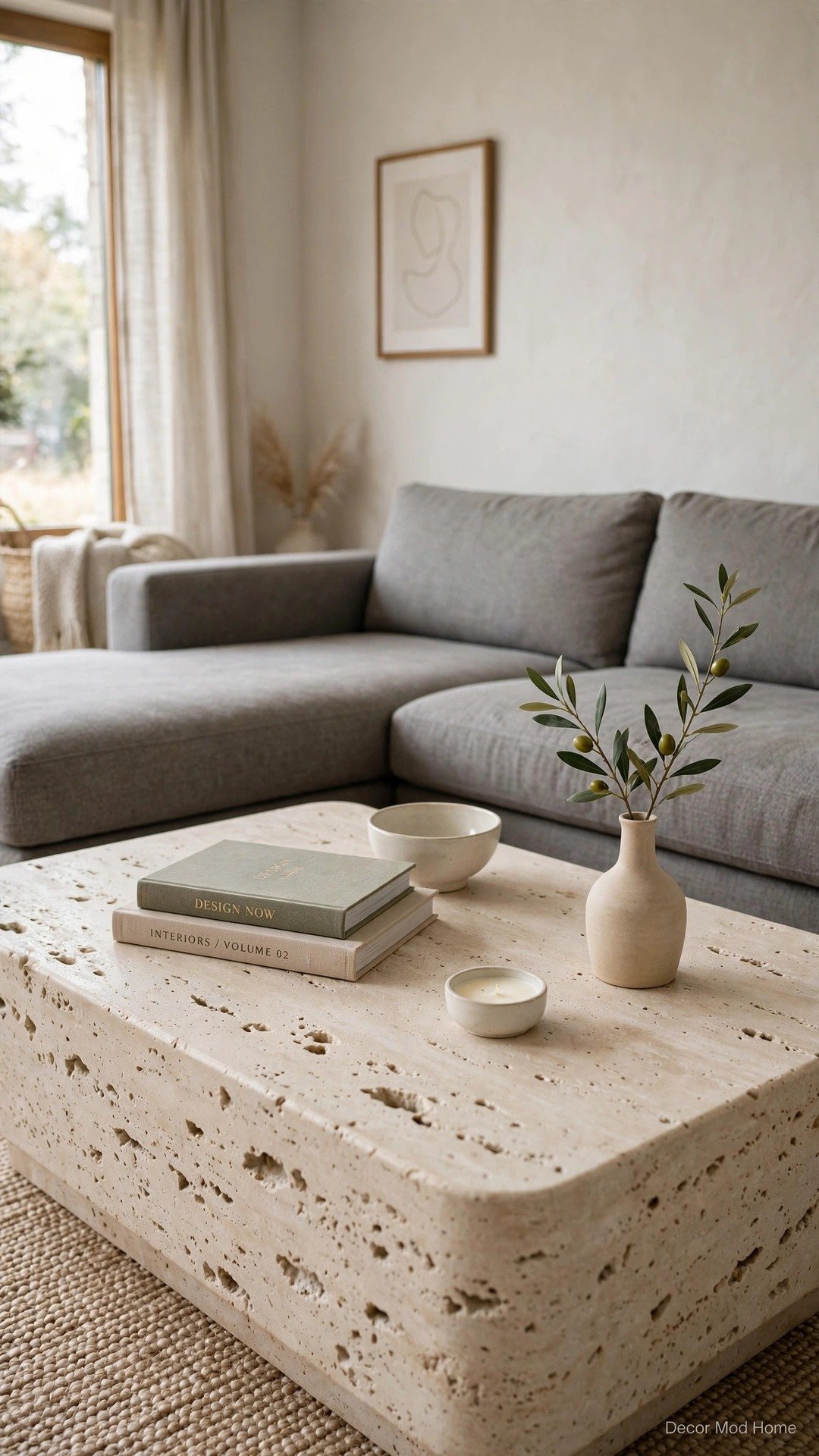
The coffee table is the sectional’s dance partner, and an ivory or travertine top is a beautiful match for gray. A travertine coffee table — with its soft pitted stone surface in creamy beige — adds natural pattern without any colour, and its solid form grounds a leggy sectional. If stone feels too heavy, a whitewashed oak or ivory lacquer table gives the same lift with a lighter footprint. Style the top in thirds: a stack of two design books, a small travertine or ceramic bowl, and a candle or bud vase with a single stem. Leave breathing room around the objects; a neutral palette looks best with a little negative space, and an uncluttered table keeps the room feeling serene.
11. Linen Curtains for Soft Light
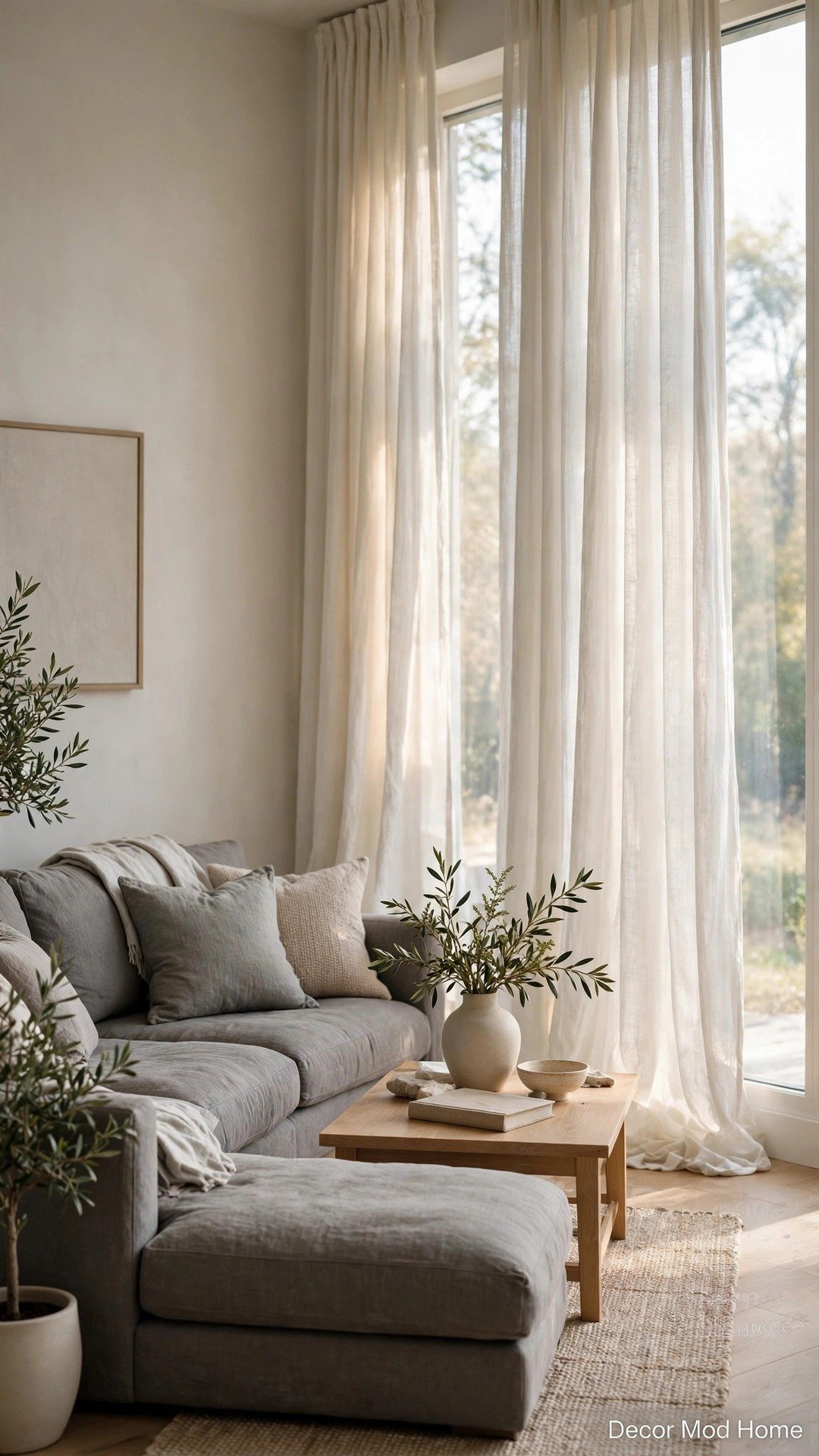
Gray sectionals look their best in soft, filtered daylight, and linen curtains are the way to get it. Hang floor-to-ceiling panels in natural or ivory linen, mounted as close to the ceiling as possible and wide enough that the fabric just kisses the wall when open — this makes windows look larger and ceilings taller. Linen’s loose weave diffuses harsh sun into a gentle glow that flatters gray fabric and keeps the room feeling airy rather than washed out. Choose a curtain rod in black or brushed brass to tie into your other accents around the room. Skip heavy blackout linings in the living room; a light cotton lining gives privacy after dark without losing the beautiful softness by day.
12. Cognac Leather Accents
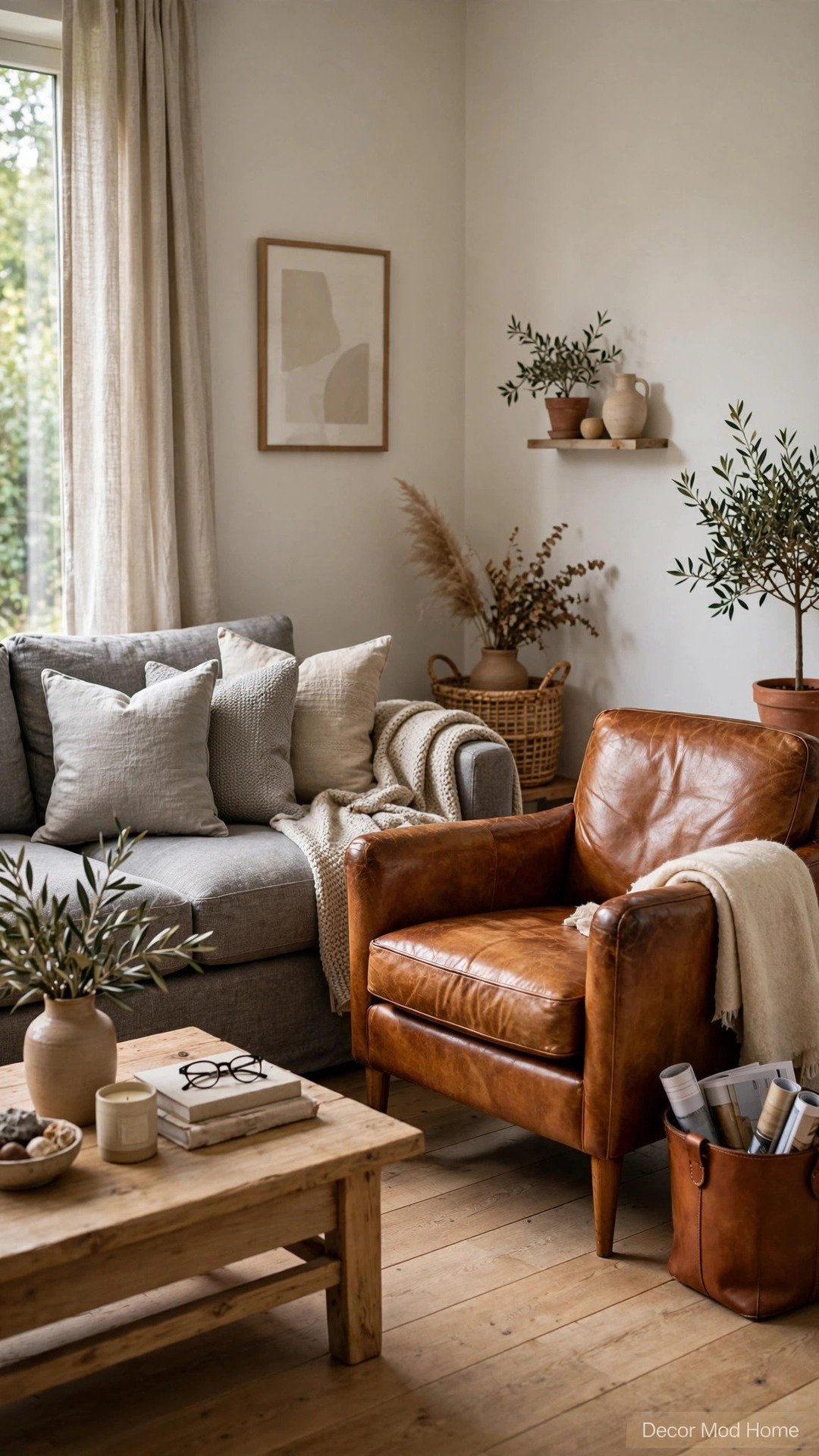
If your neutral room needs a little soul, cognac leather is the answer. A single cognac leather armchair or ottoman beside a gray sectional introduces a rich, honeyed tone that makes the whole palette feel warmer and more collected — like a room that evolved over time rather than one bought in a day. The orange-brown undertone is the perfect complement to cool gray, and leather’s patina only improves with age and use. One piece is enough; a little cognac goes a long way in a quiet scheme. Echo it lightly with a leather magazine basket or the strap handles on a storage basket so the accent feels woven through the room rather than dropped in as an afterthought.
13. Layered Lighting Around the Sectional
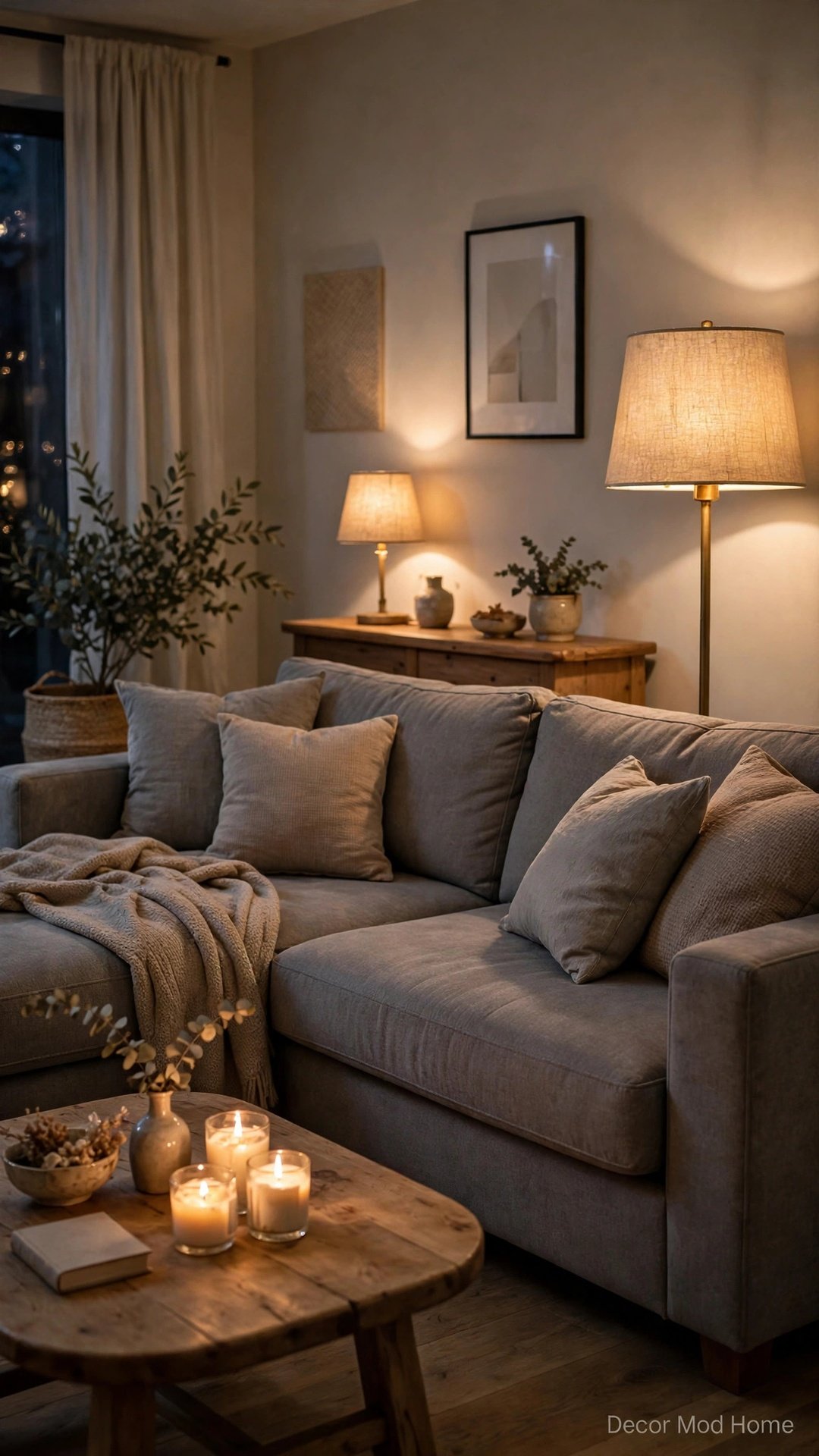
Overhead lighting alone flattens a gray sectional; layered light is what makes it glow after dark. Aim for three levels: a floor lamp with a linen shade arcing over the reading end of the sectional, a pair of small table lamps on the console or side tables behind it, and something low and flickering — candles or a lantern — on the coffee table. Choose warm-white bulbs (2700K) everywhere; cool daylight bulbs turn gray fabric steely and unwelcoming. Dimmers are worth every penny, letting you drop from bright daytime task light to a soft evening ambience at the touch of a switch. With the layers on, all the textures you have built up — the knits, the bouclé, the jute — come alive in the warm glow.
14. The Monochrome Gray-on-Gray Look
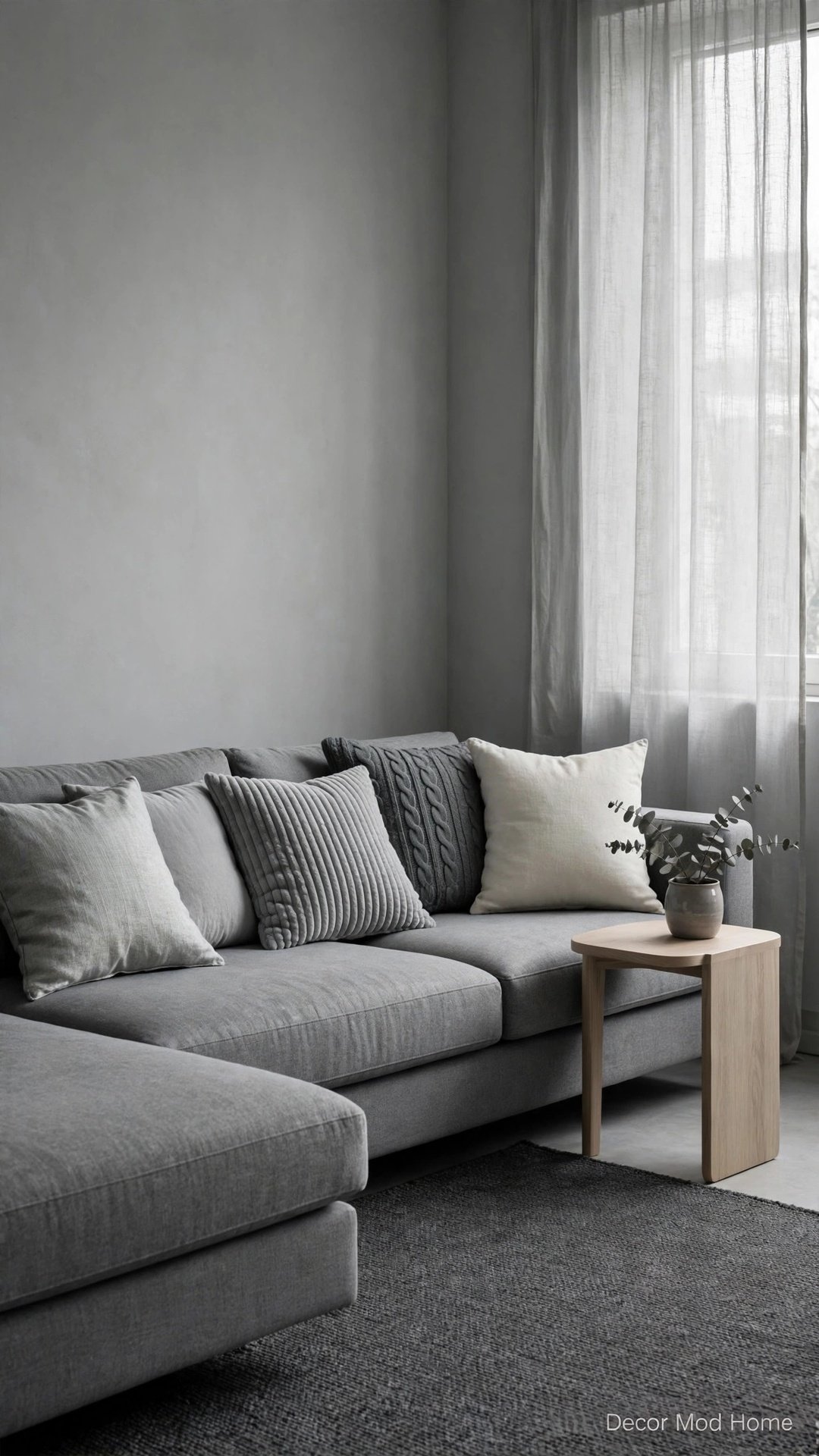
For the committed minimalist, there is nothing sleeker than gray on gray on gray. Build the room in tonal layers: a mid-gray sectional, a charcoal flat-weave rug, cushions in silver, dove and slate, and a soft gray throw in a chunky knit. The secret to keeping it from feeling flat is varying the finish — matte linen against velvety chenille, smooth leather against nubby wool. Add one whisper of warmth, like pale oak side tables or a single cream cushion, so the scheme feels intentional rather than accidental. Gray-on-gray is endlessly calming and photographs beautifully; it is the neutral scheme for people who find beige boring but still crave serenity.
15. Seasonal Swaps on a Neutral Base
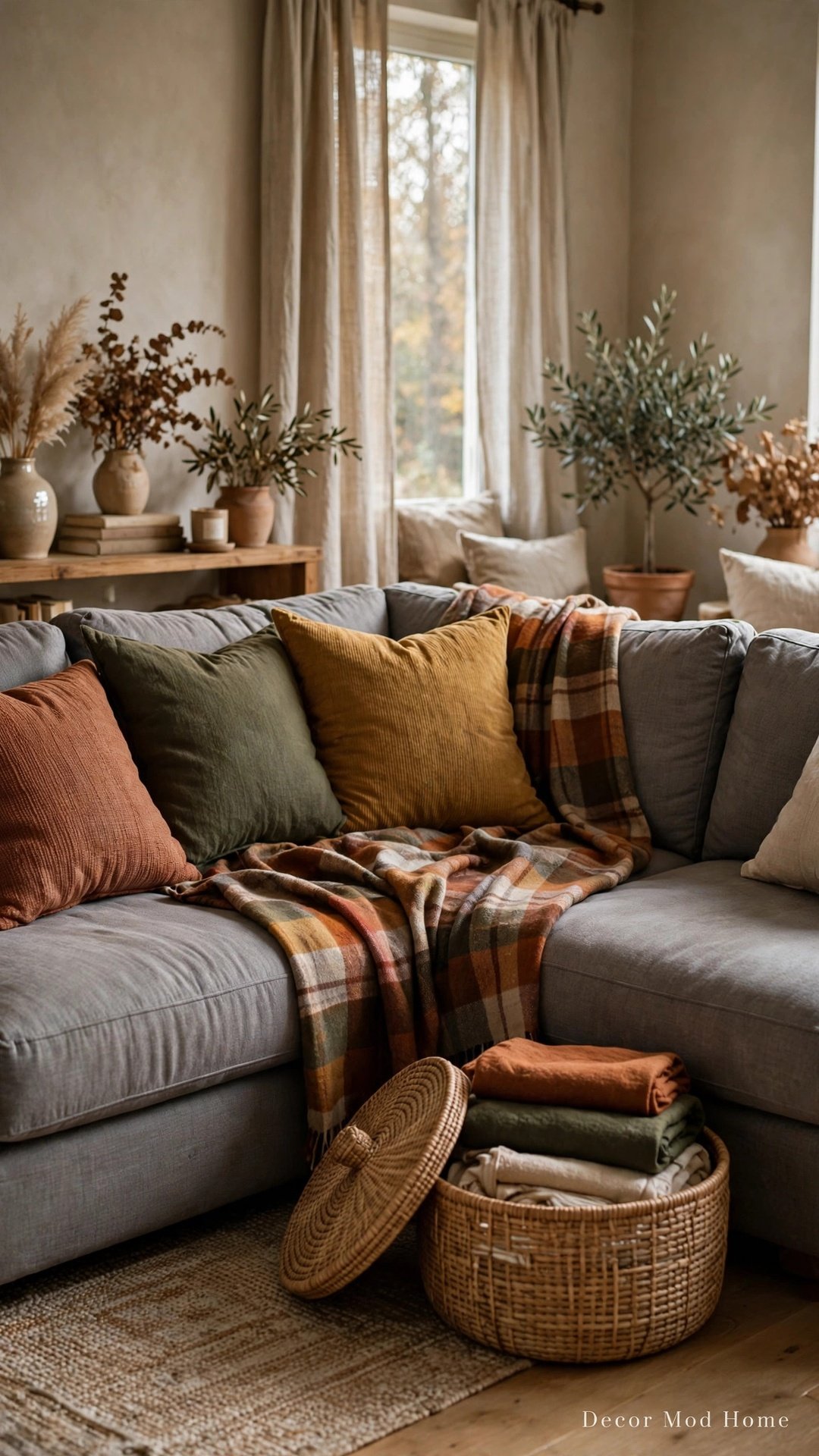
The greatest strength of a neutral room with a gray sectional is how easily it changes its mood with the seasons — no new furniture required. In autumn, swap in rust, ochre and deep olive cushions with a plaid wool throw; come spring, switch to sage, blush and fresh cream linens. Keep a lidded basket beside the sectional to store the off-season textiles, and change just the cushions, throw and one or two accessories each time. The gray sectional and neutral base stay constant while the accents do the seasonal talking. It is the most budget-friendly decorating trick there is, and it keeps the room feeling fresh and current year after year.
FAQs About Neutral Living Room Designs with Gray Sectionals
What colours go best with a gray sectional in a neutral living room?
Warm neutrals are gray’s best friends: greige, cream, ivory, oatmeal, taupe and warm wood tones all soften gray’s cool edge. Add small doses of black for definition, brass for warmth, and green from plants for life. Avoid pairing cool gray with icy blues or stark whites, which can make the room feel chilly rather than calm.
What colour rug looks best with a gray sectional?
A natural jute or sisal rug is the classic choice — its honeyed texture warms up gray beautifully. Cream, ivory or beige wool rugs also work, as does a subtle gray-on-gray pattern for a tonal look. Whatever you choose, make sure it is large enough to sit under the front legs of the sectional on all sides.
How do I stop a gray sectional looking dull or flat?
Layer texture rather than colour: chunky knits, linen, bouclé, wool and sheepskin in creams and oatmeals. Add warm metallics like brass, bring in wood tones, and use layered warm-white lighting in the evening. A single dark accent — black frames or a charcoal cushion — adds the contrast that makes neutrals pop.
Can a gray sectional work in a small living room?
Absolutely — choose a low-profile, armless or chaise-style sectional in a light to mid gray, keep walls pale, and use a light rug to visually expand the floor. A glass or light-wood coffee table keeps sightlines open, while mirrors and linen curtains maximise the sense of space around the sofa.
Neutrals That Never Feel Boring
A gray sectional in a neutral living room is not the safe choice — it is the smart one. It gives you a calm, flexible foundation that welcomes every texture, every season and every small update you will ever want to make. Start with one or two ideas from this list — the jute rug, the brass lamp, the layered creams — and watch how quickly the room comes together. And if you try any of these looks, we would love to hear about it: share your favourite in the comments, save this guide to your neutral-decor board, and explore our other living room ideas for more inspiration. Here is to a living room that feels calm, collected and completely you.