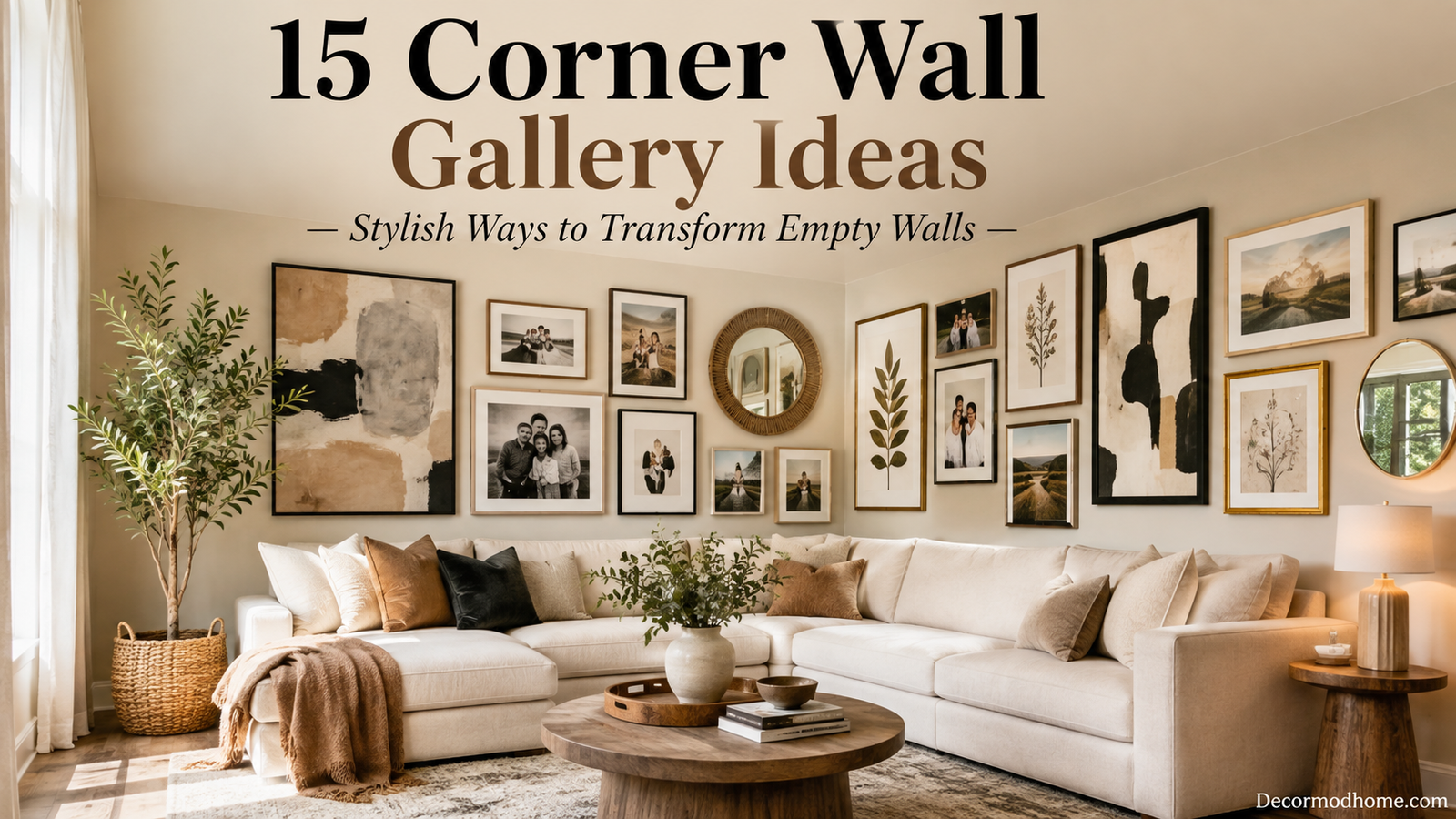
15 Corner Wall Gallery Ideas to Transform Empty Spaces
A forgotten corner can become one of the most beautiful features in your home with the right wall gallery. Whether you have a narrow hallway corner, an empty living room wall, a staircase landing, or a cozy bedroom nook, a thoughtfully arranged collection of artwork, photographs, mirrors, and decorative objects can add personality without taking up valuable floor space. These corner wall gallery ideas are perfect for creating a stylish focal point while making awkward areas feel intentional and finished.
From modern minimalist arrangements to cozy farmhouse displays, there are countless ways to design a corner gallery wall that complements your existing decor. The key is choosing a consistent color palette, mixing different frame sizes, and creating enough visual balance between the two walls. Explore these Pinterest-worthy ideas to find inspiration for your next home decorating project.
1. Modern Black-and-White Corner Gallery Wall
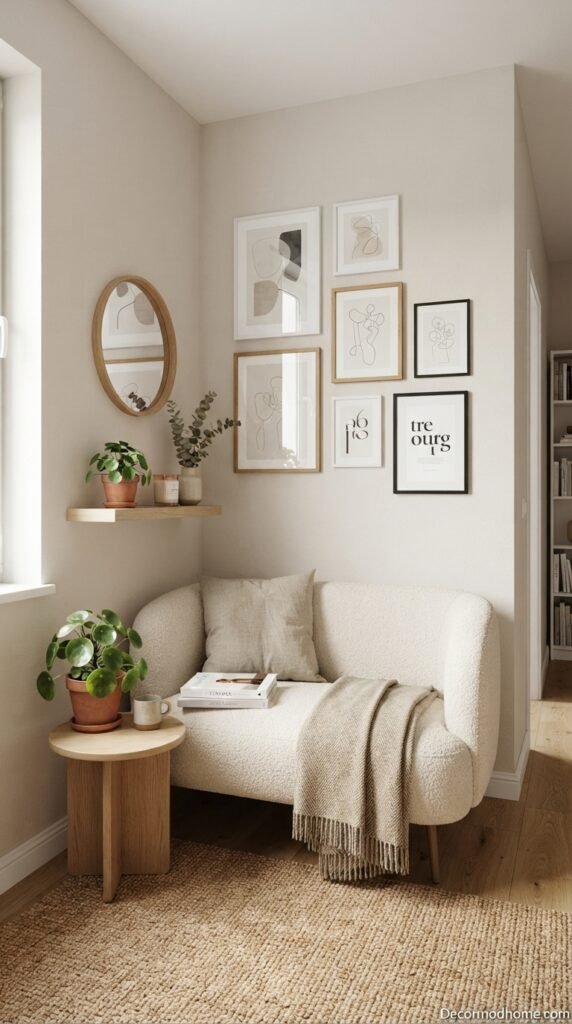
A black-and-white gallery wall is one of the easiest ways to create a sophisticated corner without overwhelming the room. Use photographs, line drawings, abstract prints, or architectural artwork in black, white, and soft gray tones. Keeping the artwork within a limited color palette creates visual consistency, even when the frames have different shapes and sizes. This approach works particularly well in modern, contemporary, Scandinavian, and minimalist homes where clean lines are important.
When decorating around a corner, allow the artwork to wrap naturally from one wall onto the other. Start with your largest frame as an anchor and gradually build outward using smaller pieces. Keep similar spacing between the frames so the arrangement feels intentional. A nearby neutral sofa, simple floor lamp, or small plant can complete the look without competing with the artwork.
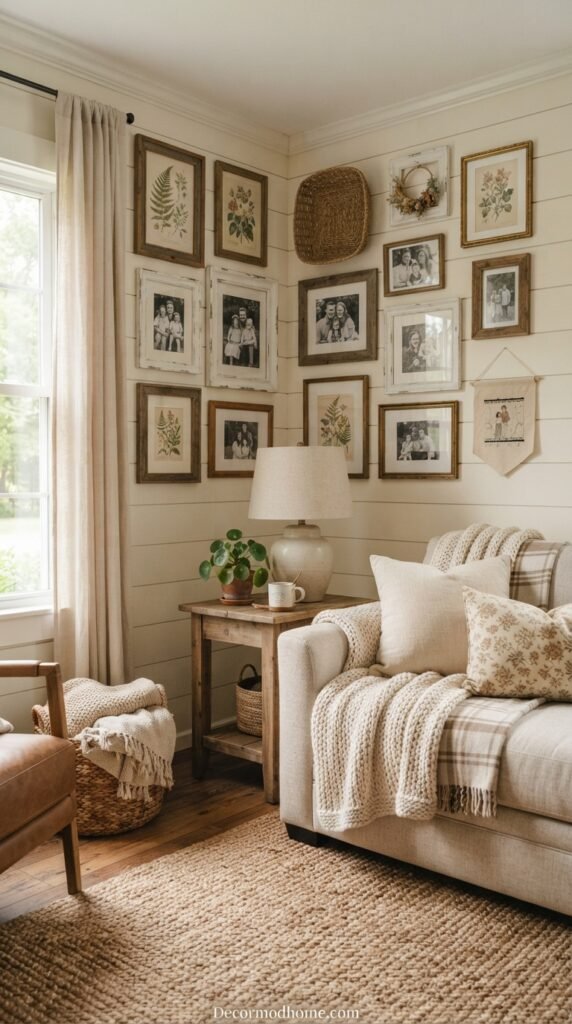
2. Cozy Farmhouse Corner Gallery
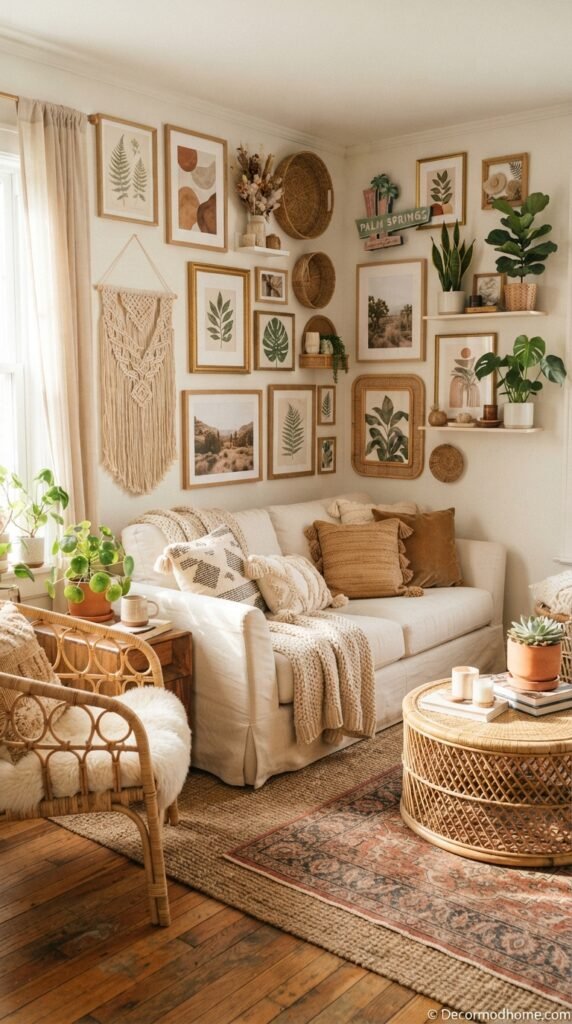
Farmhouse decorating is perfect for creating a warm and personal corner gallery wall. Combine botanical prints, vintage-inspired artwork, family photographs, handwritten-style signs, and small rustic pieces. Wooden frames in natural oak, distressed white, or warm walnut can help create the relaxed character associated with farmhouse interiors. The goal is not to make every frame match perfectly but to create a collection that feels connected.
For an authentic farmhouse appearance, mix artwork with different textures and shapes. A small woven basket, wooden plaque, or antique-style clock can break up the traditional rectangular frame pattern. Choose cream, beige, muted green, brown, and soft gray tones to keep everything cohesive. This type of corner gallery works beautifully above a console table, beside a fireplace, or in an otherwise unused living room corner.
3. Minimalist Corner Gallery With Neutral Art
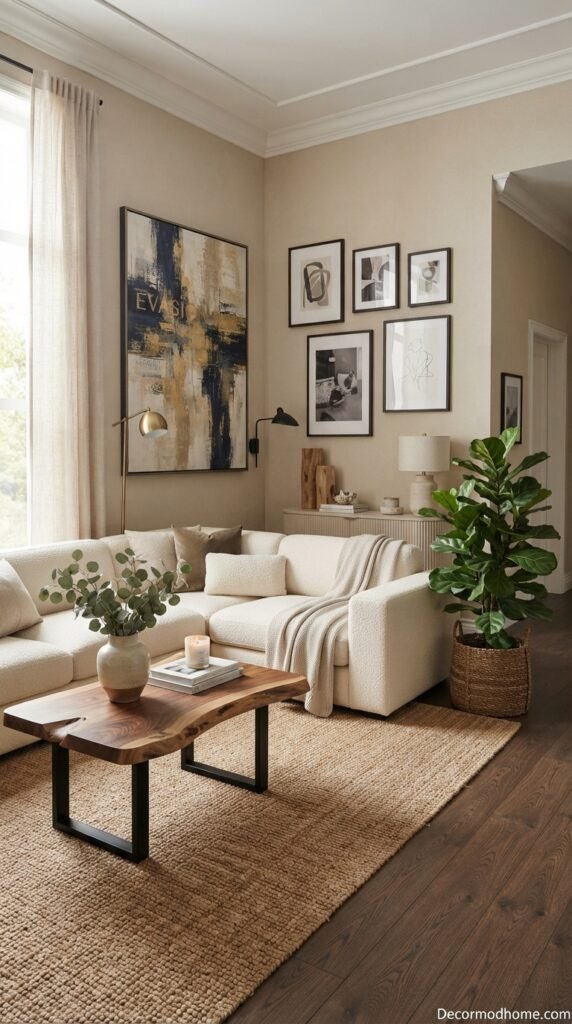
If you prefer a calm and uncluttered home, a minimalist corner gallery can add personality while maintaining a peaceful atmosphere. Choose artwork featuring soft neutral colors such as ivory, beige, taupe, sand, warm gray, and muted brown. Simple abstract shapes, architectural sketches, organic line drawings, and textured prints work especially well for this style.
Instead of filling every inch of the corner, leave generous negative space between pieces. Select five to seven carefully chosen prints rather than creating an oversized collection. Matching light wood or thin white frames can make the gallery feel cohesive. This idea is particularly useful in small apartments because it adds visual interest without requiring additional furniture. Pair the gallery with neutral upholstery, natural wood, and a few carefully selected accessories for a sophisticated minimalist finish.
4. Staircase Corner Gallery Wall
The area beside a staircase is often overlooked, yet it can become the perfect location for a dramatic gallery wall. Instead of arranging every picture in a strict horizontal or rectangular pattern, follow the natural direction of the staircase. Begin with larger pieces near the center and gradually position smaller artwork upward or downward along the angle.
Family photographs work especially well in staircase galleries because the space naturally becomes a visual story. For a more modern look, combine photographs with abstract artwork and simple typography prints. Use consistent frame colors to prevent the arrangement from looking chaotic. Before hanging anything, place the frames on the floor and experiment with different layouts. This simple step can help you achieve a balanced arrangement before putting holes in the wall.
5. Corner Gallery Wall With Mirrors
Not every gallery wall needs to consist entirely of artwork. Decorative mirrors can add dimension, reflect natural light, and make a corner appear larger. Combine round, oval, arched, or organically shaped mirrors with framed artwork to create a layered display. Brass, black, gold, or natural wood frames can be selected according to the rest of your room’s finishes.
This idea is especially useful for dark hallways and small entryways where additional reflected light can make the area feel brighter. Place a larger mirror as the visual anchor and surround it with smaller prints. Avoid placing mirrors directly opposite cluttered areas because they will reflect whatever is in front of them. A slim console table underneath can provide another opportunity for styling with a lamp, vase, books, or a small decorative bowl.
6. Boho Corner Gallery With Woven Decor
A boho corner gallery is ideal for homeowners who enjoy texture, earthy colors, and collected-over-time decor. Rather than relying solely on framed pictures, mix artwork with woven baskets, macramé pieces, small textile hangings, and natural materials. Botanical prints and abstract artwork in terracotta, olive green, tan, cream, and muted brown can reinforce the earthy color palette.
The beauty of boho decorating is that the arrangement does not have to look perfectly symmetrical. Allow different shapes and textures to interact naturally while maintaining enough breathing room between the pieces. Natural wood frames and rattan accessories can soften the overall appearance. Add a large houseplant nearby to bring another layer of organic texture. This style works beautifully in living rooms, bedrooms, reading corners, and relaxed apartment interiors.
7. Gallery Wall Around a Corner Fireplace
A corner fireplace already creates a natural focal point, but adding artwork can make the surrounding walls feel more intentional. Instead of competing with the fireplace, select artwork that supports its architectural importance. Neutral abstracts, vintage landscapes, botanical prints, or family photographs can create a layered and inviting arrangement.
When designing around a fireplace, maintain safe clearance from heat sources and follow the fireplace manufacturer’s recommendations. Visually, keep the larger pieces farther away from the strongest focal point and use smaller frames to transition toward the edges. Natural wood, black, or brass frames can complement the fireplace finish. Add soft textiles and neutral furniture nearby to make the entire corner feel warm, cohesive, and comfortable.
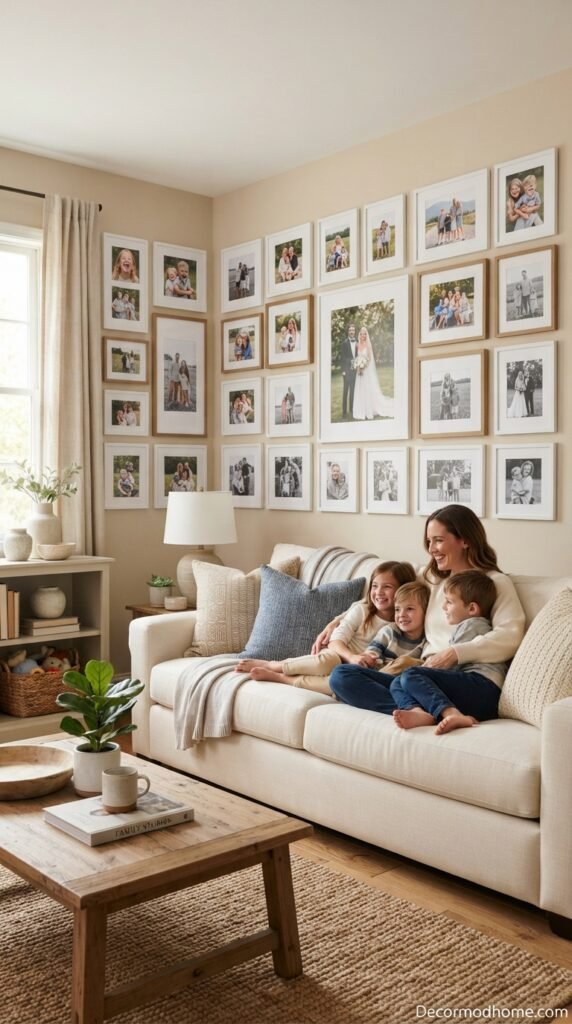
8. Family Photo Corner Gallery
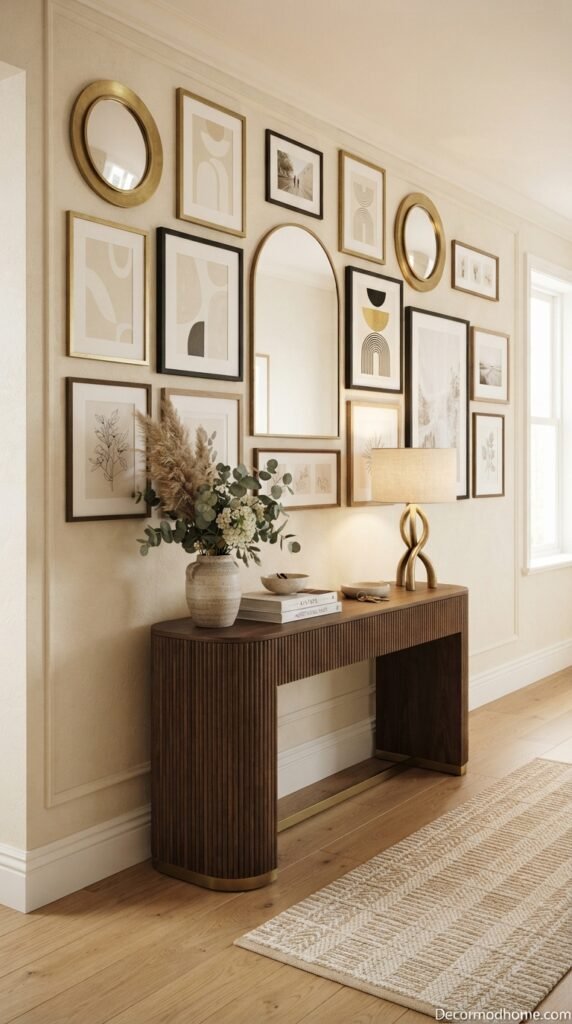
Turn an unused corner into a meaningful memory wall by displaying favorite family photographs. This idea works especially well when the photographs share a similar editing style or color palette. Black-and-white photographs can create a sophisticated appearance, while warm-toned images can produce a cozy and nostalgic feeling.
To keep the gallery polished rather than cluttered, use coordinated frames and consistent spacing. You can organize the photographs chronologically, by family member, or simply according to the visual composition of the wall. Consider leaving a little room for future memories so the collection can grow over time. A family gallery is particularly beautiful in stairways, hallways, living rooms, and upstairs landing areas where everyone can enjoy the memories regularly.
9. Small Corner Gallery for Apartments
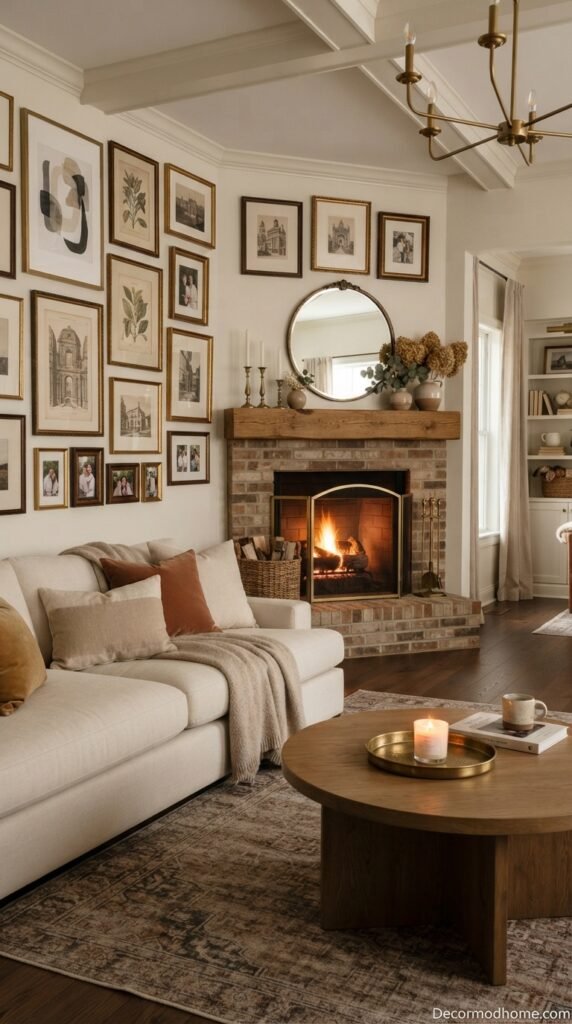
Small apartments do not need to sacrifice personality. A compact corner gallery can turn an awkward architectural space into an attractive design feature without taking up floor space. Choose five to seven smaller frames rather than oversized artwork, and consider using one or two small mirrors to create a sense of openness.
Keep the color palette simple so the display does not visually shrink the room. White, beige, black, light wood, and soft neutral artwork can work particularly well in compact spaces. If the corner is beside a sofa or desk, make sure the bottom of the artwork is positioned at a comfortable viewing height. A small floating shelf can also provide space for a tiny plant, candle, or decorative object without taking up valuable floor area.
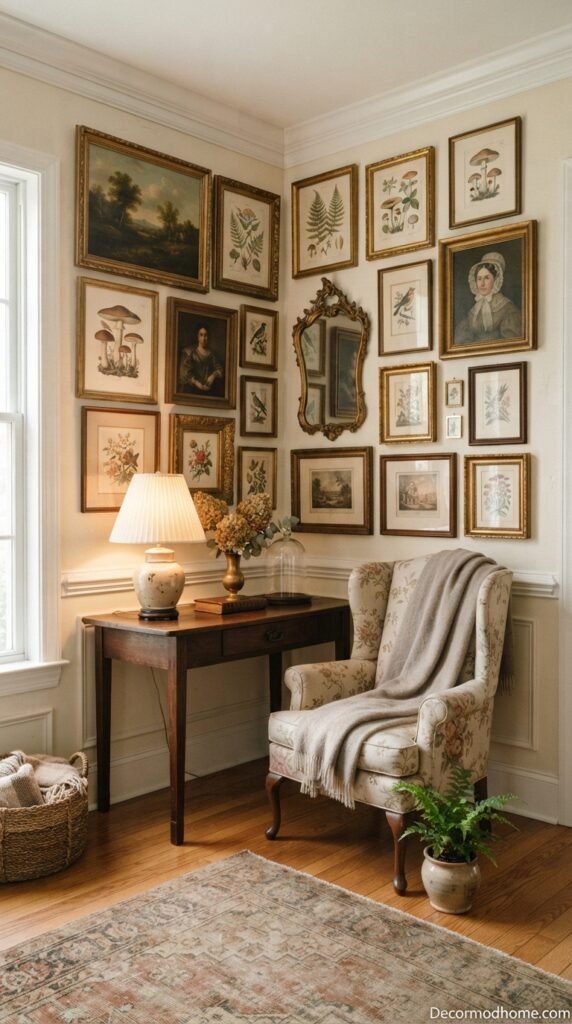
10. Vintage Gallery Wall With Antique Frames
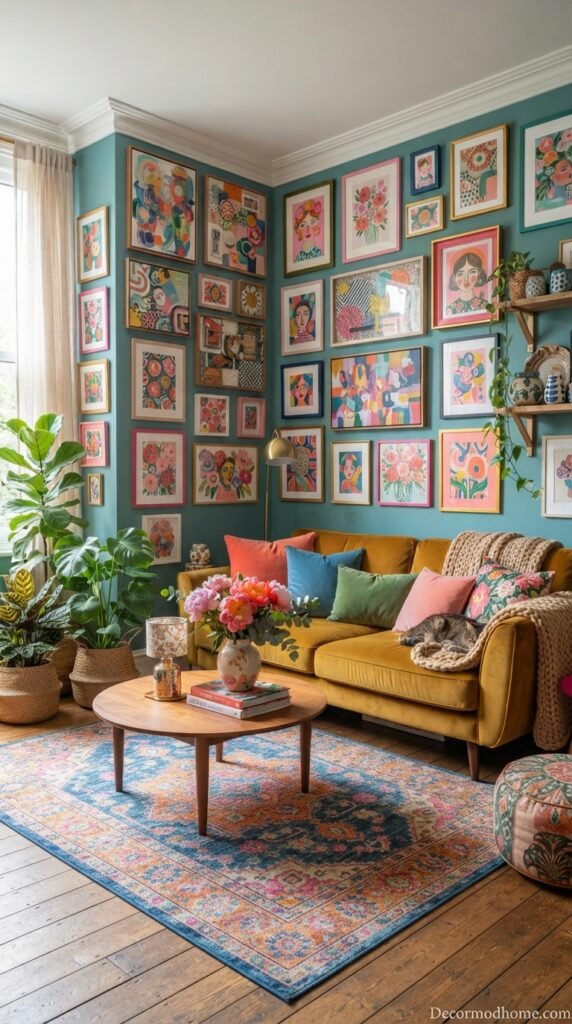
For a timeless look, create a corner gallery using vintage artwork and antique-inspired frames. This style works beautifully with traditional, transitional, cottage, European-inspired, and English-style interiors. Look for botanical illustrations, old landscapes, portraits, architectural sketches, and decorative prints that have a slightly aged appearance.
Mixing ornate gold frames with carved wood and simple frames can make the arrangement feel collected rather than overly coordinated. Place one larger artwork toward the center and build the surrounding display with smaller pieces. You can also add a vintage mirror to introduce another shape. Keep the overall color palette warm with cream, brown, muted green, faded blue, and antique gold tones for a sophisticated, lived-in appearance.
11. Corner Gallery With Floating Shelves
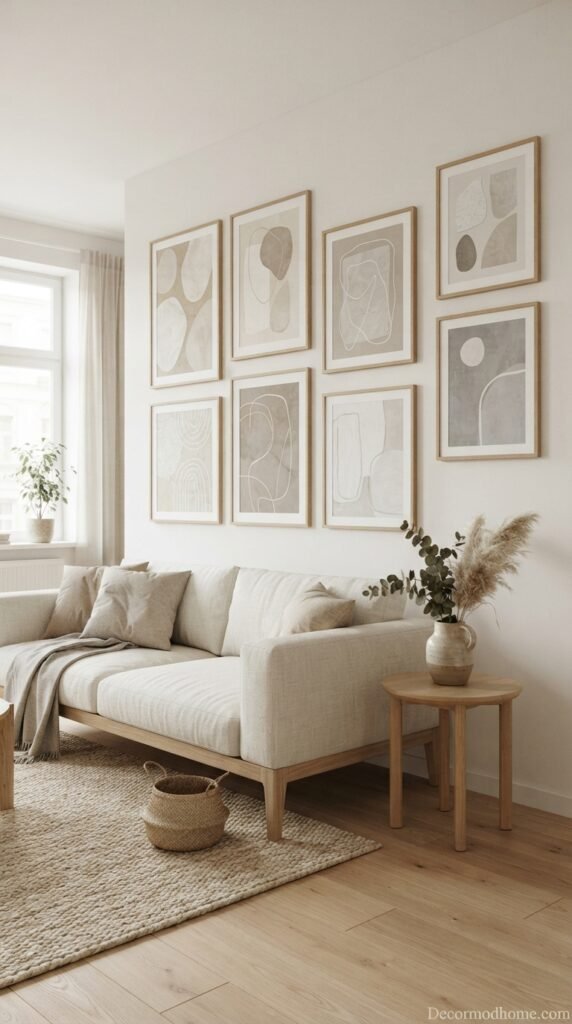
Floating shelves offer a flexible alternative to a traditional framed gallery wall. Install one or two slim shelves on each side of the corner and combine framed prints with decorative objects. This arrangement gives you the ability to change artwork and accessories whenever your decorating style evolves.
Use different heights and object sizes to create visual movement. Lean larger artwork against the wall while placing smaller frames in front or beside them. Add books, ceramic vases, small plants, candles, and sculptural accessories for additional texture. The secret is to avoid filling every inch of the shelves. Leave some empty space so the display remains visually calm. This idea is especially practical for renters who want a personalized display with fewer permanent wall modifications.
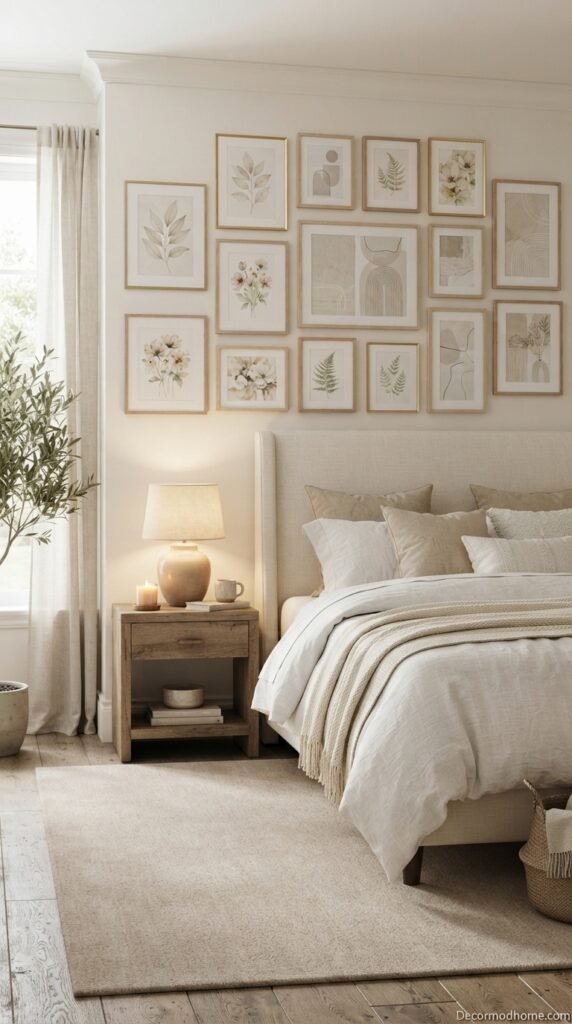
12. Elegant Bedroom Corner Gallery
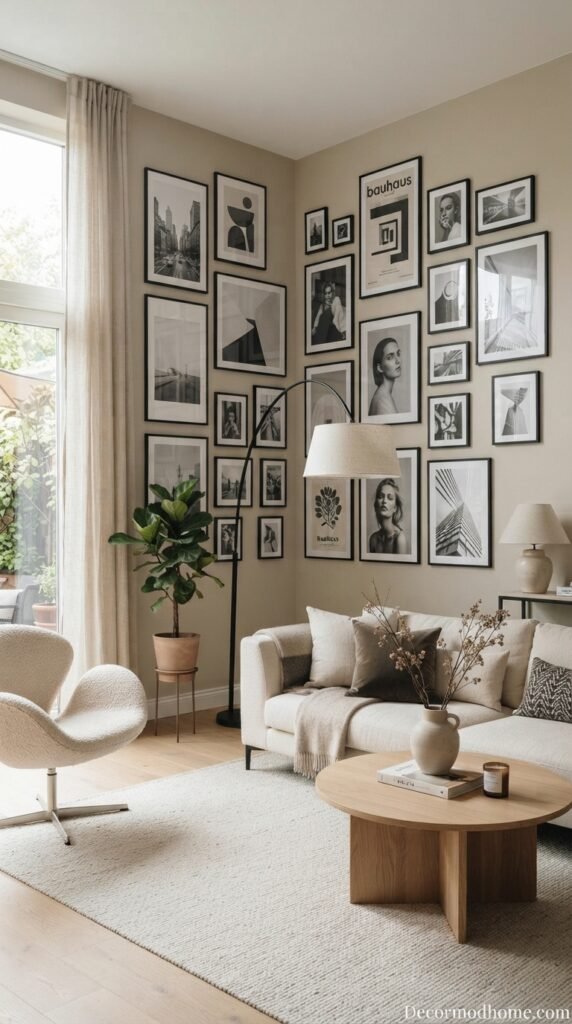
A bedroom corner gallery can add personality without making the room feel busy. Choose calming artwork such as botanical illustrations, abstract neutral prints, landscapes, or soft line drawings. Avoid overly bold colors if your goal is to create a peaceful sleeping environment. Light wood, white, champagne, or muted gold frames can complement soft bedroom textiles.
For a balanced appearance, position the gallery so it relates visually to the bed without competing with the headboard. You can extend artwork around a corner near a reading chair, dresser, or bedside area. Keep the spacing consistent and select pieces that share at least one color. Soft lighting from a table lamp or wall sconce can enhance the artwork in the evening and make the corner feel more intentional.
13. Colorful Eclectic Corner Gallery
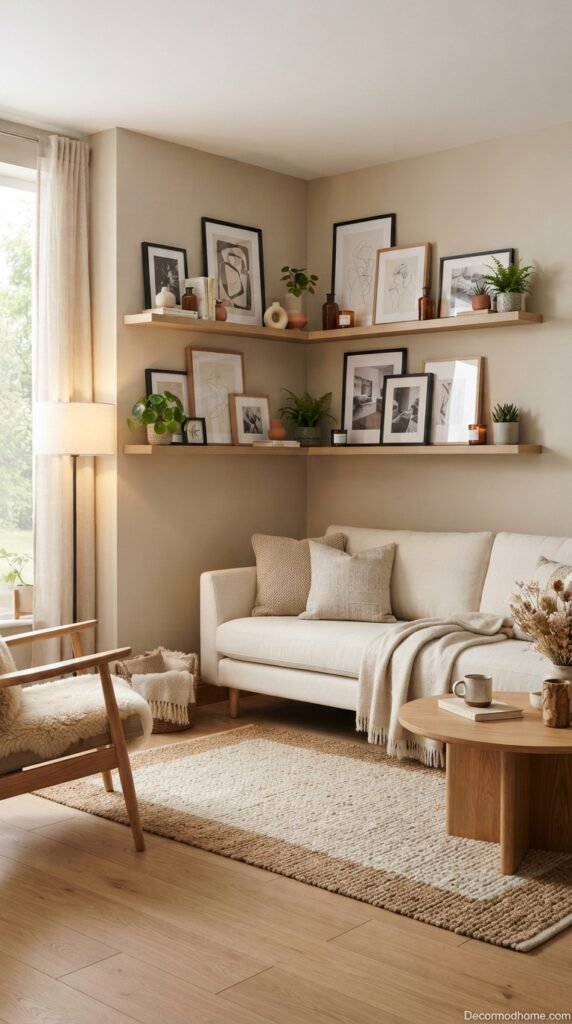
If you love color, use the corner as an opportunity to create an expressive focal point. An eclectic gallery wall can combine colorful paintings, graphic prints, illustrations, photography, and unusual decorative pieces. The trick to making a colorful display look intentional is to repeat several colors throughout the collection.
Choose a dominant color family and allow two or three accent colors to appear throughout the artwork. Frames do not necessarily need to match, but repeating one frame finish can help bring order to the arrangement. This style is perfect for creative homes, children’s spaces, home offices, and living rooms where personality is more important than strict minimalism. Let the gallery become the room’s statement feature.
14. Corner Gallery Wall With a Large Statement Piece
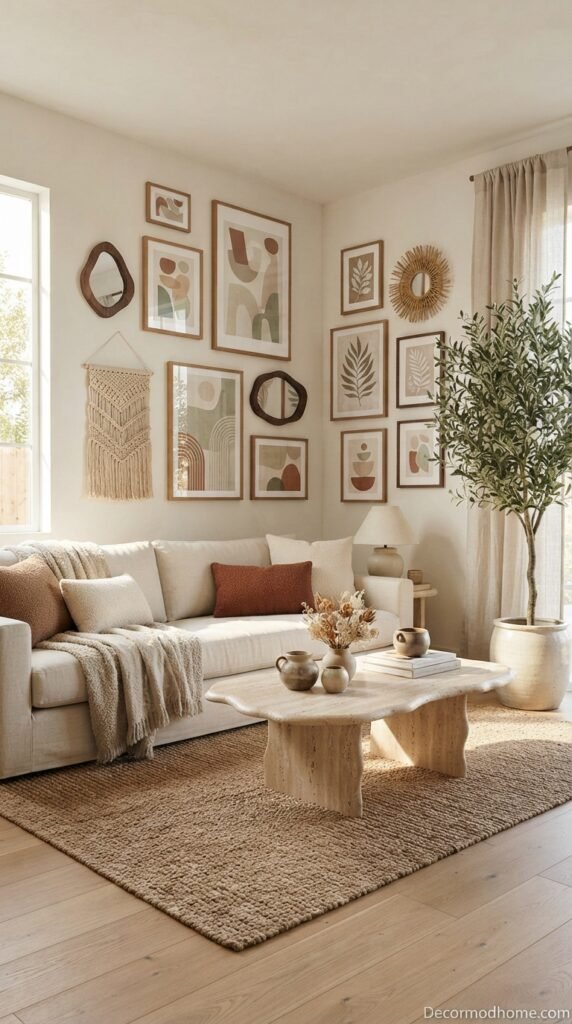
Sometimes one dramatic piece is all you need to establish a strong focal point. Start your corner gallery with an oversized painting, photograph, or abstract print. Then surround it with smaller pieces that visually support the main artwork. This approach is particularly effective when you want a gallery wall that feels sophisticated rather than crowded.
Choose the statement piece first and use its colors as the foundation for the smaller artwork. If the large painting features beige, black, and muted green, select smaller pieces containing one or more of those colors. Keep the arrangement balanced but not perfectly symmetrical. The oversized artwork provides a strong anchor while the smaller frames help the gallery naturally transition from one wall to the other.
15. Modern Organic Corner Gallery
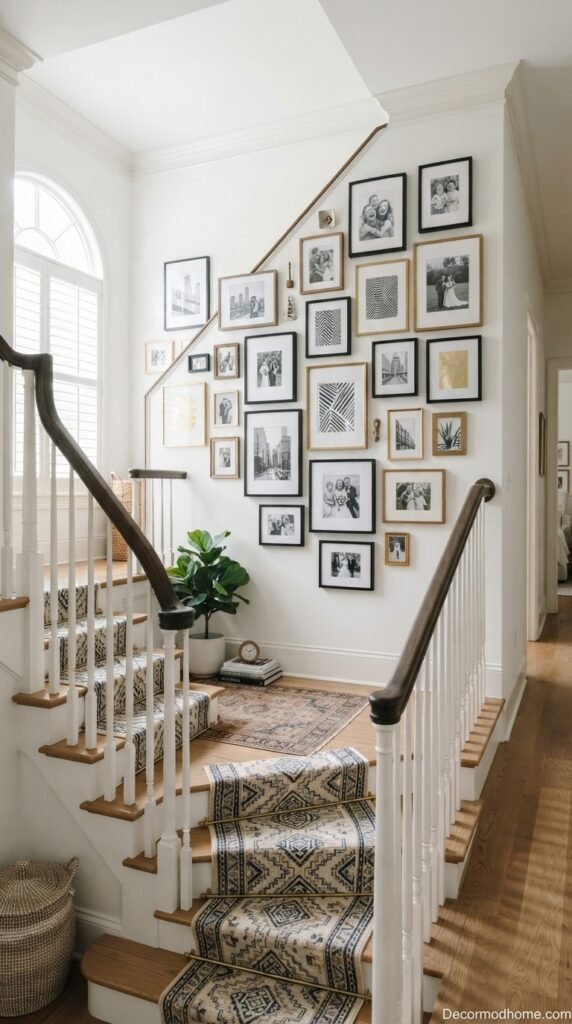
Modern organic design combines clean contemporary lines with warm natural materials, making it an excellent style for a corner gallery. Choose artwork featuring organic shapes, botanical elements, soft landscapes, textured abstracts, and earthy colors. Natural oak frames can add warmth while keeping the overall display modern.
Use shades such as warm white, sand, beige, taupe, olive, clay, and muted brown. You can also incorporate one woven wall piece or a small sculptural object to create texture. Pair the gallery with linen upholstery, natural wood, stone, ceramic accessories, and greenery. This combination creates a relaxed but sophisticated atmosphere that feels both current and timeless.
How to Arrange a Corner Gallery Wall
Before putting nails into the wall, arrange your frames on the floor and experiment with several layouts. Begin with the largest piece, then position medium and small pieces around it. When the arrangement feels balanced, take a photograph so you can recreate it on the wall. For most rooms, keeping the artwork centered around eye level will make the display comfortable to view.
When the gallery wraps around a corner, avoid making the two walls look like completely separate displays. Repeat frame finishes, colors, or artwork themes on both sides to create continuity. Leave relatively consistent gaps between frames and avoid pushing every piece too close to the corner itself. A little breathing room can make the entire arrangement look more polished.
Best Frame Colors for Corner Gallery Walls
The best frame color depends on your existing interior style. Black frames create a modern and graphic appearance, while natural wood frames add warmth and work beautifully with farmhouse, Scandinavian, and organic interiors. White frames are ideal for minimalist spaces, and gold or brass frames can create an elegant traditional or transitional look.
You can also mix frame finishes, especially for eclectic or vintage gallery walls. However, repeating at least one visual element—such as artwork colors, frame thickness, or subject matter—will keep the display cohesive. When in doubt, choose three main colors and repeat them throughout the artwork and frames.
Final Thoughts
A corner does not have to remain an awkward, empty part of your home. With the right combination of artwork, photographs, mirrors, shelves, and decorative objects, it can become a beautiful focal point that adds character to your space. Whether your style is minimalist, farmhouse, boho, modern, vintage, or eclectic, there is a corner wall gallery idea that can work with your home.
For the best results, start with a clear theme, choose a cohesive color palette, vary your frame sizes, and test the arrangement before hanging anything. Most importantly, allow your gallery wall to reflect your personality. A thoughtfully designed corner gallery is more than decoration—it can turn an overlooked wall into one of the most memorable features of your room.
Frequently Asked Questions
1. How do I make a gallery wall around a corner?
Start by treating both walls as one continuous display. Choose a large anchor piece and gradually add smaller frames around it. Maintain consistent spacing and repeat colors or frame finishes across both walls.
2. How many pictures should go on a corner gallery wall?
There is no fixed number, but 5–15 pieces usually works well depending on the wall size. Small corners may need only five to seven pieces, while larger walls can support a more extensive collection.
3. Should all gallery wall frames match?
No. Matching frames create a clean and organized look, but mixing frames can make the display more collected and personal. If you mix frames, maintain consistency through artwork colors or a common theme.
4. What should I put in a gallery wall besides pictures?
Try adding mirrors, botanical prints, woven baskets, small shelves, clocks, sculptural objects, typography artwork, or textile wall hangings. Mixing different elements can make a corner gallery more dimensional and interesting.