Long Narrow Living Room Layout With TV: 10 Smart Design Ideas That Maximize Every Inch
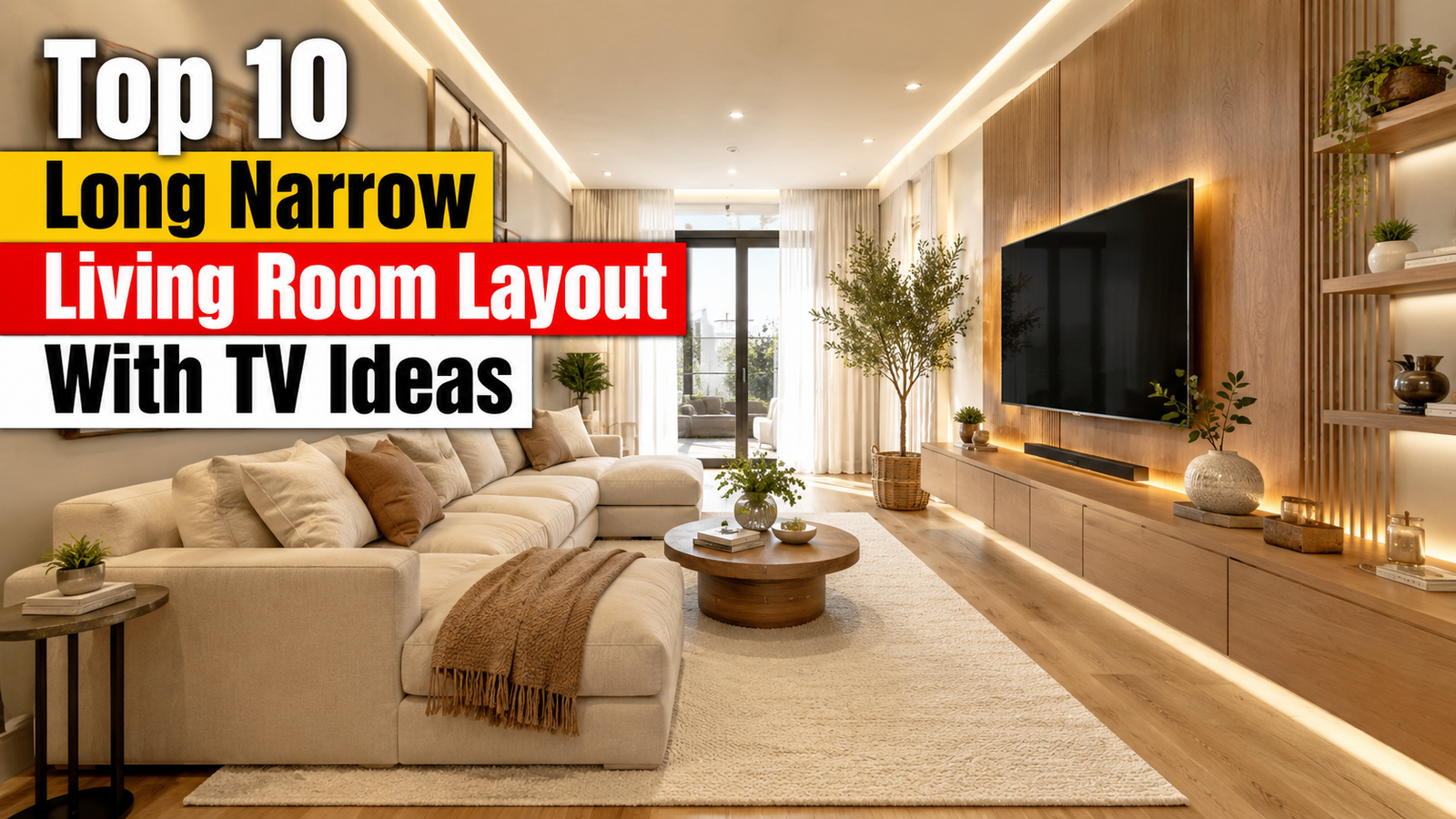
Designing a long narrow living room layout with TV can feel challenging, but the right furniture placement and styling tricks can transform an awkward space into one that feels spacious, cozy, and functional. Whether you’re decorating a small apartment, townhouse, or modern home, these Pinterest-worthy layout ideas will help you create better flow while making your television the perfect focal point. From sectional sofas to floating media walls, these inspiring layouts combine style and practicality for everyday living.
1. Center the TV on the Long Wall
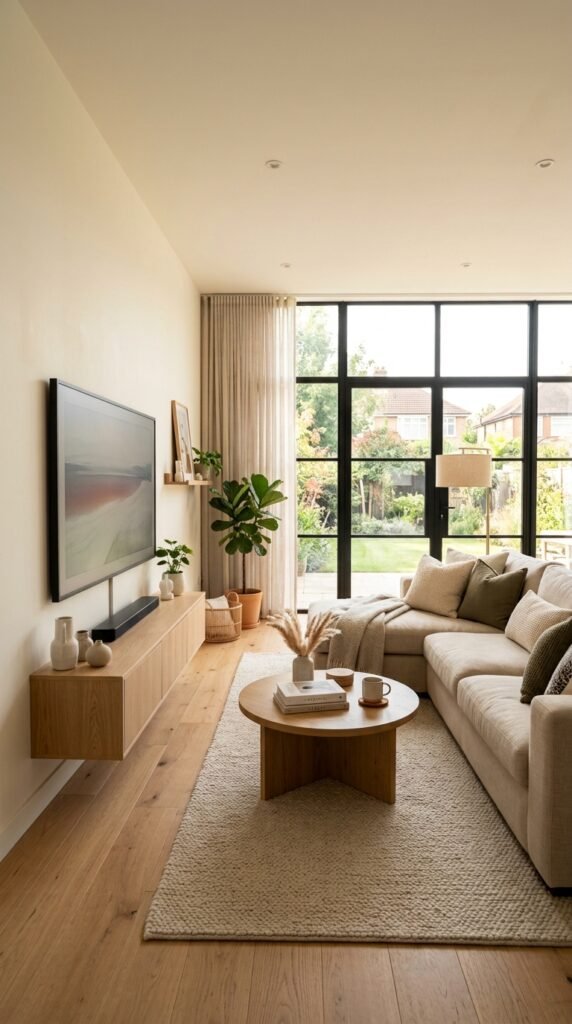
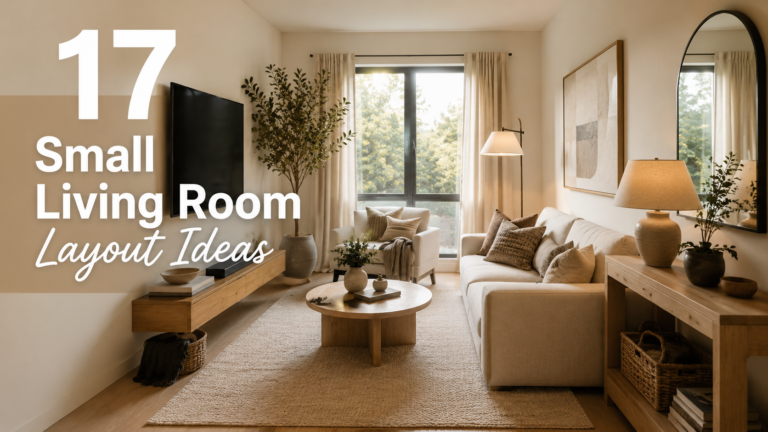
Positioning the television on the longest wall instantly creates balance in a narrow living room. Instead of fighting the room’s proportions, this arrangement embraces the available wall space while allowing furniture to align naturally. A floating media console beneath the TV keeps the floor visible, helping the room appear wider. Neutral walls and light wood finishes further enhance the sense of openness while maintaining a clean and modern aesthetic.
Place a comfortable sofa directly opposite the television while leaving enough walking space behind it. Add a round coffee table instead of a rectangular one to soften the room’s long lines. Layer the seating area with textured rugs, decorative pillows, and indoor plants to create warmth without overcrowding the space. This simple arrangement is perfect for families who enjoy movie nights while still maintaining an elegant Pinterest-inspired interior.
2. Choose an L-Shaped Sectional
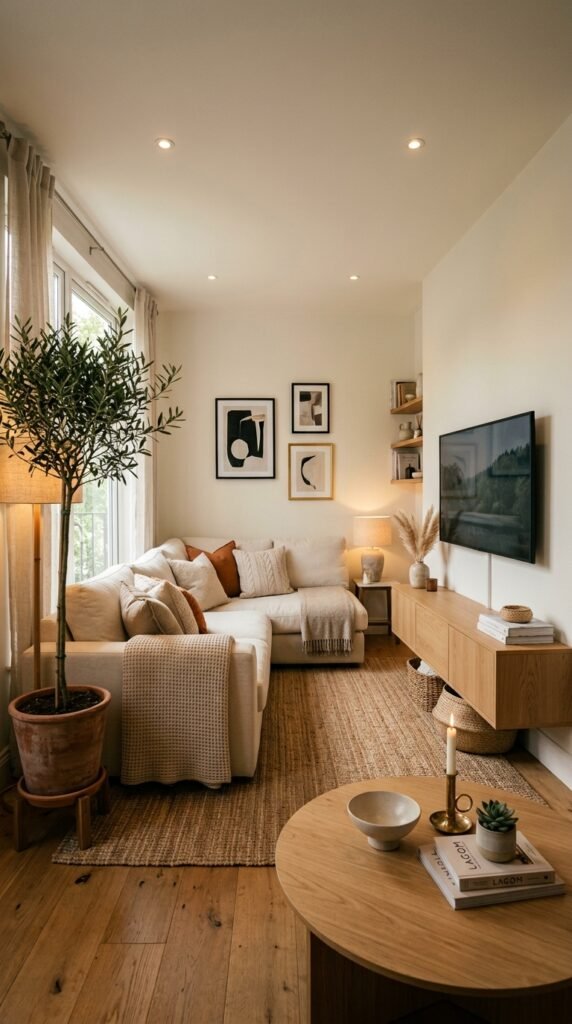
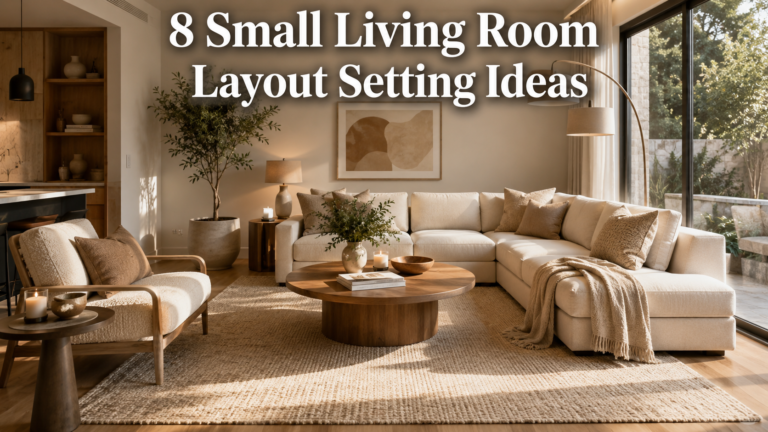
An L-shaped sectional is one of the smartest furniture choices for a long narrow living room because it maximizes seating without requiring multiple bulky chairs. Tucking the sectional neatly into a corner leaves the center of the room open, making the layout feel organized and spacious. The television naturally becomes the focal point, providing comfortable viewing angles for everyone seated on the sofa.
Enhance the design by choosing light-colored upholstery that reflects natural light throughout the room. Pair the sectional with a round wooden coffee table and soft layered textiles to introduce warmth and texture. Decorative cushions in earthy tones, woven baskets, and a tall indoor plant complete the cozy atmosphere while ensuring the room remains functional for everyday living and entertaining guests.
3. Create Two Functional Zones
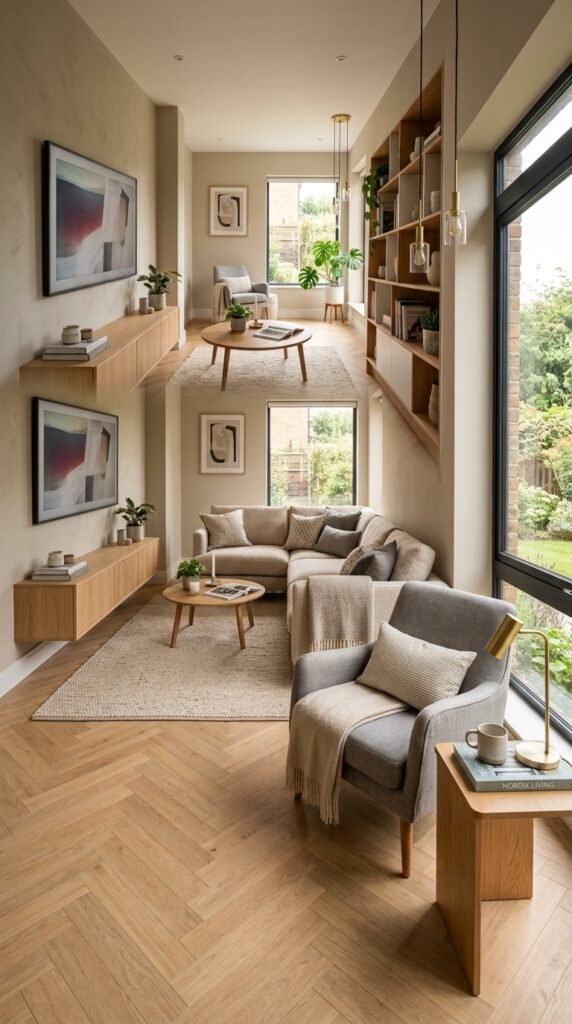
Instead of treating the entire room as one large seating area, divide it into two functional spaces. Place the television and sofa in the main viewing zone while using the remaining end of the room for a reading nook or small home office. This layout makes a long room feel intentional rather than empty while increasing everyday usability.
Use an area rug beneath the television seating arrangement to define the entertainment zone. Position a cozy armchair, floor lamp, and compact bookshelf in the second area to establish a relaxing retreat. Consistent colors and materials throughout both spaces maintain visual harmony while allowing each section to serve a unique purpose within the overall design.
4. Float the Sofa Away from the Wall
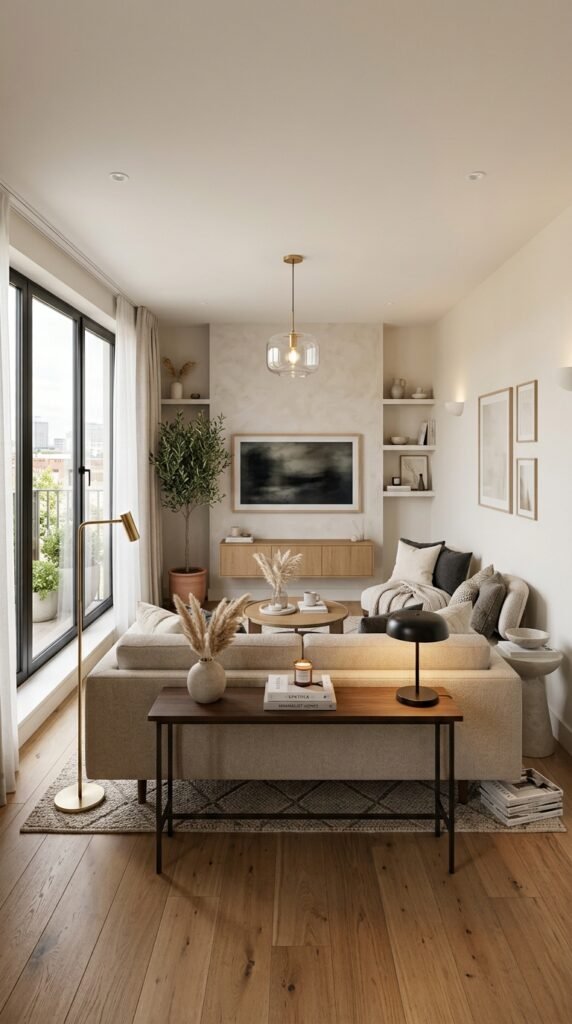
Many homeowners instinctively push furniture against the walls, but floating the sofa slightly away from them often improves both flow and proportion. Positioning the sofa toward the middle of the room creates a dedicated conversation and TV viewing area while making the remaining walkway feel more organized. This approach helps the space appear professionally designed rather than cramped.
Place a narrow console table behind the sofa for decorative accessories and practical storage. Add table lamps, books, or small plants to bring visual interest without cluttering the room. This arrangement also provides a subtle separation between the seating area and any hallway or entrance that connects to the living room.
5. Install a Floating TV Wall
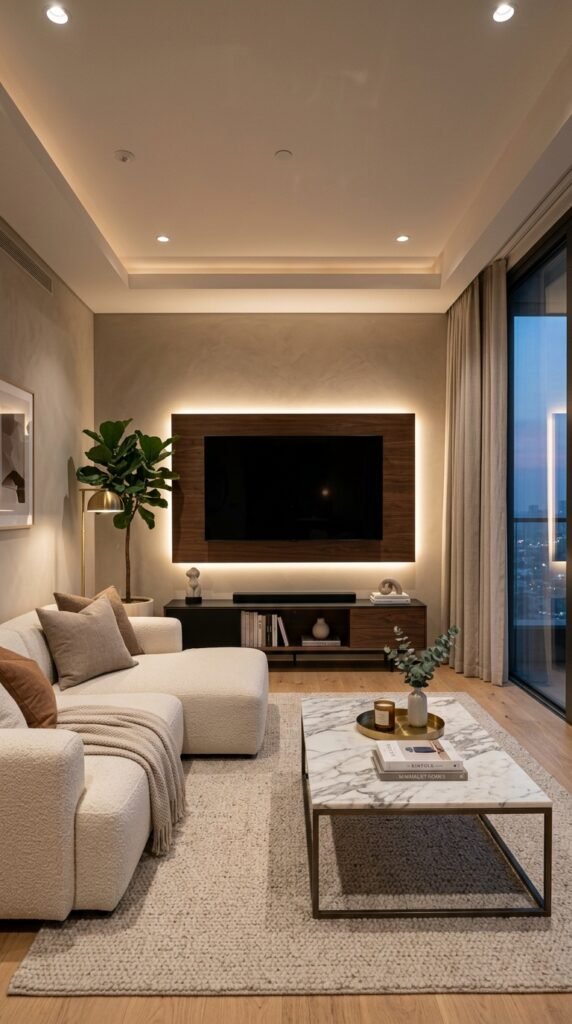
A floating television wall instantly upgrades a narrow living room by keeping the entertainment area streamlined and clutter-free. Mount the TV on a decorative wood or stone panel with concealed cable management to create a polished, custom appearance. Floating cabinets beneath the screen provide storage while preserving valuable floor space.
Integrated LED lighting behind the panel adds subtle ambiance during movie nights while highlighting architectural details. Pair the feature wall with minimalist furniture and neutral accessories to prevent the room from feeling visually crowded. This design works especially well in contemporary apartments where clean lines and efficient storage are priorities.
6. Use a Slim Media Console
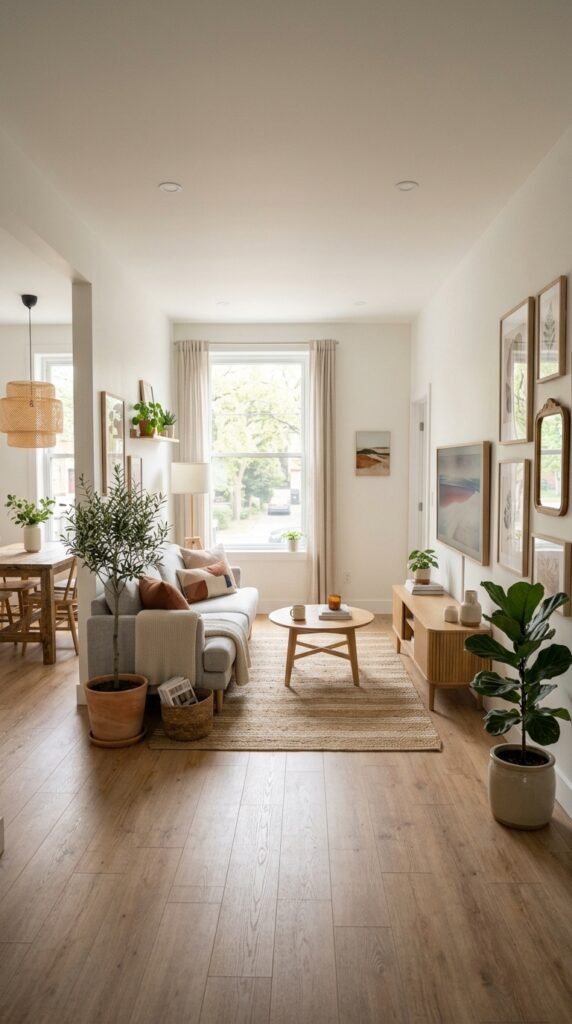
A slim media console offers storage without overwhelming the proportions of a long living room. Choose a cabinet with clean lines and elevated legs to maintain visual lightness. Open shelving can display decorative books, candles, and baskets while hidden compartments keep electronics organized.
The narrow depth allows plenty of walking space between the television wall and the seating area. Pair the console with a wall-mounted television to maximize floor visibility and create a sleek, uncluttered appearance. Finishing touches like framed artwork and ceramic vases add personality while maintaining a calm and inviting atmosphere.
7. Position the TV Above a Fireplace
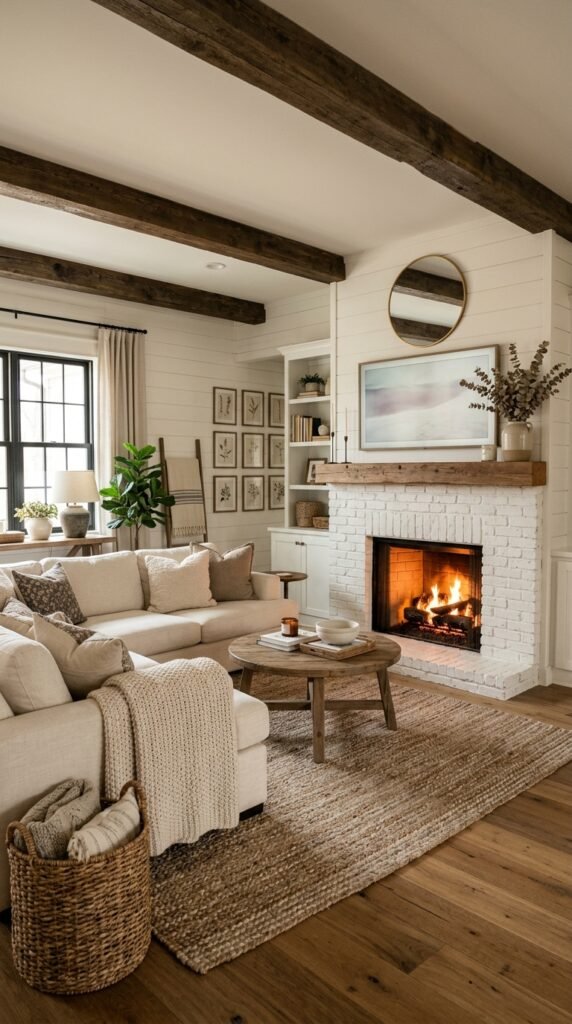
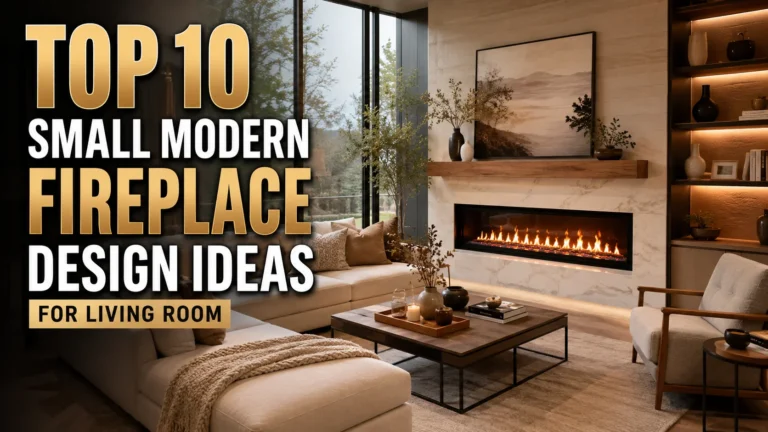
Installing the television above a fireplace combines two focal points into one visually balanced feature wall. This arrangement frees up additional wall space for seating and decorative storage while creating a warm gathering area for family and guests. A clean mantel design keeps the overall composition elegant and uncluttered.
Balance the room with comfortable seating positioned directly opposite the fireplace wall. Introduce layered textiles, woven baskets, and soft lighting to make the room feel cozy year-round. Neutral colors paired with natural wood accents ensure the layout remains timeless while enhancing the room’s overall warmth.
8. Add Built-In Shelving Around the TV
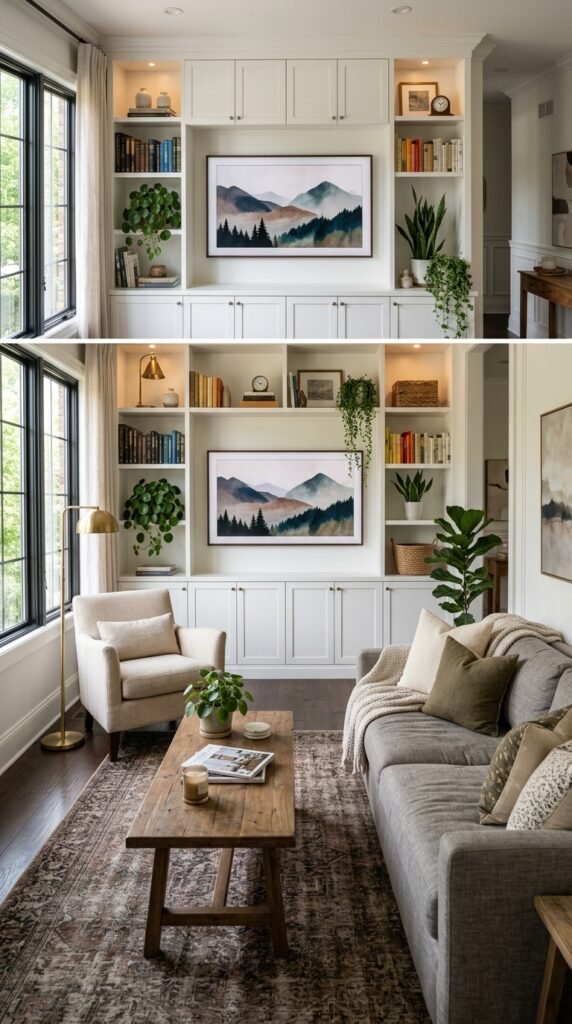
Custom built-in shelving transforms a plain television wall into a stylish architectural feature. Open shelves provide space for books, artwork, greenery, and decorative accessories while keeping the television integrated into the overall design. The symmetrical arrangement creates visual balance, making the room feel more intentional and luxurious.
Choose white or light wood cabinetry to maintain brightness throughout the room. Avoid overcrowding the shelves by displaying only a few carefully selected items in each section. This approach creates an airy, curated appearance while ensuring the television remains the central focal point without dominating the entire room.
9. Use Light Neutral Colors
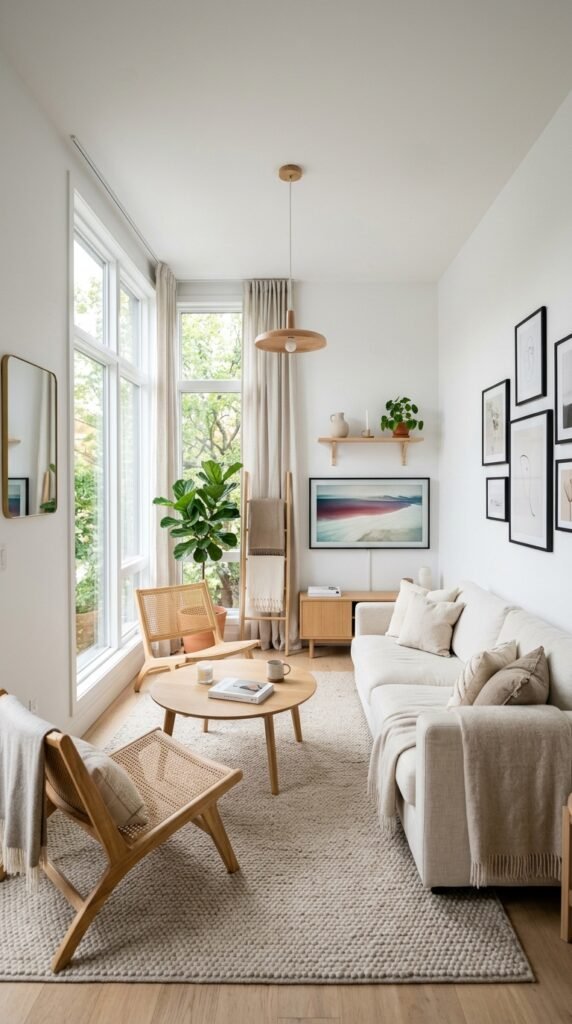
Light colors help visually widen a narrow room by reflecting natural light across every surface. White, cream, soft beige, and pale gray create a fresh foundation that makes furniture appear lighter and the room feel significantly more spacious. A simple television wall blends seamlessly into the overall palette rather than becoming visually heavy.
Layer different textures through linen curtains, woven rugs, knitted throws, and natural wood accents to prevent the neutral design from feeling flat. Green indoor plants introduce subtle contrast while keeping the atmosphere calm and welcoming. This timeless combination remains one of Pinterest’s most popular decorating styles.
10. Place Accent Chairs Near the Window
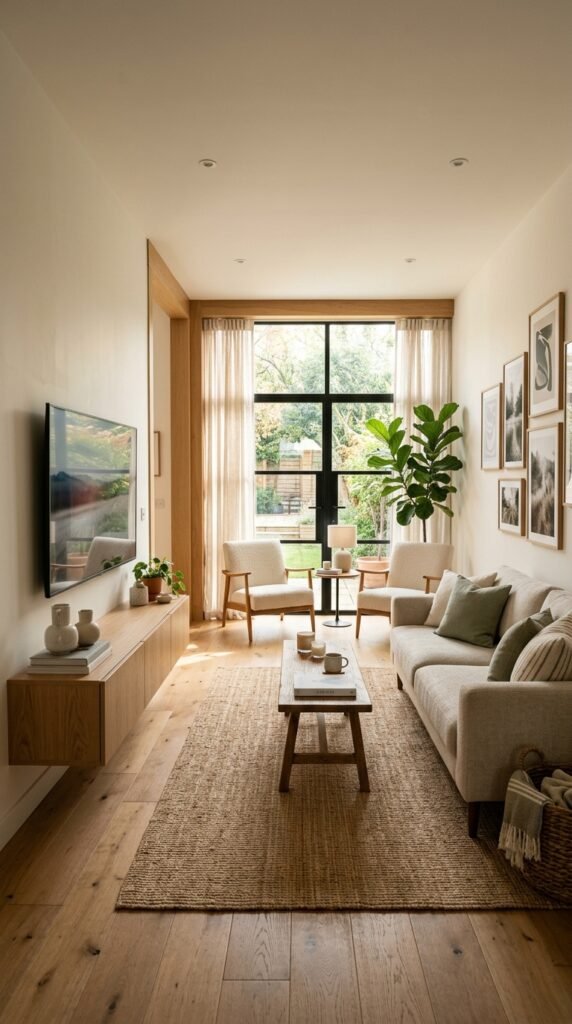
Adding a pair of accent chairs near the window expands seating without disrupting the television layout. This creates a conversation area that can also function as additional viewing space during gatherings. Lightweight chairs are easy to reposition when entertaining guests, making the room flexible and practical.
Choose chairs with slim legs and open frames to maintain an airy appearance. A small side table and floor lamp complete the corner while creating a cozy reading space when the television is not in use. Coordinating fabrics and colors tie the entire room together while enhancing the sophisticated design.
Frequently Asked Questions (FAQs)
1. How do you design a very narrow living room?
Designing a very narrow living room starts with choosing furniture that fits the room’s proportions. Use a slim sofa or an L-shaped sectional, mount the TV on the wall to save floor space, and keep walkways at least 30–36 inches wide. Stick to a light color palette, use mirrors to reflect natural light, and avoid bulky furniture. Multi-functional pieces like storage ottomans and floating shelves help maximize space without making the room feel crowded.
2. How do I arrange my living room?
The best way to arrange your living room is to first identify the main focal point, such as the TV, fireplace, or large window. Position the largest seating piece to face that focal point, then add accent chairs and a coffee table while leaving clear pathways for easy movement. Use an area rug to define the seating zone and maintain balanced spacing between furniture for a comfortable, functional layout.
3. How do I make a long, narrow room look wider?
To make a long, narrow room appear wider, use light wall colors, large mirrors, and furniture with exposed legs to create an open, airy feel. Place the TV on the longer wall, choose a round coffee table to soften straight lines, and use wide rugs positioned across the room rather than lengthwise. Incorporating horizontal artwork, layered lighting, and minimal clutter also helps visually expand the space.
4. How do you interior design a long living room?
Interior designing a long living room works best when you divide the space into functional zones. Create a dedicated TV viewing area with comfortable seating, then use the remaining space for a reading nook, home office, or conversation corner. Add cohesive colors, matching textures, and strategically placed lighting throughout the room to connect each zone while maintaining a balanced, stylish, and Pinterest-worthy design.